
For centuries, the night sky has been a canvas for human wonder, dotted with stars that have inspired myths, guided navigators, and fueled scientific inquiry. Among the most enigmatic celestial bodies revealed by modern astrophysics are black holes, regions of spacetime where gravity is so strong that nothing, not even light, can escape. Yet, as with many profound cosmic secrets, the story of black holes does not end with their seemingly inescapable grip. The concept of black hole evaporation, a phenomenon predicted by Stephen Hawking, introduces a startling twist: these cosmic voids might not be eternal. This revelation, however, brings with it an even deeper puzzle: the information loss paradox, a theoretical knot that challenges fundamental principles of physics.
Black holes are the ultimate celestial prisons, formed from the gravitational collapse of massive stars. When a star exhausts its nuclear fuel, the outward pressure that supported it against its own immense gravity ceases. If the star’s core is sufficiently massive, it collapses inward, crushing matter into an infinitesimally small point of infinite density known as a singularity. This singularity is surrounded by an event horizon, a boundary in spacetime from which there is no return. Imagine it as a waterfall’s edge; once you cross it, there’s no swimming back upstream against the crushing current of gravity.
Stellar-Mass Black Holes: The Remnants of Giant Stars
The most common type of black hole, stellar-mass black holes, are born from the dramatic deaths of stars much larger than our Sun. When these stellar giants reach the end of their lives, they often explode in a spectacular supernova, leaving behind a dense, compact object. If this object’s mass exceeds a certain threshold, the remnant collapses further, forming a black hole. These objects typically have masses ranging from a few times to tens of times the mass of our Sun. They are scattered throughout galaxies, often invisible until their gravitational influence on surrounding matter becomes apparent.
Supermassive Black Holes: The Giants at Galactic Centers
At the heart of nearly every large galaxy, including our own Milky Way, lurks a supermassive black hole. These behemoths can possess masses millions or even billions of times that of our Sun. Their formation mechanism is less understood than that of stellar-mass black holes, with theories suggesting they might have grown from smaller “seed” black holes by accreting vast amounts of gas and dust, or through the merger of other black holes. Their immense gravity shapes the dynamics of their host galaxies, influencing star formation and the overall evolution of the galactic cosmic cityscape.
The Event Horizon: A Point of No Return
The event horizon is the defining feature of a black hole from an external observer’s perspective. It’s not a physical surface but rather a boundary defined by the escape velocity reaching the speed of light. Anything that crosses this boundary, be it a particle, a photon, or a spaceship, is destined to fall towards the singularity. For an observer falling into a black hole, time and space would warp dramatically, but they would likely not perceive crossing the event horizon as a significant event in itself until it is too late.
The phenomenon of black hole evaporation, first proposed by Stephen Hawking, raises intriguing questions about the fate of information that falls into a black hole. A related article discusses the implications of this theory on our understanding of quantum mechanics and the nature of reality. For a deeper exploration of these concepts and their potential impact on the field of theoretical physics, you can read more in this insightful piece: Black Hole Evaporation and Information Loss.
Hawking Radiation: A Cry from Beyond the Horizon
For decades, black holes were considered the ultimate cosmic sinkholes, absorbing everything without giving anything back. This view was dramatically challenged by Stephen Hawking in the 1970s. Applying the principles of quantum mechanics to the extreme environment near a black hole’s event horizon, Hawking predicted that black holes are not entirely black but emit a faint thermal radiation, now known as Hawking radiation. This groundbreaking theoretical insight suggests that black holes, like all objects with mass and energy, are subject to the laws of thermodynamics and can, in principle, “evaporate.”
Quantum Fluctuations Near the Horizon: The Birth of Particles
Hawking’s theory hinges on the concept of quantum fluctuations in the vacuum of spacetime. Even in seemingly empty space, virtual particle-antiparticle pairs are constantly popping into existence and annihilating each other. Near the event horizon of a black hole, a peculiar situation can arise. Imagine a virtual particle-antiparticle pair appearing right at the edge. One particle might fall into the black hole, while the other escapes into space. To an outside observer, it appears as if the black hole has emitted a particle.
The Role of Virtual Particles
These virtual particles are not “real” in the sense of having a persistent existence. They are temporary excitations of quantum fields. However, when one half of a virtual pair is captured by the black hole’s gravity, the remaining particle can gain enough energy to become a real particle, carrying away energy from the black hole. This process, occurring continuously, means that the black hole is slowly but surely losing mass.
Energy Conservation and Mass Loss
The escaping particles carry energy away from the black hole. According to Einstein’s famous equation, E=mc², energy and mass are interchangeable. Therefore, as the black hole radiates energy, it loses mass. This mass loss is incredibly slow for astrophysical black holes, meaning their evaporation would take an unimaginably long time, far exceeding the current age of the universe. However, the theoretical implication is profound: black holes are not eternal.
The Temperature of Black Holes: A Cosmic Thermometer
Hawking radiation implies that black holes have a temperature. This temperature is inversely proportional to the black hole’s mass. Smaller black holes are hotter and radiate more intensely, while larger black holes are colder and radiate much more feebly. A stellar-mass black hole would have a temperature so low that its radiation is virtually undetectable, while a microscopic black hole, if it could exist, would be incredibly hot and evaporate very quickly. This relationship between mass and temperature is a fundamental aspect of thermodynamics.
Microscopic Black Holes and Rapid Evaporation
The concept of microscopic black holes is purely theoretical at this stage. If they were to exist, perhaps as a relic of the early universe, their small mass would mean they possess a very high temperature. This high temperature would lead to rapid Hawking radiation, causing them to evaporate in a burst of energy over a very short timescale. Detecting such a burst could provide indirect evidence for the existence of these exotic objects.
Astrophysical Black Holes: Near Absolute Zero
For a black hole with the mass of our Sun, its Hawking temperature would be a mere fraction of a Kelvin above absolute zero. This means that the rate at which it absorbs surrounding matter and radiation from the cosmic microwave background is vastly greater than the rate at which it emits Hawking radiation. Therefore, for all practical purposes, astrophysical black holes are currently growing, not evaporating.
The Information Loss Paradox: A Clash of Titans

The concept of black hole evaporation, while fascinating, throws a wrench into one of the most fundamental tenets of quantum mechanics: the principle of unitarity. Unitarity dictates that information about a physical system is never truly lost; it can always be recovered, even if it’s scrambled beyond recognition. However, if a black hole forms from matter carrying specific information and then evaporates into seemingly random thermal radiation, where does that information go? This is the heart of the information loss paradox.
Unitary Evolution: The Immutability of Information
In quantum mechanics, the evolution of a system over time is described by a unitary operator. This means that the process is reversible. If you know the state of a system at one point in time, you can, in principle, determine its state at any other point in time, both in the past and the future. This reversibility is directly tied to the conservation of information. Imagine a book; you can rip out pages, burn them, and scatter the ashes, but in principle, if you could gather every single atom of ash and reconstruct the original text, the information would be preserved.
The Quantum State and Its History
Every quantum system, from a single electron to a complex organism, exists in a particular quantum state. This state contains all the information about the system. The laws of quantum mechanics ensure that this information is preserved as the system evolves. For example, if you observe a particle’s position and momentum, quantum mechanics provides rules to predict how these properties will change over time.
The Principle of Causality and Determinism
The preservation of information is closely linked to the principle of causality, which states that an effect cannot precede its cause. Unitary evolution ensures that the future state of a system is uniquely determined by its past state. This deterministic nature, within the probabilistic framework of quantum mechanics, ensures that no information is lost, preventing paradoxes where effects could arise without a cause.
Black Holes as Information Destroyers?
When matter falls into a black hole, it seems to disappear behind the event horizon, its unique quantum state lost to the outside universe. If the black hole then evaporates into thermal radiation, which is by definition random and devoid of specific information about its origin, it appears as though the initial information has been irretrievably destroyed. This is like taking that book, burning it, and the ashes turning into a uniform, featureless cloud – the original text is gone forever.
The “No-Hair” Theorem and Its Implications
The “no-hair” theorem in general relativity states that a stable black hole can be characterized by only three macroscopic properties: its mass, electric charge, and angular momentum. This implies that all other information about the matter that formed the black hole is lost once it crosses the event horizon. Imagine a perfectly formed statue; once you melt it down into a uniform block of metal, you can tell its mass and density, but you can no longer discern the original intricate details of the sculpture. The black hole, according to this theorem, acts as a cosmic censor, discarding all but the most basic information.
The Fate of Quantum Information
The information loss paradox directly challenges this notion. If quantum information is truly lost within black holes, then the fundamental principles of quantum mechanics, which forbid such loss, must be wrong or incomplete. This is a profound crisis for theoretical physics, as it suggests a breakdown in our understanding of the universe at its most fundamental level.
Hawking’s Own Doubts and Proposed Solutions
Even Stephen Hawking eventually came to doubt the strict interpretation of his own radiation theory as leading to outright information loss. He famously wagered with physicist John Preskill that information is indeed lost in black holes, a bet he eventually conceded. This shift in thinking reflects the deep conceptual challenges posed by the paradox. Several theoretical avenues have been explored to resolve this conundrum.
The Black Hole Complementarity Principle
One prominent proposal is the black hole complementarity principle, which suggests that information entering a black hole is not actually destroyed. Instead, it might be somehow encoded on the event horizon itself and later re-emitted in the Hawking radiation. From the perspective of an infalling observer, information would be preserved, while from an external observer’s perspective, it would appear to be lost. This is akin to having two different ways of viewing a hologram: one that captures the 3D image and another that might just be a flat surface, yet both are derived from the same source.
The Holographic Principle: A Universe on a Surface
The holographic principle, inspired by black hole thermodynamics, proposes that the information content of a volume of spacetime can be fully described by a theory living on its boundary. In essence, all the information describing our three-dimensional universe might be encoded on a two-dimensional surface. If this principle applies to black holes, then the information that falls into a black hole might be imprinted on its event horizon, a 2D surface, and subsequently released as Hawking radiation.
Towards a Unified Theory: Bridging the Gap
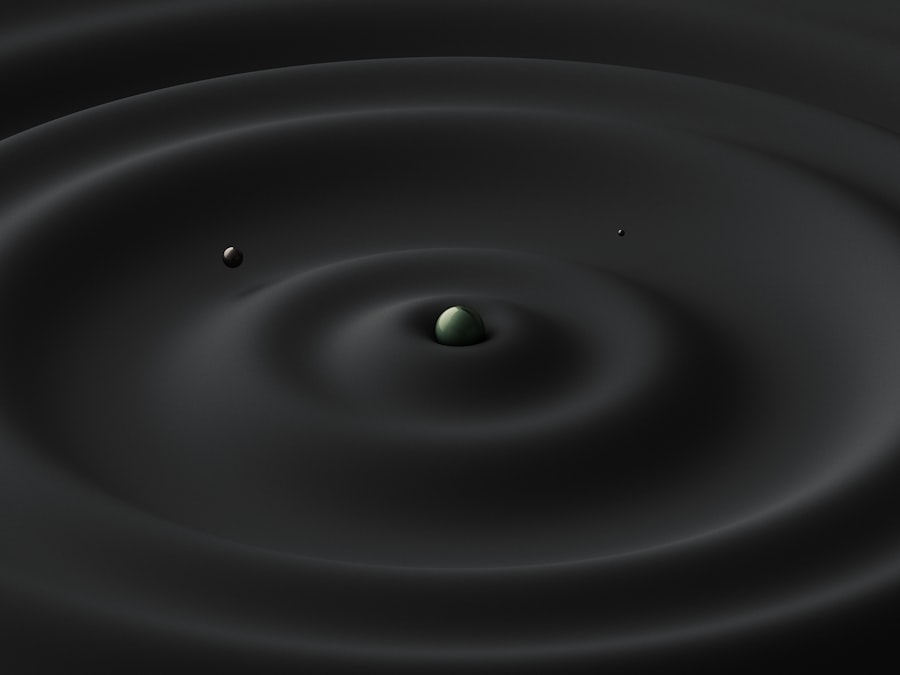
The information loss paradox is not merely an academic curiosity; it is a symptom of a deeper tension between our two most successful theories of the universe: general relativity, which describes gravity and large-scale structures, and quantum mechanics, which governs the microscopic world. Resolving this paradox is seen as a crucial step towards a more complete and unified theory of quantum gravity.
The Search for Quantum Gravity: The Holy Grail of Physics
Physicists have long sought a single framework that can reconcile general relativity and quantum mechanics, a “theory of everything” that can describe all fundamental forces and particles in the universe. The information loss paradox highlights a domain – the extreme conditions near black holes and at the very beginning of the universe – where both theories are essential and yet appear to conflict. Imagine trying to describe both a mighty ocean and a single water molecule using the same set of rules; you need a framework that can encompass both scales.
String Theory and Loop Quantum Gravity
Two leading candidates for a theory of quantum gravity are string theory and loop quantum gravity. String theory proposes that fundamental particles are not point-like but rather tiny vibrating strings, and that gravity arises from the vibrations of these strings. Loop quantum gravity, on the other hand, quantizes spacetime itself, suggesting that it is not continuous but rather made up of discrete loops. Both approaches offer potential pathways to re-examine the nature of spacetime and information in extreme gravitational environments.
Black Hole Mergers as Cosmic Laboratories
The detection of gravitational waves from merging black holes by the LIGO and Virgo observatories has opened up a new window into studying these enigmatic objects. These cataclysmic events provide unprecedented opportunities to test theories about black hole physics, including the very processes that might resolve the information loss paradox. While direct observation of Hawking radiation is currently unfeasible, the study of gravitational wave signatures could indirectly shed light on the quantum processes occurring near black holes.
Gravitational Waves and the Event Horizon
The ripples in spacetime generated by black hole mergers allow us to probe the immediate vicinity of the event horizon. By analyzing the precise patterns of these waves, scientists can glean information about the strength of gravity and the dynamics of spacetime in these extreme regions. Future, more sensitive gravitational wave detectors might even be able to distinguish subtle differences in these patterns that could be influenced by quantum effects, potentially offering clues about information preservation.
The Role of Entanglement in Resolving the Paradox
Quantum entanglement, a phenomenon where two or more particles become inextricably linked, sharing the same fate regardless of the distance separating them, is increasingly seen as a key player in understanding the information loss paradox. It is theorized that the Hawking radiation emitted by a black hole is entangled with the matter that fell inside. If this entanglement can be maintained even as the black hole evaporates, it could provide a mechanism for information to be preserved and eventually returned to the universe.
Entangled Pairs and Information Retrieval
When a virtual particle-antiparticle pair is created near the event horizon, and one particle falls in while the other escapes as Hawking radiation, these two particles are entangled. The information carried by the infalling particle is then intrinsically linked to the information carried by the emitted Hawking radiation. If this intricate quantum dance can be fully understood, it might reveal how the information lost to the black hole is subtly encoded in the radiation it emits.
Recent discussions in theoretical physics have focused on the intriguing concept of black hole evaporation and the associated problem of information loss. A fascinating article that delves into these topics can be found on My Cosmic Ventures, where the implications of quantum mechanics on black holes are explored in depth. This research raises important questions about the nature of information in our universe and challenges our understanding of fundamental physics. For more insights, you can read the article here.
The Enduring Mystery and Future Prospects
| Metric | Description | Typical Values / Notes |
|---|---|---|
| Black Hole Mass (M) | Mass of the black hole | From a few solar masses (~3 M☉) to billions of solar masses (10⁹ M☉) |
| Hawking Temperature (T_H) | Temperature of black hole radiation due to quantum effects | T_H ≈ 1.2 × 10⁻⁷ K × (M☉ / M) |
| Evaporation Time (τ) | Time for a black hole to completely evaporate via Hawking radiation | τ ≈ 10⁶⁷ years × (M / M☉)³ |
| Entropy (S) | Black hole entropy proportional to event horizon area | S = k_B × (A / 4 l_P²), where A = 4π (2GM/c²)² |
| Information Loss Paradox | Debate on whether information that falls into a black hole is lost after evaporation | Unresolved; theories include information preservation via holography or loss |
| Event Horizon Radius (r_s) | Radius of the black hole event horizon (Schwarzschild radius) | r_s = 2GM / c²; ~3 km per solar mass |
| Hawking Radiation Power (P) | Power emitted by black hole due to Hawking radiation | P ≈ 3.56 × 10⁻²⁷ W × (M☉ / M)² |
The mystery of black hole evaporation and information loss remains one of the most profound and challenging puzzles in modern physics. It forces us to confront the limits of our current understanding and beckons us towards new theoretical frontiers. While definitive answers remain elusive, the ongoing research, fueled by theoretical innovation and experimental advancements, offers tantalizing glimpses into the fundamental nature of reality.
The Cosmic Significance of Black Holes
Black holes are not just exotic cosmic oddities; they represent extreme environments where gravity and quantum mechanics collide in spectacular fashion. Understanding their behavior, including their potential evaporation and the fate of information, is crucial for developing a complete picture of the universe. They serve as natural laboratories for testing our most fundamental physical theories, pushing the boundaries of what we can comprehend about space, time, and information itself.
Black Holes as Probes of Fundamental Physics
The very existence of the information loss paradox suggests that there are aspects of gravity and quantum mechanics that we do not yet fully grasp. By studying black holes, physicists are indirectly probing the very fabric of reality. The eventual resolution of this paradox will undoubtedly lead to a deeper understanding of quantum gravity and the interconnectedness of all physical phenomena.
The Future of Black Hole Research
The future of black hole research is bright, with ongoing efforts in theoretical physics, observational astrophysics, and experimental cosmology. The development of more powerful telescopes, advanced gravitational wave detectors, and innovative theoretical frameworks promises to unravel the secrets of black hole evaporation and the information loss paradox. We stand on the precipice of potentially groundbreaking discoveries that could fundamentally alter our perception of the cosmos.
Multi-Messenger Astronomy and Black Holes
The era of multi-messenger astronomy, where we observe celestial events using multiple types of signals – light, gravitational waves, neutrinos – is revolutionizing our understanding of black holes. By combining data from various sources, scientists can paint a more comprehensive picture of black hole mergers, accretion disks, and their surrounding environments, offering new avenues for testing theoretical predictions related to black hole dynamics and potentially information preservation.
The Quest for Observational Evidence
While direct observation of Hawking radiation is currently beyond our technological capabilities, future missions and refined detection techniques might one day make it possible. Furthermore, the study of the early universe, the possible existence of primordial black holes, and subtle deviations in gravitational wave signals could provide indirect evidence for the processes involved in black hole evaporation and the resolution of the information loss paradox. The journey to understand these cosmic enigmas is far from over, and the universe continues to hold its breath, waiting for the next revelation.
FAQs
What is black hole evaporation?
Black hole evaporation is a theoretical process by which black holes lose mass and energy over time through the emission of Hawking radiation, eventually leading to their disappearance.
Who proposed the concept of black hole evaporation?
The concept of black hole evaporation was proposed by physicist Stephen Hawking in 1974, based on quantum mechanical effects near the event horizon of black holes.
What is the information loss paradox in black holes?
The information loss paradox refers to the problem that information about matter falling into a black hole appears to be lost when the black hole evaporates, conflicting with the principles of quantum mechanics that state information must be preserved.
How does Hawking radiation cause black holes to evaporate?
Hawking radiation arises from quantum fluctuations near the event horizon, where particle-antiparticle pairs form and one particle escapes as radiation while the other falls into the black hole, resulting in a net loss of mass and energy from the black hole.
Has the information loss paradox been resolved?
The information loss paradox remains an open question in theoretical physics, with various proposed solutions including the idea that information is encoded in Hawking radiation or preserved in a black hole’s quantum structure, but no definitive consensus has been reached.