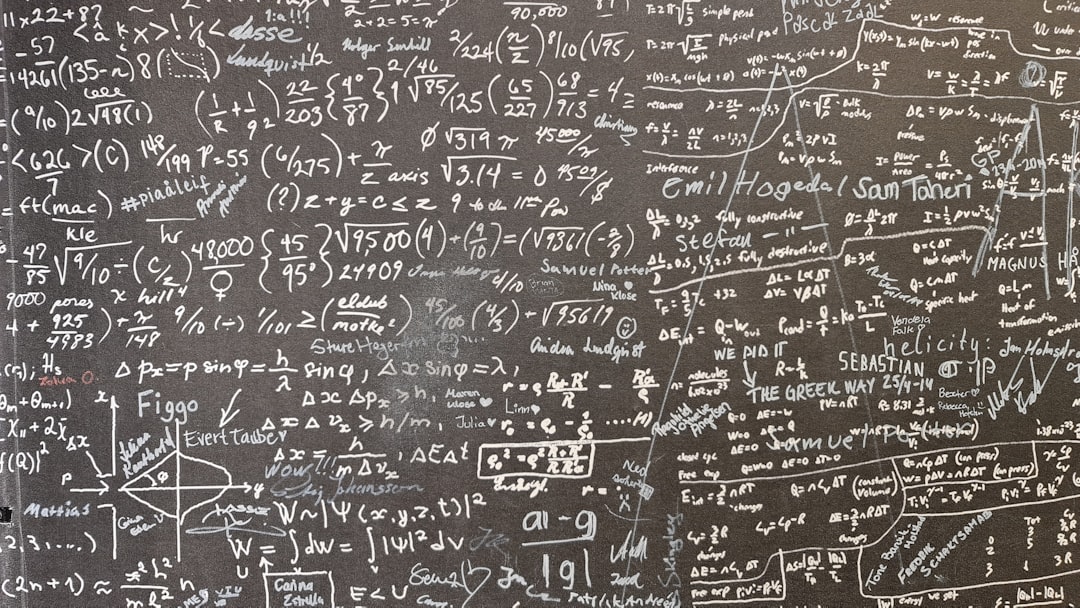
The universe, in all its magnificent complexity and bewildering vastness, operates under a set of fundamental rules. These are the laws of physics, the bedrock principles that govern everything from the infinitesimal dance of subatomic particles to the majestic ballet of galaxies. While often perceived as abstract and daunting, these laws are, in essence, elegant descriptions of how the cosmos behaves, refined through centuries of observation, experimentation, and profound intellectual endeavor. To truly understand them is to glimpse the underlying order that binds reality together. This exposition aims to demystify these fundamental principles, revealing their beauty and their pervasive influence on our existence.
At the heart of classical physics lies the work of Sir Isaac Newton. His three laws of motion, formulated in his seminal work Philosophiæ Naturalis Principia Mathematica, laid the foundation for understanding how objects move and interact. These laws, though seemingly simple, are extraordinarily powerful and have a vast range of applications, from calculating the trajectory of a projectile to designing complex engineering marvels.
Newton’s First Law: The Law of Inertia
Often referred to as the law of inertia, Newton’s first law states that an object at rest will stay at rest, and an object in motion will stay in motion with the same speed and in the same direction unless acted upon by an unbalanced force. This means that objects possess a natural tendency to resist changes in their state of motion. Imagine a hockey puck gliding smoothly across frictionless ice. It will continue to move indefinitely at its current speed and direction until something, like friction or a player’s stick, intervenes. Conversely, a book resting on a table will remain there forever unless you pick it up or some other force acts upon it. Inertia is a fundamental property of matter, directly proportional to its mass. The more massive an object, the greater its inertia and the more force is required to alter its motion. This concept explains why it’s harder to push a heavy truck than a bicycle, and why a passenger in a suddenly braking car lurches forward – their body’s inertia continues its forward motion.
Newton’s Second Law: The Law of Acceleration
Newton’s second law provides a quantitative relationship between force, mass, and acceleration. It is famously expressed by the equation $F = ma$, where $F$ represents the net force acting on an object, $m$ is its mass, and $a$ is its acceleration. This law dictates that the acceleration of an object is directly proportional to the net force acting on it and inversely proportional to its mass. In simpler terms, a larger force applied to an object will cause it to accelerate more quickly. Similarly, if the same force is applied to two objects of different masses, the less massive object will accelerate more than the more massive one. This is why a gentle push can send a feather flying, while the same push on a boulder would have little effect. This law is crucial for understanding everything from the acceleration of a car to the orbital mechanics of planets.
Newton’s Third Law: The Law of Action and Reaction
The third law of motion, the law of action and reaction, states that for every action, there is an equal and opposite reaction. This means that forces always occur in pairs. When object A exerts a force on object B, object B simultaneously exerts an equal and opposite force back on object A. Think about walking: when you push your foot back against the ground (the action), the ground pushes your foot forward with an equal and opposite force (the reaction), propelling you forward. A rocket expels hot gas downwards (action), and the gas pushes the rocket upwards (reaction). This law is often less intuitive than the first two, but it is fundamental to understanding how objects interact and move through forces.
For those interested in a deeper understanding of the laws of physics, you might find the article on the fundamental principles of the universe particularly enlightening. It delves into the intricate relationships between various physical laws and how they govern everything from the smallest particles to the vastness of space. To explore this fascinating topic further, you can read the article here: Fundamental Principles of the Universe.
The Universal Bond: Newton’s Law of Universal Gravitation
Building upon his laws of motion, Newton also formulated the law of universal gravitation, a groundbreaking insight that explained the force responsible for keeping the Moon in orbit around the Earth and the planets in their orbits around the Sun. This law revolutionized our understanding of the cosmos, suggesting that the same force that pulls an apple to the ground also governs the grand celestial movements. This law establishes that every particle of matter in the universe attracts every other particle with a force that is directly proportional to the product of their masses and inversely proportional to the square of the distance between their centers. The mathematical representation of this law is $F = G \frac{m_1 m_2}{r^2}$, where $F$ is the gravitational force, $G$ is the gravitational constant, $m_1$ and $m_2$ are the masses of the two objects, and $r$ is the distance between their centers.
The Invisible Hand of Gravity
Gravity, according to Newton, is a universal force, meaning it acts between any two objects with mass, regardless of their distance. While the force becomes weaker with increasing distance (due to the inverse square relationship), it theoretically extends infinitely. This universal nature is what allows us to map the orbits of celestial bodies with remarkable accuracy and predict phenomena like tides. The strength of the gravitational attraction depends directly on the masses of the objects involved. The Sun, with its enormous mass, exerts a strong gravitational pull on all the planets in our solar system, keeping them tethered in their elliptical paths. Similarly, the Earth’s gravity is what keeps us grounded and what gives weight to objects.
Gravitational Constant and its Significance
The gravitational constant, denoted by $G$, is a fundamental constant of nature that quantifies the strength of the gravitational force. Its value is extremely small, which is why the gravitational attraction between everyday objects is imperceptible. However, when dealing with astronomical scales and massive bodies like stars and planets, this force becomes dominant. The precise determination of $G$ was a significant experimental challenge, and its value is crucial for many calculations in astrophysics and cosmology.
The Dance of Light and Electromagnetism: Maxwell’s Equations
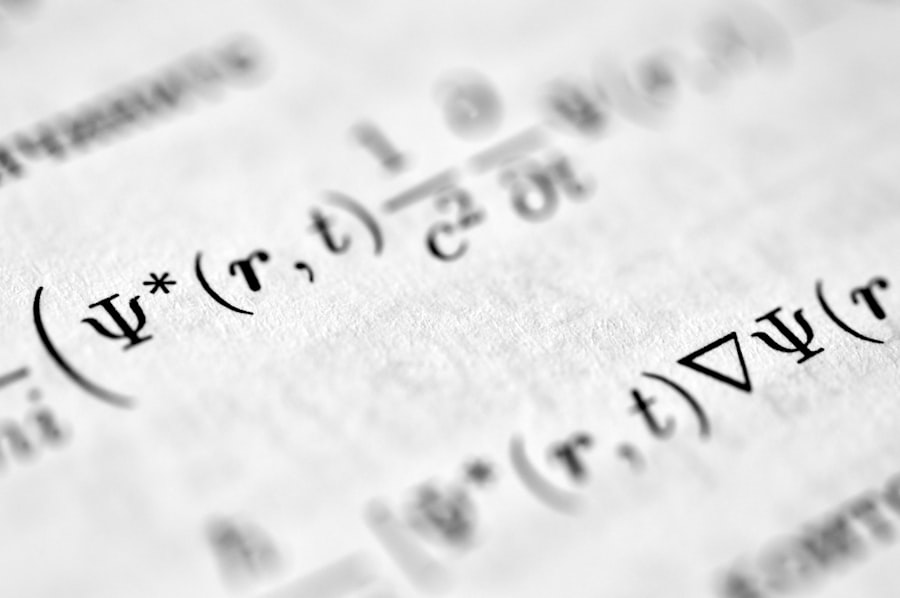
While Newton’s laws describe the mechanics of the universe, James Clerk Maxwell’s work in the mid-19th century unified electricity and magnetism into a single, elegant framework known as electromagnetism. His famous equations revealed that light itself is an electromagnetic wave, a revelation that profoundly impacted physics and led to the development of numerous modern technologies.
Electricity and Magnetism: Intertwined Forces
Before Maxwell, electricity and magnetism were studied as separate phenomena. However, experiments had revealed intriguing connections. For instance, an electric current could produce a magnetic field, and a changing magnetic field could induce an electric current. Maxwell hypothesized that these two forces were not independent but were manifestations of a single underlying force.
The Four Pillars of Electromagnetism
Maxwell’s equations are a set of four fundamental equations that describe the behavior of electric and magnetic fields and their interactions with matter.
Gauss’s Law for Electricity
This law relates the electric field to the electric charges that create it. It essentially states that the net electric flux through any closed surface is proportional to the total electric charge enclosed within that surface. In simpler terms, electric charges are the sources of electric fields.
Gauss’s Law for Magnetism
This law states that there are no magnetic monopoles. In other words, magnetic field lines always form closed loops; they do not begin or end at isolated “poles.” This is why magnets always have a north and a south pole; you cannot isolate a north pole by itself.
Faraday’s Law of Induction
This law describes how a changing magnetic field can induce an electromotive force (EMF), which is essentially a voltage, in a conductor. This principle is the basis for electric generators and transformers.
Ampère’s Law (with Maxwell’s addition)
This law, originally formulated by André-Marie Ampère, describes how electric currents and changing electric fields create magnetic fields. Maxwell’s crucial addition of the displacement current term unified the understanding of how both static and changing electric fields generate magnetic fields, thus completing the picture of a unified electromagnetic force.
Light as an Electromagnetic Wave
The most astonishing consequence of Maxwell’s equations was the prediction that electromagnetic disturbances would propagate through space as waves, traveling at a specific speed – the speed of light. This revealed that light itself is an electromagnetic wave, and that the visible spectrum is merely a small portion of a much broader electromagnetic spectrum, which includes radio waves, microwaves, infrared radiation, ultraviolet light, X-rays, and gamma rays. This unification revolutionized our understanding of light and led to the development of technologies like radio communication and optical fibers.
The Fabric of Spacetime: Einstein’s Relativity
While Newtonian mechanics proved incredibly successful, it encountered limitations when dealing with objects moving at speeds approaching the speed of light or in very strong gravitational fields. Albert Einstein’s theories of special and general relativity provided a more comprehensive and accurate description of gravity, space, and time.
Special Relativity: Motion at High Speeds
Einstein’s theory of special relativity, published in 1905, revolutionized our understanding of space and time. It is based on two postulates:
The Principle of Relativity
The laws of physics are the same for all observers in uniform motion (non-accelerating frames of reference). This means that there is no absolute state of rest; motion is always relative.
The Constancy of the Speed of Light
The speed of light in a vacuum is the same for all inertial observers, regardless of the motion of the light source or the observer. This seemingly simple postulate has profound implications, leading to counter-intuitive phenomena such as time dilation and length contraction.
Time Dilation and Length Contraction
One of the most famous consequences of special relativity is that time and space are not absolute but are relative to the observer’s frame of reference. As an object approaches the speed of light, its internal clock appears to slow down relative to a stationary observer (time dilation), and its length in the direction of motion appears to contract (length contraction). These effects are negligible at everyday speeds but become significant at relativistic speeds.
Mass-Energy Equivalence: E=mc²
Another iconic outcome of special relativity is the equation $E = mc²$. This equation states that energy ($E$) and mass ($m$) are interchangeable and are related by the square of the speed of light ($c²$). This profound insight reveals that mass is a form of concentrated energy, and that a small amount of mass can be converted into a vast amount of energy, a principle demonstrated in nuclear reactions.
General Relativity: Gravity as Spacetime Curvature
Einstein’s theory of general relativity, published in 1915, extended his earlier work to include gravity. It proposes that gravity is not a force in the traditional sense but rather a manifestation of the curvature of spacetime caused by the presence of mass and energy. Massive objects warp the fabric of spacetime around them, and other objects moving through this warped spacetime follow curved paths, which we perceive as gravitational attraction.
Spacetime: A Unified Continuum
General relativity views space and time as a single, interwoven four-dimensional fabric called spacetime. Massive objects create “dents” or “curves” in this fabric. Imagine placing a heavy ball on a stretched rubber sheet; it creates a dip. If you then roll a smaller marble across the sheet, it will curve towards the heavy ball. This is analogous to how planets orbit stars.
Gravitational Lensing and Black Holes
The extreme curvature of spacetime near massive objects predicted by general relativity leads to observable phenomena like gravitational lensing, where light from distant galaxies is bent as it passes massive objects, creating distorted or multiple images. It also predicts the existence of black holes – regions of spacetime where gravity is so strong that nothing, not even light, can escape.
The laws of physics govern the fundamental principles that describe the behavior of the universe, and understanding them is crucial for anyone interested in science. For a deeper dive into these concepts, you might find the article on cosmic ventures particularly enlightening, as it explores various phenomena and their underlying physical laws. This resource offers a comprehensive overview that can enhance your grasp of how these laws shape everything from the smallest particles to the vastness of space.
The Quantum Realm: The Rules of the Very Small
“`html
| Law | Description |
|---|---|
| Newton’s First Law | An object at rest stays at rest and an object in motion stays in motion with the same speed and in the same direction unless acted upon by an unbalanced force. |
| Newton’s Second Law | The acceleration of an object is directly proportional to the net force acting on it and inversely proportional to its mass. |
| Newton’s Third Law | For every action, there is an equal and opposite reaction. |
| Law of Universal Gravitation | Every point mass attracts every single other point mass by a force pointing along the line intersecting both points. |
“`
At the other end of the scale from the cosmos, the laws of physics take a decidedly strange turn when we delve into the realm of the very small – atoms and their constituent particles. Quantum mechanics, the governing theory of this microscopic world, is characterized by principles that challenge our everyday intuition.
The Wave-Particle Duality
One of the most fundamental concepts in quantum mechanics is wave-particle duality. It states that quantum objects, such as electrons and photons, can exhibit both wave-like and particle-like properties. For example, light can behave as a stream of discrete packets of energy called photons, but it also exhibits wave-like behavior, such as interference and diffraction. Similarly, electrons, typically considered particles, can also exhibit wave-like characteristics.
Quantization of Energy
In the quantum world, energy is not continuous but is “quantized,” meaning it exists in discrete packets or levels. Electrons in atoms, for instance, can only occupy specific energy levels. When an electron jumps from a higher energy level to a lower one, it emits a photon of light with a specific energy corresponding to the energy difference between the levels. This explains the characteristic spectral lines observed in the light emitted by different elements.
The Uncertainty Principle
Formulated by Werner Heisenberg, the uncertainty principle states that certain pairs of physical properties, such as the position and momentum of a particle, cannot be known with absolute precision simultaneously. The more precisely one property is known, the less precisely the other can be determined. This is not a limitation of our measurement tools but a fundamental characteristic of the quantum universe, implying an inherent fuzziness at the most fundamental level of reality.
Quantum Superposition and Entanglement
Quantum mechanics introduces concepts like superposition, where a quantum system can exist in multiple states simultaneously until it is measured. For instance, a quantum bit (qubit) can be both 0 and 1 at the same time. Another fascinating phenomenon is entanglement, where two or more quantum particles become linked in such a way that they share the same fate, even when separated by vast distances. Measuring the state of one entangled particle instantaneously influences the state of the other, a phenomenon Albert Einstein famously referred to as “spooky action at a distance.”
The Unifying Quest: The Search for a Theory of Everything
Despite the incredible success of these individual theories, a grand challenge in modern physics is to reconcile them into a single, coherent framework. The laws of Newtonian mechanics and electromagnetism are well-suited for macroscopic phenomena, while quantum mechanics governs the microscopic world, and general relativity describes gravity and the large-scale structure of the universe. However, these theories are not easily unified, particularly in extreme conditions like those found at the center of black holes or at the moment of the Big Bang.
The Discrepancy Between Theories
The primary difficulty lies in how quantum mechanics and general relativity treat gravity. Quantum mechanics describes forces as being mediated by particles (like photons for electromagnetism), while general relativity describes gravity as the curvature of spacetime. Attempts to quantize gravity often lead to mathematical inconsistencies and infinities.
Leading Candidates for Unification
Physicists are actively pursuing several theoretical frameworks in the hope of achieving this unification. Among the most prominent are:
String Theory
String theory proposes that the fundamental constituents of the universe are not point-like particles but tiny, vibrating strings. The different vibration modes of these strings give rise to different fundamental particles and forces, including gravity. String theory typically requires the existence of extra spatial dimensions beyond the three we perceive.
Loop Quantum Gravity
Loop quantum gravity offers a different approach, focusing on quantizing spacetime itself. It suggests that spacetime is not a smooth continuum but is made up of discrete, fundamental units.
Other Approaches
Numerous other avenues of research are being explored, including various modifications to existing theories and entirely new conceptual frameworks. The quest for a “Theory of Everything” represents one of the most profound and exciting frontiers in scientific inquiry, promising to unlock a deeper understanding of the universe’s fundamental nature.
In conclusion, the laws of physics, from the predictable motion described by Newton to the mind-bending probabilities of quantum mechanics and the elegant geometry of spacetime in relativity, are the universal language the cosmos speaks. While we continue to unravel their intricacies and strive for a unified understanding, these fundamental principles provide an enduring framework for comprehending the universe and our place within it, a testament to humanity’s relentless pursuit of knowledge.

Physics Can’t Explain Why Reality Exists
FAQs
What are the laws of physics?
The laws of physics are fundamental principles that describe the natural world. They encompass various scientific theories and principles that govern the behavior of matter, energy, and the forces that act upon them.
What are some examples of laws of physics?
Some examples of laws of physics include Newton’s laws of motion, the law of conservation of energy, the law of conservation of momentum, the laws of thermodynamics, and the law of universal gravitation.
How do the laws of physics impact everyday life?
The laws of physics impact everyday life in numerous ways, from the functioning of simple machines to the behavior of complex systems. They govern everything from the motion of objects to the transfer of energy and the behavior of matter.
Why are the laws of physics important?
The laws of physics are important because they provide a framework for understanding and predicting the behavior of the natural world. They form the basis for technological advancements, scientific research, and our understanding of the universe.
How are the laws of physics discovered and tested?
The laws of physics are discovered through observation, experimentation, and mathematical modeling. They are tested through controlled experiments, empirical evidence, and the development of scientific theories that can make accurate predictions about physical phenomena.