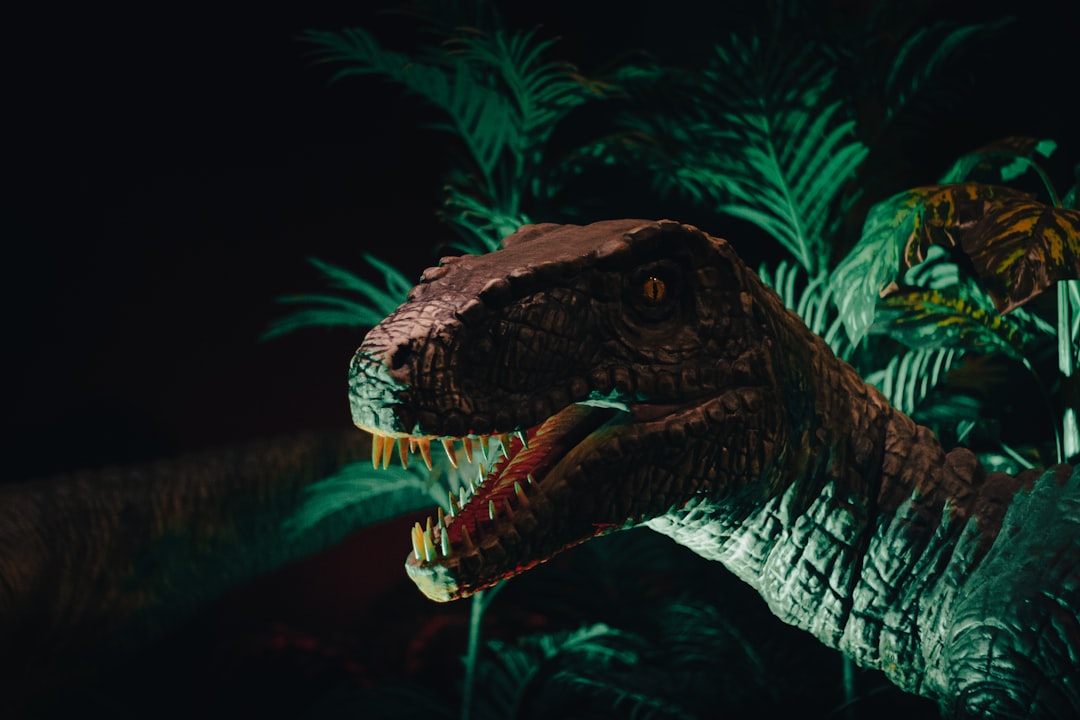
The question of dinosaur intelligence has long captivated the human imagination. From the quick, cunning raptors of cinematic lore to the lumbering, seemingly dim-witted sauropods, paleontological reconstructions have often assigned varying degrees of cognitive ability to these prehistoric giants. However, as scientific understanding evolves, researchers are moving beyond superficial depictions to explore the tangible evidence for dinosaur intellect, or its absence. This article delves into the methodologies employed to assess dinosaur brainpower, examines the anatomical and behavioral clues, and discusses the challenges in definitively answering whether dinosaurs possessed true intelligence or merely complex instictive behaviors.
Encephalization, the relative size of the brain compared to body mass, serves as a primary metric for estimating intelligence across species. A higher encephalization quotient (EQ) generally correlates with greater cognitive capacity. However, applying this metric to extinct animals presents significant challenges.
Estimating Brain Volume
Direct measurement of dinosaur brains is impossible due to the rapid decomposition of soft tissues after death. Instead, paleontologists rely on endocasts, natural or artificial molds of the internal space of the skull where the brain once resided.
- Natural Endocasts: These rare fossils form when sediment fills the brain cavity, solidifying over time. They offer valuable insights into the general shape and volume of the dinosaur brain.
- Computed Tomography (CT) Scans: Modern technology allows scientists to digitally reconstruct endocasts from fossilized skulls, providing highly detailed 3D models of the braincase and, by extension, the brain. This method can reveal features such as olfactory bulban size, optic lobe development, and the overall compartmentalization of the brain.
The Limitations of EQ
While EQ offers a convenient starting point, it is not a perfect indicator of intelligence. Other factors, such as brain architecture, neuron density, and the presence of specific brain regions, play crucial roles.
- Body Mass Estimation: Accurately determining the body mass of extinct animals is inherently difficult, as only skeletal remains are typically preserved. Variations in muscle mass, fat content, and organ size can significantly impact body mass estimates, directly affecting the calculated EQ.
- Metabolic Rates: Different metabolic rates can influence brain size relative to body size. Animals with higher metabolisms, like birds and mammals, tend to have larger brains for their body size compared to ectothermic reptiles, which generally have lower metabolic rates. This distinction can complicate direct comparisons between dinosaurs and modern animals.
The question of whether dinosaurs possessed advanced intelligence has intrigued scientists and enthusiasts alike for decades. A related article that delves deeper into this fascinating topic is available at My Cosmic Ventures, where researchers explore the cognitive abilities of various dinosaur species and compare them to modern-day animals. This exploration sheds light on the evolutionary adaptations that may have influenced their behavior and survival strategies.
Anatomical Clues to Cognitive Ability
Beyond overall brain size, specific anatomical features within the dinosaur skull and skeleton can offer tantalizing glimpses into their sensory capabilities and potential cognitive prowess.
Sensory Acuity
Well-developed sensory organs are often precursors to complex behaviors and, by extension, intelligence. Dinosaurs possessed a diverse array of sensory adaptations.
- Olfaction (Smell): Large olfactory bulbs, indicative of a keen sense of smell, are evident in the endocasts of many theropods, including Tyrannosaurus rex. This suggests that smell played a vital role in hunting, scavenging, and potentially social communication.
- Vision: The size and orientation of orbital sockets, coupled with reconstructions of extraocular muscles, provide clues about dinosaur vision. Some dinosaurs, particularly predators like birds of prey, exhibited forward-facing eyes, indicative of stereoscopic vision crucial for judging distance. Conversely, many herbivores possessed eyes positioned more laterally, providing a wider field of view to detect approaching threats.
- Audition (Hearing): The structure of the inner ear, specifically the cochlear duct, can reveal the range of frequencies a dinosaur could detect. Studies on the inner ear structures of various dinosaurs indicate a diverse range of auditory capabilities, suggesting that sound played a role in communication or environmental awareness.
Brain Structure and Complexity
While detailed brain anatomy is not preserved, the general shape of the endocast can reveal information about the relative proportions of different brain regions.
- Cerebrum Development: The cerebrum, responsible for higher cognitive functions in mammals, is notoriously difficult to assess in dinosaurs. However, some endocasts suggest the presence of a relatively enlarged cerebrum in certain dinosaur groups, particularly avian dinosaurs and their immediate ancestors.
- Cerebellar Size: The cerebellum, crucial for motor control and coordination, was often well-developed in dinosaurs, reflecting their dynamic and often bipedal locomotion. A larger cerebellum indicates sophisticated control over movement, which can be indirectly linked to the complexity of behaviors.
Behavioral Indicators of Intelligence

While direct observation is impossible, numerous lines of evidence from the fossil record suggest a range of complex behaviors in dinosaurs, some of which hint at cognitive abilities beyond simple instinct.
Social Dynamics
Evidence of social behavior, including herd living and cooperative activities, implies a level of communication and coordination.
- Herding and Flocking: Trackway fossils provide compelling evidence of large groups of dinosaurs moving together. Sauropod trackways, for instance, often show parallel paths of multiple individuals, suggesting herd structures. These formations may have provided protection against predators or facilitated foraging for widespread food sources.
- Parental Care: Nesting sites and fossilized eggs with embryos offer insights into dinosaur reproductive strategies. Some dinosaurs, like Maiasaura (“good mother lizard”), have been found in large nesting colonies with evidence of prolonged parental care, including tending to hatchlings. This implies an investment in offspring that goes beyond simple egg laying, hinting at learned behaviors and social bonds within the family unit.
Hunting Strategies
Predatory dinosaurs engaged in a variety of hunting techniques, some of which may have required a degree of strategic thinking.
- Ambush Predation: Many theropods likely utilized ambush tactics, relying on camouflage and surprise to subdue prey. While seemingly instinctive, successful ambush requires an understanding of prey behavior and the environment.
- Pack Hunting: The controversial idea of pack hunting in dinosaurs like Deinonychus or Velociraptor, popularized by films, is based on circumstantial evidence from fossil assemblages. Multiple individuals of the same predatory species found alongside a larger prey animal could suggest cooperative hunting. If true, this would necessitate advanced communication, coordination, and perhaps even a rudimentary understanding of strategic teamwork.
Communication
The fossil record offers clues, albeit indirect, about how dinosaurs might have communicated with each other.
- Vocalizations: Hollow crests in hadrosaurs, like Parasaurolophus, are interpreted as resonating chambers that could have amplified calls. These diverse crest morphologies suggest a wide range of vocalizations, potentially used for species recognition, alarm calls, or mating displays.
- Visual Displays: Elaborate frills, crests, and sail-like structures found on various dinosaurs, such as Triceratops or Spinosaurus, likely served as visual signals. These displays could have communicated status, attracted mates, or intimidated rivals, suggesting a visual language beyond simple body posture.
The Case of Avian Dinosaurs: A Glimpse into the Future

Modern birds are the direct descendants of avian dinosaurs, and their intelligence provides a living analogue for understanding the cognitive potential of their ancient relatives.
Avian Intelligence
Birds exhibit a remarkable range of intelligent behaviors, from tool use in crows to complex problem-solving in parrots, demonstrating that advanced cognition is not exclusive to mammals.
- Tool Use: New Caledonian crows are renowned for their ability to fashion and use tools to extract food, a behavior long considered a hallmark of primate intelligence.
- Problem Solving: Parrots and corvids have demonstrated remarkable abilities to solve complex puzzles, understand abstract concepts, and even engage in limited forms of communication with humans, exhibiting a level of intelligence that challenges previous assumptions about avian brains.
Connecting the Dots to Non-Avian Dinosaurs
While modern birds are highly evolved, studying their brains and behaviors can offer insights into the cognitive potential of their non-avian dinosaur ancestors. Many features, such as the relative size of certain brain regions, are conserved across the avian lineage.
- Brain Structure Homologies: Neuroanatomical comparative studies aim to identify homologous brain structures between birds and non-avian dinosaurs, attempting to trace the evolutionary trajectory of cognitive abilities.
- Behavioral Analogues: Observing the complex social structures, communication methods, and problem-solving skills of modern birds can inspire new interpretations of dinosaurian behaviors inferred from the fossil record.
The question of whether dinosaurs had advanced intelligence has intrigued scientists and enthusiasts alike, leading to various studies and discussions on their cognitive abilities. A related article that delves deeper into this topic can be found at My Cosmic Ventures, where researchers explore the evidence surrounding dinosaur behavior and brain structure. This exploration not only sheds light on the potential intelligence of these ancient creatures but also enhances our understanding of their social interactions and survival strategies.
The Challenge of Defining and Measuring Dinosaur Intelligence
| Aspect | Details |
|---|---|
| Brain Size | Generally small relative to body size; some species like Troodon had larger brains |
| Encephalization Quotient (EQ) | Most dinosaurs had low EQ (~0.1-0.5), Troodon had higher EQ (~2.0), indicating relatively higher intelligence |
| Behavioral Evidence | Some evidence of complex behaviors such as pack hunting, nesting, and parental care |
| Comparison to Modern Animals | Troodon’s intelligence possibly comparable to modern birds like crows and parrots |
| Limitations | Fossil record limits understanding; intelligence inferred mostly from brain size and behavior analogies |
Ultimately, the inherent limitations of paleontological data make a definitive answer to the question of dinosaur intelligence elusive. The concept itself is multifaceted and difficult to quantify even in living organisms.
The Ambiguity of “Intelligence”
“Intelligence” is a broad term, often encompassing problem-solving, learning, adaptability, and consciousness. Applying this human-centric definition to animals, especially extinct ones, is fraught with methodological difficulties.
- Instinct vs. Learning: Distinguishing between highly evolved instinctive behaviors and learned, adaptive responses is particularly challenging in the absence of direct observation. For instance, a complex hunting strategy could be hardwired or developed through experience.
- Consciousness and Emotion: While compelling evidence exists for social bonds and parental care in some dinosaurs, inferring complex emotions or self-awareness from fossilized remains remains largely speculative.
The Problem of Limited Data
Paleontology operates on incomplete data, a mosaic of bones and traces that researchers try to piece together into a coherent picture. This inherent limitation dictates the extent to which definitive conclusions can be drawn about abstract concepts like intelligence.
- Soft Tissue Preservation: As previously noted, the most informative tissues for assessing intelligence (brain tissue) rarely fossilize. This forces reliance on indirect proxies, which carry inherent uncertainties.
- Trace Fossils vs. Direct Evidence: While trackways, coprolites, and nesting sites offer invaluable behavioral clues, they are interpretative and cannot provide insights into the internal thought processes of the animals that created them.
Conclusion: A Nuanced Perspective
The intelligence of dinosaurs is not a monolithic concept. Instead, it likely encompassed a spectrum of cognitive abilities, varying significantly across different lineages and ecological roles. The popular image of dim-witted giants is increasingly challenged by scientific findings. While definitive proof of complex intelligence akin to modern humans or even primates remains beyond our reach, a wealth of anatomical and behavioral evidence points towards dinosaurs possessing a level of cognitive capacity necessary to navigate complex environments, engage in social interactions, and employ sophisticated survival strategies.
As technology advances, particularly in imaging and analytical techniques, future research will continue to refine our understanding of dinosaur brains and behaviors. The path forward involves integrating all available evidence – from endocast analyses and skeletal morphology to trace fossils and comparative studies with living relatives. In this ongoing quest, the intelligence of dinosaurs remains a fascinating frontier, inviting us to peer into the minds of the ancient world and appreciate the diverse forms cognition can take. We may never hold a dinosaur’s brain in our hands, but through the fossil record, we can continue to piece together the echoes of their prehistoric thoughts, a testament to the enduring curiosity of the human mind.
FAQs
Did dinosaurs have advanced intelligence compared to modern animals?
Dinosaurs generally did not have advanced intelligence comparable to modern mammals like primates or dolphins. While some species showed signs of relatively higher brain-to-body size ratios, their cognitive abilities were likely limited compared to many modern animals.
Which dinosaurs are believed to have had the highest intelligence?
Among dinosaurs, theropods such as Troodon are often considered to have had relatively higher intelligence. Troodon had a larger brain relative to its body size, suggesting better sensory perception and problem-solving skills than many other dinosaurs.
How do scientists estimate dinosaur intelligence?
Scientists estimate dinosaur intelligence primarily by examining the size and structure of their braincases (endocasts) and comparing brain-to-body mass ratios. They also study fossilized behavior evidence, such as nesting sites and social structures, to infer cognitive abilities.
Did any dinosaurs exhibit complex behaviors indicating intelligence?
Some dinosaurs showed behaviors that suggest a degree of complexity, such as nesting, caring for young, and possibly hunting in packs. These behaviors imply social interaction and problem-solving skills, but they do not necessarily indicate advanced intelligence.
How does dinosaur intelligence compare to that of modern birds?
Modern birds, which evolved from theropod dinosaurs, generally have more advanced intelligence than their dinosaur ancestors. Birds exhibit complex behaviors, problem-solving abilities, and communication skills that surpass what is known about non-avian dinosaurs.