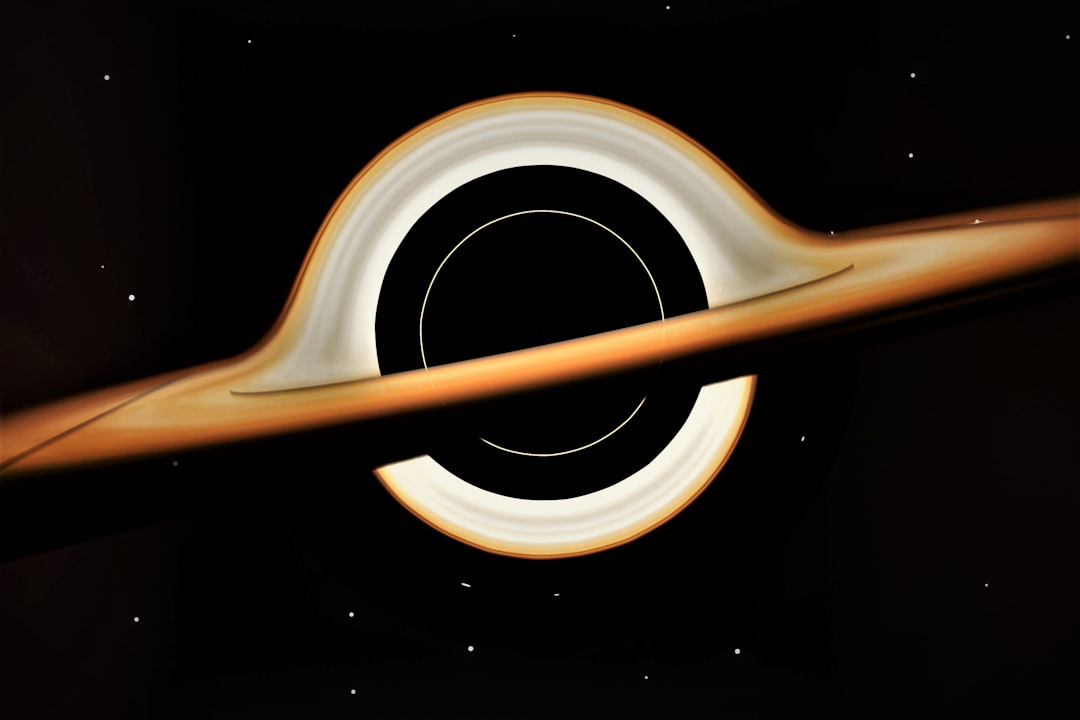
The presence of a black hole within our solar system, a region conventionally understood as a gravitationally bound star system comprising the Sun and the objects orbiting it, represents a hypothetical scenario with profound implications. Such an event would fundamentally alter the dynamics, habitability, and ultimate fate of all celestial bodies residing within this orbital framework. This article explores the multifaceted impacts of such an occurrence, utilizing scientific principles and extrapolating from known black hole characteristics.
The introduction of a black hole into the solar system would immediately establish a new gravitational center, one far more massive and compact than the Sun. Its immense gravitational pull would exert an unprecedented influence, altering the delicate orbital equilibrium established over billions of years.
The Sun’s Subordination
Should a black hole, even one of stellar mass, enter the solar system, the Sun would likely find its dominant position challenged or usurped. Its relatively gentle gravitational field, which orchestrates the orbits of planets, asteroids, and comets, would be severely perturbed.
Dual-Star System Formation
If the black hole were of comparable mass to the Sun, a binary star system, or rather a star-black hole binary, might form. The Sun would then orbit the black hole, creating a highly unusual celestial arrangement. The implications for the inner solar system, now subjected to two competing gravitational sources, would be chaotic.
The Sun’s Ejection or Capture
A more massive black hole could potentially eject the Sun from the solar system entirely, flinging it into interstellar space. Conversely, a less massive but nearby black hole might find itself captured into an orbit around the Sun, though its influence on the outer planets would still be significant.
Planetary Orbital Instability
The planets, currently locked in stable, elliptical orbits around the Sun, would experience catastrophic gravitational perturbations. Their trajectories would become unpredictable, akin to billiard balls on a tilted table during an earthquake.
Resonant Interactions
The influx of a new, massive gravitational body would introduce complex resonant interactions. Planets that once maintained stable orbital periods might find themselves in highly asynchronous resonance with the black hole, leading to increased eccentricity and potential collision courses.
Ejection from the Solar System
Many planets, particularly those in the outer solar system, could be ejected from the solar system altogether, flung into the cold vacuum of interstellar space. These rogue planets would then continue their journey through the galaxy devoid of a parent star’s warmth.
Collision Cascades
Gravitational chaos would inevitably lead to an increase in collisions. Asteroids, comets, and even planets could be knocked from their orbits onto paths that intersect with one another, resulting in high-energy impacts that would reshape planetary surfaces and potentially generate massive debris fields.
In exploring the intriguing possibilities of cosmic phenomena, one might find it fascinating to read about the implications of a black hole entering our solar system. Such an event could drastically alter the gravitational dynamics of our celestial neighborhood, potentially affecting the orbits of planets and other celestial bodies. For a deeper understanding of this topic, you can refer to a related article that delves into the potential consequences and scientific theories surrounding black holes and their interactions with solar systems. Check it out here: What Happens If a Black Hole Enters Our Solar System.
The Habitable Zone’s Annihilation
The concept of a habitable zone, often dubbed the “Goldilocks zone,” relies intricately on the radiant energy output of a star. The introduction of a black hole would profoundly disrupt this delicate balance, rendering the region around the Sun inhospitable to life as we understand it.
Loss of Solar Irradiance
Even if the Sun were not directly ejected or destroyed, its position relative to the planets would become highly volatile. Planets might spend extended periods much closer to or much farther from the Sun, experiencing extreme temperature fluctuations.
Orbital Eccentricity Increases
The gravitational influence of the black hole would likely increase the eccentricity of planetary orbits. This means planets would experience vast swings in their distance from the Sun, leading to periods of intense heat followed by prolonged periods of extreme cold.
Tidal Heating and Cooling
The combined gravitational stresses from the Sun and the black hole could induce tidal heating within the planets, particularly those closer to either body. Conversely, planets flung to the outer reaches of the system would experience drastic cooling.
Black Hole Radiation and Accretion Disk Formation
While black holes themselves are famously dark, they are often surrounded by accretion disks—swirling masses of superheated gas and dust that emit intense radiation across the electromagnetic spectrum.
X-ray and Gamma-ray Bursts
As matter falls into the black hole, it can form an accretion disk. The extreme temperatures and pressures within this disk would generate prodigious amounts of X-rays and gamma rays. These high-energy photons are lethal to most known life forms. Earth and any other potentially habitable planets would be subjected to continuous bombardment.
Stellar Winds from Accretion Disks
Accretion disks can also produce powerful outflows, or “winds,” of charged particles. These winds, moving at relativistic speeds, would further erode planetary atmospheres, stripping away protective layers and exposing surfaces to the harsh realities of space.
Geological and Geophysical Cataclysms
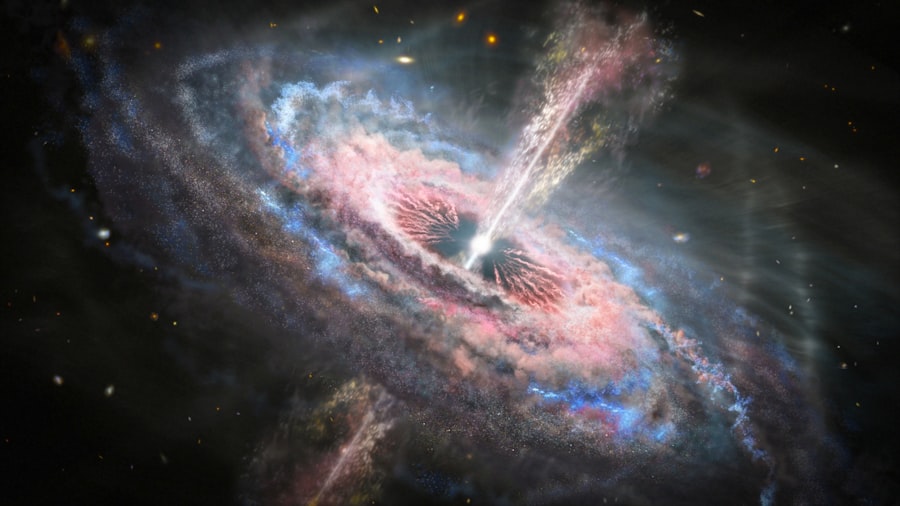
The gravitational forces of a black hole would not only affect orbital mechanics but would also have profound consequences for the internal structures and geological processes of planets and other celestial bodies.
Planetary Core Destabilization
The immense tidal forces exerted by a nearby black hole would stretch and compress planetary bodies, potentially destabilizing their internal structures.
Increased Volcanic Activity
On planets with molten cores, such as Earth, these tidal stresses could lead to a massive increase in volcanic activity and seismic events. The internal heat generated by these forces could cause widespread volcanism, reshaping continents and altering atmospheric composition.
Resurfacing Events
The constant flexing and stretching could trigger global resurfacing events, similar to those observed on Jupiter’s moon Io, fundamentally altering planetary landscapes and destroying any existing surface features.
Atmospheric Stripping
Planetary atmospheres, held in place by their parent body’s gravity, would be vulnerable to the black hole’s influence.
Gravitational Drag
The direct gravitational pull of the black hole could directly strip away the upper layers of planetary atmospheres, particularly those of less massive planets. These atmospheric gases would then be drawn towards the black hole or flung into space.
Solar Wind Interaction (Enhanced)
Even if the Sun remained, the altered orbital environment and potentially increased solar activity due to the black hole’s influence could exacerbate the stripping effects of stellar winds, further accelerating atmospheric loss.
The Fate of Terrestrial Life
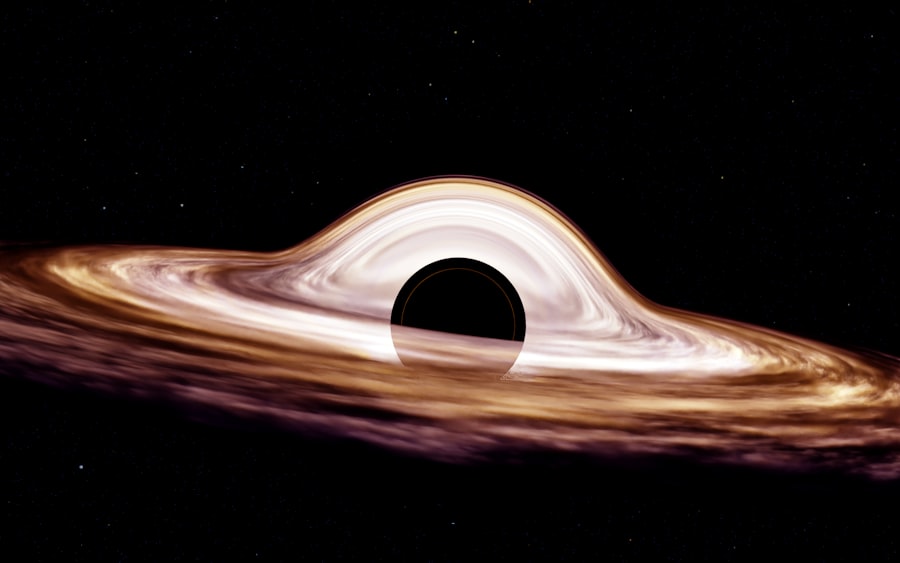
For Earth, the introduction of a black hole would spell the unequivocal end of life as we know it. The interwoven network of environmental factors that support terrestrial biodiversity would be irrevocably dismantled.
Extinction-Level Events
Multiple, cascading extinction-level events would unfold simultaneously, leaving no sanctuary for complex life.
Radiation Poisoning
The constant bombardment of X-rays and gamma rays from the black hole’s accretion disk would rapidly sterilize the surface of Earth. Without a thick, protective atmosphere, life would be subjected to lethal doses of radiation.
Climate Catastrophe
The extreme temperature swings, combined with mass volcanic eruptions and atmospheric loss, would trigger a runaway climate catastrophe. Oceans would either boil away or freeze solid, and terrestrial environments would become uninhabitable.
Resource Scarcity
Even if pockets of life could theoretically endure the initial onslaught, the subsequent destruction of planetary environments would eliminate access to essential resources, including liquid water, breathable air, and viable ecosystems for sustenance.
The Search for Extraterrestrial Life: A Lost Cause
The presence of a black hole would effectively make the solar system a sterile environment, ending any prospects for the emergence or persistence of extraterrestrial life within its bounds.
Unsuitable Conditions for Abiogenesis
The extreme environmental conditions – intense radiation, temperature fluctuations, and gravitational chaos – would utterly preclude the chemical processes necessary for abiogenesis and the subsequent evolution of complex life.
Erasure of Pre-existing Life
Any existing life forms, from microscopic organisms to complex multi-cellular beings, would be swiftly eradicated by the overwhelming forces unleashed by the black hole. The potential for a “second genesis” would be non-existent.
If a black hole were to enter our solar system, the consequences could be catastrophic, altering the orbits of planets and potentially drawing celestial bodies into its gravitational pull. For a deeper understanding of the implications of such an event, you can explore a related article that discusses the various scenarios and outcomes that could arise from a black hole’s proximity to our solar system. This insightful piece can be found at My Cosmic Ventures, where you can learn more about the mysteries of black holes and their effects on the universe.
Detecting the Intrusion and Future Observations
| Metric | Estimated Value/Effect | Description |
|---|---|---|
| Black Hole Mass | Varies (e.g., 5 to 10 solar masses for a stellar black hole) | Determines gravitational influence on solar system bodies |
| Gravitational Disruption Radius | Several AU (Astronomical Units) | Distance within which planetary orbits would be significantly altered |
| Effect on Earth’s Orbit | Potentially destabilized or ejected from orbit | Depends on proximity and mass of black hole |
| Solar System Stability | Highly compromised | Planets, asteroids, and comets could be pulled into new orbits or ejected |
| Radiation Emission | Possible X-ray and gamma-ray bursts | From accretion of solar system material onto black hole |
| Timeframe of Effects | Days to years | Depending on black hole velocity and trajectory through solar system |
| Likelihood of Event | Extremely low | Black holes passing through solar system are very rare |
While a black hole’s direct entry into our solar system is a highly improbable event, the hypothetical scenario underscores the importance of ongoing astronomical observation and the development of advanced detection technologies.
Gravitational Wave Astronomy
The most direct evidence of a black hole’s presence would likely come from its gravitational waves, ripples in spacetime generated by its movement and interaction with other massive objects.
LIGO/Virgo Detections
Ground-based observatories like LIGO and Virgo, designed to detect these minuscule distortions in spacetime, would be sensitive to the gravitational waves emitted by a black hole moving through the solar system or interacting with the Sun.
Future Space-Based Observatories
Future space-based gravitational wave observatories, such as LISA, would provide even greater sensitivity, allowing for the detection of lower-frequency gravitational waves and offering earlier warning of such an event.
Electromagnetic Signatures
While black holes are dark, matter accreting onto them would produce strong electromagnetic signals across various wavelengths.
X-ray and Gamma-ray Telescopes
Space-based X-ray and gamma-ray telescopes would quickly detect the characteristic high-energy emissions from an accretion disk formed around a solar system black hole. This would be a crucial indicator of its presence.
Radio and Optical Observations
The disturbance of interstellar gas and dust by the black hole’s gravitational field, or the interaction of its accretion disk with diffuse matter, could also produce detectable radio and optical signals, providing further clues to its location and properties.
Astrometry and Stellar Aberration
Changes in the apparent positions and motions of stars, as observed from Earth, could indicate the gravitational influence of a massive unseen object.
Precision Astrometry Missions
Missions like Gaia, capable of precisely measuring the positions and motions of billions of stars, would be instrumental in detecting the subtle astrometric shifts caused by the gravitational lens effect or the direct pull of a black hole.
Perturbations of Planetary Orbits
Even before direct detection, long-term monitoring of planetary orbits might reveal anomalies and deviations from predicted paths, signaling the presence of an unseen massive perturber within the solar system. The discovery of Neptune, for example, followed precisely such an astrometric detective story.
In conclusion, the entry of a black hole into our solar system, while a remote possibility, represents an existential threat of unparalleled magnitude. Its gravitational dominance would unravel the delicate orbital ballet of planets, pulverize the conditions for life, and expose celestial bodies to unimaginable energies. This thought experiment serves as a stark reminder of the dynamic and sometimes violent nature of the cosmos, emphasizing the critical importance of understanding fundamental astrophysical processes and continually advancing our observational capabilities to better comprehend both the remote and hypothetical threats that might one day emerge from the depths of space.
FAQs
1. What would happen if a black hole entered our solar system?
If a black hole entered our solar system, its strong gravitational pull could disrupt the orbits of planets, asteroids, and other objects. Depending on its size and proximity, it might cause planets to be pulled out of their orbits, collide with each other, or even be swallowed by the black hole.
2. Could a black hole passing through the solar system destroy Earth?
If a black hole passed very close to Earth, its gravity could cause severe tidal forces, potentially leading to catastrophic geological and atmospheric effects. However, the likelihood of a black hole passing close enough to directly destroy Earth is extremely low.
3. How would scientists detect a black hole entering our solar system?
Scientists would detect a black hole by observing its gravitational effects on nearby objects, such as changes in the orbits of planets or asteroids. Additionally, if the black hole accreted matter, it might emit X-rays or other radiation detectable by telescopes.
4. Are there any black holes near our solar system currently?
No known black holes are currently near our solar system. The closest known black holes are many light-years away, posing no threat to our planetary system.
5. Can a black hole enter the solar system without being noticed?
It is highly unlikely that a black hole could enter the solar system without being noticed. Due to their strong gravitational influence, even a small black hole would affect the orbits of planets and other objects, making its presence detectable by astronomers.