
The vast expanse of the cosmos, a domain often perceived as a canvas for grand adventures, may ultimately be defined by an overwhelming silence. The future of cosmic isolation, the persistent lack of detected extraterrestrial intelligence, presents a complex tapestry woven from scientific observation, theoretical extrapolation, and philosophical inquiry. This article delves into the multifaceted explanations and potential implications of our current solitude in the universe.
The observation that the vastness of space and time suggests a high probability of the existence of extraterrestrial civilizations, yet we have no evidence of them, is known as the Fermi Paradox. This paradox, named after physicist Enrico Fermi, is not a single argument but rather a collection of related questions and potential resolutions. It acts as a foundational pillar upon which discussions about cosmic isolation are built.
The Scale of the Universe and Probability
The sheer scale of the observable universe is a primary driver of the Fermi Paradox.
Billions of Galaxies, Trillions of Stars
Estimates suggest that there are hundreds of billions of galaxies in the observable universe, each containing hundreds of billions of stars. This astronomical number of stars, many of which are likely to host planetary systems, statistically increases the probability of life arising elsewhere. The raw numbers, when considered in isolation, seem to shout that we cannot be alone. It is akin to expecting to find a single grain of sand on an infinite beach – the odds strongly suggest its existence, even if it remains elusive.
The Goldilocks Zone and Habitable Planets
The concept of the “Goldilocks Zone” – the region around a star where a planet can maintain liquid water on its surface – plays a crucial role. As our understanding of exoplanets grows, so does the number of planets discovered within these habitable zones.
Exoplanet Discoveries: A Nascent Understanding
The advent of telescopes like Kepler and TESS has revolutionized our ability to detect exoplanets. We are no longer speculating about their existence; we are cataloging them. While the precise conditions for habitability are still being refined, the sheer volume of potentially habitable worlds identified suggests that Earth-like conditions are not a galactic rarity. This abundance fuels the expectation that life, in some form, should have arisen and evolved elsewhere.
The Great Filter: Obstacles to Interstellar Civilization
The “Great Filter” hypothesis proposes that there are one or more significant evolutionary or technological hurdles that prevent life from progressing to an observable, interstellar stage. These filters can exist at any point along the evolutionary timeline, from the origin of life to the development of advanced technological civilizations.
Early Filters: The Spark of Life
One possibility is that the spontaneous generation of life, the transition from non-living matter to self-replicating entities, is an exceptionally rare event.
Abiogenesis: A Cosmic Bottleneck?
The precise mechanisms of abiogenesis – how life arose from non-living matter – remain one of science’s most profound unanswered questions. If this process is incredibly complex and requires a highly specific confluence of environmental conditions, then Earth might be a remarkably unique incubator. The ignition of life could be a cosmic lottery with extremely long odds, and we might have won.
Late Filters: Civilizational Self-Destruction
Alternatively, the Great Filter could lie in the future, representing challenges that advanced civilizations inevitably face and fail to overcome.
Technological Catastrophies: A Self-Inflicted Silence
The development of advanced technologies, particularly those with destructive potential, could lead to the demise of civilizations before they have a chance to become interstellar.
Nuclear Winter and Ecological Collapse
The specter of nuclear war, or widespread environmental degradation leading to ecological collapse, are stark reminders of the self-destructive capabilities inherent in technological advancement. A civilization that reaches a certain technological threshold and fails to manage its power responsibly might simply burn itself out. Imagine a wildfire that consumes its own fuel, leaving only ashes.
Unforeseen Technological Risks
Beyond known threats, there are always unforeseen risks associated with new technologies. The emergence of advanced artificial intelligence, unchecked genetic engineering, or even novel forms of energy production could pose existential threats that are difficult to predict or control.
In exploring the future of cosmic isolation, it’s intriguing to consider how advancements in technology and our understanding of the universe may shape our experience of solitude in space. A related article that delves deeper into this topic can be found at My Cosmic Ventures, where the implications of long-term space travel and the psychological effects of isolation are examined. This piece provides valuable insights into how humanity might adapt to the vast emptiness of the cosmos and what it means for our future explorations.
Explanations for Cosmic Isolation
Numerous theories attempt to explain why we have not yet encountered evidence of extraterrestrial intelligence. These explanations range from the mundane to the speculative, each offering a piece of the puzzle of our apparent loneliness.
The Rare Earth Hypothesis: Uniqueness as a Rule
The Rare Earth Hypothesis suggests that the specific combination of geological, astronomical, and biological factors that allowed complex life to arise and evolve on Earth is exceedingly uncommon. This hypothesis posits that Earth is not just a habitable planet, but a rarely habitable planet, requiring a precise constellation of circumstances.
Planetary Requirements for Complex Life
Life as we know it, particularly complex multicellular life, requires a remarkably stable set of conditions over vast timescales.
Stable Star and Orbit
The Sun’s stability as a G-type main-sequence star, with a relatively low rate of flaring activity, has been crucial for the long-term evolution of life. Planets orbiting more erratic stars might face constant sterilization events. The precise orbital path within the habitable zone, avoiding extreme temperature fluctuations, is also critical.
Plate Tectonics and Magnetic Field
Plate tectonics plays a vital role in regulating Earth’s climate by recycling carbon and producing necessary minerals. A global magnetic field, generated by Earth’s molten core, shields the surface from harmful solar and cosmic radiation, preventing atmospheric stripping and preserving life. The absence of these features on other planets could render them unsuitable for complex life.
Large Moon and Tidal Forces
Earth’s large Moon stabilizes its axial tilt, preventing extreme climate variations over geological timescales. Tidal forces generated by the Moon also played a role in early life’s evolution, potentially aiding in the movement of molecules and the development of cellular structures.
Astrobiological Requirements: The Unlikely Path
Even with a suitable planet, the specific biological pathways that led to intelligence might be improbable.
The Evolutionary Ladder to Intelligence
The evolution of intelligence, particularly human-level intelligence capable of developing advanced technology, involves a complex series of evolutionary steps. The presence of specific evolutionary pressures, contingencies, and perhaps even random chance, could make this trajectory less common than we might assume. Imagine a vast, intricate clockwork mechanism, where each gear must turn in precisely the right sequence for the final chime to sound. If any gear is missing or misaligned, the clock remains silent.
The Zoo Hypothesis: Deliberate Non-Interference
The Zoo Hypothesis proposes that extraterrestrial civilizations exist and are aware of us, but they deliberately choose not to make contact, treating Earth as a protected sanctuary or a living experiment.
A Policy of Non-Intervention
This hypothesis draws parallels to human behavior in observing wildlife reserves, where interaction is minimized to allow natural development.
Prime Directive Analogue
Extraterrestrial intelligences, having perhaps advanced far beyond our current understanding, may have adopted a “Prime Directive” analogous to the fictional Star Trek concept, forbidding interference with developing civilizations. Their motivation could be ethical, scientific, or simply a disinterest in disrupting nascent cultures.
Waiting for Maturity
They might be waiting for humanity to reach a certain stage of technological or social maturity before initiating contact. This could be a period during which we demonstrate our capacity for interstellar communication or responsible stewardship of our planet.
The Dark Forest Theory: A Universe of Precaution
The Dark Forest Theory, popularized by Liu Cixin’s science fiction novel “The Three-Body Problem,” suggests that the universe is a “dark forest” where every civilization is a hunter lurking in the shadows, fearing all other life. In this scenario, broadcasting one’s existence is an invitation to annihilation.
The Danger of Revealing Oneself
This theory posits that any civilization that reveals its location and capabilities risks being preemptively destroyed by a more advanced, fearful civilization.
Survival Through Stealth
Under the Dark Forest Theory, the most rational strategy for survival is to remain silent and unseen. Civilizations that achieve interstellar capability would do so by becoming exceptionally skilled at stealth, actively avoiding detection, and perhaps even eliminating other emerging signals.
Hunter-Prey Dynamics
Emergent signals, like those from our radio telescopes, are seen as the equivalent of a match struck in a dark forest, attracting the attention of predators. The vast silence of the cosmos, therefore, is not emptiness, but a testament to the extreme caution and successful concealment of its inhabitants.
The Vastness of Space and Time: Challenges to Detection

Even if life and intelligent civilizations are not rare, the sheer scale of the universe presents significant obstacles to their detection or interaction.
The Tyranny of Distance
The immense distances between star systems pose an insurmountable challenge for interstellar travel and even for communication.
Interstellar Travel: An Unfulfilled Dream
Current scientific understanding suggests that interstellar travel, as depicted in science fiction, is either impossible or prohibitively resource-intensive with our present or foreseeable technology. The vast distances mean that even traveling at near light-speed would involve voyages lasting generations.
The Speed of Light Limit
The fundamental speed limit imposed by the laws of physics – the speed of light – means that even reaching the nearest star would take over four years. For any meaningful exploration or communication to occur across interstellar distances, we would need breakthroughs in physics that are beyond our current comprehension. Imagine trying to send a letter to someone on the other side of the planet and expecting a reply within minutes – the limitations are inherent in the medium.
Signal Degradation and Detection Limits
The signals that extraterrestrial civilizations might send, or that we might send, are subject to degradation over vast distances, making them increasingly difficult to detect and decipher.
Weak Signals in Cosmic Noise
Radio and optical signals weaken with the square of the distance, becoming fainter than the background cosmic noise. Detecting a faint, deliberate signal amidst this cacophony requires incredibly sensitive instruments and advanced signal processing techniques.
The ‘SETI’ Dilemma: Listening for a Needle in a Haystack
The Search for Extraterrestrial Intelligence (SETI) projects are akin to searching for a specific needle in an infinite haystack. The challenge lies not only in the faintness of potential signals but also in determining where and when to listen. A hypothetical alien broadcast might have ceased millennia ago, or it might be directed at a different part of the galaxy.
The Timescale of Civilizations
Civilizations, even advanced ones, may have lifespans that are infinitesimally short when compared to the cosmic timescale.
Ephemeral Civilizations: A Cosmic Blink
Advanced technological civilizations might be relatively short-lived phenomena, appearing and disappearing on geological timescales.
The Rise and Fall of Empires
History on Earth demonstrates the transient nature of civilizations. Empires rise and fall, and the technologies that define them can become obsolete or lead to their own undoing. If this pattern holds true for extraterrestrial civilizations, the window of opportunity for us to detect them, or for them to detect us, might be remarkably small.
Technological Singularity and Beyond
It is also possible that advanced civilizations reach a point of technological singularity, transforming themselves into forms of existence that are unrecognizable or undetectable by our current methods, perhaps transcending physical reality.
The Search Continues: Our Enduring Curiosity
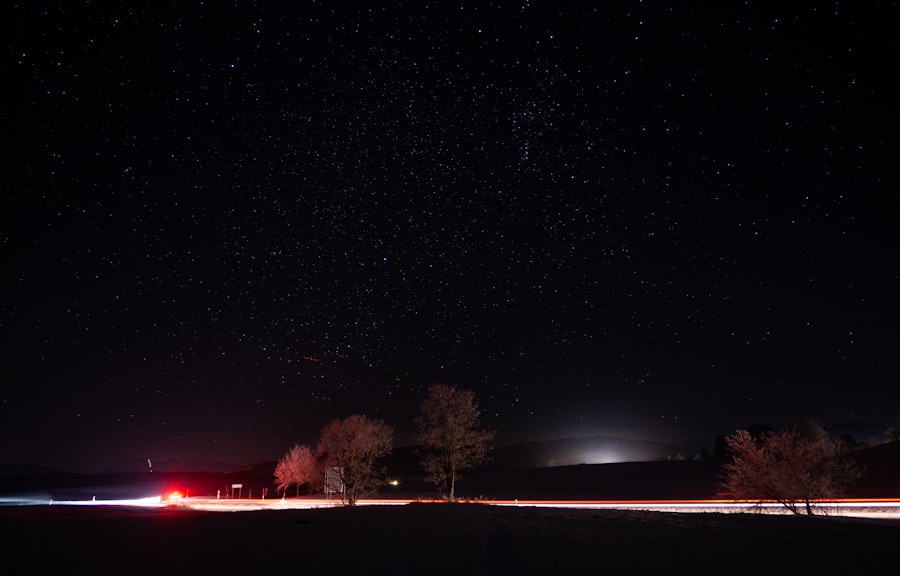
Despite the profound implications of cosmic isolation, humanity’s drive to understand its place in the universe continues unabated.
Evolving Search Strategies
The methods and focus of the search for extraterrestrial intelligence are constantly evolving.
Beyond Radio Waves: New Forms of Detectable Signatures
While radio waves have been the primary focus of SETI, researchers are increasingly considering other potential technosignatures, such as unusual atmospheric compositions on exoplanets, artificial megastructures, or even evidence of technological waste.
Biosignatures vs. Technosignatures
The detection of biosignatures – indicators of life itself, such as the presence of oxygen or methane in an exoplanet’s atmosphere – is a stepping stone. The identification of technosignatures – evidence of technology – is the ultimate goal in confirming the presence of intelligent life.
Interstellar Communication Initiatives
Some initiatives are exploring the possibility of actively broadcasting messages into space, though this remains a controversial topic due to the potential risks outlined by theories like the Dark Forest.
METI (Messaging Extraterrestrial Intelligence)
METI projects involve sending deliberate messages to specific star systems. The ethical and strategic considerations of such actions are still a subject of intense debate within the scientific community.
Philosophical and Societal Implications
The question of our cosmic solitude has profound philosophical and societal implications for humanity.
The Uniqueness of Humanity: A Burden or a Privilege?
If we are indeed alone, or among the very few intelligent species in the universe, it places a unique responsibility on humanity.
Preserving Life and Consciousness
The potential uniqueness of Earth’s biosphere and the development of human consciousness could be seen as an extraordinary cosmic event that we are obligated to preserve. The weight of this potential solitude might encourage greater introspection and a more profound appreciation for our existence.
Redefining Our Place in the Cosmos
The realization of cosmic isolation, or its continued confirmation, would undoubtedly reshape our understanding of ourselves and our place in the grand scheme of the universe. It would shift us from potentially one among many intelligent species to a solitary beacon of consciousness in an otherwise silent expanse.
The future of cosmic isolation is a fascinating topic that delves into the potential scenarios humanity may face as the universe continues to expand and galaxies drift apart. For those interested in exploring this subject further, a related article can provide deeper insights into the implications of such isolation on our understanding of existence and the universe. You can read more about these intriguing concepts in the article found at My Cosmic Ventures, where the complexities of cosmic isolation are discussed in detail.
The Future of Cosmic Isolation: An Ongoing Enigma
| Metric | Description | Current Value/Estimate | Future Projection |
|---|---|---|---|
| Cosmic Expansion Rate (Hubble Constant) | Rate at which the universe is expanding | ~70 km/s/Mpc | Expected to remain constant or increase due to dark energy |
| Dark Energy Density | Energy density causing accelerated expansion | ~68% of total energy density | Likely to dominate, driving galaxies apart indefinitely |
| Observable Universe Radius | Maximum distance from which light has reached us | ~46.5 billion light years | Will effectively shrink as distant galaxies move beyond horizon |
| Number of Observable Galaxies | Galaxies currently visible from Earth | ~2 trillion | Will decrease as galaxies recede beyond cosmic horizon |
| Cosmic Isolation Timeline | Timeframe when galaxies become unreachable | Currently ongoing | Within tens of billions of years, most galaxies will be isolated |
| Temperature of Cosmic Microwave Background (CMB) | Residual radiation from Big Bang | 2.7 K | Will continue to cool, approaching absolute zero over trillions of years |
The future of cosmic isolation is not a fixed destination but an ongoing narrative, shaped by scientific discovery and philosophical contemplation.
The Possibility of Future Contact
While current evidence points to isolation, the possibility of future contact remains open.
Breakthroughs in Detection Technology
Advancements in telescope technology, AI-driven data analysis, and novel detection methodologies could dramatically improve our ability to find evidence of extraterrestrial life and intelligence. A subtle anomaly that is currently overlooked might become glaringly obvious with next-generation instruments.
Unforeseen Cosmic Events
Unforeseen cosmic events, such as deliberate contact from an advanced civilization or the accidental discovery of alien artifacts, could dramatically alter our current understanding of isolation overnight. Imagine stumbling upon an ancient, derelict spacecraft – a clear testament to another civilization’s existence.
The Evolving Definition of Intelligence
Our understanding of what constitutes “intelligence” might also need to broaden as we continue our exploration.
Non-Carbon Based Life and Alien Cognition
The possibility of life based on different chemistries, or advanced intelligences with fundamentally alien modes of cognition, could mean that we are currently looking for the wrong signs or interpreting them incorrectly. Our current definition of intelligence is inherently anthropocentric.
Searching for the Unimaginable
The true challenge may lie in recognizing intelligence that is so utterly alien that it exists beyond our current conceptual frameworks, like trying to explain color to someone who has only ever known black and white.
The Enduring Mystery
Ultimately, the future of cosmic isolation remains an enduring mystery. The silence of the universe is a profound enigma, prompting us to look both outward with ever-increasing curiosity and inward with a deeper appreciation for the rarity and complexity of life itself. The questions we ask about our isolation will continue to drive scientific inquiry and philosophical debate, shaping our understanding of existence for generations to come. The cosmic stage may appear empty now, but the play is far from over, and the final act remains unwritten.
FAQs
What is cosmic isolation?
Cosmic isolation refers to the eventual state of the universe where galaxies, stars, and other cosmic structures become increasingly separated due to the expansion of the universe, leading to isolated pockets of matter with little to no interaction between them.
Why is cosmic isolation expected to occur in the future?
Cosmic isolation is expected because the universe is expanding at an accelerating rate, driven by dark energy. Over billions of years, this expansion will cause galaxies outside our local group to move beyond the observable horizon, effectively isolating them from each other.
How will cosmic isolation affect the observable universe?
As cosmic isolation progresses, distant galaxies will recede beyond the cosmic event horizon, making them invisible to observers in our galaxy. This will limit the observable universe to only the local group of galaxies, reducing the amount of information and cosmic structures accessible to future astronomers.
What role does dark energy play in cosmic isolation?
Dark energy is the mysterious force causing the accelerated expansion of the universe. Its influence increases over time, pushing galaxies apart faster and leading to the eventual isolation of cosmic structures as they move beyond each other’s observable reach.
Can cosmic isolation impact the future of life or civilizations in the universe?
While cosmic isolation primarily concerns large-scale cosmic structures, it could indirectly impact future civilizations by limiting access to external resources and information from other galaxies. However, this process occurs over extremely long timescales, far beyond the current age of the universe.