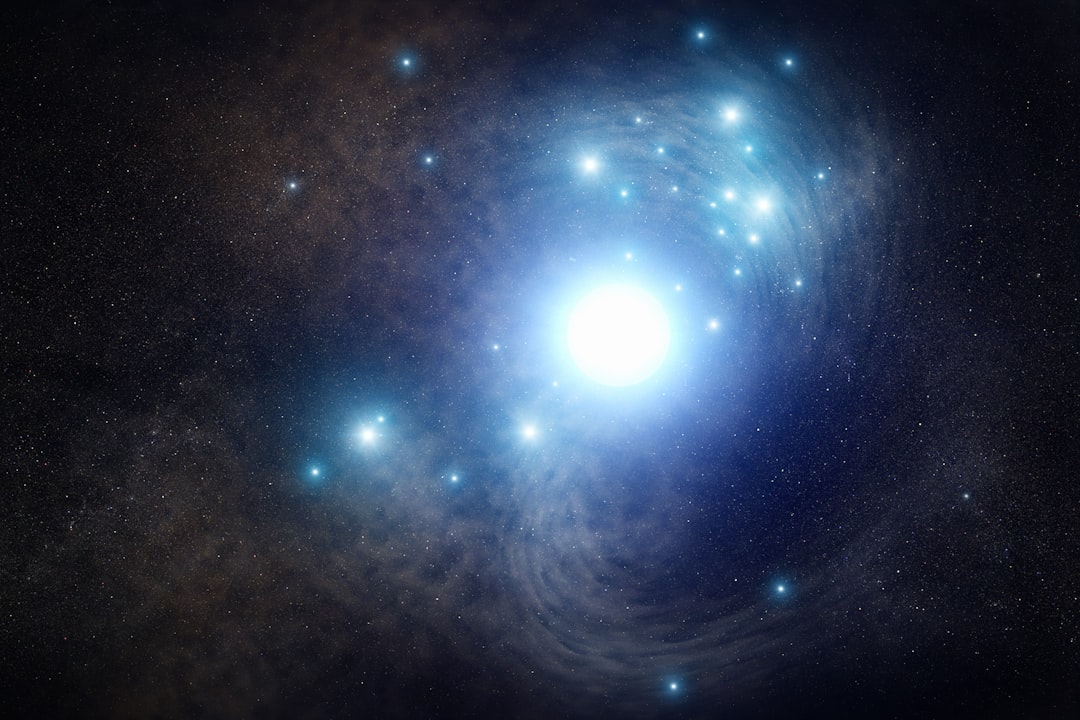
The Cosmic Infall: Approaching Asymptotic Limits
For millennia, humanity has gazed upwards, pondering the vast expanse of the cosmos and the fundamental laws that govern its behavior. This ongoing scientific inquiry has revealed a universe of astonishing complexity and profound beauty, yet it also points towards inherent limitations, principles that suggest certain outcomes are not merely improbable, but fundamentally unattainable. The concept of “The Cosmic Infall: Approaching Asymptotic Limits” delves into these boundaries, exploring how the very fabric of reality guides universal evolution towards such ultimate, uncrossable lines.
The First Law of Thermodynamics, the principle of conservation of energy, states that energy cannot be created or destroyed, only transformed. This fundamental tenet acts as a cosmic bedrock, laying down the initial conditions for all interactions. However, it is the Second Law, the law of entropy, that truly dictates the direction of universal progress. Entropy, often described as a measure of disorder or randomness, has a relentless tendency to increase in isolated systems. The universe, as an aggregate of all known systems, is not strictly isolated, but its overall trend, as far
FAQs
What is asymptotic cosmic infall?
Asymptotic cosmic infall refers to the theoretical process by which matter in the universe gradually falls into gravitational wells, such as galaxies or clusters, over very long timescales, approaching a steady-state or asymptotic behavior.
Why is asymptotic cosmic infall important in cosmology?
It helps scientists understand the large-scale structure formation and evolution of the universe by describing how matter accumulates around massive objects, influencing galaxy formation and the distribution of dark matter.
What physical forces drive asymptotic cosmic infall?
Gravitational attraction is the primary force driving cosmic infall, pulling matter toward regions of higher density, while cosmic expansion and dark energy can counteract or modify the infall dynamics.
How is asymptotic cosmic infall modeled in astrophysics?
It is typically modeled using solutions to the equations of general relativity and fluid dynamics, often employing self-similar or asymptotic solutions to describe the behavior of infalling matter over time.
What observational evidence supports the concept of cosmic infall?
Observations of galaxy clusters, large-scale velocity flows, and the distribution of matter inferred from gravitational lensing and cosmic microwave background anisotropies provide indirect evidence for ongoing cosmic infall processes.