The Cosmic Hard Drive: Is There a Capacity Limit?
The universe, in its vast and enigmatic immensity, presents a compelling analogy: the cosmic hard drive. Much like a digital storage device, it holds within it an immeasurable quantity of information – the blueprints of galaxies, the history of stars, the quantum states of subatomic particles. The question inevitably arises: does this cosmic repository have a finite capacity? Are we hurtling towards a cosmic storage limit, or is the universe an eternally expanding hard drive, capable of accommodating an infinite amount of data? Exploring this question delves into fundamental physics, cosmology, and the very nature of reality.
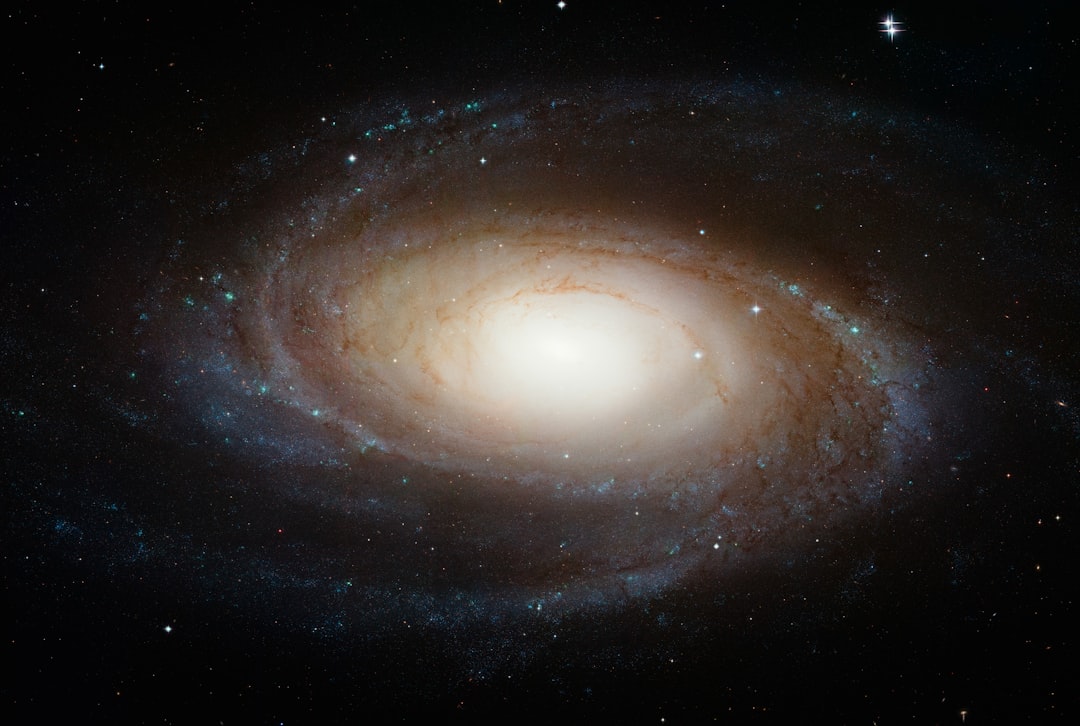
Before we can contemplate a capacity limit, it is crucial to appreciate the sheer scale of the universe and the types of “data” it contains. The observable universe alone is estimated to be approximately 93 billion light-years in diameter. Within this vast expanse reside an estimated 100 billion to 2 trillion galaxies, each containing hundreds of billions of stars.
Stars as Information Nodes
Each star represents a complex thermodynamic system, a vast fusion reactor that has been burning for millions, billions, or even trillions of years. The life cycle of a star, from its birth in a stellar nursery to its eventual demise as a white dwarf, neutron star, or black hole, is a narrative encoded in its composition, mass, temperature, and luminosity. These stellar properties, in turn, influence the formation and evolution of planetary systems, making each star a unique data point in the cosmic record. Imagine each star as a meticulously crafted sculpture, its form and texture telling a story of cosmic forces and chemical reactions.
Galaxies: Cosmic Libraries
Galaxies, the grand architects of the universe’s large-scale structure, are orders of magnitude more complex. They are intricate collections of stars, gas, dust, dark matter, and of course, the pervasive gravitational fields that bind them together. The distribution, size, and morphology of galaxies reveal information about the early universe, the influence of dark matter, and the ongoing processes of cosmic evolution. Think of galaxies as sprawling libraries, each volume within them representing a star or a planetary system, and the arrangement of these volumes revealing overarching trends and historical narratives.
The Cosmic Microwave Background: The Universe’s Baby Picture
Perhaps the most compelling snapshot of the early universe’s informational content is the Cosmic Microwave Background (CMB) radiation. This faint afterglow of the Big Bang carries information about the universe when it was only about 380,000 years old. The minuscule temperature fluctuations within the CMB are like encoded messages, revealing the initial conditions of the universe, its age, composition, and the seeds of future structure formation. The CMB acts as a single, incredibly detailed photograph capturing the nascent stages of cosmic information storage.
The concept of cosmic hard drive capacity limit theory has sparked intriguing discussions among scientists and enthusiasts alike. For a deeper exploration of this fascinating topic, you can read a related article that delves into the implications of information storage in the universe. This article provides insights into how the universe might be viewed as a vast information storage system, pushing the boundaries of our understanding of physics and cosmology. To learn more, visit this link.
Information Density: The Occupancy Rate of the Cosmic Hard Drive
The concept of information density is central to understanding whether there are limits to the universe’s storage capacity. In physics, information is deeply intertwined with entropy. High entropy states are generally considered to contain more information than low entropy states.
The Bekenstein Bound: A Theoretical Limit for a Black Hole
For a region of space with a given size and energy, there exists a theoretical upper limit to the amount of information it can contain. This is famously articulated by the Bekenstein bound, which states that the maximum entropy, and thus the maximum information, that can be contained within a region of space is proportional to the surface area of that region, not its volume. This is a counterintuitive notion, suggesting that information might be stored on the “surface” of a system rather than throughout its volume.
Black Holes: The Ultimate Cosmic Data Compressors
Black holes, with their immense gravitational pull, are considered the most efficient information storage devices in the universe. All matter and energy that falls into a black hole are thought to be compressed into a singularity, a point of infinite density. The entropy of a black hole is proportional to the area of its event horizon, the boundary beyond which nothing, not even light, can escape. This area-law behavior of black hole entropy is a strong indicator that information in our universe might be fundamentally holographic – encoded on a lower-dimensional surface. The event horizon of a black hole can be envisioned as a cosmic vault, where information is packed so densely that it defies our usual three-dimensional understanding.
The Holographic Principle: A Universe of Surfaces
The holographic principle, inspired by black hole thermodynamics, proposes that the description of a volume of space can be thought of as encoded on a lower-dimensional boundary. If this principle holds true for the entire universe, then the total information content of the universe might be limited by the surface area of its boundary (if it has one) or by the surface area of the observable universe. This suggests that even the vastness of the universe could, in principle, be described by a finite amount of information. This takes the “cosmic hard drive” analogy to a new level, suggesting the data isn’t stored in the depth of the drive, but on its shiny, reflective surface.
The Expansion of the Universe: A Growing Hard Drive or a Shrinking File System?
The ongoing expansion of the universe complicates the notion of a static storage limit. The universe is not only vast but also continuously growing.
The Observable Universe vs. The Entire Universe
It is crucial to distinguish between the observable universe and the entire universe. The observable universe is the portion of the cosmos from which light has had time to reach us since the Big Bang. This region is finite and expanding as space itself stretches. The entire universe, however, could be infinite. If the universe is infinite, then its potential capacity for information is also infinite in a very straightforward sense – there is simply more “space” to store it.
Dark Energy and Accelerated Expansion
The accelerated expansion of the universe, driven by dark energy, implies that galaxies are not only moving away from each other but are doing so at an increasing rate. This could lead to a scenario where distant galaxies eventually recede from us faster than the speed of light, effectively disappearing beyond our observable horizon.
The Cosmic Horizon: A Shifting Boundary
The cosmic horizon represents the limit of what we can currently observe. As the universe expands, this horizon also recedes. Simultaneously, as the universe ages, light from more distant regions has had more time to reach us, effectively increasing the size of the observable universe, albeit slowly. The relationship between the expansion and the observable horizon is a dynamic dance, a constant redrawing of the boundaries of our cosmic hard drive’s accessible sectors.
Fundamental Limits: Planck Scale and Quantum Gravity

At the most fundamental level, the universe operates according to the laws of quantum mechanics and general relativity. The interplay between these two theories, particularly in extreme conditions, might impose intrinsic limitations on information storage.
The Planck Length and Planck Time: The Universe’s Pixel Size
The Planck length (approximately 1.6 x 10^-35 meters) and Planck time (approximately 5.4 x 10^-44 seconds) are considered fundamental units of length and time in physics. It is theorized that below the Planck length, our current understanding of space and time breaks down, and quantum gravity effects become dominant. This might imply that space itself is quantized, like pixels on a screen, and that there’s a minimum unit of “storage space.” This is akin to asking if a digital image can be infinitely detailed, or if it’s limited by the resolution of its pixels.
Quantum Entanglement and Information Transfer
Quantum entanglement, a phenomenon where particles become correlated in such a way that they share the same fate, regardless of the distance separating them, plays a crucial role in how information is processed and potentially stored. While entanglement doesn’t allow for faster-than-light communication, it highlights the interconnectedness of information in the universe. The subtle correlations within entangled particles represent a form of complex, non-local information storage.
The Black Hole Information Paradox
The black hole information paradox—the apparent loss of information when matter falls into a black hole—is a significant challenge in theoretical physics. If information is truly lost, it would violate a fundamental tenet of quantum mechanics, which states that information cannot be destroyed. Proposed solutions, such as Hawking radiation carrying information away, or information being stored on the event horizon, suggest that information is preserved but its retrieval or deciphering is incredibly complex. This paradox is like a corrupted data file that defies standard recovery methods.
Recent discussions around the cosmic hard drive capacity limit theory have sparked interest in the implications of information storage in the universe. A fascinating article that delves deeper into this concept can be found at My Cosmic Ventures, where researchers explore how the universe might encode information and the potential limits of this storage capacity. This exploration raises intriguing questions about the nature of reality and the fundamental structure of the cosmos.
Theoretical Limits and the End of the Universe
| Metric | Value | Unit | Description |
|---|---|---|---|
| Estimated Maximum Information Storage | 10^92 | bits | Upper bound on information storable in the observable universe |
| Observable Universe Volume | 4 × 10^80 | cubic meters | Volume of the observable universe |
| Planck Area | 2.6 × 10^-70 | square meters | Smallest meaningful unit of area in quantum gravity |
| Holographic Principle Limit | Area / 4 | Planck units | Maximum entropy proportional to surface area, not volume |
| Black Hole Entropy (Bekenstein-Hawking) | k × A / (4 × l_p^2) | J/K (entropy units) | Entropy proportional to event horizon area |
| Speed of Light (c) | 3 × 10^8 | m/s | Fundamental constant used in cosmic calculations |
| Planck Length (l_p) | 1.616 × 10^-35 | meters | Fundamental length scale in quantum gravity |
Beyond the current observable universe, theoretical cosmological models offer scenarios that could delineate the universe’s ultimate capacity.
The Big Rip Scenario: A Universe Ripped Apart
One speculative scenario for the end of the universe is the “Big Rip.” In this scenario, the accelerating expansion driven by dark energy becomes so extreme that it eventually overcomes all fundamental forces, tearing apart galaxies, stars, planets, and even atoms themselves. If the Big Rip occurs, it suggests a destructive rather than a storage-limiting end, effectively wiping the cosmic hard drive clean.
The Big Crunch Scenario: A Return to Singularity
Conversely, the “Big Crunch” scenario posits that the expansion of the universe will eventually reverse, leading to a contraction and a collapse back into a singularity, similar to the conditions of the Big Bang. In this case, the universe’s history might be compressed back into a single point, a radical form of data erasure.
Oscillating or Cyclic Universes: Rewriting the Disk?
Some theories propose an oscillating or cyclic universe, where the universe undergoes repeated cycles of expansion and contraction. In such a model, the “cosmic hard drive” might be periodically erased and rewritten, with potential limitations on how much “new” information can be stored in each cycle. This is like a hard drive that gets formatted and then filled anew, with questions about whether the formatting process erases all prior data or leaves residual traces.
Ultimately, the question of whether the cosmic hard drive has a capacity limit remains one of the most profound and open questions in science. While our current understanding of physics suggests that information is conserved, the mechanisms by which it is stored and the ultimate fate of the universe could impose constraints. The universe’s immense scale, coupled with the enigmatic nature of dark energy and quantum gravity, means that the true capacity of this cosmic storage device remains largely unknown, a frontier of scientific exploration that continues to push the boundaries of our comprehension.
FAQs
What is the cosmic hard drive capacity limit theory?
The cosmic hard drive capacity limit theory suggests that there is a maximum amount of information or data that can be stored within the observable universe, analogous to the storage capacity of a hard drive. This concept is based on principles from physics, particularly quantum mechanics and cosmology.
What factors determine the cosmic hard drive capacity limit?
The limit is influenced by the physical properties of the universe, such as the amount of matter and energy, the size of the observable universe, and the fundamental limits imposed by the laws of physics, including the Bekenstein bound and the holographic principle.
How does the holographic principle relate to this theory?
The holographic principle posits that all the information contained within a volume of space can be represented as encoded data on the boundary of that space. This principle helps define the maximum information capacity of the universe, supporting the idea of a cosmic storage limit.
Is the cosmic hard drive capacity limit a proven scientific fact?
No, it is a theoretical concept derived from current understanding of physics and cosmology. While it is supported by mathematical models and physical laws, it remains a hypothesis subject to further research and validation.
What implications does the cosmic hard drive capacity limit have for science and technology?
Understanding this limit could impact fields such as quantum computing, information theory, and cosmology by defining fundamental constraints on data storage and processing. It also raises philosophical questions about the nature of information and the universe.