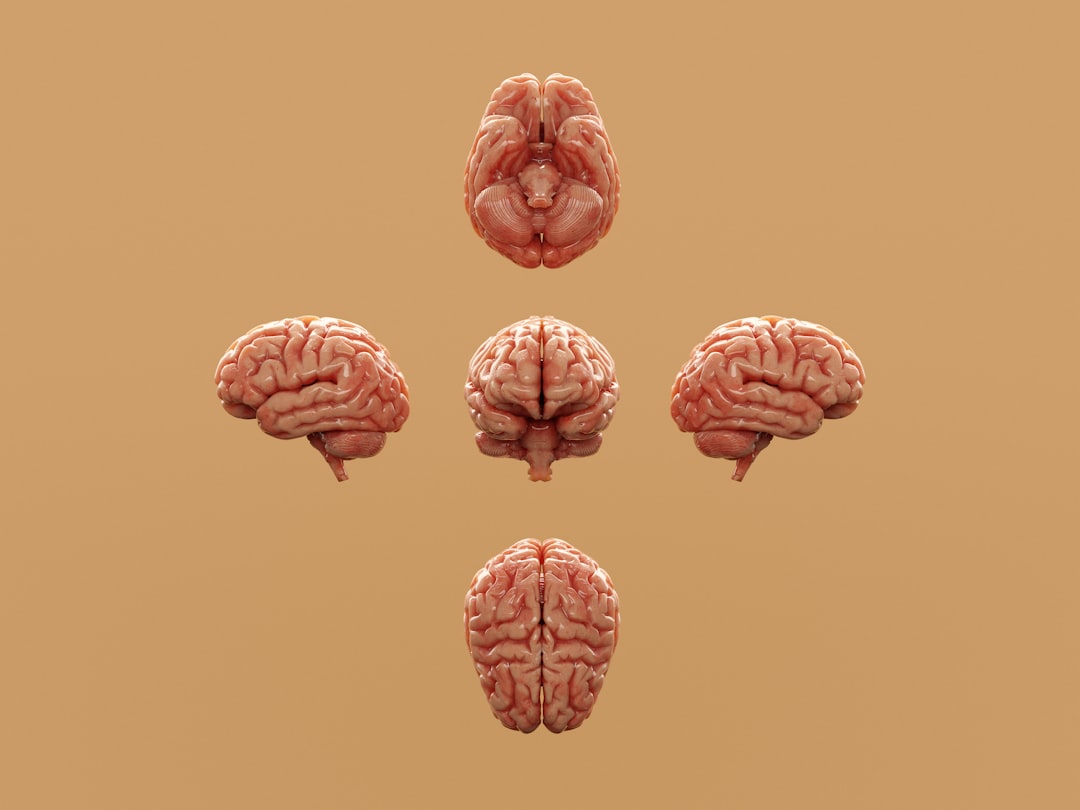
When you wake up in the morning, the world appears to simply be. You see your bedroom, you hear the birds chirping, you feel the sheets against your skin. It’s a seemingly straightforward, objective reality. But this outward presentation, your familiar and comforting experience of the world, is a masterful, continuous construction orchestrated by your brain. You’re not a passive observer receiving unfiltered data; you are an active participant, shaping and interpreting, building the very reality you perceive.
The Sensation Spectacle: Raw Data, Interpreted
Your journey into constructing reality begins with sensation. You take in light through your eyes, sound waves vibrate your eardrums, chemical compounds interact with taste buds and olfactory receptors, and pressure and temperature stimulate nerve endings in your skin. These are the raw ingredients, the electromagnetic waves, air vibrations, and molecular interactions of the external world. However, these raw signals are just that – signals. They hold no inherent meaning until your brain begins its intricate process of translation.
Seeing: More Than Just Light
Think about what happens when light enters your eyes. Photoreceptor cells in your retina – rods and cones – convert this light energy into electrical impulses. This is just the first step. These impulses then travel through a complex network of neurons, undergoing preliminary processing in the retina itself. The information is then relayed to your visual cortex in the occipital lobe. Here, specialized areas begin to decode different aspects of the visual scene: lines, edges, colors, movement, and depth. Your brain isn’t just registering pixels; it’s actively assembling them into coherent objects and scenes. This is why you can recognize a face even if it’s partially obscured, or follow the trajectory of a moving ball. This ability relies on sophisticated pattern recognition and predictive coding, where your brain anticipates what it expects to see based on past experiences.
The Illusion of Color
Color, for instance, isn’t an intrinsic property of an object. It’s a perceptual experience generated by your brain’s interpretation of specific wavelengths of light. Your cones are sensitive to different ranges of light, and the combination of signals they send to your brain dictates the color you perceive. This is why colors can appear different under varying lighting conditions or when viewed against different backgrounds. Your brain adjusts and recalibrates, demonstrating its active role in constructing a consistent, albeit subjective, experience.
Depth Perception: Filling in the Blanks
The perception of depth is another remarkable feat of brain construction. While your eyes receive two-dimensional images, your brain uses a variety of cues to infer the three-dimensional layout of the world. Binocular disparity, the slight difference in the images received by each eye, provides crucial information about an object’s distance. But your brain also relies on monocular cues like linear perspective, the way parallel lines appear to converge in the distance, and occlusion, where an object blocking another is perceived as being closer. Your brain is constantly making educated guesses based on these cues, filling in the missing depth information to create the illusion of a three-dimensional world.
Hearing: Decoding the Soundscape
Just as with vision, your brain constructs our auditory reality. Sound waves are captured by your outer ear, channeled to your eardrum, and then transmitted through the middle ear bones to the cochlea in your inner ear. Here, tiny hair cells convert these vibrations into electrical signals that are sent to your auditory cortex. Your brain then decodes these signals, distinguishing between different frequencies (pitch), amplitudes (loudness), and durations.
Speech Recognition: A Symphony of Meaning
One of the most impressive achievements of your auditory system is speech recognition. The complex patterns of phonemes, words, and sentences are not simply heard; they are actively parsed and understood by your brain. This involves not only processing the acoustic properties of speech but also drawing on your knowledge of language, context, and even the speaker’s emotional state. Your brain is constantly predicting upcoming words and sounds, allowing you to process speech at rapid speeds.
Auditory Illusions: When the Brain Gets Creative
Auditory illusions, like the Shepard tone which appears to ascend or descend infinitely, highlight the constructive nature of hearing. Your brain attempts to make sense of ambiguous auditory information, sometimes leading to surprising and illogical perceptions. These illusions reveal the rules and assumptions your brain employs in constructing the world of sound.
Understanding how the brain assembles reality is a complex and fascinating topic that delves into the interplay between perception, cognition, and the external world. For those interested in exploring this subject further, a related article can be found at this link, which discusses the mechanisms through which our brains interpret sensory information and construct our understanding of reality. This exploration sheds light on the intricate processes that shape our experiences and perceptions.
The Cognitive Filters: Prioritizing and Organizing
Sensory input alone is overwhelming. Imagine trying to process every single speck of dust, every faint rustle, every subtle change in light. Your brain has evolved sophisticated filtering mechanisms to manage this deluge of information, prioritizing what is relevant and discarding what is not. This filtering is crucial for efficient functioning and for preventing cognitive overload.
Attention: The Spotlight of Consciousness
Attention is your brain’s way of directing cognitive resources towards specific information. It’s like a spotlight that illuminates certain aspects of your sensory experience while dimming others. You can consciously direct your attention, focusing on a conversation in a noisy room, for example. But your attention is also involuntarily captured by salient stimuli – a sudden loud noise, a bright flashing light, or something that poses a potential threat. This selective attention is fundamental to constructing a manageable and meaningful reality.
The Cocktail Party Effect: A Remarkable Feat
The “cocktail party effect” is a classic example of selective auditory attention. In a crowded, noisy environment, you can often focus on a single conversation while largely filtering out the surrounding chatter. Your brain is actively distinguishing between different sound sources, prioritizing the one you’re interested in. When your name is called, even if it’s from a distant part of the room, your attention is immediately drawn to it, demonstrating the brain’s ability to monitor the external environment even when not actively attending to it.
Memory: The Blueprint for Interpretation
Your past experiences, stored in your memory, are not just a repository of events; they are the blueprints that shape how you interpret current sensory information. When you encounter something new, your brain compares it to existing mental models and schemas, attempting to find a match or a link. This allows for rapid understanding and prediction.
Priming and Expectation: The Pre-wiring of Perception
Memory influences perception through phenomena like priming. If you’ve recently seen a word, you’ll recognize it faster when it appears again. This isn’t just about familiarity; your brain has been pre-sensitized to that particular pattern. Similarly, expectations, forged by past experiences, strongly influence what you perceive. If you’re expecting to see a dog, you’re more likely to interpret ambiguous shapes as a dog than if you were expecting to see a cat. This highlights how your history actively sculpts your present reality.
The Predictive Engine: Anticipating the Unknown
Your brain isn’t just reacting to sensory input; it’s constantly trying to predict what will happen next. This predictive processing is a cornerstone of how your brain constructs reality, making it remarkably efficient. By anticipating incoming signals, your brain can reduce the amount of processing it needs to do, allowing for faster responses and a smoother experience of the world.
Predictive Coding: The Brain’s Hypothesis Testing
The theory of predictive coding suggests that your brain constantly generates predictions about incoming sensory information. When sensory input matches these predictions, little new information needs to be processed. However, when there’s a discrepancy – a “prediction error” – your brain updates its internal model to better reflect reality. This is a continuous cycle of hypothesis generation, testing, and refinement.
Errors and Surprise: The Drivers of Learning
Prediction errors are not failures; they are opportunities for learning and adjustment. A surprising event, something that violates your expectations, is a powerful signal for your brain to update its understanding of the world. This is how you learn new things and adapt to changing circumstances. The unexpected splash of cold water, for example, elicits a strong prediction error, prompting your brain to update its understanding of what is happening in your environment.
Top-Down vs. Bottom-Up Processing: A Dynamic Duo
The construction of reality involves a constant interplay between bottom-up and top-down processing. Bottom-up processing refers to the flow of information from sensory receptors to higher brain areas, driven by the sensory data itself. Top-down processing, on the other hand, involves the influence of your knowledge, expectations, and cognitive states on how you interpret sensory input.
The Balance of Influence
Your brain is perpetually attempting to reconcile these two streams of information. If bottom-up data strongly contradicts your top-down expectations, your brain will eventually adjust its internal model. Conversely, if sensory input is ambiguous, your top-down knowledge will play a more dominant role in shaping your perception. This dynamic balance is what allows for both accurate perception and flexible interpretation.
The Integrated Experience: Binding it All Together
The world you experience is not a collection of separate visual, auditory, and tactile sensations. It is a unified, coherent whole. Your brain has the remarkable ability to integrate information from different sensory modalities, creating a seamless and cohesive perceptual experience. This process, known as sensory integration or binding, is crucial for understanding the world around you.
The Binding Problem: A Persistent Puzzle
The “binding problem” refers to the question of how your brain combines individual features of an object – its shape, color, motion, and sound – into a single, unified percept. For example, when you see a slamming door, you don’t just see a visual event and hear an auditory event separately; you perceive them as part of the same unified experience. Your brain seems to solve this by synchronizing neural activity across different brain regions that process these features.
Cross-Modal Perception: The Blending of Senses
Your brain also exhibits cross-modal perception, where information from one sense can influence the perception of another. For instance, the McGurk effect, where the visual information of a speaker’s lips mouthing one sound can alter the auditory perception of a different sound, clearly demonstrates this integration. Your brain is not siloed; it’s a highly interconnected network where senses inform and influence each other.
The Role of Emotion and Motivation: Coloring Your World
Your emotional state and motivational drives also play a significant role in constructing your reality. What you focus on, how you interpret events, and what you remember are all influenced by your feelings and goals. Fear, for example, can heighten your perception of threats, while excitement can make you more attuned to opportunities.
Motivation and Salience: What Matters Most
If you’re hungry, the sight and smell of food become significantly more salient, capturing your attention and influencing your interpretation of your surroundings. Likewise, if you’re motivated to achieve a particular goal, your brain will prioritize information relevant to that goal. This demonstrates how your internal states actively shape the reality you construct, making certain aspects of the world more prominent and meaningful than others.
Understanding how the brain assembles reality is a fascinating topic that delves into the intricate processes of perception and cognition. For those interested in exploring this subject further, a related article can be found at My Cosmic Ventures, which discusses the neural mechanisms that shape our experiences and how our brains interpret sensory information to create a coherent understanding of the world around us. This exploration sheds light on the complex interplay between our senses and our mental frameworks, revealing the remarkable capabilities of the human mind.
The Subjective Reality: Why We Don’t All See the Same World
Given the complex and interpretive nature of brain construction, it’s no surprise that your reality is fundamentally subjective. You share much of the same sensory apparatus and underlying neural architecture as other humans, leading to a broadly similar experience of the world. However, your unique history, experiences, cultural background, and even your current emotional state mean that your constructed reality will always be, to some degree, your own.
The Influence of Culture and Experience: Shaping Lenses
Your culture provides a framework for understanding and interpreting the world. The meanings you assign to symbols, the social norms you follow, and the values you hold are all shaped by your cultural upbringing. Similarly, your personal experiences create individual “lenses” through which you view the world. A childhood trauma, for instance, might lead you to be more wary of certain situations.
The Power of Beliefs: Reality as a Reflection
Your beliefs about the world powerfully influence your perception. If you believe that people are generally trustworthy, you are more likely to interpret their actions in a positive light. Conversely, if you hold a cynical view, you might perceive the same actions as suspicious. Your beliefs act as powerful filters, shaping what you attend to and how you interpret it, thus reinforcing your existing reality.
The Dynamic and Malleable Nature of Reality
Understanding that your reality is a construction is empowering. It means that while your brain is constantly building your experience, there is also a degree of malleability. By consciously influencing your attention, challenging your assumptions, and seeking new experiences, you can, to some extent, shape the reality you perceive. The world may appear fixed, but the way you experience it is a continuous, dynamic, and deeply personal creation, a testament to the astonishing power of your brain. It is your brain’s ongoing masterpiece, painted with the hues of sensation, emotion, memory, and prediction, a unique and evolving canvas that is your personal universe.

You’ve Never Experienced “Now”
FAQs

What is the brain’s role in assembling reality?
The brain plays a crucial role in assembling reality by processing sensory information from the environment and integrating it with past experiences and expectations to create a coherent perception of the world.
How does the brain process sensory information to create reality?
The brain processes sensory information through a complex network of neurons and neural pathways. Different regions of the brain are responsible for processing different types of sensory input, such as visual, auditory, olfactory, and tactile information.
What factors influence the brain’s perception of reality?
The brain’s perception of reality is influenced by a variety of factors, including past experiences, emotions, beliefs, and expectations. These factors can shape how the brain interprets and organizes sensory information to create a subjective perception of reality.
Can the brain’s perception of reality be altered?
Yes, the brain’s perception of reality can be altered through various means, such as sensory deprivation, hallucinogenic drugs, meditation, and cognitive behavioral therapy. These methods can temporarily or permanently change the way the brain processes and assembles reality.
How does understanding the brain’s role in assembling reality impact society?
Understanding the brain’s role in assembling reality can have significant implications for various fields, including psychology, neuroscience, philosophy, and artificial intelligence. It can also inform how we approach mental health, education, and the development of technology and virtual reality.