The Black Hole Information Paradox: Does it Destroy Information?
For decades, physicists have grappled with a profound puzzle that sits at the intersection of two of humanity’s most successful theories of the universe: general relativity and quantum mechanics. This puzzle, known as the black hole information paradox, raises fundamental questions about the nature of reality itself. It asks a seemingly simple question with earth-shattering implications: what happens to the information that falls into a black hole? Does it vanish forever, or is it somehow preserved?
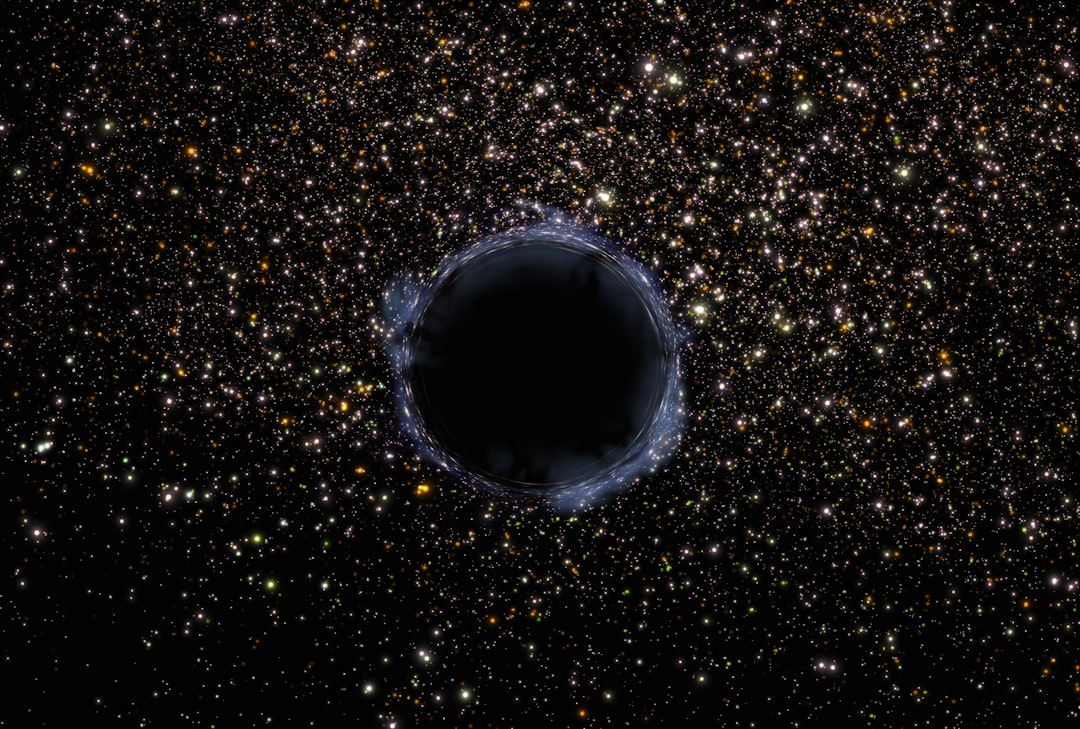
Black holes are among the most enigmatic and captivating objects in the cosmos. They are regions of spacetime where gravity is so strong that nothing, not even light, can escape. Formed from the gravitational collapse of massive stars, their existence is predicted by Einstein’s theory of general relativity.
The Event Horizon: A Point of No Return
Extreme Gravity and Spacetime Distortion
Singularities: The Heart of Darkness
The debate surrounding whether black holes destroy information has captivated physicists and cosmologists for decades, raising profound questions about the nature of reality and the laws of quantum mechanics. For a deeper exploration of this intriguing topic, you can read a related article that delves into the implications of black holes on information theory and the potential resolutions to this paradox. Check it out here: Black Holes and the Information Paradox.
Hawking Radiation and the Erosion of Memory
In the 1970s, Stephen Hawking made a groundbreaking discovery that injected a new level of complexity into the black hole puzzle. He demonstrated that black holes are not entirely black; they emit a faint thermal radiation, now known as Hawking radiation. This radiation arises from quantum effects near the event horizon.
Quantum Fluctuations and Particle Pairs
The Black Hole as a “Black Body”
The Slow Evaporation of Black Holes
The Paradox Emerges: When Information Meets Thermodynamics

The problem arises because Hawking radiation appears to be purely thermal. This means it carries no information about the specific properties of the matter that formed the black hole or anything that subsequently fell into it. It’s akin to burning a book and only being able to tell the temperature of the fire, not the story it contained.
Information Loss in Thermodynamics
The Principle of Unitarity in Quantum Mechanics
A Collision of Fundamental Principles
If a black hole completely evaporates through Hawking radiation, and this radiation carries no information, then the initial information about the matter that collapsed to form the black hole is irretrievably lost. This is a direct contradiction to a fundamental tenet of quantum mechanics, known as unitarity, which states that information is always conserved in physical processes.
Proposed Solutions: Reconciling Relativity and Quantum Mechanics

The black hole information paradox has spurred a vast amount of theoretical research, leading to several proposed resolutions, each with its own strengths and challenges. These solutions represent ambitious attempts to mend the perceived rift between general relativity and quantum mechanics.
The Firewall Hypothesis: A Fiery Barrier to Information
One of the most debated solutions is the “firewall” hypothesis. Proposed by Ahmed Almheiri, Donald Marolf, Joseph Polchinski, and James Sully (AMPS), it suggests that the event horizon of a black hole is not a smooth, unremarkable place as predicted by general relativity, but rather a rapidly fluctuating region of high energy – a “firewall” – that incinerates anything that attempts to cross it.
Quantum Entanglement and the AMPS Paradox
Implications for Spacetime Smoothness
The Price of Information Preservation
The firewall hypothesis, while preserving unitarity, comes at a steep cost: it violates the principle of equivalence, a cornerstone of general relativity, which states that gravity is indistinguishable from acceleration and that spacetime is smooth and continuous at the event horizon. An infalling observer would, according to general relativity, experience no unusual effects upon crossing the event horizon. The firewall, however, implies a dramatic and violent end to their journey just before crossing.
The Holographic Principle: A Cosmic Cinema Screen
Another influential idea is the holographic principle, which suggests that the description of a volume of space can be encoded on its boundary, much like a three-dimensional image can be encoded on a two-dimensional surface. Applied to black holes, this implies that all the information about the matter that falls into a black hole is somehow encoded on its event horizon.
AdS/CFT Correspondence: A Mathematical Bridge
Information Encoded on the Horizon
The Analogy of a Data Storage Device
The holographic principle, particularly through the AdS/CFT correspondence, offers a powerful framework where the physics of gravity in a higher-dimensional spacetime can be described by quantum field theory on its lower-dimensional boundary. In this context, the black hole’s interior and its evaporation can be understood as processes occurring on the event horizon, where information is conserved. The event horizon, in this view, acts as a cosmic information storage device, preserving what might seem lost.
Complementarity: Two Perspectives on One Reality
The principle of complementarity, first proposed by Niels Bohr in the context of quantum mechanics, suggests that certain phenomena can be described in mutually exclusive ways, and both descriptions are valid depending on the observer’s perspective. Black hole complementarity proposes that information falling into a black hole is both lost to an infalling observer and preserved for an external observer.
Information for the Infalling vs. the External
Avoiding Contradiction Through Different Viewpoints
The Challenge of reconciling ‘Both/And’
Complementarity attempts to sidestep the paradox by asserting that no single observer can witness both the complete loss and the complete preservation of information. An observer falling into the black hole would experience nothing special at the event horizon and would eventually be destroyed, with their information seemingly lost. An observer far away would see the information imprinted on the Hawking radiation as the black hole evaporates. The challenge lies in reconciling these two seemingly contradictory perspectives without violating fundamental physical principles.
Fuzzballs and the End of Singularities
The “fuzzball” proposal, stemming from string theory, suggests that black holes do not harbor singularities at their centers. Instead, they are complex, string-theoretic objects without a well-defined event horizon or singularity. In this model, the information is not lost because there is no point of irreversible collapse.
String Theory and the Nature of Black Holes
No Singularities, No Information Loss
A New Picture of Cosmic Objects
The fuzzball proposal fundamentally reimages what a black hole is. Instead of a point of infinite density and a singularity from which nothing can escape, it’s envisioned as a highly compact and complex quantum object. This redefinition eliminates the need for a singularity and the associated event horizon as we classically understand them, thereby resolving the information paradox by removing the mechanism for information loss.
The debate surrounding whether black holes destroy information has captivated physicists for decades, raising profound questions about the nature of reality and the laws of quantum mechanics. A related article explores this intriguing topic in depth, discussing various theories and perspectives that attempt to reconcile the apparent paradox of information loss in black holes. For those interested in delving deeper into this fascinating subject, you can read more about it in the article found here. This exploration not only sheds light on the mysteries of black holes but also challenges our understanding of the universe itself.
The Future of the Paradox: Towards a Quantum Theory of Gravity
| Aspect | Description | Current Understanding | Key Researchers |
|---|---|---|---|
| Information Paradox | Whether information that falls into a black hole is lost forever or preserved. | Still debated; recent theories suggest information is preserved in some form. | Stephen Hawking, Leonard Susskind, Juan Maldacena |
| Hawking Radiation | Black holes emit radiation that can cause them to evaporate over time. | Leads to the question of how information escapes if black holes evaporate. | Stephen Hawking |
| Black Hole Complementarity | Proposes that information is both reflected at the event horizon and passes through it. | Attempts to resolve the paradox without violating quantum mechanics. | Leonard Susskind, Gerard ‘t Hooft |
| Firewall Hypothesis | Suggests a high-energy zone at the event horizon that destroys information. | Controversial; challenges traditional views of black hole interiors. | Almheiri, Marolf, Polchinski, Sully (AMPS) |
| Holographic Principle | Information about the volume inside a black hole is encoded on its surface. | Widely accepted framework supporting information preservation. | Gerard ‘t Hooft, Leonard Susskind |
The black hole information paradox remains an active area of research, pushing the boundaries of our understanding of physics. Finding a definitive resolution would likely require a complete theory of quantum gravity, a long-sought framework that unifies general relativity and quantum mechanics.
The Search for a Unified Theory
Experimental Signatures and Observational Clues
The Philosophical Implications of Information Conservation
The quest to resolve the black hole information paradox is more than just an academic exercise. It’s a fundamental inquiry into the nature of reality, the efficacy of our most cherished scientific theories, and the ultimate fate of information in the universe. Whether information is indeed lost, preserved, or transformed in ways we cannot yet comprehend, the pursuit of this answer promises to illuminate the deepest secrets of the cosmos.
Ultimately, the black hole information paradox serves as a powerful testament to the elegance and enduring mystery of the universe. It reminds us that even in the face of seemingly insurmountable theoretical challenges, the human drive to understand continues to push the frontiers of knowledge, one paradox at a time. The answer, when it arrives, will undoubtedly reshape our perception of gravity, spacetime, and the very fabric of existence.
FAQs
What is the black hole information paradox?
The black hole information paradox arises from the conflict between quantum mechanics and general relativity. It questions whether information that falls into a black hole is permanently lost, which would violate the principle of quantum theory that information must be conserved.
Do black holes destroy information according to current physics?
According to current understanding, black holes do not destroy information. Instead, information is believed to be preserved, possibly encoded in the radiation emitted by black holes, known as Hawking radiation, although the exact mechanism is still under investigation.
What is Hawking radiation and how does it relate to information?
Hawking radiation is theoretical radiation predicted to be emitted by black holes due to quantum effects near the event horizon. It suggests that black holes can slowly lose mass and eventually evaporate, potentially releasing information that was once thought to be lost.
What role does the holographic principle play in the information paradox?
The holographic principle proposes that all the information contained within a volume of space can be represented as encoded data on the boundary of that space. This idea supports the notion that information swallowed by a black hole is not lost but stored on its event horizon.
Has the black hole information paradox been resolved?
While significant progress has been made, including insights from string theory and quantum gravity, the black hole information paradox is not fully resolved. It remains an active area of research in theoretical physics.