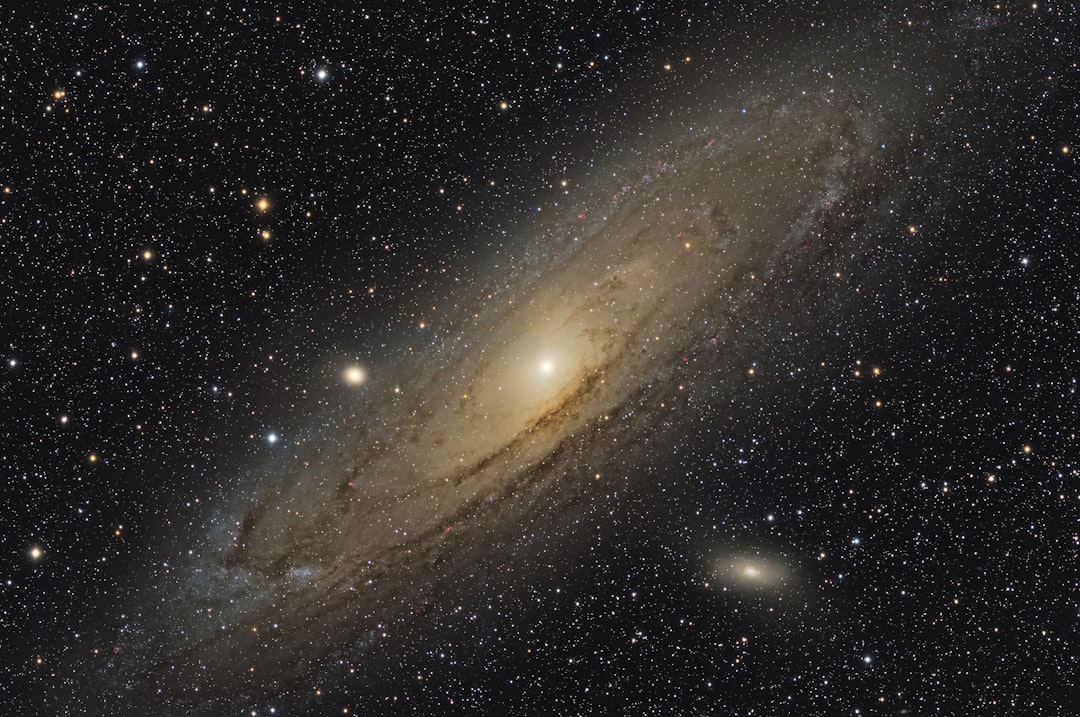
The Andromeda Milky Way Merger: A Cosmic Collision
The night sky is a tapestry woven with cosmic wonders. Among these, the grandest and most inevitable spectacle anticipated by astronomers is the impending merger of our own Milky Way galaxy with its closest large galactic neighbor, the Andromeda Galaxy. This colossal event, not a sudden cataclysm but a slow, deliberate dance of gravitational attraction, promises to reshape the very fabric of our local universe over billions of years, culminating in the birth of a new, grander celestial entity.
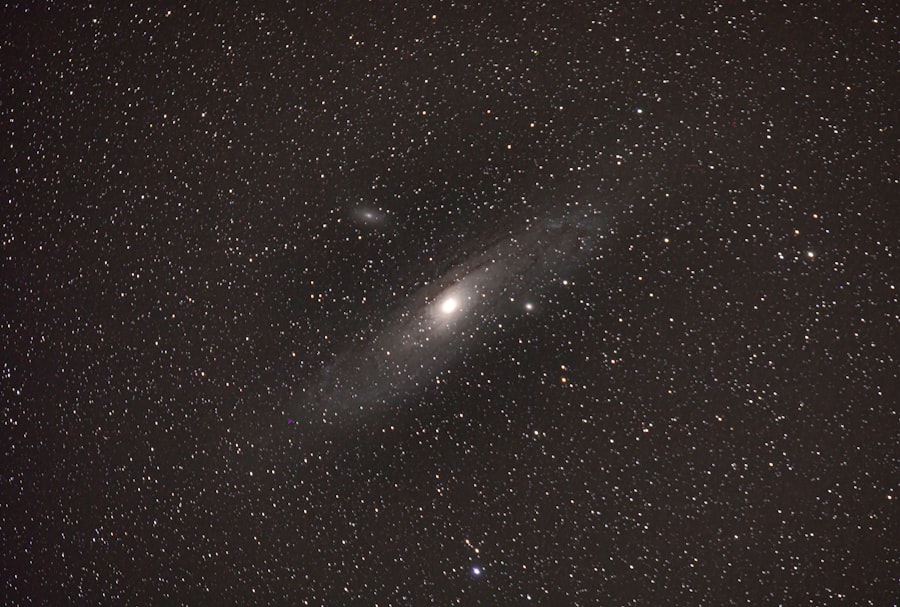
When we gaze upwards, the faint smudge of light that is Andromeda, visible to the naked eye under dark skies, is more than just a distant island of stars. It is a galactic titan, slightly larger and more massive than our own Milky Way, locked in an inexorable gravitational embrace. This embrace, driven by the fundamental force of gravity, is gradually drawing the two galaxies closer, setting the stage for a cosmic collision of unimaginable scale. The current distance between us and Andromeda, approximately 2.537 million light-years, may seem vast, but in the language of the cosmos, it is a mere stone’s throw.
The Andromeda-Milky Way merger is not a random event. It is the consequence of the universal law of gravitation, a force that governs everything from the fall of an apple to the orbits of planets and the majestic movements of galaxies. Our galaxies, like any two massive objects in the universe, exert a gravitational pull on each other. Over cosmic timescales, this pull has been slowly but surely drawing them together.
The Nature of Galactic Motion
Galaxies are not stationary islands in the cosmic ocean. They are in constant motion, propelled by the initial conditions of the universe and the gravitational influences of their neighbors. The Milky Way and Andromeda are no exception. Their current trajectories indicate a clear convergence, a testament to the enduring power of mutual attraction. Think of it as two massive dancers, circling each other an immeasurable distance away, their steps dictated by an unseen choreographic force.
Measuring the Cosmic Approach
Astronomers have employed sophisticated techniques to measure the relative velocity of the Andromeda Galaxy with respect to the Milky Way. By observing the Doppler shift of light from Andromeda – the stretching or compressing of light waves due to relative motion – they can determine if it is moving towards us or away from us, and at what speed. These measurements confirm that Andromeda is not only approaching but is doing so at a significant pace, on the order of 110 kilometers per second (about 68 miles per second). This velocity, combined with our understanding of orbital mechanics, paints a clear picture of an upcoming cosmic rendezvous.
The Role of Dark Matter Halos
While stars and gas are the visible components of galaxies, it is the invisible scaffolding of dark matter that plays a crucial role in their gravitational interactions. Each galaxy is embedded in a vast halo of dark matter, a mysterious substance that vastly outweighs its luminous counterpart. These dark matter halos are the true gravitational anchors, and their immense combined mass dictates the long-term fate of galactic interactions. The dark matter halos of the Milky Way and Andromeda are intertwined, their gravitational influence pulling the galaxies into their inevitable collision course.
The impending merger between the Andromeda Galaxy and the Milky Way has captivated astronomers and space enthusiasts alike, shedding light on the future of our cosmic neighborhood. For a deeper understanding of this monumental event and its implications for our galaxy, you can explore a related article that delves into the dynamics of galactic collisions and their effects on star formation. To read more, visit My Cosmic Ventures.
The Long Road to Collision: A Billions-Year Ballet
The merger of the Milky Way and Andromeda will not be an instantaneous event. Instead, it will unfold over billions of years, a slow-motion ballet of cosmic proportions. This extended timeframe allows for a gradual and complex interplay of gravitational forces, shaping each galaxy incrementally before their final embrace.
The First Close Encounters: Gravitational Perturbations
Long before the galaxies physically collide, their gravitational fields will begin to interact, causing significant disturbances. As Andromeda approaches, its immense gravity will begin to pull and distort the Milky Way, and vice versa. This will manifest as tidal forces, stretching and pulling at the edges of each galaxy, much like the tides on Earth are affected by the Moon’s gravity. Stars and gas clouds in the outer reaches of our galaxy may be ripped away and flung into intergalactic space, forming stellar streams. Similarly, Andromeda will experience its own period of gravitational strain.
Simulated Scenarios: Unveiling the Future
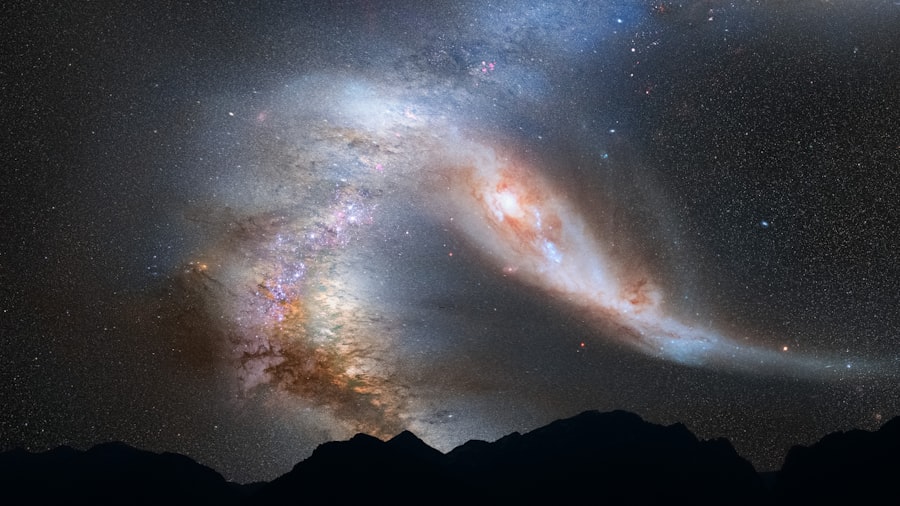
Through the use of powerful supercomputers, astronomers can simulate the merger process. These simulations take into account the current positions, velocities, and estimated masses of the Milky Way and Andromeda, along with the gravitational influence of dark matter. By running these simulations forward in time, scientists can create visualizations of what the merger is likely to look like, providing us with a preview of our galaxy’s ultimate transformation. These models are akin to a cosmic time machine, allowing us to witness events that are billions of years in our future.
The Role of Intergalactic Gas
The space between galaxies is not entirely empty. It is filled with a tenuous plasma known as the intergalactic medium. As the Milky Way and Andromeda approach each other, this intergalactic gas will be drawn into the gravitational wells of both galaxies. This infalling gas can fuel the formation of new stars, potentially leading to a burst of star formation during the merger process. It is like two rivers, carrying debris and nutrients, converging and mixing their contents before their ultimate union.
The Grand Finale: A Cosmic Confluence
The culmination of this long gravitational dance will be the complete merging of the Milky Way and Andromeda. This process will involve multiple passes and interactions, with the galaxies spiraling closer and closer until they can no longer maintain their individual identities.
The First Major Collision: A Cosmic Dance Floor
The actual collision, when the stellar halos and disks of the two galaxies first significantly overlap, is predicted to occur in approximately 4 billion years. However, it is important to note that within a galaxy of billions of stars, the probability of any single star colliding with another is exceedingly low. The vastness of interstellar space ensures that most stars will pass by each other at a safe distance. The visible spectacle, however, will be breathtaking, with gravitational forces warping the shapes of the galaxies and igniting intense bursts of star formation as gas clouds ignite.
The Transformation into ‘Milkomeda’: A New Galactic Identity
As the merger progresses, the original spiral structures of both the Milky Way and Andromeda will be disrupted. The gravitational forces will stretch and warp the galactic disks, eventually leading to the formation of a single, larger, and more elliptical galaxy. This new entity has been colloquially dubbed ‘Milkomeda’ (or ‘Milkdromeda’). The once distinct spiral arms will be lost, replaced by a more chaotic and diffuse structure. Picture two beautifully spun yarns, interwoven and then re-spun into a thicker, more irregular rope.
The Future of Our Solar System: A Sojourner in a New Home
The impact of the merger on our own solar system, including Earth, is a subject of considerable scientific interest. While direct stellar collisions are unlikely, the gravitational gravitational dynamics of the new, larger galaxy will undoubtedly alter the orbit of our Sun and potentially our solar system’s location within the galaxy. The Sun, currently residing in one of the Milky Way’s spiral arms, might find itself in a different, potentially more central or a more diffuse region of Milkomeda. The prospect of Earth being ejected from the galaxy is extremely unlikely due to the sheer gravitational inertia of the combined system. However, the night sky visible from Earth will be dramatically different. The familiar constellations will likely be rearranged, and the presence of the new, merged galaxy will dominate.
The Aftermath: A Realm of Stellar Birth and Galactic Evolution
The merger will not be the end of the story, but rather the beginning of a new chapter in the evolution of our local group of galaxies. The increased density of gas and the energetic interactions will set the stage for a period of intense stellar formation and subsequent galactic evolution.
A Surge in Star Formation: Lighting Up the Cosmos
The gravitational turmoil and compression of gas clouds during the merger will act as cosmic catalysts for star birth. Regions that were previously quiescent will become nurseries for vast numbers of new stars. This “starburst” phase can dramatically increase the overall luminosity of the newly formed galaxy. Imagine a spark igniting a vast field of dry tinder; the resulting conflagration will be spectacular.
The Evolution of Galactic Structure: From Spirals to Ellipticals
The merging process is a primary driver of galactic evolution, particularly the transition from spiral galaxies to elliptical galaxies. Spiral galaxies, with their ordered disks and prominent arms, are prone to disruptions when they collide. The violent gravitational interactions tend to shear off the spiral structures and redistribute stars and gas into a more spherical or ellipsoidal distribution. Our current understanding of galaxy formation suggests that many larger galaxies in the universe began their lives as spiral galaxies that have undergone one or more mergers.
The Fate of Satellite Galaxies: A Gravitational Assimilation
The Milky Way and Andromeda are not alone in their local neighborhood. They are surrounded by smaller dwarf galaxies, some of which are already in the process of being tidally disrupted and absorbed by our current galaxies. The merger of the Milky Way and Andromeda will accelerate this process, drawing in and assimilating these smaller companions into the growing mass of Milkomeda. These dwarf galaxies are like crumbs from the galactic feast, destined to be devoured by the larger entities.
The impending merger between the Andromeda and Milky Way galaxies has sparked significant interest among astronomers and astrophysicists, as it offers insights into the future of our cosmic neighborhood. For those looking to delve deeper into the implications of this galactic collision, a related article can be found at My Cosmic Ventures, which explores the potential effects on star formation and the dynamics of our galaxy. Understanding these cosmic events not only enhances our knowledge of the universe but also helps us appreciate the vastness of time and space.
Observing the Past and Predicting the Future: Tools of Cosmic Understanding
| Metric | Value | Unit | Notes |
|---|---|---|---|
| Distance between Andromeda and Milky Way | 2.537 | million light-years | Current approximate distance |
| Relative velocity towards each other | 110 | km/s | Approaching speed |
| Estimated time until collision | 4 | billion years | Projected time of first contact |
| Duration of merger process | ~2 | billion years | Time taken for full merger |
| Resulting galaxy type | Elliptical galaxy | N/A | Post-merger galaxy classification |
| Estimated number of stars in merged galaxy | ~1 trillion | stars | Combined stellar population |
| Impact on Solar System | Minimal | N/A | Solar System likely to remain intact |
Our ability to understand and predict the Andromeda-Milky Way merger relies on a sophisticated toolkit of astronomical observation and theoretical modeling. From studying distant galaxies that are currently undergoing mergers to simulating the intricate physics of cosmic interactions, scientists are piecing together the narrative of our galactic future.
Studying Analogous Mergers: Learning from Cosmic Neighbors
Astronomers observe instances of galactic mergers occurring in other parts of the universe. By studying these ongoing collisions, scientists can gain valuable insights into the processes involved, the timescales, and the resulting structures. These observed mergers serve as real-world laboratories, allowing us to test and refine our theoretical models. It’s like studying existing car crashes to understand the forces and outcomes of a potential collision.
The Power of Computational Astrophysics: Simulating the Unseen
Modern supercomputers are indispensable tools for simulating the complex gravitational interactions that govern galactic mergers. These simulations allow scientists to explore various scenarios, adjust parameters, and visualize the evolution of galaxies over billions of years. They provide a crucial bridge between theoretical predictions and observable phenomena. These simulations are the digital blueprints of our cosmic future, drawn with billions of calculations.
Future Observational Advancements: Unveiling New Details
As astronomical instrumentation continues to advance, our ability to observe and analyze distant galaxies and the subtle movements within our own will improve. Future telescopes, both ground-based and space-based, will provide higher resolution images and more precise measurements, allowing us to refine our understanding of the Andromeda-Milky Way merger and other cosmic phenomena. These advancements are like acquiring sharper lenses, allowing us to see the grand cosmic play with ever-increasing clarity.
The Andromeda-Milky Way merger is a profound reminder of the dynamic and ever-changing nature of the universe. It is a testament to the power of gravity and the immense timescales over which cosmic processes unfold. While the event is billions of years in the future, the scientific endeavor to understand it connects us to the grand narrative of cosmic evolution, offering a glimpse into the distant future of our galactic home. It is a story written not in ink, but in the fundamental forces that govern all existence, a story of inevitable change, grand transformation, and the eventual unification of two cosmic titans.
FAQs
What is the Andromeda-Milky Way merger?
The Andromeda-Milky Way merger refers to the predicted future collision and eventual merging of the Milky Way galaxy with the Andromeda galaxy, our nearest large galactic neighbor.
When is the Andromeda-Milky Way merger expected to occur?
Astronomers estimate that the merger will begin in about 4 billion years and will take several billion years to complete.
What will happen to the stars in both galaxies during the merger?
Although the galaxies will collide, individual stars are unlikely to collide due to the vast distances between them. Instead, gravitational interactions will reshape the galaxies and may trigger new star formation.
What will the merged galaxy look like?
The merger is expected to result in a large elliptical galaxy, sometimes referred to as “Milkomeda” or the “Milky Andromeda,” combining features of both original galaxies.
How do scientists study and predict the Andromeda-Milky Way merger?
Scientists use observations from telescopes, measurements of galaxy velocities, and computer simulations to model the dynamics and timeline of the merger.