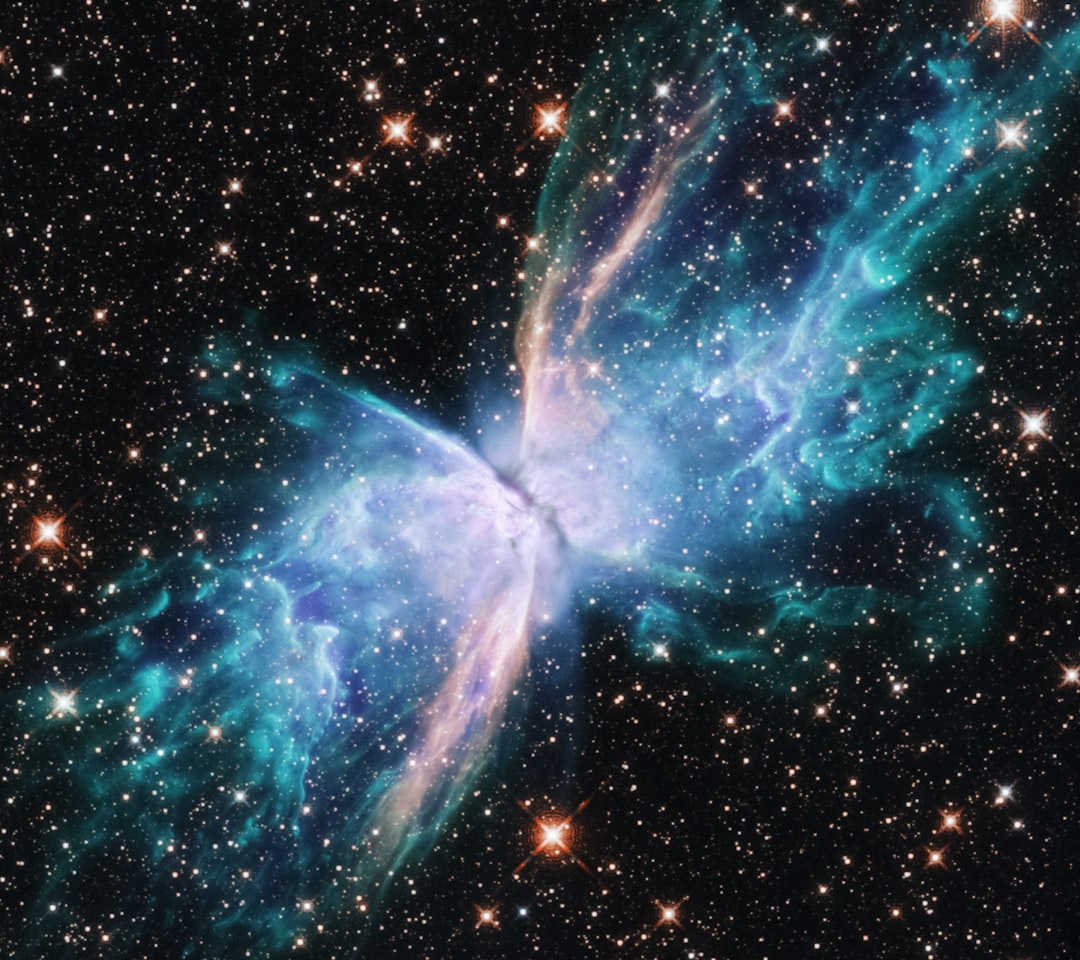
The accurate determination of stellar luminosities is a fundamental undertaking in astrophysics, serving as a cornerstone for understanding the physical properties of stars, their evolutionary stages, and the overall structure and composition of galaxies. However, a persistent challenge in precisely measuring these luminosities arises from the pervasive presence of interstellar dust. This dust, while crucial for star formation and the enrichment of galactic material, has the detrimental effect of obscuring starlight, leading to an undercounting of a star’s true intrinsic brightness.
The Nature of Stellar Luminosity Measurement
Understanding Intrinsic Brightness
Stellar luminosity, denoted by the symbol $L$, represents the total amount of energy a star radiates per unit time across all wavelengths. It is an intrinsic property of a star, determined by its mass, age, and chemical composition. Astronomers typically infer luminosity by first measuring a star’s apparent brightness – how bright it appears from Earth – and then accounting for the distance to the star. The relationship between apparent brightness ($b$), luminosity ($L$), and distance ($d$) is governed by the inverse square law: $b = L / (4 \pi d^2)$. Therefore, if the distance is known, a measurement of apparent brightness can be used to calculate luminosity.
The Role of Photometry
The primary tool for measuring apparent brightness is photometry, which involves quantifying the intensity of light received from celestial objects across specific wavelength bands. Telescopes equipped with photometers or imaging cameras are used to collect photons from stars. By comparing the photon flux from a given star to that of a calibrated standard star with a known apparent brightness, astronomers can deduce the apparent brightness of the target star. These measurements are often made in different filters (e.g., ultraviolet, visible, infrared) to capture the star’s spectral energy distribution (SED).
Distance Determination Challenges
While the inverse square law provides a straightforward path from apparent brightness to luminosity, its application hinges on accurate distance measurements. For nearby stars, parallax measurements, which rely on observing a star’s apparent shift against the background of more distant stars as Earth orbits the Sun, provide the most precise distances. However, parallax becomes less accurate for more distant objects, necessitating the use of indirect methods such as standard candles (e.g., Cepheid variables, Type Ia supernovae) or spectroscopic parallax, which uses a star’s spectral type and luminosity class to estimate its absolute magnitude and subsequently its distance. Each method of distance determination introduces its own uncertainties, which propagate into the calculated luminosity.
Recent studies have highlighted the complexities of measuring stellar luminosities, particularly in relation to the undercounting of dust in local environments. An insightful article discussing these challenges can be found at My Cosmic Ventures, where researchers delve into how dust obscuration affects our understanding of stellar brightness and the implications for galactic evolution. This exploration not only sheds light on the discrepancies in luminosity measurements but also emphasizes the importance of accounting for dust in astronomical observations.
The Impact of Interstellar Dust Extinction
Composition and Distribution of Interstellar Dust
Interstellar dust is a complex mixture of solid particles, primarily composed of silicates, carbonaceous compounds, and ice. These grains range in size from molecular to sub-micron scales. They are not uniformly distributed throughout the galaxy but tend to concentrate in molecular clouds, nebulae, and the galactic disk, where star formation is most active. The density and composition of dust can vary significantly from region to region.
Mechanisms of Light Attenuation
Interstellar dust affects starlight through two primary processes: absorption and scattering. Absorption occurs when a dust grain absorbs photons, converting their energy into heat and re-emitting it at longer wavelengths, typically in the infrared. Scattering redirects photons from their original path. Both processes reduce the number of photons from a star that reach an observer on Earth. This reduction in observed flux is known as extinction.
Wavelength Dependence of Extinction
Crucially, interstellar dust extinction is not uniform across all wavelengths. It is generally more pronounced at shorter wavelengths (e.g., ultraviolet and blue light) and less so at longer wavelengths (e.g., red and infrared light). This phenomenon is quantified by the extinction curve, which plots the ratio of extinction to reddening ($A_\lambda / E(B-V)$) as a function of wavelength ($\lambda$). The specific shape of the extinction curve depends on the size distribution and chemical composition of the dust grains in the intervening medium.
Reddening and Luminosity Underestimation
The Reddening Effect
The wavelength-dependent nature of dust extinction leads to a phenomenon known as reddening. Because blue light is absorbed and scattered more effectively than red light, starlight passing through interstellar dust appears redder than its intrinsic color. This spectral distortion can be quantified by measuring the difference in a star’s apparent magnitude in two different color bands, such as the B (blue) and V (visual) bands. The quantity $E(B-V) = (B-V)_{\text{observed}} – (B-V)_{\text{intrinsic}}$ is known as the color excess, a direct measure of reddening.
Connecting Reddening to Extinction
The color excess provides a valuable proxy for the amount of dust extinction a star has experienced. By understanding the relationship between reddening and extinction, as described by the extinction curve, astronomers can estimate the total extinction at a particular wavelength. For example, the extinction in the V band, $A_V$, can be related to the color excess $E(B-V)$ through a constant multiplier, $R_V$, which represents the ratio of total to selective extinction: $A_V = R_V \times E(B-V)$. The value of $R_V$ itself can vary depending on the dust properties, but is often assumed to be around 3.1 for typical interstellar dust.
The Consequence of Underestimated Luminosity
If the reddening and resulting extinction are not properly accounted for, a star’s measured apparent brightness will be lower than its true intrinsic apparent brightness. Since luminosity is calculated using apparent brightness and distance, this underestimation of apparent brightness directly leads to an underestimation of the star’s luminosity. This error can be significant, particularly for stars located in or behind dense interstellar dust clouds. For instance, a star that appears dim and red due to dust might be intrinsically brighter and bluer.
Strategies for Correcting Dust Extinction
Extinction Maps and Dust Models
One approach to mitigating the effects of dust is to develop detailed extinction maps of the interstellar medium. These maps are constructed by observing the distribution and properties of dust-emitting objects (e.g., infrared sources) or by measuring the reddening of large numbers of background stars. By correlating the observed reddening with Galactic coordinates, astronomers can create three-dimensional maps of interstellar dust. These maps can then be used to estimate the extinction towards any given star based on its location. Sophisticated dust models are developed that describe the grain size distribution, composition, and spatial distribution. These models are based on observational data from various wavelengths.
Spectrophotometric Analysis and SED Fitting
A more direct method involves detailed spectrophotometric analysis of a star’s spectrum. By observing a star’s SED across a broad range of wavelengths, from the ultraviolet to the infrared, astronomers can identify spectral features that are sensitive to dust extinction. If the intrinsic SED of a star can be reliably modeled (based on its spectral type and luminosity class), then by fitting the observed SED to the intrinsic SED, one can determine the extinction law and the amount of extinction. This SED fitting technique is particularly powerful when multi-wavelength photometric data is available.
Infrared Observations as a Key Tool
Infrared (IR) observations are invaluable in overcoming dust extinction. Because interstellar dust is less opaque in the infrared than in the visible and ultraviolet wavelengths, stars that are heavily obscured at optical wavelengths can often be observed in the IR. By comparing magnitudes in different IR bands or by fitting the star’s IR SED to theoretical models, astronomers can infer properties like temperature and luminosity, which are less affected by dust. Moreover, the re-emitted radiation from the dust itself, observed in the far-infrared and submillimeter, provides information about the amount and properties of the dust.
Recent studies have highlighted the complexities of measuring stellar luminosities, particularly in relation to the undercounting of dust in local environments. This issue can significantly affect our understanding of star formation and the overall luminosity of galaxies. For a deeper dive into this topic, you can explore a related article that discusses the implications of dust undercounting and its impact on astronomical observations. Check it out here to gain further insights into how these factors interplay in our observations of the universe.
Implications for Stellar Astrophysics
Impact on Stellar Populations
The undercounting of stellar luminosities due to dust has significant implications for our understanding of stellar populations. For instance, when constructing Hertzsprung-Russell (H-R) diagrams, which plot stellar luminosity against temperature, uncorrected extinction can artificially compress the distribution of stars, making it difficult to identify distinct evolutionary sequences. This can lead to misinterpretations of stellar ages, metallicities, and the relative numbers of stars in different evolutionary phases. Particularly in dusty regions like the Galactic center or star-forming regions, this effect can be severe.
Galactic Structure and Evolution Studies
Studies of galactic structure and evolution rely heavily on accurate counts of stars and their luminosities. If many dim stars are missed or intrinsically bright stars are underestimated, it can skew estimates of stellar mass, star formation rates, and the overall luminous output of the galaxy. For example, if the luminosity function of a galaxy is underestimated, its total stellar mass will also be underestimated, impacting estimates of galactic dynamics and evolution. In regions with high column densities of dust, this is a crucial consideration.
Exoplanet Detection and Characterization
In exoplanet research, the accurate determination of host star luminosity is essential for calculating the radius of transiting exoplanets and for understanding the habitability of planetary systems. If a star’s luminosity is underestimated, a transiting exoplanet might appear larger than it truly is, leading to mischaracterizations. Furthermore, the energy output of the host star, which dictates the surface temperature of orbiting planets and their potential to harbor liquid water, is directly related to luminosity. Dust extinction can therefore indirectly affect our assessment of exoplanetary habitability.
Future Directions and Ongoing Research
Advanced Dust Models and Extinction Laws
Ongoing research aims to refine our understanding of interstellar dust by developing more sophisticated dust models. This includes better characterizing the variety of dust grain compositions and size distributions found throughout the galaxy and even in other galaxies. Developing wavelength-dependent extinction laws that are tailored to specific regions of the galaxy, rather than relying on universal approximations, is crucial for improving accuracy. Observational campaigns utilizing next-generation telescopes, such as the James Webb Space Telescope (JWST), which are sensitive to a wide range of wavelengths, are providing unprecedented data for this purpose.
Improved Distance Measurement Techniques
Continued advancements in distance determination methods are also vital. Projects like the Gaia mission are revolutionizing parallax measurements, providing highly accurate distances for billions of stars. For more distant objects, improvements in the calibration and application of standard candles, as well as the development of new distance indicators, will further reduce uncertainties in luminosity calculations. The synergy between precise distance measurements and accurate dust correction is paramount.
Machine Learning and Big Data Analysis
The increasing volume of astronomical data necessitates the application of advanced computational techniques. Machine learning algorithms are being developed to automatically identify and correct for dust extinction in large photometric and spectroscopic surveys. By training these algorithms on datasets with well-characterized extinction, they can learn to predict and compensate for dust effects in unseen data, significantly speeding up and improving the accuracy of stellar luminosity determinations across vast datasets. The integration of these techniques with our physical understanding of dust and stars promises to enhance our knowledge of the Universe.
FAQs
What are stellar luminosities?
Stellar luminosity refers to the total amount of energy emitted by a star per unit of time. It is a measure of the star’s brightness and can vary depending on the size, temperature, and age of the star.
How is dust undercounting locally related to stellar luminosities?
Dust undercounting locally refers to the potential underestimation of the amount of dust present in the local interstellar medium. This can affect the measurement of stellar luminosities, as dust can absorb and scatter starlight, leading to inaccuracies in determining the true brightness of stars.
What impact does dust undercounting locally have on astronomical observations?
Dust undercounting locally can lead to errors in estimating the distances to stars and galaxies, as well as in determining their intrinsic luminosities. This can affect our understanding of the properties and evolution of celestial objects, as well as the overall structure of the universe.
How do astronomers account for dust undercounting locally in their observations?
Astronomers use various techniques to correct for the effects of dust on their observations, such as measuring the extinction of starlight due to dust absorption and employing sophisticated models to account for the presence of dust in the interstellar medium.
What are the implications of addressing dust undercounting locally for our understanding of the universe?
By accurately accounting for dust undercounting locally, astronomers can improve their measurements of stellar luminosities and other astronomical properties. This, in turn, can lead to a better understanding of the formation and evolution of stars, galaxies, and the universe as a whole.