The cosmic ballet, a symphony of celestial bodies in constant motion, has long captivated humanity. From the earliest stargazers charting constellations to modern astrophysicists probing the universe’s deepest mysteries, the night sky has served as an inexhaustible source of wonder and scientific inquiry. Yet, even with the most sophisticated instruments at our disposal, the cosmos continues to throw curveballs, posing enigmas that challenge our understanding and push the boundaries of our knowledge. One such perplexing phenomenon is the recent “strange dip” observed by a particular star detector, a subtle yet significant fluctuation in a star’s brightness that has sent ripples of excitement and speculation through the scientific community. This event, far from being a mere blip on a data readout, represents a potential gateway to unraveling previously unknown cosmic processes, prompting a concerted effort to understand its origin and implications.
The Unforeseen Dimming of a Distant Sun
The star detector, a marvel of engineering designed to meticulously monitor the light output of distant stars, operates with an almost preternatural precision. Its mission is to identify exoplanets by observing the minute dips in stellar brightness that occur when a planet transits, or passes in front of, its host star. However, the recent anomaly was not a typical exoplanet transit. The observed dimming was unusually protracted, its pattern perplexing, and the star in question, a G-type main-sequence star located several hundred light-years away in a relatively uncrowded sector of the galaxy, was not previously known to host any large planetary bodies that would cause such a significant and prolonged eclipse.
Tracing the Origin of the Signal
The initial detection of the strange dip was met with a mixture of intrigue and caution. Astronomers, accustomed to the predictable rhythms of stellar behavior, immediately initiated follow-up observations using a battery of other telescopes, both ground-based and space-borne. The goal was to confirm the anomaly and gather as much data as possible from different wavelengths of light. Was this a localized event, specific to the primary detector’s field of view, or a genuine astronomical occurrence? The consensus quickly formed: the dimming was real, and it was substantial. The star’s luminosity decreased by a significant percentage, a magnitude of change that typically signals the passage of a large object or a significant alteration in the star’s own surface.
Characterizing the Stellar Phenomenon
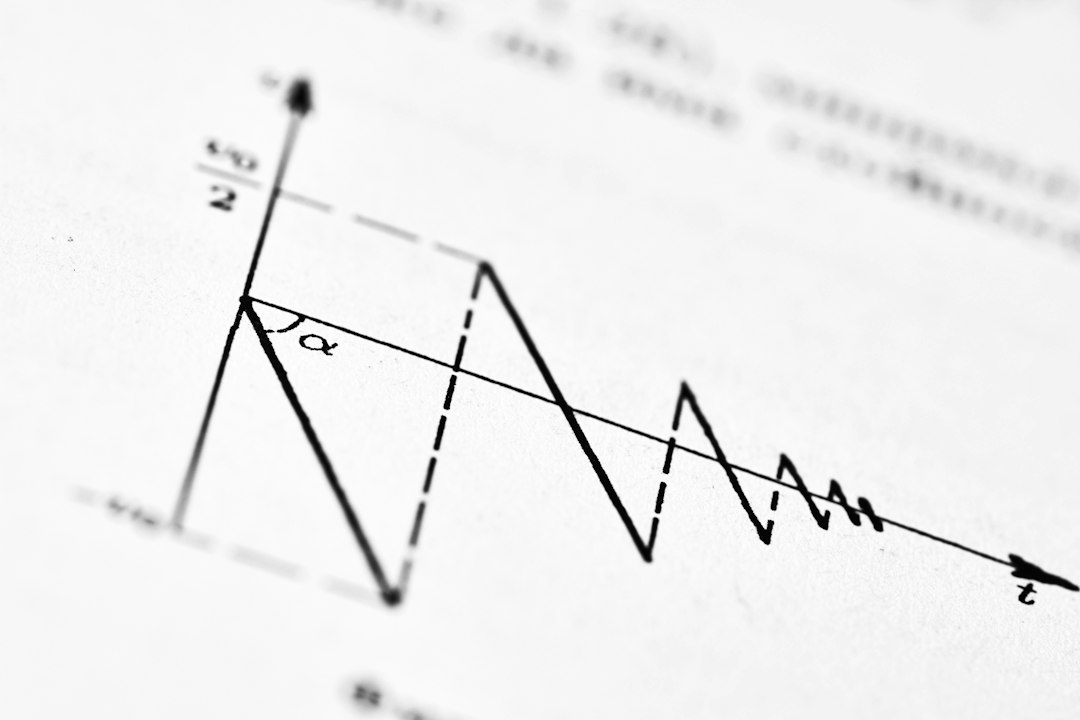
The star itself, designated by a catalog number that belies its newfound cosmic significance, is unremarkable in many ways. It is of a similar spectral type and age to our own Sun, making it an object of particular interest for comparative studies. The unusual dimming event, however, has transformed it from a routine observational target into a focal point of intense scientific scrutiny. Initial analyses focused on the duration and shape of the light curve. Unlike the sharp, V-shaped dips characteristic of planetary transits, this event displayed a broader, more asymmetric profile, suggesting a more complex obscuring body or process. The dimming also exhibited a peculiar variability within its overall decline and subsequent recovery, hinting at non-uniformity in whatever was causing the blockage.
In recent discussions about the peculiarities of star detectors, the concept of the “strange dip” has garnered significant attention. This phenomenon, which refers to unexpected fluctuations in light intensity from distant stars, raises intriguing questions about the nature of cosmic events. For a deeper understanding of this topic, you can explore a related article that delves into the implications of these strange dips and their potential connections to dark matter and other cosmic mysteries. Check it out here: My Cosmic Ventures.
Exploring Potential Explanations for the Cosmic Shadow

The scientific community is a hive of activity, with researchers from around the globe proposing and evaluating various hypotheses to explain the peculiar stellar dimming. The lack of a readily apparent exoplanet that could account for the observed phenomenon has opened the door to more exotic and imaginative possibilities. Each potential explanation, however, requires rigorous testing and the accumulation of further observational evidence. The universe, it seems, is not yet ready to yield its secrets without a fight, and the “strange dip” is a testament to its enduring capacity to surprise.
The Dust Cloud Hypothesis: A Veil of Cosmic Debris
One of the most straightforward explanations involves the presence of a massive, previously undetected dust cloud or a ring of debris orbiting the star. Such a formation could potentially eclipse a significant portion of the star’s light, especially if it is dense and vast enough. This scenario is not entirely unprecedented, as astronomers have observed dust disks around young stars, and even the occasional asteroid belt in other planetary systems. However, the particular characteristics of the dimming event – its duration, asymmetry, and internal variability – require a very specific kind of dust cloud. It would need to be structured in such a way as to not only block the light but also to cause the observed fluctuations. Some researchers are hypothesizing a “clumpy” dust cloud, with denser regions interspersed with more tenuous areas, leading to the observed variations in dimming. The composition of this dust is also a subject of intense speculation, with possibilities ranging from silicates and carbonaceous materials to more exotic compounds.
The Alien Megastructure Theory: A Highly Speculative Endeavor
While scientists are typically loath to invoke extraterrestrial intelligence as an explanation for astronomical phenomena, the sheer strangeness of the observed dip has inevitably led to the consideration of highly speculative, albeit remote, possibilities. One such idea, popularized by the late Dr. Frank Drake and later explored by others, is the concept of a Dyson sphere or a similar megastructure built by an advanced civilization to capture stellar energy. Such a structure, or a swarm of orbiting collectors, could conceivably cause a significant and prolonged dimming of its host star. However, this explanation faces significant challenges. First, the observed dimming is not perfectly uniform, which might be expected from a completed Dyson sphere. Second, the lack of any other discernible technosignatures from the star system makes the presence of such an advanced civilization highly improbable. Nevertheless, the possibility, however remote, cannot be entirely dismissed, and it serves as a reminder of the vastness of possibilities in the universe.
Unusual Stellar Activity: Internal Processes at Play
Another avenue of investigation centers on the possibility of unusual stellar activity originating from within the star itself. While stars are generally considered stable entities, they do exhibit dynamic processes, such as sunspots, flares, and coronal mass ejections. Could this dimming be an exceptionally large and prolonged stellar event, perhaps a colossal sunspot or a series of interconnected flares that temporarily obscured a significant portion of the star’s photosphere? The irregular nature of the dip, with its ups and downs, could potentially be explained by the dynamic and evolving nature of such stellar phenomena. However, the scale of the dimming event seems to exceed typical known stellar activity. Most G-type stars, even those with active magnetic fields, do not exhibit such profound and sustained reductions in luminosity due to surface features alone. Further analysis of the star’s spectrum during the dimming event is crucial to assess whether changes in its emitted light are consistent with internal stellar processes.
The Search for Additional Clues: Multi-Wavelength Astronomy and Citizen Science
Unraveling the mystery of the strange dip requires a multi-pronged approach. Scientists are not only relying on their established observational tools but also exploring new avenues of data acquisition and analysis. The collaborative nature of modern astronomy means that even the most complex puzzles can often be solved through the combined efforts of many. The “strange dip” has become a rallying point for the scientific community, inspiring innovative thinking and fostering a renewed sense of urgency.
Harnessing the Power of Different Telescopes
The initial detection was made by a single instrument, but to truly understand the phenomenon, astronomers are employing a diverse array of telescopes, each sensitive to different parts of the electromagnetic spectrum. Radio telescopes are being used to search for any unusual emissions, while infrared telescopes can probe the temperature and composition of any obscuring material. X-ray and ultraviolet observations can reveal information about the star’s activity and any high-energy processes occurring in its vicinity. By comparing data from these various sources, scientists can build a more comprehensive picture of what is happening around the star and differentiate between a dust obscuration, a planetary transit, or an intrinsic stellar event. The subtle spectral shifts observed during the dimming are particularly important, as they can reveal the composition and velocity of any intervening material.
The Role of Citizen Scientists in Discovery
In an era of big data, the power of citizen science has become increasingly evident. Platforms that allow amateur astronomers and enthusiasts to analyze vast datasets have proven invaluable in identifying anomalies that might otherwise go unnoticed. The “strange dip” is a prime candidate for such collaborative efforts. Organizations are mobilizing their networks of citizen scientists, providing them with the data and tools to search for similar events in other stars or to meticulously analyze the light curves from the affected star. The sheer volume of astronomical data generated by modern observatories can be overwhelming for professional astronomers alone, and the keen eyes and dedicated efforts of citizen scientists can provide crucial insights and accelerate the pace of discovery. Their contributions can range from identifying subtle patterns in the light curve to finding similar events in archival data, helping to establish whether this is a unique occurrence or part of a broader cosmic phenomenon.
Implications for Exoplanet Detection and Stellar Evolution
The implications of the “strange dip” extend far beyond the immediate puzzle of its origin. If the event is indeed caused by an unusual form of obscuration, it could revolutionize our understanding of exoplanet detection methods. Conversely, if it points to a novel stellar process, it could rewrite chapters in our textbooks on stellar evolution. The scientific pursuit of understanding this anomaly is therefore not just about solving a single mystery but about advancing our fundamental knowledge of the universe.
Refining Exoplanet Detection Techniques
The current methods for detecting exoplanets, particularly the transit method, rely on the assumption of predictable dimming patterns. If the “strange dip” is caused by something other than a planet, it highlights the need for more sophisticated algorithms and analytical techniques to distinguish between different types of obscuring objects. For instance, if a dense cloud of dust with irregular shapes can mimic a planetary transit, our current detection systems might be susceptible to false positives. Conversely, if the event represents a new class of celestial object or a phenomenon that can partially mask a planet, it could lead to the discovery of exoplanets that have thus far eluded detection. The careful analysis of the light curve’s characteristics – its duration, depth, and variability – will be crucial in developing these advanced detection techniques. Researchers are particularly interested in how these unusual dips might be confused with genuine planetary signals and how to mitigate such misidentifications.
Understanding the Dynamics of Stellar Environments
The “strange dip” also has profound implications for our understanding of stellar environments. The presence of large, structured dust clouds or debris rings around stars could be more common than previously thought. Such formations might play a crucial role in the formation and evolution of planetary systems. They could also represent remnants of past planetary collisions or indicate ongoing processes that shape the habitable zones around stars. If the dimming is due to intrinsic stellar activity, it could reveal new mechanisms by which stars regulate their energy output and interact with their surroundings. This could lead to a better understanding of stellar lifecycles and the conditions necessary for life to emerge and persist on exoplanets. The possibility of encountering such phenomena in other star systems also raises questions about the diversity of galactic environments and the potential for life to arise in seemingly unusual circumstances.
Recent studies on star detectors have revealed intriguing phenomena, including the strange dip observed in their readings. This unexpected behavior has sparked discussions among astronomers and physicists alike, leading to various hypotheses about its implications for our understanding of cosmic events. For a deeper dive into this topic, you can explore a related article that discusses the potential causes and significance of these strange dips in star detection. Check it out here for more insights.
The Ongoing Investigation: A Cosmic Whodunit in Progress
| Metric | Description | Possible Interpretation | Typical Value/Range |
|---|---|---|---|
| Dip Depth | The magnitude of the decrease in detected signal intensity | Indicates the strength or size of the obscuring object or event causing the dip | 0.1% to 5% decrease in brightness |
| Dip Duration | Time interval over which the dip occurs | Relates to the size or speed of the object causing the dip | Minutes to several hours |
| Dip Shape | Profile of the dip (e.g., symmetric, asymmetric, sharp, gradual) | May indicate the nature of the event, such as transiting planet, star spots, or instrumental artifact | Varies widely depending on cause |
| Wavelength Dependence | Variation of dip depth across different wavelengths | Helps distinguish between dust clouds, planetary atmospheres, or stellar activity | Often stronger in visible or infrared bands |
| Recurrence | Whether the dip repeats periodically | Periodic dips often indicate orbiting bodies; irregular dips may suggest transient phenomena | Periodic (days to years) or aperiodic |
| Signal-to-Noise Ratio (SNR) | Quality of the dip detection relative to background noise | Higher SNR confirms the dip is a real astrophysical event rather than noise | Typically >5 for confident detection |
| Contextual Data | Additional observations such as spectral data or simultaneous multi-band monitoring | Helps interpret the dip’s origin and physical meaning | Varies depending on observation campaign |
The “strange dip” in the star’s brightness remains an active area of research. The scientific community is united in its determination to solve this cosmic whodunit. While definitive answers may still be some way off, the pursuit itself is yielding invaluable insights. Each new piece of data, each refined hypothesis, brings us closer to understanding this enigmatic celestial event. The universe, in its infinite complexity, continues to surprise and inspire, reminding us that the journey of discovery is far from over. The ongoing investigation promises to shed new light on the workings of the cosmos and perhaps even on our own place within it. The results of these ongoing studies will undoubtedly be eagerly anticipated by scientists and the public alike, as the allure of the unknown continues to draw us to the stars. The dedicated work of astronomers, fueled by curiosity and rigorous scientific inquiry, ensures that the mysteries of the universe, no matter how strange, will eventually be unraveled.

A Collider Found a Strange Dip in Dense Matter. What Caused It?
FAQs
What is a star detector?
A star detector is a device used in astronomy to detect and analyze the light emitted by stars. It helps astronomers study the properties and behavior of stars.
What does a strange dip in a star detector’s readings indicate?
A strange dip in a star detector’s readings could indicate various phenomena, such as a planet passing in front of the star (transit), a binary star system, or even the presence of an unknown celestial object.
How do astronomers interpret strange dips detected by a star detector?
Astronomers carefully analyze the light curve data from the star detector to determine the shape, duration, and depth of the dip. They then compare this information with known astronomical events to make interpretations.
Can a strange dip in a star detector’s readings be a sign of extraterrestrial life?
While it is unlikely, a strange dip in a star detector’s readings could potentially be a sign of extraterrestrial life if all other natural explanations have been ruled out. However, astronomers approach such claims with caution and skepticism.
Are there any famous discoveries made through analyzing strange dips in star detector data?
Yes, one of the most famous discoveries made through analyzing strange dips in star detector data is the detection of exoplanets orbiting distant stars. These discoveries have revolutionized our understanding of the universe and the prevalence of planets beyond our solar system.