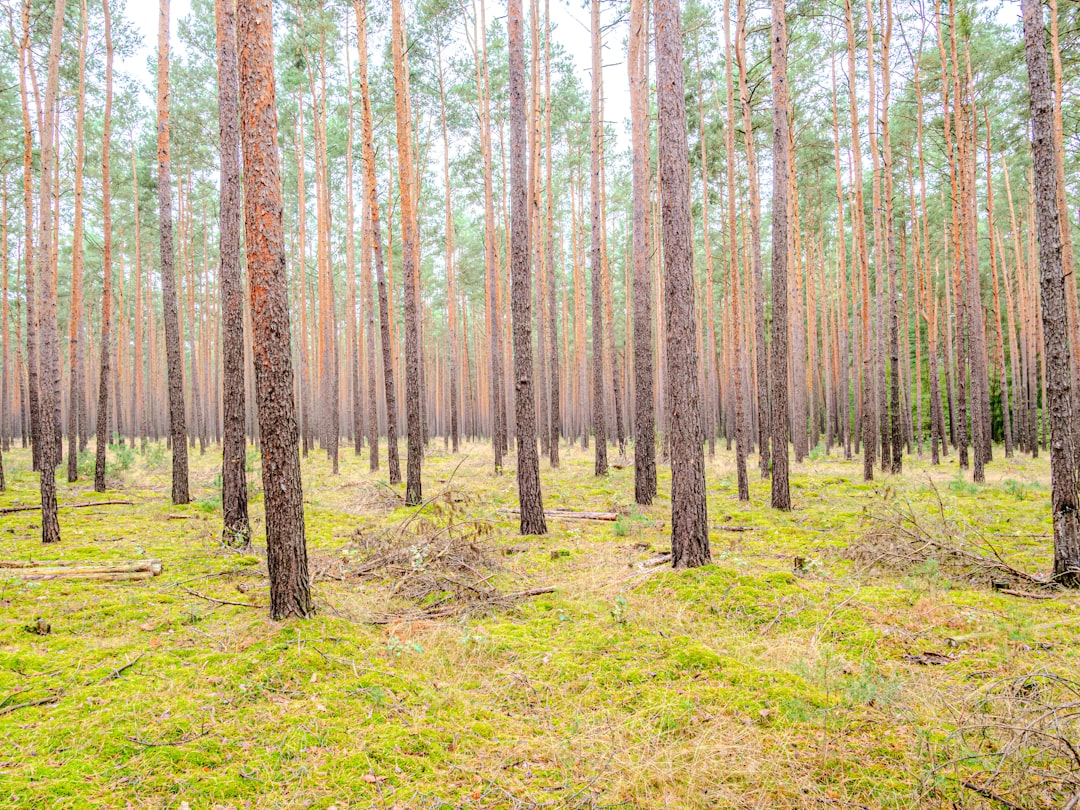
The natural world, in its ceaseless unfolding, occasionally presents anomalies that challenge our understanding of historical environmental processes. Recent research, focused on a remarkably well-preserved Scots pine (Pinus sylvestris) found in the French Alps, has unearthed a significant and puzzling radiocarbon spike. This discovery offers a unique window into a past event whose exact nature remains elusive but whose impact is demonstrably etched into the growth rings of this ancient tree. The implications of this finding extend beyond dendrochronology, potentially touching on astrophysics, atmospheric science, and even our comprehension of cosmic radiation events.
The Discovery and its Context
The specimen in question is not merely a collection of dead wood; it represents a living organism that once stood tall, absorbing atmospheric carbon dioxide for centuries. Its discovery within the Alpine permafrost, a natural refrigerator, has played a crucial role in its exceptional preservation. Permafrost environments are known for their ability to halt decomposition, thereby preserving organic materials in a state that can reveal detailed historical data. The Scots pine, a species renowned for its resilience and wide distribution across the Northern Hemisphere, provides a robust foundation for such investigations.
A Frozen Archive
The French Alps, with their substantial permafrost zones, have become a focal point for researchers seeking to access these frozen historical records. These high-altitude environments offer a unique combination of cold temperatures and relatively stable conditions, allowing for the long-term preservation of ancient flora. The Scots pine in question was unearthed from such a periglacial context, offering a direct link to the atmospheric conditions of its time.
Dendrochronological Significance
Dendrochronology, the science of dating and interpreting past events through tree rings, finds its most precise and informative applications in well-preserved specimens. The annual growth rings of trees act as a chronological archive, recording fluctuations in climate, environmental stresses, and even the isotopic composition of the atmosphere. The Scots pine’s intact structure and absence of significant decay make it an ideal candidate for highly accurate dendrochronological analysis.
Recent studies have highlighted the significance of the Scots pine radiocarbon spike found in the French Alps, shedding light on past climatic events and their impact on forest ecosystems. For a deeper understanding of the implications of this research, you can explore a related article that discusses the broader context of radiocarbon dating in environmental science. This article can be found at My Cosmic Ventures, where it delves into the methodologies and findings that connect ancient tree growth patterns to contemporary climate change.
The Nature of the Radiocarbon Spike
The core of this scientific enigma lies in the analysis of radiocarbon (¹⁴C) within the tree’s growth rings. Radiocarbon, a radioactive isotope of carbon, is continuously produced in the Earth’s atmosphere by cosmic rays. Organisms absorb ¹⁴C during their lifetime, and upon death, the ¹⁴C begins to decay at a known rate. This decay process allows scientists to date ancient organic materials.
¹⁴C Production and ¹⁴C Reservoir
Atmospheric ¹⁴C is incorporated into plants through photosynthesis. This ¹⁴C then enters the global carbon cycle, becoming part of various reservoirs, including the atmosphere, oceans, and biomass. Fluctuations in the rate of ¹⁴C production are primarily influenced by changes in cosmic ray flux and the Earth’s magnetic field intensity.
The Anomaly Revealed
Upon analyzing the ¹⁴C concentration in successive growth rings of the Scots pine, researchers identified a sudden and pronounced increase. This spike represents a period where the tree absorbed significantly more ¹⁴C than would be considered typical for its historical period. Such an event suggests a substantial, albeit temporary, perturbation in the atmospheric ¹⁴C reservoir.
Pinpointing the Timing: A Chronological Anchor
The precise dating of this radiocarbon anomaly is paramount to understanding its potential cause. Dendrochronology, combined with radiocarbon dating techniques, allows for the fine-tuning of the timing of environmental events recorded in tree rings.
Annual Resolution
Thanks to the annual nature of tree ring formation, the radiocarbon spike can be localized to a specific year, or at most a very short period of a few years. This level of temporal precision narrows down the potential triggers for such a significant atmospheric change.
Calibration and Refinement
Radiocarbon dates often require calibration against known historical records or independently dated sequences to account for variations in atmospheric ¹⁴C levels over time. In this case, the well-established dendrochronological sequence of the Scots pine itself provides a robust framework for calibrating the radiocarbon data, firmly anchoring the spike to a particular point in the past.
Investigating Potential Causes
The discovery of such a sharp radiocarbon spike naturally leads to a vigorous investigation into its possible origins. Several astronomical and terrestrial phenomena can influence atmospheric ¹⁴C levels, and researchers are exploring the most plausible explanations.
Solar Activity and Cosmic Rays
The Sun plays a significant role in moderating the Earth’s exposure to cosmic rays. During periods of intense solar activity, such as solar flares or coronal mass ejections, the Sun’s magnetic field can deflect incoming cosmic rays, leading to a decrease in ¹⁴C production. Conversely, periods of reduced solar activity can lead to an increase. However, the magnitude and rapidity of the observed spike suggest a more extreme event than typical solar cycles.
Supernova Events
The explosion of a massive star as a supernova also releases vast amounts of cosmic radiation. If a supernova occurred relatively close to our solar system, the increased flux of energetic particles could penetrate Earth’s atmosphere and significantly boost ¹⁴C production. The timing of such an event would need to align with the recorded spike in the Scots pine.
Gamma-Ray Bursts (GRBs)
Gamma-ray bursts are the most powerful explosions in the universe, thought to be associated with the collapse of massive stars or the merger of neutron stars. A nearby GRB could deliver a substantial flux of high-energy photons and particles to Earth, potentially triggering a rapid increase in ¹⁴C. These events are rare but have the potential for profound atmospheric impacts.
Terrestrial Factors: Limited Impact
While certain terrestrial events, such as large-scale volcanic eruptions, can inject aerosols into the atmosphere, their direct impact on radiocarbon production is generally considered minimal compared to extraterrestrial sources. Nevertheless, secondary effects or coincidental terrestrial events might be considered in a comprehensive analysis.
Recent studies have highlighted a significant radiocarbon spike in Scots pine found in the French Alps, shedding light on historical climate events and their impact on forest ecosystems. This intriguing phenomenon has drawn attention from researchers, prompting further investigation into its implications for understanding past environmental changes. For those interested in exploring this topic in greater detail, a related article can be found at this link, which delves into the methodologies used in analyzing radiocarbon levels and their correlation with climatic shifts.
Broader Implications and Future Research
The discovery of this Scots pine radiocarbon spike is not merely a curious scientific footnote. It opens avenues for interdisciplinary research and has the potential to refine our understanding of numerous scientific fields.
Cosmic Ray Flux Reconstruction
This event provides a valuable data point for reconstructing past cosmic ray flux. By accurately dating and quantifying the spike, scientists can gain insights into the intensity and duration of past cosmic ray bombardment, which has implications for understanding stellar evolution and the interstellar medium.
Atmospheric Chemistry and Isotope Dynamics
The incorporation of the ¹⁴C spike into the atmosphere and subsequent absorption by organisms offers a unique opportunity to study atmospheric chemistry and isotope dynamics. The speed at which this anomaly was processed and distributed throughout the biosphere can provide crucial data for atmospheric modeling.
Paleoclimate and Event Dating
The precise dating of this event allows for its potential identification in other paleoclimate archives, such as ice cores or marine sediment records. Corroborating evidence would strengthen the interpretation of the spike and potentially reveal a widespread atmospheric event. Furthermore, it provides a highly accurate chronological marker for paleontological and archaeological studies conducted in regions contemporaneous with the tree’s life.
Refining Radiocarbon Dating Methods
Understanding such significant anomalies is crucial for refining radiocarbon dating methodologies. By studying the dynamics of these spikes, scientists can improve the accuracy of radiocarbon dating for periods that might have experienced similar, though perhaps less pronounced, fluctuations.
The discovery of this striking radiocarbon anomaly within a well-preserved Scots pine from the French Alps represents a significant scientific opportunity. It underscores the invaluable information locked within natural archives and the power of interdisciplinary collaboration to unravel the mysteries of our planet’s past. Further research will undoubtedly focus on pinpointing the exact timing, refining the magnitude of the ¹⁴C increase, and rigorously testing the various astrophysical and atmospheric explanations. This ancient tree, standing silent for millennia, has spoken, offering a cryptic but profound insight into a dramatic event etched into the very fabric of our planet’s history.
FAQs
What is the Scots pine radiocarbon spike in the French Alps?
The Scots pine radiocarbon spike in the French Alps refers to a significant increase in radiocarbon levels found in the tree rings of Scots pine trees in the region. This spike is believed to be caused by a sudden release of radiocarbon into the atmosphere.
When did the Scots pine radiocarbon spike occur in the French Alps?
The Scots pine radiocarbon spike in the French Alps is believed to have occurred around 994-993 BC, based on the analysis of tree rings from the Scots pine trees in the region.
What could have caused the Scots pine radiocarbon spike in the French Alps?
Researchers believe that the Scots pine radiocarbon spike in the French Alps may have been caused by a solar proton event, which is a sudden increase in solar activity that releases high-energy particles into the Earth’s atmosphere.
What are the implications of the Scots pine radiocarbon spike in the French Alps?
The Scots pine radiocarbon spike in the French Alps provides valuable information for researchers studying past solar activity and its potential impact on the Earth’s atmosphere. It also offers insights into the effects of solar proton events on the environment and can help improve our understanding of space weather.
How was the Scots pine radiocarbon spike in the French Alps discovered?
The Scots pine radiocarbon spike in the French Alps was discovered through the analysis of tree rings from Scots pine trees in the region. By examining the radiocarbon levels in the tree rings, researchers were able to identify the spike and study its potential causes and implications.