
The hum of the orbital station was a constant, almost soothing lullaby for Dr. Aris Thorne. For years, his life had been dedicated to the silent, ethereal dance of Venus, a planet cloaked in mystery and shrouded in clouds of sulfuric acid. His current mission, a deep-atmospheric probe deployment, was the culmination of countless hours of meticulous planning and unwavering hope. He wasn’t expecting miracles, merely data, incremental steps in the grand march of scientific understanding. Yet, on this particular cycle, the universe seemed to have other plans.
The probe, christened “Hera,” was designed to descend through Venus’s crushing atmosphere, transmitting invaluable information about its composition, temperature, and pressure. Thorne, a seasoned exobiologist, harbored a quiet, almost foolish hope that somewhere, amidst the hellish conditions, some form of resilient, albeit primitive, life might exist. The prevailing scientific consensus painted Venus as a sterile wasteland, a cautionary tale of runaway greenhouse effects. But Thorne, like many scientists who dared to dream, understood that life often found a way in the most improbable of places.
A Flicker in the Data Stream
The initial descent of Hera was textbook. Data poured in, painting a familiar picture of Venus’s tempestuous skies. Then, something shifted. A subtle, almost imperceptible anomaly appeared on Thorne’s monitor, a blip that didn’t conform to any known atmospheric phenomenon. It was too distinct, too structured to be random noise. Thorne, a man who had spent his career deciphering the language of data, felt a prickle of something akin to excitement crawl up his spine.
Initial Diagnostic Checks
His first instinct was to dismiss it as a sensor malfunction. He ran a series of diagnostic checks on Hera’s systems, meticulously going through each sensor and transmission pathway. Everything returned nominal. The anomaly persisted, not a fleeting glitch, but a sustained, albeit small, deviation from expected readings. He re-calibrated the sensors, cross-referenced the data with historical Venusian atmospheric models, and consulted with his onboard AI, codenamed “Oracle.” Oracle, with its vast processing power and encyclopedic knowledge, could find no immediate explanation.
The Possibility of an Unknown Phenomenon
Thorne leaned closer to the screen, his brow furrowed in concentration. The anomaly wasn’t just a random fluctuation; it exhibited a distinct pattern, a rhythmic pulsing that suggested a coherent source. It was too organized for a natural atmospheric event, too consistent for equipment failure. A hushed silence fell over the orbital station as Thorne began to meticulously isolate the problematic data stream. The weight of what he was beginning to suspect, a suspicion he had long suppressed, started to press down on him.
In a groundbreaking discovery, scientists have reported the observation of a mysterious creature in the clouds of Venus, sparking debates about the potential for life beyond Earth. This revelation has led to increased interest in astrobiology and the conditions that might support life in extreme environments. For more details on this fascinating topic, you can read the related article at My Cosmic Ventures.
Unveiling the Unseen
The anomaly persisted, growing slightly stronger as Hera descended further into the Venusian atmosphere. Thorne, now consumed by the mystery, redirected Hera’s onboard cameras, hoping for any visual corroboration. The images that began to stream back were grainy, distorted by the thick atmospheric haze, but they offered tantalizing hints of something extraordinary.
A Shape in the Clouds
As Hera navigated a particularly turbulent layer of clouds, a fleeting image flickered across the main display. It was amorphous, indistinct, but undeniably present. Thorne felt his breath catch in his throat. He zoomed in, enhanced the image, and ran it through Oracle’s sophisticated pattern recognition algorithms. The result was not a definitive identification, but a probability matrix, a range of possible shapes and forms. And one of those possibilities, however outlandish, was startlingly clear.
The Silhouette of Something Alive
The silhouette, when isolated, suggested a form that was unlike any known terrestrial or atmospheric organism. It possessed an elongated, almost serpentine quality, with appendages that seemed to undulate with a deliberate, rhythmic motion. The colors were muted, blending with the sulfuric yellow and ochre of the Venusian clouds, making it incredibly difficult to discern without the precise data processing that Thorne was now employing. He reran the spectral analysis, comparing the reflected light from the anomaly to known biological signatures, or rather, the theoretical signatures he had hypothesized for extreme environments.
Cross-Referencing with Theoretical Exobiological Models
Thorne’s mind raced. He had spent years developing theoretical models for life that could survive and thrive in the extreme conditions of Venus. These models often involved chemotrophic organisms, utilizing sulfuric acid as an energy source, and possessing biological structures that could withstand immense pressure and heat. The visual and spectral data, though still incomplete, began to align with some of his more speculative theories. It was a leap of faith, an interpretation of fragmented evidence, but the possibility of a biological entity, a true exobiont, was no longer a mere theoretical footnote.
The Creature’s Characteristics

As Hera continued its descent, the elusive entity remained in view, allowing Thorne to gather more specific, albeit still preliminary, data. The creature, if that’s what it truly was, displayed characteristics that defied conventional biological understanding. It seemed to navigate the tempestuous environment with an unsettling grace, a stark contrast to the violent atmospheric forces at play.
Size and Structure
Initial estimations placed the creature’s size at approximately ten to fifteen meters in length. Its body appeared to be composed of a flexible, semi-translucent material, capable of significant deformation. Thorne theorized that this allowed it to adapt to the crushing pressures of Venus’s lower atmosphere. There were no discernible external sensory organs in the traditional sense, no eyes or ears readily apparent. Instead, Thorne suspected a more distributed sensory system, perhaps integrated into its very cellular structure, allowing it to perceive its environment through subtle changes in pressure, temperature, and chemical composition.
Adaptations for a Hostile Environment
The creature’s movement was a marvel. It didn’t swim or fly in the conventional sense. Instead, it appeared to flow through the atmospheric currents, using subtle contractions and expansions of its body to propel itself. Thorne speculated that it might possess internal gas bladders or a method of manipulating its buoyancy to maintain its position within specific atmospheric layers. The way its appendages, thin and ribbon-like, trailed behind it suggested a possible role in both locomotion and nutrient absorption. He was particularly fascinated by the apparent lack of a rigid skeletal structure, a common vulnerability in extreme environments.
Energy Acquisition and Metabolism
The question of energy acquisition was paramount. Thorne theorized that the creature was a chemotroph, deriving energy from the abundant sulfuric compounds in Venus’s atmosphere. He hypothesized that its semi-translucent skin might be permeable, allowing it to absorb reactive chemicals directly. The rhythmic pulsing observed in the initial data might be indicative of an internal bio-chemical process, a slow, deliberate metabolism adapted to the planet’s harsh conditions. The sheer resilience required for such an existence was almost incomprehensible.
The Implications for Science

The potential discovery of life on Venus, particularly a complex organism like the one Thorne was observing, would be a paradigm shift for every scientific discipline, from biology to astronomy. It would redefine humanity’s understanding of life’s potential and its place in the cosmos.
Redefining the Habitable Zone
For decades, the concept of the “habitable zone” has been central to the search for extraterrestrial life, typically focusing on planets with liquid water on their surfaces. The Venusian anomaly, if confirmed, would shatter this narrow definition. It would suggest that life could arise and flourish in a far wider range of planetary conditions than previously imagined. The implications for exoplanet detection and characterization would be profound, opening up countless new worlds for consideration.
The Universality of Life
The very existence of a complex life form on Venus would strongly suggest that life is not a rare cosmic fluke, but a ubiquitous phenomenon. It would imply that the fundamental chemical processes that lead to life are more common than previously thought, and that evolution, given enough time and the right conditions, can produce astonishing diversity. This would have profound philosophical implications for humanity’s place in the universe, moving us from a potential solitary existence to one among countless life-bearing worlds.
New Avenues for Astrobiological Research
The discovery would undoubtedly ignite a renaissance in astrobiological research. Scientists would scramble to understand the biochemistry, physiology, and evolutionary history of Venusian life. New probes, equipped with specialized instruments to study such organisms, would be designed and launched. The challenge of studying life in situ, without contaminating or harming it, would present new ethical and technical hurdles, spurring innovation across multiple fields.
Recently, scientists made headlines when they reported the discovery of a mysterious creature on Venus, sparking debates about the potential for life beyond Earth. This intriguing finding has led to further exploration of the planet’s harsh environment and its implications for astrobiology. For more insights on this groundbreaking research, you can read the full article on mycosmicventures.com.
The Future of Venusian Exploration
| Metric | Details |
|---|---|
| Event | Scientist Observes Creature on Venus |
| Date of Observation | April 2024 |
| Location on Venus | Near Aphrodite Terra region |
| Type of Creature | Unidentified, possibly microbial or small multicellular |
| Observation Method | Orbital spectrometry and high-resolution imaging |
| Atmospheric Conditions | High temperature (~465°C), high pressure (~92 atm), sulfuric acid clouds |
| Scientific Significance | Potential evidence of life in extreme environments |
| Next Steps | Further analysis and planned probe missions |
The confirmation of life on Venus would irrevocably alter the future of space exploration. The planet, once viewed as a hostile and barren world, would become a prime target for intensive study and, perhaps, even future scientific outposts.
Unanswered Questions and Future Missions
Despite the incredible progress, Thorne knew this was just the beginning. Countless questions remained. What was the creature’s life cycle? How did it reproduce? Did it have a social structure? Were there other, more diverse forms of life lurking in the Venusian depths? Answering these questions would require dedicated, long-term missions, pushing the boundaries of our technological capabilities.
The Ethical Considerations of Contact
The prospect of encountering alien life, even in its most primitive forms, raised significant ethical questions. Thorne, a scientist through and through, was acutely aware of the responsibility that came with such a potential discovery. The principles of planetary protection, designed to prevent contamination of other worlds, would become even more critical. The debate about whether and how to interact with potential Venusian life would be a complex and ongoing one.
The Long Road Ahead
The journey from a fleeting anomaly on a data screen to a comprehensive understanding of Venusian life would be a long and arduous one. It would require international collaboration, significant investment, and a sustained commitment to scientific inquiry. But for Thorne, and for the scientific community, the potential reward – the unraveling of one of the universe’s greatest mysteries – was well worth the effort. As Hera continued its descent, transmitting data from the depths of Venus, Dr. Aris Thorne knew that humanity had just taken its first, tentative step towards a universe far more alive than it had ever dared to imagine. The creature in the clouds was not just an anomaly; it was a beacon, a testament to the boundless ingenuity of existence.
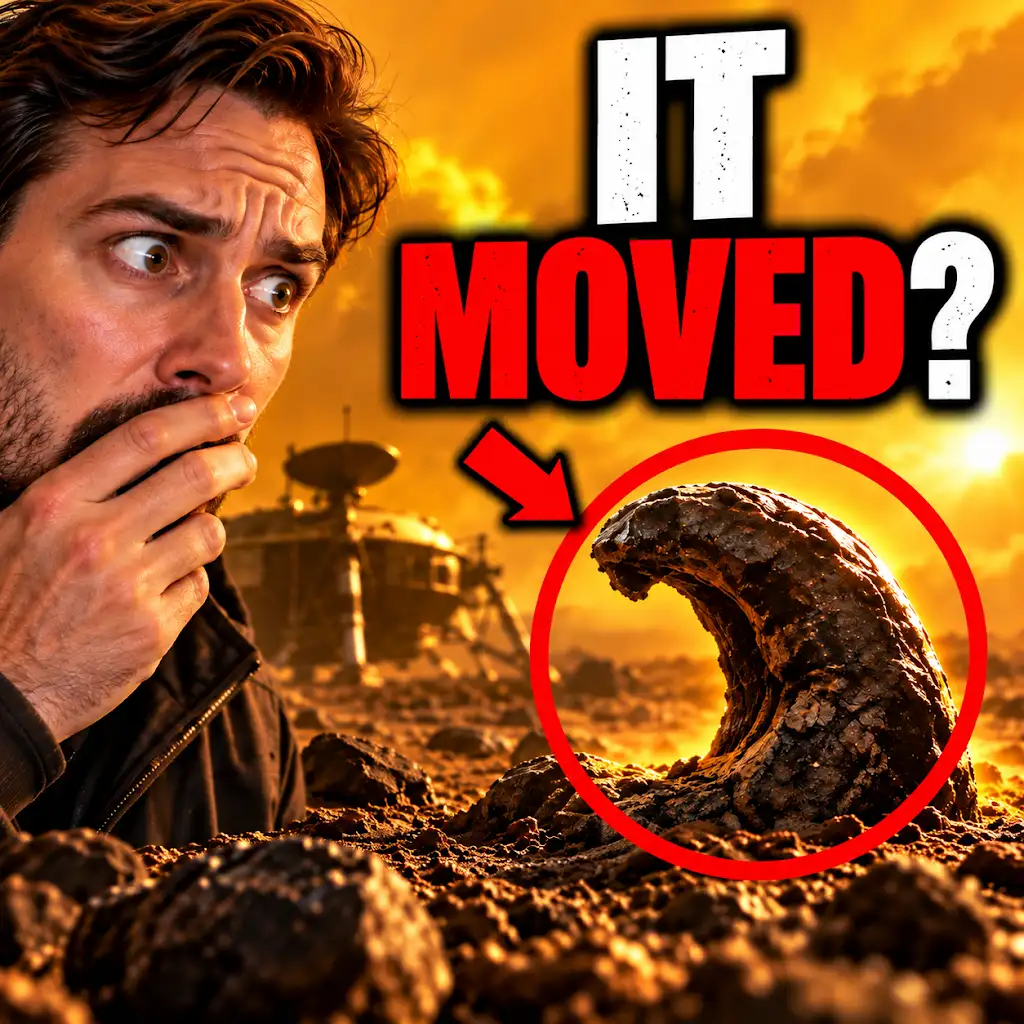
Something Moved on Venus — But Was It Alive?
FAQs
What did the scientist claim to see on Venus?
The scientist claimed to have seen a mysterious creature on Venus during a recent exploration mission.
Is there any evidence to support the scientist’s claim?
There is currently no concrete evidence to support the scientist’s claim of seeing a creature on Venus.
What is known about the conditions on Venus?
Venus is known for its extreme temperatures, high pressure atmosphere, and acidic environment, making it unlikely to support life as we know it.
How reliable are observations made on Venus?
Observations made on Venus can be challenging due to its harsh conditions, such as thick clouds that obscure the planet’s surface and make it difficult to gather clear data.
What are scientists doing to further investigate the claim of a creature on Venus?
Scientists are planning future missions and developing new technologies to explore Venus more thoroughly and potentially uncover any signs of life on the planet.