Robotic Avatars: The Future of Mars Colonization
Laying the Groundwork: Pre-Cursor Missions and Robotic Exploration
The aspiration to establish a human presence on Mars is a complex undertaking, one that hinges significantly on the robust capabilities of robotic systems. Before human boots ever touch Martian soil with the intent of residency, extensive preliminary work must be accomplished. This involves not merely scouting and analysis but the active construction and preparation of infrastructure that will ultimately support life. Robotic avatars, in this context, represent a crucial evolution beyond traditional remote-controlled rovers and orbiters. They are designed to act with a degree of autonomy, to perform intricate tasks, and to relay not just data but a richer, more nuanced understanding of the Martian environment.
The Evolution of Martian Robotics
Early Martian robotic missions, such as the Viking landers and the Pathfinder mission, provided foundational knowledge about the planet’s geology, atmosphere, and potential for past habitability. The Mars Exploration Rovers, Spirit and Opportunity, extended this exploration with unprecedented longevity and mobility, revealing evidence of ancient water. More recent missions, like the Curiosity and Perseverance rovers, have incorporated more sophisticated scientific instrumentation and autonomous navigation capabilities. However, these have still largely operated under direct human command and oversight from Earth, a process that is significantly time-delayed and limits responsiveness.
From Remote Control to Semi-Autonomy
The next logical step in robotic Martian exploration is the development of semi-autonomous systems. These avatars will be empowered to make on-the-spot decisions based on pre-programmed parameters and sensor input. This capability is critical for tasks requiring immediate reactions, such as navigating treacherous terrain to avoid hazards or making real-time adjustments to construction protocols. The reduction in reliance on terrestrial communication will significantly accelerate the pace of exploration and infrastructure development.
Enhanced Sensory Apparatus
Future robotic avatars will possess a far more comprehensive suite of sensors than current rovers. This will include advanced spectroscopy for detailed mineral identification, subsurface radar for geological profiling, and atmospheric sensors capable of continuous, high-resolution monitoring of weather patterns. Furthermore, the integration of rudimentary artificial intelligence will allow these avatars to interpret this data in real-time, identifying areas of particular scientific interest or potential resource deposits with greater accuracy and efficiency. The ability to not only collect data but to contextualize it instantaneously is a significant leap.
The debate over robotic avatars versus human colonization of Mars continues to gain traction as advancements in technology reshape our understanding of space exploration. A related article that delves into the implications of these two approaches can be found on My Cosmic Ventures, where experts discuss the potential benefits and challenges of utilizing robotic avatars for initial missions to prepare for human settlers. For more insights on this topic, you can read the article here: My Cosmic Ventures.
The Role of Robotic Avatars in Infrastructure Development
Human colonization of Mars necessitates the establishment of habitable environments, power generation, communication networks, and resource extraction capabilities. Performing these foundational tasks on an alien world, with its inherent dangers and logistical challenges, is a task perfectly suited for advanced robotic avatars. Their resilience, precision, and ability to operate continuously remove a significant burden from the early human colonists.
Construction and Assembly
The construction of habitats, landing pads, and scientific outposts will be a primary function of robotic avatars. These machines will be designed with manipulators capable of complex assembly, utilizing in-situ resources where possible. Imagine swarms of robots working in unison to excavate regolith, fabricate building materials through additive manufacturing, and erect structures that can withstand the Martian environment. This process will be far more efficient and safer than attempting such large-scale construction with limited human crews in the initial stages.
3D Printing with Martian Regolith
A key technology for robotic avatar construction will be the utilization of Martian regolith as a building material. This abundant resource can be processed and used in 3D printing applications to create shelter structures, radiation shielding, and even elements of the local transportation infrastructure. Robotic avatars equipped with novel regolith processing and 3D printing systems will be the bedrock of early Martian construction efforts.
Deployment of Power Generation Systems
Establishing a reliable power supply is paramount for any Martian settlement. Robotic avatars will be deployed to set up and maintain solar arrays, potentially to deploy and service small-scale nuclear reactors, and to establish power distribution grids. Their ability to operate in dust storms and extreme temperatures, and to perform delicate maintenance tasks on these critical systems, will ensure the continuous operation of the nascent colony.
Resource Extraction and Processing
The ability to live off the land on Mars is essential for long-term sustainability. Robotic avatars will be vital for identifying, extracting, and processing local resources, most importantly water ice and minerals. This will significantly reduce the reliance on resupply missions from Earth, which are both prohibitively expensive and time-consuming.
Water Ice Extraction
Water is a critical resource for life support, agriculture, and propellant production. Robotic avatars equipped with drilling and excavation tools will be tasked with locating subsurface water ice deposits, extracting them, and transporting them to processing facilities. Their ability to operate in low light conditions and to execute precise drilling operations will be indispensable.
In-Situ Resource Utilization (ISRU) for Propellant
The production of rocket propellant on Mars would dramatically reduce the cost and complexity of future expeditions and the return journey for early colonists. Robotic avatars will be instrumental in mining and processing materials, such as atmospheric carbon dioxide and water, to create methane and oxygen for propellant. This ISRU capability is a cornerstone of self-sufficiency.
The “Avatar” Concept: Bridging the Gap Between Human and Machine
The term “robotic avatar” implies a more sophisticated level of interaction and utility than traditional rovers. It suggests a symbiotic relationship where robots act as extensions or proxies for human presence and capability, even in their absence. This goes beyond simple remote operation; it involves machines that can embody certain human-like decision-making processes and perform complex tasks with a degree of foresight.
Mimicking Human Dexterity and Mobility
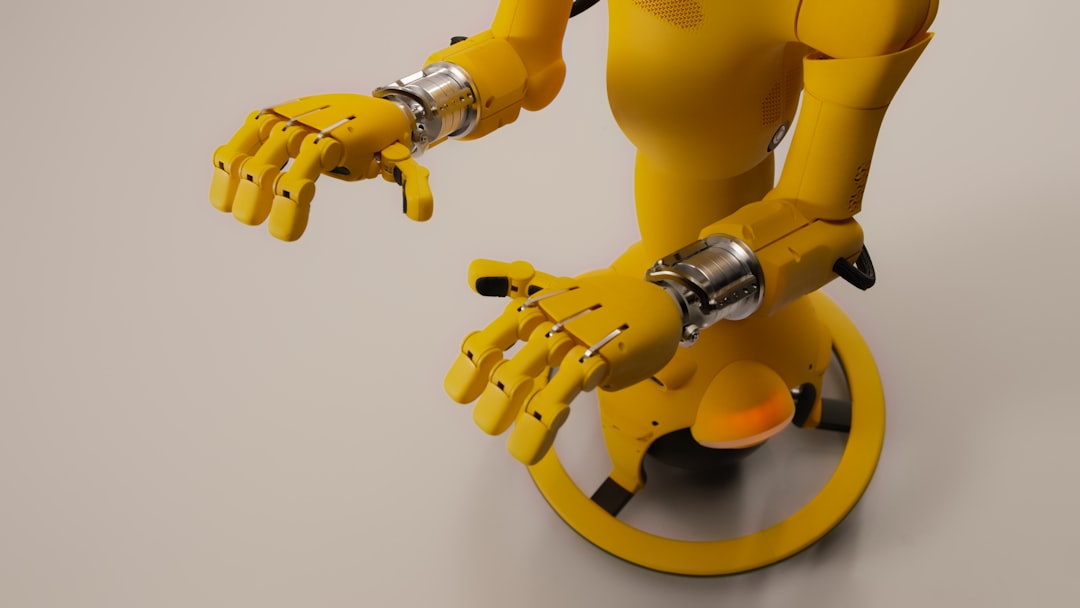
Advanced robotic avatars will aim to replicate the dexterity and mobility of human hands and bodies. This will involve highly articulated robotic arms with sophisticated end-effectors capable of fine manipulation, as well as mobile platforms that can navigate varied and challenging Martian terrain with agility. The goal is to enable these machines to perform tasks that currently require human intervention.
Fine Motor Skills for Delicate Operations
Tasks such as repairing intricate scientific equipment, connecting delicate wiring, or performing delicate biological sampling will require a level of dexterity that current rovers lack. Robotic avatars designed with advanced haptic feedback and precision manipulators will be able to achieve these fine motor skills, allowing for more sophisticated scientific investigation and equipment maintenance.
All-Terrain Navigation and Hazard Avoidance
The Martian surface is characterized by boulders, steep inclines, and soft regolith. Robotic avatars will be equipped with advanced Lidar, stereo-vision, and AI-driven navigation systems that allow them to traverse this difficult terrain efficiently and safely. This includes the ability to identify and avoid hazards, adapting their paths in real-time.
Communication and Sensory Feedback
The “avatar” aspect also extends to how these robots communicate their findings and the environment back to humans, both on Mars and Earth. This isn’t just about sending data; it’s about conveying a sense of place and status.
Immersive Data Visualization
Instead of just receiving raw sensor readings, future robotic avatars will employ advanced imaging and data processing to provide immersive sensory experiences for human operators. This could involve high-fidelity 3D reconstructions of the environment, augmented reality overlays displaying critical information, and even simulated haptic feedback transmitted from the robot’s manipulators.
Real-time Environmental Sensing and Reporting
Robotic avatars will continuously monitor their surroundings and report environmental conditions with a high degree of detail. This includes atmospheric pressure, temperature, radiation levels, and geological activity. This real-time reporting allows for immediate situational awareness and facilitates informed decision-making by human colonists.
The Evolution of AI and Autonomy in Robotic Avatars
The increasing sophistication of artificial intelligence is the driving force behind the development of truly autonomous robotic avatars. These machines will not merely follow pre-programmed instructions but will possess the capacity for learning, adaptation, and independent problem-solving.
Machine Learning for Task Optimization
Machine learning algorithms will enable robotic avatars to learn from their experiences, optimizing their task performance over time. This includes refining construction techniques, improving resource extraction efficiency, and developing more robust navigation strategies based on analysis of past operations and environmental data.
Predictive Maintenance and Self-Repair
By analyzing ongoing operational data, AI-powered avatars will be able to predict potential equipment failures and proactively perform maintenance, or even self-repair minor damage. This reduces the need for external intervention and ensures the continuous operation of critical systems.
Adaptive Mission Planning
Robotic avatars will be capable of adapting their mission plans in response to unforeseen circumstances or new discoveries. If a robot encounters a particularly interesting geological formation, for example, its AI could autonomously decide to divert from its original path to investigate, while still adhering to broader mission objectives.
Enhanced Decision-Making Capabilities
The ability to make complex decisions independently is a hallmark of advanced autonomy. This is particularly crucial in scenarios where communication delays or catastrophic events preclude immediate human input.
Real-time Hazard Assessment and Response
Robotic avatars will be programmed to assess potential hazards in real-time, such as approaching dust storms, unstable terrain, or equipment malfunctions. They will then be able to execute pre-defined protocols or generate novel responses to mitigate these risks, ensuring their own survival and the integrity of their tasks.
Collaborative Swarm Intelligence
For large-scale operations, robotic avatars will work in coordinated swarms, exhibiting emergent collective intelligence. This allows for efficient division of labor, parallel processing of tasks, and dynamic reallocation of resources to optimize overall mission success.
As discussions about the future of Mars colonization continue to evolve, the debate between using robotic avatars and human presence becomes increasingly significant. A recent article explores the potential advantages of robotic avatars in terms of safety and efficiency in harsh Martian environments. This innovative approach could pave the way for more sustainable exploration before humans set foot on the Red Planet. For more insights on this topic, you can read the full article here: Mars Colonization: Robotic Avatars vs. Human Presence.
The Phased Integration of Robotic Avatars into Mars Colonization
The deployment of robotic avatars will not be an all-or-nothing event. Rather, it will be a phased integration, commencing with highly specialized robots and gradually progressing towards more generalized, autonomous systems that work in tandem with human colonists.
Stage 1: Dedicated Infrastructure Construction Bots
In the initial phases, the focus will be on deploying specialized robotic avatars designed for specific construction and resource extraction tasks. These machines will operate with a high degree of autonomy, laying the groundwork for future human arrival.
Habitat Assembly Units
Robots specifically designed for the precise manipulation and assembly of modular habitat components. These units will work autonomously to construct initial living and working spaces.
Regolith Processing and 3D Printing Drones
Fleets of drones dedicated to excavating, processing, and 3D printing with Martian regolith, creating foundational structures and radiation shielding.
Stage 2: Exploratory and Scientific Support Avatars
As initial infrastructure is established, more versatile robotic avatars will be deployed to conduct detailed site surveys, identify resource locations, and perform initial scientific investigations. These avatars will work more closely with early human pioneers.
Advanced Geological and Astrobiological Surveyors
Robots equipped with sophisticated sensors and drilling capabilities to perform in-depth geological and astrobiological surveys, identifying potential sites for future expansion or crucial scientific discoveries.
Resource Scouting and Mapping Drones
Autonomous drones capable of wide-area surveying and mapping to identify and quantify vital resources such as water ice, metallic ores, and usable minerals.
Stage 3: Human-Robot Symbiosis
In the mature stages of colonization, robotic avatars will transition from purely preparatory roles to becoming integral partners for human colonists. They will augment human capabilities, perform dangerous tasks, and contribute to the overall efficiency and expansion of the settlement.
Companion and Assistive Robots
Robots designed to assist human colonists with daily tasks, provide logistical support, and act as mobile sensor platforms, extending human senses and reach.
Maintenance and Repair Specialists
Highly dexterous robots capable of performing complex maintenance and repairs on all manner of equipment, from life support systems to vehicles, ensuring the continuous operation of the colony.
The future of Mars colonization is inextricably linked to the advancement and deployment of sophisticated robotic avatars. These intelligent machines represent a critical bridge, enabling the foundational work necessary for human habitation, mitigating risks, and ultimately paving the way for a sustainable, multi-planetary future. Their adaptability, resilience, and growing autonomy position them as indispensable partners in humanity’s boldest endeavor.
FAQs
What are robotic avatars?
Robotic avatars are remote-controlled robots that can be operated by a human user from a different location. They are equipped with cameras, sensors, and other tools to perform tasks in environments that may be hazardous or inaccessible to humans.
What is human Mars colonization?
Human Mars colonization refers to the potential future establishment of a permanent human settlement on the planet Mars. This would involve sending astronauts to live and work on Mars, potentially for extended periods of time.
How do robotic avatars compare to human Mars colonization?
Robotic avatars offer the potential for exploring and conducting tasks on Mars without the need to physically transport humans to the planet. This could reduce the risks and costs associated with human space travel. However, human Mars colonization involves the long-term goal of establishing a sustainable human presence on the planet, which would require addressing numerous technical, logistical, and ethical challenges.
What are the advantages of using robotic avatars for Mars exploration?
Robotic avatars can be used to gather data, conduct experiments, and perform tasks in environments that may be too hazardous or remote for human exploration. They can also be operated remotely, reducing the need for human presence on Mars and the associated risks and costs.
What are the challenges of human Mars colonization?
Human Mars colonization presents numerous challenges, including the development of life support systems, protection from radiation, long-duration space travel, psychological effects of isolation, and the ethical considerations of establishing a human presence on another planet. Additionally, the cost and technical complexity of transporting and sustaining humans on Mars are significant hurdles to overcome.