The RHIC STAR Detector Dip: A Mystery Unveiled in High-Energy Collisions
The Relativistic Heavy Ion Collider (RHIC) at Brookhaven National Laboratory stands as a monumental achievement in experimental physics, designed to recreate the extreme conditions of the early universe. Within RHIC’s vast experimental halls, colossal detectors like the Solenoidal Tracker at RHIC (STAR) meticulously record the aftermath of collisions between atomic nuclei accelerated to nearly the speed of light. These collisions, a tempestuous dance of fundamental particles, generate a symphony of subatomic debris that scientists painstakingly analyze to probe the nature of matter. Among the myriad of phenomena observed, one particular characteristic, often referred to as the “RHIC STAR detector dip,” has consistently captured the attention and spurred extensive research. This dip, observed in the transverse momentum ($p_T$) distributions of particles produced in certain types of collisions, represents a deviation from expected theoretical predictions and hints at a deeper, more complex physics at play within these ultra-relativistic fireballs. Understanding this dip is not merely an academic exercise; it is a critical step in refining our models of the quark-gluon plasma (QGP), the exotic state of matter believed to have existed in the universe’s first microseconds.
The STAR detector, with its sophisticated array of tracking and calorimetry systems, is ideally suited to capture the intricate details of these high-energy events. Its ability to precisely measure the momentum and identity of millions of particles produced in each collision allows physicists to reconstruct the properties of the initial QGP. The dip in question typically manifests as a region of reduced particle yield in the intermediate transverse momentum range, a stark contrast to the expected smooth power-law behavior predicted by simpler models. This deviation, while subtle in the grand scheme of particle production, carries profound implications for our understanding of the QGP’s dynamics, opacity, and emergent properties. Researchers have spent years meticulously analyzing data, developing new theoretical frameworks, and conducting simulations to decipher the origin of this intriguing phenomenon. The ongoing quest to explain the RHIC STAR detector dip underscores the power of experimental observation to challenge and refine our fundamental understanding of the universe at its most extreme.
The RHIC STAR detector, a crucial component of the Relativistic Heavy Ion Collider, plays a significant role in understanding the properties of quark-gluon plasma and the fundamental forces of nature. For those interested in exploring more about the intricacies of particle physics and the technology behind the STAR detector, a related article can be found at this link: My Cosmic Ventures. This resource delves into the operational mechanisms and scientific contributions of the STAR detector in greater detail.
Observing the Dip: Experimental Signatures and Data Analysis
The RHIC STAR detector dip is not a directly visible phenomenon like a flash of light, but rather a statistical feature emerging from the analysis of vast datasets. Its observation hinges on the precise measurement of particle properties, particularly their transverse momentum, which is the component of momentum perpendicular to the beam axis. The STAR detector’s sophisticated instrumentation plays a crucial role in this process, enabling the reconstruction of particle trajectories and momenta with remarkable accuracy.
Particle Identification and Momentum Measurement
At the heart of the STAR detector’s capability to observe the dip lies its advanced particle identification (PID) systems and precise momentum tracking. The detector utilizes a combination of technologies to distinguish between different types of particles produced in the collisions. These include charged particle tracking using the Time Projection Chamber (TPC) and the Silicon Vertex Detector (SVD), which allow for the reconstruction of particle paths and the determination of their momentum through the bending in a strong magnetic field.
Beyond tracking, the detector employs various PID techniques to identify particle species. The Time-of-Flight (TOF) detector measures the time it takes for a particle to reach it, allowing for velocity determination. This, combined with momentum, yields the particle’s mass, enabling differentiation between pions, kaons, protons, and other hadrons. Furthermore, the Ring Imaging Cherenkov (RICH) detector can also contribute to PID by detecting Cherenkov radiation emitted by charged particles traveling faster than the speed of light in a specific medium. By combining information from these various sub-detectors, STAR can confidently identify a wide range of particles produced in the collisions.
The transverse momentum, $p_T$, is calculated as $p_T = \sqrt{p_x^2 + p_y^2}$, where $p_x$ and $p_y$ are the momentum components in the transverse plane. The STAR detector’s ability to measure these components with high precision is paramount. The resolution of the momentum measurement, meaning how accurately the momentum can be determined, directly impacts the ability to observe subtle features in the $p_T$ spectrum. Small uncertainties in momentum measurement can blur out or even create artificial dips and peaks. Therefore, significant effort is dedicated to calibrating and understanding the detector’s response to ensure the reliability of the measured $p_T$ values.
Analyzing Transverse Momentum Distributions
Once particles are identified and their momenta measured, physicists construct transverse momentum distributions. This involves counting the number of particles detected within specific $p_T$ bins. The resulting histogram, often plotted on a logarithmic scale for the y-axis (particle yield) and a logarithmic scale for the x-axis ($p_T$), reveals the characteristic spectrum of particle production. In many high-energy collision systems, these distributions are well-approximated by a power law, $dN/dp_T \propto p_T^{-n}$, where ‘n’ is an exponent that typically varies slightly with $p_T$.
The RHIC STAR detector dip is observed as a departure from this smooth power law. Specifically, in the intermediate $p_T$ range, typically between a few GeV/c and perhaps 10-20 GeV/c, the observed particle yield falls below the extrapolated power law. This deficit is what constitutes the “dip.” The magnitude and precise shape of this dip can vary depending on the colliding species (e.g., gold-gold vs. proton-proton) and the collision centrality (how head-on the nuclei collide). Central collisions, which produce the largest and hottest QGP, often exhibit a more pronounced dip.
Statistical analysis is crucial in confirming the significance of the observed dip. Physicists must account for all potential sources of systematic uncertainty, such as variations in detector performance, uncertainties in particle identification efficiency, and biases in the reconstruction algorithms. By comparing the observed data to theoretical models and simulations that incorporate these uncertainties, they can determine whether the dip is a genuine physical phenomenon or an artifact of the experimental setup or analysis. The statistical significance of the dip is typically expressed in terms of standard deviations, with a higher number of standard deviations indicating a greater confidence in its physical reality. This rigorous analytical approach is essential for drawing robust conclusions from the complex data generated at RHIC.
Theoretical Explanations: Probing the Quark-Gluon Plasma
The observation of the RHIC STAR detector dip has provided a powerful impetus for the development and refinement of theoretical models describing the quark-gluon plasma (QGP). This exotic state of matter, composed of deconfined quarks and gluons, is thought to exist at extremely high temperatures and densities, conditions replicated in the head-on collisions of heavy ions at RHIC. The dip’s deviation from simple power-law behavior suggests that the QGP is not an inert medium but a strongly interacting fluid with complex transport properties.
The Role of Jet Quenching
One of the most prominent theoretical explanations for the dip revolves around the phenomenon of “jet quenching.” When energetic quarks and gluons are produced in the initial stages of a collision, they fragment into collimated sprays of particles known as “jets.” In a vacuum, these jets would propagate unimpeded and their fragmentation functions would follow predictable patterns, contributing to the expected power-law spectrum. However, when these jets traverse the dense QGP medium, they interact strongly with the plasma constituents.
These interactions lead to the energy loss of the high-energy partons (quarks and gluons) within the jet. This energy loss manifests as a suppression of the high-momentum particles that would otherwise be produced. The energy is transferred to the surrounding QGP in the form of softer gluons and quark-antiquark pairs, contributing to the bulk properties of the plasma. The dip in the $p_T$ spectrum is interpreted as a signature of this energy loss. Particles in the intermediate $p_T$ range, which are the fragmentation products of jets that have undergone significant energy loss, are produced less frequently than expected by a simple vacuum shower model.
The theoretical framework for jet quenching is often based on models that treat the QGP as a strongly coupled fluid. Techniques like perturbative QCD (pQCD) are used to describe the initial hard scatterings that produce the high-energy partons, while more sophisticated approaches are employed to model the interaction of these partons with the QGP. The amount of energy lost by a parton is related to the path length it travels through the QGP and the “density” of the medium, often quantified by a parameter called the jet quenching parameter, $\hat{q}$. By comparing the predicted suppression in particle yields from these models to the experimental data, physicists can constrain the properties of the QGP, such as its opacity and temperature.
Hydrodynamic Models and Collective Flow
Beyond jet quenching, the dip can also be understood as a consequence of the collective behavior of the QGP, particularly the development of strong radial and anisotropic flow. Hydrodynamic models treat the QGP as a nearly perfect fluid, meaning it has very low viscosity and flows collectively. This collective flow imparts a common velocity to the particles as they expand and cool.
The presence of strong collective flow can significantly alter the observed $p_T$ spectra. Particles originating from different parts of the expanding fireball, and thus experiencing different flow velocities, contribute to the overall spectrum. In the intermediate $p_T$ range, the collective expansion tends to “push” particles towards lower $p_T$, effectively softening the spectrum and potentially contributing to the observed dip. This phenomenon is particularly noticeable in central heavy-ion collisions where the system is large and the collective expansion is most pronounced.
Furthermore, anisotropic flow, such as elliptic flow ($v_2$), which arises from the initial spatial anisotropy of the collision zone, can also influence the $p_T$ spectra. While elliptic flow is more directly observed as an azimuthal anisotropy in particle emission, its underlying dynamics are intimately linked to the overall flow patterns. Models that incorporate sophisticated relativistic hydrodynamics, coupled with descriptions of the early-time QGP formation and late-time hadronization, are crucial for understanding the interplay between flow and particle production. The dip, in this context, can be seen as a signature that the system is highly thermalized and exhibits strong collective dynamics, a hallmark of the QGP.
Beyond Simple Models: Non-Perturbative Effects and Hadronization
While jet quenching and hydrodynamic flow are dominant explanations, other factors may also contribute to the RHIC STAR detector dip. The transition from the deconfined quark-gluon plasma to a state of confined hadrons (known as hadronization) is a complex, non-perturbative process. The specific mechanism and temperature at which this transition occurs can influence the final particle yields. Different hadronization models can predict varying $p_T$ spectra, and some might naturally incorporate features that mimic or contribute to the observed dip.
Additionally, interactions between hadrons after the QGP has cooled down, but before they are detected, can also play a role. These “hadronic rescattering” processes can modify the $p_T$ distribution of particles. For instance, if a high-momentum pion undergoes a rescattering interaction, it might lose momentum, contributing to the lower $p_T$ bins. Conversely, a lower-momentum particle might gain momentum. The extent of these rescattering effects is dependent on the density and lifetime of the hot hadronic phase.
The ongoing challenge for theorists is to integrate these different aspects – initial hard scatterings, jet-medium interactions, collective flow, and hadronization – into a coherent theoretical framework that can quantitatively reproduce the experimental observations, including the precise shape and magnitude of the RHIC STAR detector dip. The success of such models in explaining the dip serves as a strong validation of our understanding of the fundamental physics governing the creation and evolution of the quark-gluon plasma.
Colliding Systems and Collision Centrality: Influences on the Dip
The RHIC STAR detector dip is not a static feature but exhibits significant dependence on the types of particles being collided and how precisely they collide. RHIC’s capability to collide various nuclei, from protons to gold ions, and to select different collision centralities, allows physicists to explore a broad parameter space and understand the conditions under which the dip is most pronounced. This systematic variation is key to disentangling the different physical mechanisms at play.
Gold-Gold Collisions: The Prime Environment for QGP Formation
The most dramatic manifestations of the RHIC STAR detector dip are observed in collisions between the heaviest nuclei available at RHIC, namely gold-gold (Au-Au) collisions. These collisions are designed to create the largest and hottest QGP fireballs, offering the most favorable conditions for studying the properties of this exotic state of matter. The vast overlap volume of the colliding gold nuclei leads to an extended period of high energy density, allowing for the development of significant jet quenching and strong collective flow.
In central Au-Au collisions, where the nuclei collide nearly head-on, the overlap region is large and relatively spherical. This results in a substantial amount of QGP being formed, leading to significant suppression of high-energy particle production due to jet quenching. The strong collective expansion in these central collisions also contributes to a softening of the $p_T$ spectrum. The combination of these effects leads to a clearly discernible dip in the intermediate $p_T$ range, deviating substantially from the behavior observed in cleaner, less dense systems.
As the centrality of Au-Au collisions decreases (i.e., the collision becomes more peripheral), the overlap volume and the initial energy density decrease. Consequently, the amount of QGP formed is reduced, and the lifetime of the plasma is shorter. This leads to a less pronounced jet quenching effect and weaker collective flow. As a result, the RHIC STAR detector dip becomes shallower and may even disappear in very peripheral Au-Au collisions. Studying this gradual evolution of the dip as a function of centrality provides crucial insights into the density dependence of jet quenching and the onset of collective phenomena.
Proton-Proton Collisions: A Baseline for Comparison
To understand the unique properties of the QGP formed in heavy-ion collisions, it is essential to have a baseline for comparison. Proton-proton (p-p) collisions, which involve the simplest and smallest colliding particles, do not create a QGP. Instead, they produce a cascade of hadrons through processes described by quantum chromodynamics (QCD). The $p_T$ spectrum in p-p collisions is generally well-described by perturbative QCD calculations, often showing a smooth power-law behavior without any significant dip in the intermediate $p_T$ range.
However, even in p-p collisions, there are instances where deviations from a simple power law can be observed, sometimes referred to as a “ridge” or “shoulder” in the spectrum. These features are typically attributed to different physics, such as the onset of multi-parton interactions (MPIs), where multiple independent parton-parton scatterings occur within a single p-p collision, or the production of certain resonances. Comparing the $p_T$ spectra of p-p collisions with those of Au-Au collisions highlights the dramatic impact of the QGP on particle production. The striking difference observed in the intermediate $p_T$ range in Au-Au collisions, compared to the relatively smooth spectrum in p-p collisions, is a powerful piece of evidence for the formation of a strongly interacting medium.
Other Colliding Systems: Probing Intermediate Regimes
RHIC also collides other systems, such as proton-gold (p-Au) and deuteron-gold (d-Au) collisions. These “asymmetric” collisions provide an intermediate regime between p-p and Au-Au. In p-Au collisions, a proton collides with a gold nucleus. While no bulk QGP is expected to be formed in these collisions, the proton can still interact with the dense medium of nucleons and mesons within the gold nucleus. This can lead to some degree of energy loss for the particles produced from the proton’s interaction with the gold.
The observed $p_T$ spectra in p-Au collisions often show a suppression compared to p-p collisions, but it is generally less pronounced than in Au-Au collisions. This suppression is sometimes referred to as “cold nuclear matter effects,” indicating that interactions within the nuclear environment, even without a QGP, can modify particle production. Studying these effects in p-Au and d-Au collisions is crucial for isolating the unique contributions of the QGP in Au-Au collisions. By carefully comparing the dip (or lack thereof) in p-p, p-Au, and Au-Au collisions, physicists can systematically dissect the influence of the nuclear environment and the QGP on the observed particle production spectra, thereby refining their understanding of the underlying physics.
The RHIC STAR detector plays a crucial role in understanding the properties of quark-gluon plasma, a state of matter believed to have existed shortly after the Big Bang. For those interested in exploring the intricate details of this groundbreaking research, a related article can be found at My Cosmic Ventures, which delves into the advancements in particle physics and the significance of the STAR detector in current experiments. This resource provides valuable insights into how such detectors contribute to our knowledge of the universe’s earliest moments.
Implications for Quark-Gluon Plasma Properties: Opacity and Viscosity
| Metric | Description | Value / Details |
|---|---|---|
| Detector Name | STAR (Solenoidal Tracker at RHIC) | STAR Detector |
| Facility | Relativistic Heavy Ion Collider (RHIC) | Brookhaven National Laboratory |
| Purpose of Detector | Study quark-gluon plasma and high-energy nuclear collisions | Track particles and measure their properties |
| What is the “RHIC STAR Detector Dip”? | Refers to a specific dip or drop in detector performance or signal observed in data | Often related to calibration, magnetic field effects, or detector response anomalies |
| Typical Causes of Dip | Magnetic field non-uniformities, detector dead zones, or electronic noise | Calibration errors or temporary hardware issues |
| Impact on Data | Can cause reduced detection efficiency or signal loss in certain regions | Requires correction during data analysis |
| Correction Methods | Calibration adjustments, software corrections, and hardware maintenance | Data quality monitoring and reprocessing |
| Measurement Units | Signal strength, particle counts, efficiency percentage | Varies depending on specific dip measurement |
The RHIC STAR detector dip, and the theoretical explanations it has spurred, has profound implications for our understanding of the fundamental properties of the quark-gluon plasma (QGP). By analyzing the dip’s characteristics, physicists can quantitatively constrain key parameters that define the QGP, such as its opacity and its degree of thermalization.
Quantifying the Opacity of the QGP
The magnitude of the dip in the $p_T$ spectrum serves as a direct measure of how effectively the QGP absorbs or scatters energetic particles traversing it. This property is often referred to as the “opacity” of the medium. A deeper dip indicates a more opaque QGP, meaning that high-energy partons lose more energy as they propagate through the plasma. Conversely, a shallower dip suggests a more transparent medium.
The jet quenching parameter, $\hat{q}$, is a theoretical quantity that quantifies the average transverse momentum squared transferred from a high-energy parton to the QGP per unit path length. Theoretical models aim to extract the value of $\hat{q}$ by fitting the observed suppression in the $p_T$ spectra and other related observables (like jet modifications) to their predictions. The RHIC STAR detector dip, by revealing a significant suppression in the intermediate $p_T$ range, has strongly indicated that the QGP is a highly opaque medium, challenging earlier assumptions of a more dilute, weakly interacting plasma. The precise shape and depth of the dip allow for detailed studies of how $\hat{q}$ might vary with the energy of the parton and the properties of the QGP itself.
Furthermore, the study of how the dip evolves with collision centrality provides information about the spatial distribution of opacity within the QGP. Central collisions, with their larger QGP volume, are expected to exhibit greater opacity effects. By comparing the dip in different centrality bins, physicists can map out the opacity of the created medium, helping to build a more complete picture of its internal structure and dynamics.
Measuring the Viscosity and Thermalization of the QGP
The RHIC STAR detector dip also provides indirect insights into the “viscosity” of the QGP. Viscosity is a measure of a fluid’s resistance to flow. A highly viscous fluid flows sluggishly, while a low-viscosity fluid flows easily. Hydrodynamic models, which describe the QGP as a nearly perfect fluid, have been remarkably successful in explaining a wide range of experimental observables at RHIC, including the collective flow patterns.
The collective flow, which is strongly influenced by the QGP’s viscosity, can contribute to the softening of the $p_T$ spectrum and, in conjunction with jet quenching, can help shape the observed dip. By precisely measuring the $p_T$ spectra and their associated dips, physicists can use hydrodynamic models to constrain the QGP’s shear viscosity to entropy density ratio, often denoted as $\eta/s$. The fact that the QGP exhibits a very small $\eta/s$, close to the theoretical lower bound for quantum fluids, is a crucial discovery that has solidified the understanding of the QGP as a strongly interacting liquid rather than a weakly interacting gas. The dip, as part of the overall spectrum influenced by flow, indirectly reflects this low viscosity.
The observation of a well-defined dip, particularly in central collisions, also implies a high degree of thermalization within the QGP. Thermalization refers to the process by which a system reaches thermal equilibrium, where its macroscopic properties are well-defined and predictable by statistical mechanics. The emergence of strong collective flow and the consistent suppression patterns observed across different particle species suggest that the QGP quickly thermalizes after its creation. The dip, therefore, is not just a sign of energy loss but also an indicator that the created system has evolved into a state where collective phenomena, governed by thermodynamic principles, are dominant. The interplay between jet quenching and collective flow, both of which contribute to the dip, is a testament to the complex, strongly coupled nature of the QGP.
Future Directions and Unanswered Questions: Refining the Picture
While significant progress has been made in understanding the RHIC STAR detector dip, several key questions remain, driving ongoing research at RHIC and inspiring future experimental endeavors. The pursuit of answers to these questions promises to refine our understanding of the quark-gluon plasma and the fundamental forces that govern matter at its most extreme.
Precision Measurements and New Observables
Future analyses at RHIC will focus on achieving even greater precision in measuring the $p_T$ spectra of various particle species. This includes extending the measurements to higher transverse momenta, where deviations from power-law behavior might reveal different underlying physics, and to lower transverse momenta, where the transition from QGP to hadronic matter is more directly probed. The STAR detector, with upgrades and continuous data collection, will be instrumental in this regard.
Beyond simply refining the existing $p_T$ distributions, researchers are exploring new observables that can provide complementary information about the QGP. These include studies of jet substructure, which probes how jets fragment and lose energy within the medium, and the analysis of dilepton (electron-positron or muon-antimuon) and hadron-pair correlations. These correlation studies can provide more direct probes of the QGP’s initial conditions and its interaction with energetic probes. By combining information from multiple, carefully chosen observables, physicists can build a more robust and comprehensive picture of the QGP’s properties and the mechanisms responsible for the observed dip.
Understanding the Hadronization Transition
The precise nature of the transition from the deconfined QGP to the confined hadronic phase remains a significant puzzle. While the dip in the $p_T$ spectrum is influenced by this transition, it does not solely originate from it. Understanding the thermodynamics and kinetics of hadronization is crucial for a complete picture. Future experiments aim to better probe this transition by looking for signatures like the critical point of strongly interacting matter, which is predicted by QCD phase diagrams. If such a point exists, it could leave telltale signs in the particle production spectra and correlations, potentially influencing the features observed in the $p_T$ distributions and offering new perspectives on the dip.
Connecting RHIC to Other Facilities and Theories
The quest to understand the RHIC STAR detector dip is not isolated but is part of a broader global effort in high-energy nuclear physics. Comparisons with results from other heavy-ion colliders, such as the Large Hadron Collider (LHC) at CERN, are essential. The LHC, with its higher collision energies, creates even hotter and denser QGP, allowing for the study of phenomena at different regimes. Identifying commonalities and differences in the observed dips and other QGP signatures between RHIC and the LHC can reveal universal properties of the QGP and highlight the impact of collision energy on its evolution.
Furthermore, theoretical developments are constantly pushing the boundaries of what can be calculated. Lattice QCD calculations, which provide ab initio predictions for QCD at finite temperature, are becoming increasingly sophisticated. Comparing experimental data with these theoretical calculations offers a powerful way to test our fundamental understanding of the strong interaction. The ongoing dialogue between experimentalists at RHIC and theorists working on diverse models, from string theory inspired holographic approaches to phenomenological transport models, is vital for interpreting the complex data and unraveling the mysteries of the quark-gluon plasma, including the persistent enigma of the RHIC STAR detector dip. The continued study of this phenomenon promises to further illuminate the fundamental nature of matter and the forces that shape our universe.
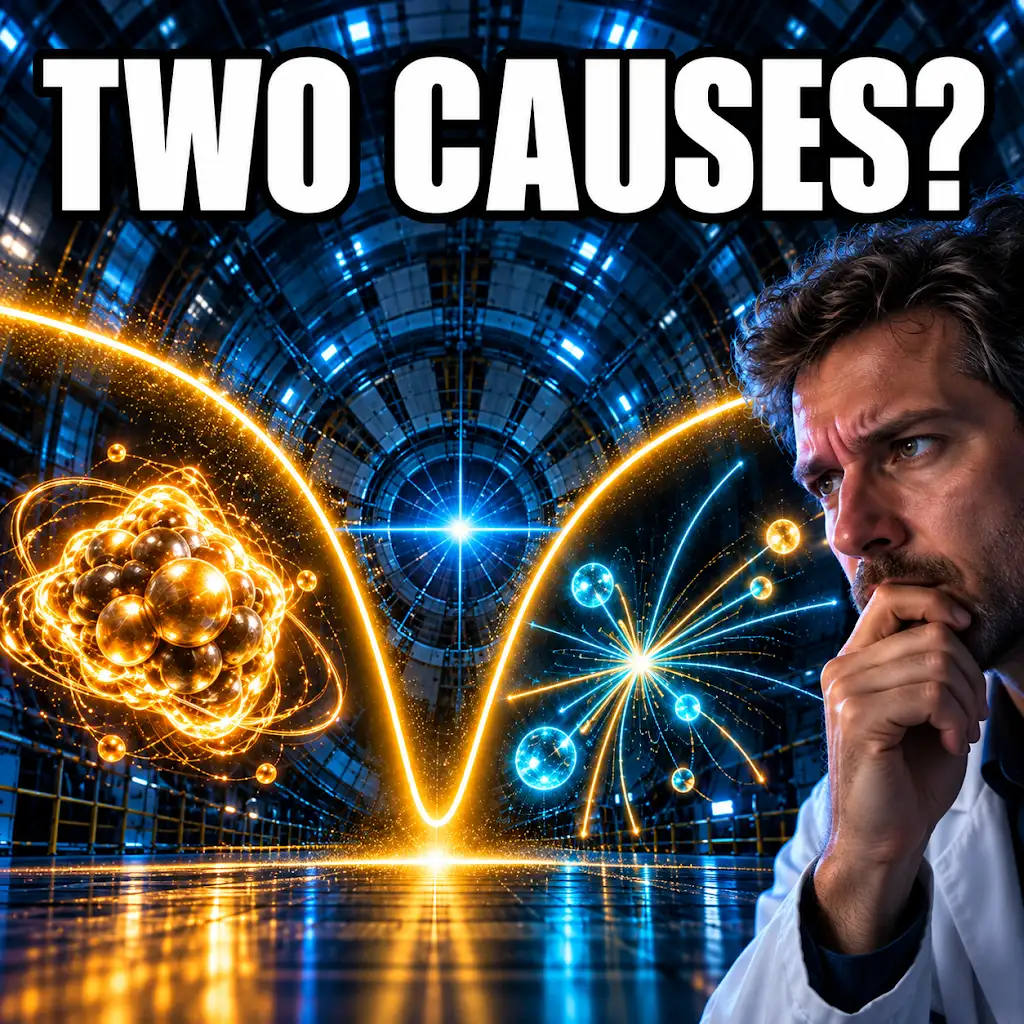
A Collider Found a Strange Dip in Dense Matter. What Caused It?
FAQs
What is the RHIC Star Detector Dip?
The RHIC Star Detector Dip refers to a phenomenon observed in the Relativistic Heavy Ion Collider (RHIC) at Brookhaven National Laboratory. It is a dip in the energy spectrum of particles detected by the STAR (Solenoidal Tracker at RHIC) detector.
What causes the RHIC Star Detector Dip?
The RHIC Star Detector Dip is caused by the collective flow of particles created in heavy-ion collisions at RHIC. This flow results in a redistribution of particle energies, leading to the dip in the energy spectrum.
How is the RHIC Star Detector Dip studied?
Scientists study the RHIC Star Detector Dip by analyzing the data collected by the STAR detector during heavy-ion collisions at RHIC. They use sophisticated algorithms and statistical methods to identify and characterize the dip in the energy spectrum.
What insights can be gained from studying the RHIC Star Detector Dip?
Studying the RHIC Star Detector Dip can provide valuable information about the properties of the quark-gluon plasma created in heavy-ion collisions. It can help researchers understand the dynamics of the collision process and the behavior of matter at extreme temperatures and densities.
How does the RHIC Star Detector Dip contribute to our understanding of the early universe?
The RHIC Star Detector Dip is believed to be analogous to similar phenomena observed in the early universe shortly after the Big Bang. By studying the dip, scientists can gain insights into the conditions that existed in the early universe and how matter evolved in the aftermath of the Big Bang.