The landscape of professional communication is undergoing a significant transformation, with conventional presentation methods increasingly vying for attention in an era saturated with visual information. This article explores the emergence of holographic projection systems as a groundbreaking technology poised to redefine how information is conveyed and absorbed. By offering a three-dimensional, immersive experience, these systems move beyond the limitations of flat screens and static images, presenting a dynamic platform for engaging audiences with unparalleled depth and clarity.
For centuries, human communication has relied on evolving technological advancements to enhance information transfer. From cave paintings to the printing press, and subsequently to photography and motion pictures, each innovation has sought to overcome barriers of distance, scale, and comprehension. The advent of digital displays and projectors marked a significant leap, enabling the widespread dissemination of dynamic visual content. However, these two-dimensional mediums, while highly effective, inherently possess spatial constraints, often requiring the audience to mentally bridge the gap between flat imagery and real-world complexity. Holographic projection systems represent a natural progression in this evolutionary journey, offering a solution that directly addresses this spatial limitation by manifesting content as tangible, volumetric light forms. This technological leap signifies a shift from passive viewing to an active, almost tactile, engagement with presented information.
From Static Images to Dynamic Dimensions
The journey from static infographics to interactive holographic models illustrates a fundamental paradigm shift. Traditional slide decks, though ubiquitous, often struggle to convey intricate spatial relationships or complex mechanisms effectively. A projected image of an architectural design, for instance, requires mental reconstruction on the part of the viewer to fully grasp its three-dimensional form. Holographic displays bypass this cognitive load, presenting the edifice as a fully rendered, explorable entity within physical space.
The Limitations of Traditional Projection
Standard projection systems, while versatile, are bound by the inherent flatness of their output. They rely on an external surface, often a screen or wall, to display information. This fundamental constraint limits their capacity to represent truly volumetric data, such as a molecule’s intricate structure or the operational mechanics of complex machinery. The audience’s perception is thus filtered through a two-dimensional lens, potentially hindering complete understanding and immersion.
The advancements in holographic technology have opened up new possibilities in various fields, including entertainment, education, and communication. A related article that explores the latest developments in holographic projection systems can be found at My Cosmic Ventures. This article delves into how these systems work, their potential applications, and the future of holography in our daily lives, making it a must-read for anyone interested in cutting-edge technology.
Principles of Holographic Projection
Holographic projection systems operate on fundamental principles of light manipulation, drawing inspiration from classical optics and leveraging advanced digital processing. Unlike conventional projection, which simply casts a magnified image onto a surface, holographic projection aims to reconstruct a light field, thereby generating a three-dimensional image that appears to occupy real space. This is achieved through various techniques, each with its own advantages and limitations, but all fundamentally aiming to recreate the wavefronts of light that would emanate from a physical object.
Light Field Reconstruction
At the core of holographic projection is the concept of light field reconstruction. A light field describes the direction and intensity of light rays at every point in space. Traditional photography captures only a two-dimensional projection of this light field. Holography, in contrast, aims to capture and recreate the full light field, allowing viewers to perceive the object from different angles and distances, much as they would a real object. This is a crucial distinction, as it moves beyond mere illusion to a faithful recreation of visual reality.
Diffraction and Interference
The physical phenomena of diffraction and interference are central to most holographic technologies. Diffraction refers to the bending of light waves as they pass around an obstacle or through an aperture. Interference occurs when two or more light waves interact, resulting in a new wave pattern. Holographic projectors typically employ a spatial light modulator (SLM) to manipulate incoming light, creating intricate interference patterns. When these patterns are illuminated by a coherent light source, they diffract the light in such a way as to reconstruct the original light field of the intended three-dimensional image.
Types of Holographic Displays
The term “holographic display” encompasses a range of technologies, each with distinct operational principles. These include volumetric displays, which create actual light points in 3D space; autostereoscopic displays, which present different images to each eye without requiring special eyewear; and digital holography, which numerically reconstructs holographic images. Each type presents varying levels of fidelity, interactivity, and design complexity, catering to diverse application scenarios.
Applications Across Industries
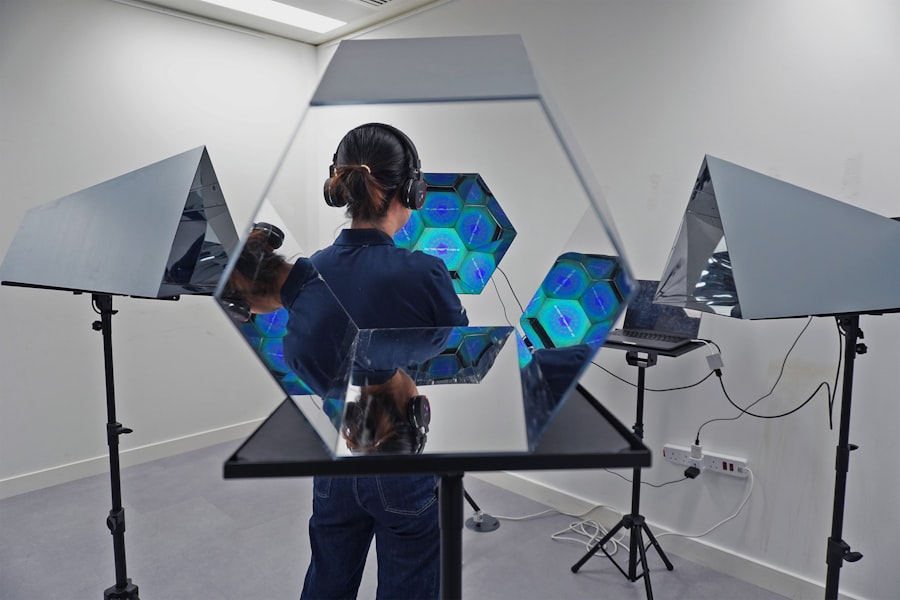
The transformative potential of holographic projection systems extends across a multitude of industries, offering innovative solutions to long-standing challenges in communication, visualization, and training. From the meticulous planning required in engineering to the nuanced explanations of medical education, holography provides a richer, more intuitive medium for conveying complex information. Its ability to create interactive, spatial representations unlocks new avenues for collaboration and comprehension.
Engineering and Design
In engineering and product design, the ability to visualize prototypes in three dimensions before physical fabrication can drastically reduce development cycles and costs. Holographic projections allow engineers to scrutinize intricate components, assess spatial relationships, and identify potential design flaws with unprecedented clarity. Design teams can collaboratively interact with virtual models, making real-time adjustments and exploring conceptual iterations in a shared, immersive environment.
Virtual Prototyping
Holographic systems enable the creation of virtual prototypes that can be manipulated and examined from any angle. This eliminates the need for expensive physical mock-ups during initial design phases, accelerating the iterative design process.
Collaborative Design Review
Teams located in different geographical regions can simultaneously review and interact with a holographic model, facilitating more efficient and comprehensive design feedback.
Medical and Scientific Visualization
The medical and scientific fields stand to benefit immensely from holographic visualization. Complex human anatomy, intricate biological processes, and abstract scientific data can be presented in a manner that enhances comprehension and retention for students, practitioners, and researchers alike. Imagine medical students dissecting a virtual heart, or scientists visualizing the precise interactions of molecules in a dynamic reaction.
Anatomical Training
Holographic projections of anatomical structures provide medical students with a detailed, interactive “dissection” experience without the logistic and ethical challenges associated with cadavers.
Surgical Planning
Surgeons can utilize holographic models derived from patient scans to meticulously plan complex procedures, visualizing the precise location of organs and tumors in three dimensions.
Data Interpretation
In scientific research, complex datasets, such as climate models or astrophysical phenomena, can be rendered holographically, allowing researchers to identify patterns and relationships that might be obscured in two-dimensional representations.
Education and Training
The educational sector is primed for a paradigm shift with the integration of holographic technology. Traditional textbooks and static images often struggle to capture the dynamic essence of certain subjects. Holographic lectures, interactive demonstrations, and virtual field trips can transform passive learning into an engaging, multi-sensory experience, fostering deeper understanding and improving knowledge retention.
Immersive Classrooms
Holographic projections can bring historical events to life, allow students to explore distant galaxies, or dissect a dinosaur in a classroom setting, making learning more experiential and memorable.
Skill-Based Training
For vocational training, holographic simulations can provide realistic environments for practicing procedures in fields like aviation, construction, or manufacturing, without the risks or costs associated with real-world scenarios.
Retail and Advertising
The retail and advertising industries can leverage holographic technology to create captivating customer experiences. Product demonstrations, interactive displays, and engaging advertisements can draw consumers in and provide a richer understanding of offerings, potentially influencing purchasing decisions.
Product Demonstrations
Holographic displays can showcase products in an innovative way, highlighting features and functionalities in a visually striking three-dimensional format that captures attention.
Interactive Exhibits
Retail environments can become more engaging through holographic projections that allow customers to virtually try on clothes, customize products, or explore different options in an immersive manner.
Challenges and Considerations
While the promise of holographic projection systems is substantial, their widespread adoption is not without challenges. These range from the technical hurdles of achieving high-fidelity, real-time holography to the economic considerations of mass production and affordability. Addressing these issues is crucial for the technology to transition from niche applications to a ubiquitous communication tool.
Technical Limitations
Current holographic technologies face several technical constraints. Achieving truly high-definition, full-color, large-scale holographic projections in real-time remains a complex engineering feat. Factors such as viewing angle limitations, speckle noise, and computational intensity for rendering complex holographic content need ongoing research and development.
Resolution and Fidelity
Many current holographic displays offer limited resolution compared to their 2D counterparts, impacting the clarity and realism of projected images. Achieving photorealistic fidelity across large volumes is a significant challenge.
Viewing Angle Restrictions
Some holographic systems have restricted viewing angles, meaning the 3D effect is only perceivable from specific vantage points. This limits their effectiveness in situations with large, distributed audiences.
Computational Demands
Generating and rendering complex holographic content requires substantial computational power, posing challenges for real-time interactivity and dynamic content updates.
Cost and Accessibility
The production cost of advanced holographic display systems is currently high, limiting their accessibility to specialized industries and high-budget applications. For widespread adoption, economies of scale and innovations in manufacturing processes are necessary to bring down prices to a more commercially viable level.
Manufacturing Complexity
The intricate nature of holographic optics and the precision required in their manufacture contribute to higher production costs. Simplifying these processes is crucial for accessibility.
Content Creation Tools
Developing holographic content requires specialized software and expertise, which are not yet as widely available or user-friendly as traditional 2D content creation tools.
Societal and Ethical Implications
As with any transformative technology, holographic projection systems raise societal and ethical questions. Concerns about privacy in public holographic displays, the potential for digital manipulation of reality, and the impact on human perception warrant careful consideration. Thoughtful development and implementation frameworks will be essential to harness the benefits while mitigating potential risks.
Data Privacy
Public holographic displays could potentially capture and analyze audience reactions or personal data, raising important privacy concerns that need to be addressed through robust regulations.
Reality Distortion
The immersive nature of holographic projections could be exploited to create highly convincing, yet entirely fictional, scenarios, raising questions about truth and digital manipulation.
Accessibility and Inclusivity
Ensuring that holographic technology is developed with accessibility in mind, accommodating diverse needs and preventing it from becoming a tool that exacerbates existing digital divides, is paramount.
The advancements in holographic technology have led to the development of innovative systems that can transform the way we interact with digital content. A fascinating article that explores the implications and applications of these systems can be found at this link. As holographic projection systems continue to evolve, they promise to enhance fields such as education, entertainment, and communication, offering immersive experiences that were once thought to be the realm of science fiction.
The Future of Interactive Displays
| Metric | Value | Unit | Description |
|---|---|---|---|
| Projection Resolution | 1920 x 1080 | pixels | Maximum display resolution of the holographic image |
| Projection Size | 1.5 | meters | Maximum diagonal size of the holographic projection |
| Viewing Angle | 120 | degrees | Maximum angle from which the hologram can be viewed clearly |
| Refresh Rate | 60 | Hz | Number of times the hologram image updates per second |
| Latency | 30 | milliseconds | Delay between input and hologram response |
| Power Consumption | 50 | Watts | Average power usage during operation |
| Weight | 3.2 | kilograms | Total weight of the holographic projection unit |
| Operating Temperature | 0 to 40 | °C | Recommended temperature range for optimal performance |
| Connectivity | Wi-Fi, HDMI, USB-C | – | Available input/output interfaces |
| 3D Depth Perception | 1.2 | meters | Maximum depth range for 3D holographic effect |
The trajectory of holographic projection systems points towards a future where digital content seamlessly integrates with our physical environment, moving beyond the confines of screens and towards truly interactive, volumetric displays. Ongoing research and development are focused on overcoming current limitations, pushing the boundaries of what is technically feasible and aesthetically pleasing.
Towards Real-Time, Full-Color Holography
Significant advancements are anticipated in achieving real-time, full-color holographic projections with wider viewing angles and higher resolution. This advancement will unlock richer, more dynamic visual experiences across all application domains.
Advanced Spatial Light Modulators (SLMs)
Further development in SLM technology, including higher pixel counts, faster refresh rates, and improved phase modulation capabilities, will be key to enhanced holographic fidelity.
Computational Holography
Advances in computational power and algorithms for light field synthesis will enable faster and more efficient generation of complex holographic content, facilitating real-time interactions.
Integration with Other Technologies
The true potential of holographic projection may lie in its integration with other emerging technologies. Combining holography with artificial intelligence (AI), virtual reality (VR), and augmented reality (AR) could create entirely new paradigms for interaction and information delivery. Imagine AI-powered holographic assistants or AR glasses projecting holographic overlays onto real-world objects.
AI-Powered Content Generation
AI could automate the creation of holographic content, adapting it in real-time based on user interaction or environmental conditions, thus personalizing the holographic experience.
Mixed Reality Integration
Holographic projections, when integrated with AR and VR platforms, could create hybrid environments where virtual objects seamlessly coexist and interact with the physical world, blurring the lines between reality and simulation.
Democratization of Holographic Content Creation
As the technology matures, it is likely that tools for creating holographic content will become more accessible and user-friendly, much like video editing software today. This democratization will empower a broader range of creators to experiment with holographic storytelling, education, and entertainment. The proliferation of authoring tools will be a strong indicator of the technology’s move from expert domain to general usability.
Holographic projection systems stand as a testament to humanity’s ongoing quest to enhance communication and perception. By offering a three-dimensional window into digital information, they promise to revolutionize presentations, education, and interaction across numerous sectors. While challenges persist, the trajectory of innovation suggests a future where the world, rendered in light, becomes an almost tactile medium for learning and engagement. The era of information unfolding in mid-air is not a distant fantasy, but a rapidly approaching reality, inviting us to rethink the very nature of visual communication.
FAQs
What is a holographic projection system?
A holographic projection system is a technology that creates three-dimensional images by projecting light patterns that appear to float in space, allowing viewers to see a realistic 3D representation without the need for special glasses.
How does a holographic projection system work?
It works by using lasers, light diffraction, or digital light processing to project images onto a transparent medium or into the air, creating the illusion of a 3D object that can be viewed from multiple angles.
What are common applications of holographic projection systems?
These systems are used in entertainment, advertising, medical imaging, education, and virtual meetings to provide immersive visual experiences and interactive displays.
Do holographic projection systems require special equipment to view the images?
Most modern holographic projection systems do not require viewers to wear special glasses; the 3D images can be seen with the naked eye from different perspectives.
What are the limitations of current holographic projection technology?
Limitations include high cost, complexity of setup, limited brightness in well-lit environments, and challenges in producing fully interactive or high-resolution holograms on a large scale.