The Elusive Nature of Photons: A Quantum Enigma
The very essence of light, a phenomenon we perceive daily, has proven to be one of science’s most profound and enduring mysteries. At its heart lies the photon, a quantum of electromagnetic radiation, a particle that defies simple categorization and consistently challenges our classical intuitions. For centuries, scientists have grappled with the paradoxical nature of light, oscillating between wave and particle descriptions. However, the advent of quantum mechanics in the early 20th century revealed a truth far stranger and more intricate than anyone could have imagined. Photons are not simply tiny billiard balls of energy, nor are they solely ethereal waves rippling through space. Instead, they embody a peculiar duality, exhibiting characteristics of both, depending on how they are observed and interacted with. This inherent fuzziness, this “quantum weirdness,” is not a limitation of our measurement tools but a fundamental property of reality at its most granular level. Understanding the photon means venturing into a realm where probabilities reign supreme, where causality can appear bent, and where the observer plays an indispensable role in shaping what is observed. This exploration will delve into the fascinating characteristics of photons, examining their wave-particle duality, their peculiar behavior in quantum experiments, and the profound implications of their quantum nature for our understanding of the universe.
Photon quantum weirdness continues to intrigue scientists and enthusiasts alike, as it challenges our understanding of the fundamental principles of physics. For those interested in exploring this phenomenon further, a related article can be found at My Cosmic Ventures, where the complexities of quantum mechanics and the behavior of photons are discussed in detail. This article delves into the implications of quantum entanglement and the bizarre nature of light, offering insights that are both enlightening and thought-provoking.
Wave-Particle Duality: The Bifurcated Identity of Light
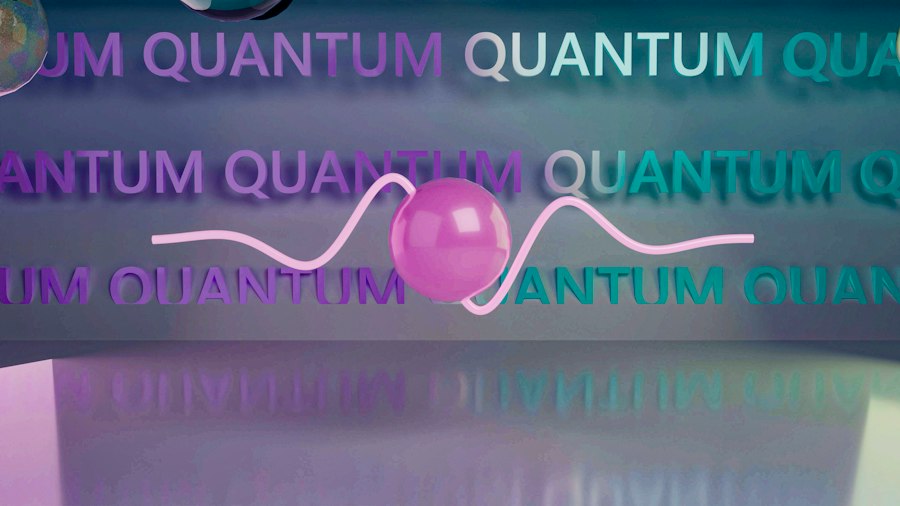
The most striking characteristic of the photon is its paradoxical wave-particle duality. This concept, a cornerstone of quantum mechanics, suggests that quantum entities, like photons, can exhibit properties of both waves and particles, seemingly at the same time. This isn’t a matter of switching between states; rather, it’s an inherent characteristic that manifests differently depending on the experimental setup.
The Double-Slit Experiment: A Quantum Playground
Perhaps the most iconic demonstration of wave-particle duality is the double-slit experiment, a thought experiment that has been realized in countless variations with photons, electrons, atoms, and even molecules. When photons are fired, one by one, at a barrier with two slits, and the resulting pattern on a detector screen behind it is observed, a curious phenomenon emerges. If one considers photons as mere particles, one would expect to see two distinct bands of impacts on the screen, corresponding to the photons passing through each slit. However, what is observed is an interference pattern, a series of bright and dark fringes, characteristic of waves interfering with each other. This pattern arises even when photons are sent through the slits one at a time, implying that each individual photon somehow “knows” about both slits and interferes with itself.
The Role of Observation: Collapsing the Wave Function
The strangeness of the double-slit experiment intensifies when one attempts to determine which slit each photon passes through. If detectors are placed at the slits to observe the photon’s path, the interference pattern vanishes, and the expected two-band distribution of particles reappears. This suggests that the act of measurement, of “observing” the photon’s trajectory, forces it to behave like a particle, collapsing its wave-like nature. This “observer effect” is not about human consciousness but about the unavoidable interaction that occurs when a measurement is performed, an interaction that perturbs the quantum system. The photon, in essence, is in a superposition of states, passing through both slits simultaneously in its wave-like manifestation, until an interaction forces it to choose a single, definite path, exhibiting its particle-like character.
Quantum Superposition: Being in Multiple States at Once
The ability of a photon to exhibit wave-like properties, particularly its interference in the double-slit experiment, is a direct consequence of the quantum principle of superposition. Before measurement, a photon can exist in a superposition of multiple possible states simultaneously. In the context of the double-slit experiment, this means a photon can be thought of as being in a superposition of “passing through slit A” and “passing through slit B” at the same time. It is only when a measurement is performed that this superposition “collapses” into a single, definite state. This concept is utterly foreign to our everyday experience, where an object is either here or there, but never both.
Entanglement: The Spooky Connection
Beyond duality and superposition, photons also exhibit another peculiar quantum phenomenon: entanglement. When two or more photons become entangled, their fates become inextricably linked, regardless of the distance separating them. If a measurement is performed on one entangled photon, the state of the other entangled photon is instantaneously determined, even if it is light-years away. This apparent faster-than-light influence, famously described by Einstein as “spooky action at a distance,” has been experimentally verified and poses a fundamental challenge to our understanding of locality and causality. The measurement on one photon instantly affects the properties of its entangled partner, suggesting a deeper, non-local connection in the quantum realm that classical physics cannot explain.
The Photon as a Quantum of Energy: Quantization and Planck’s Constant

The concept of the photon emerged from the need to explain the phenomenon of blackbody radiation. Classical physics predicted that a heated object should emit an infinite amount of energy at high frequencies, a result known as the ultraviolet catastrophe. Max Planck, in 1900, proposed a radical solution: energy is not emitted or absorbed continuously but in discrete packets, or quanta. The energy of these quanta is directly proportional to the frequency of the radiation, a relationship described by Planck’s equation: E = hf, where E is the energy, f is the frequency, and h is Planck’s constant, a fundamental constant of nature approximately equal to 6.626 x 10^-34 joule-seconds.
The Photoelectric Effect: Light as a Particle
Albert Einstein, in 1905, further solidified the particle nature of light by explaining the photoelectric effect. This phenomenon, where electrons are emitted from a material when light shines on it, could not be fully explained by the wave theory of light. Einstein proposed that light itself consists of discrete energy packets, which he called “light quanta” (later termed photons). Each photon carries an amount of energy proportional to its frequency. When a photon strikes an electron in the material, it transfers its entire energy. If this energy is sufficient to overcome the binding energy of the electron, the electron is ejected. This explanation accounted for the observation that the emission of electrons depends on the frequency of the light, not its intensity, a result that was baffling under the wave model.
Energy Transfer and Momentum: The Photon’s Physical Properties
As a quantum of energy, a photon possesses momentum as well. This momentum is also quantized and is related to the photon’s wavelength by the de Broglie relation, p = h/λ, where p is momentum and λ is wavelength. This dual nature, possessing both energy and momentum, allows photons to exert pressure when they interact with matter, a phenomenon known as radiation pressure. This property is crucial in astrophysical contexts, such as the outward pressure exerted by starlight on gas clouds in nebulae, influencing star formation. The photon, therefore, is not just a carrier of energy; it is a physical entity with demonstrable momentum, capable of imparting a force.
Quantum Vacuum and Virtual Particles: The Energetic Sea
The quantum vacuum, often conceived as empty space, is far from inert in the quantum realm. According to quantum field theory, the vacuum is a dynamic, fluctuating entity teeming with virtual particles that pop into existence and annihilate each other on incredibly short timescales. Photons play a crucial role in this process, as they are often involved in the creation and annihilation of these virtual particle-antiparticle pairs.
The Photon Cloud: Interactions in the Void
Even in what appears to be empty space, photons are constantly interacting. These interactions can lead to the creation of transient, “virtual” particles and antiparticles, such as electron-positron pairs. These virtual particles exist for only a fleeting moment, borrowing energy from the vacuum for their brief existence before annihilating and returning the energy. Photons can be emitted and absorbed by these virtual particles, effectively creating a dynamic “photon cloud” around any charged particle. This cloud influences the properties of the charged particle, contributing to phenomena like the Lamb shift in atomic energy levels.
Renormalization: Taming the Infinities
The existence of virtual particles and the continuous interactions involving photons in the vacuum lead to infinities when calculations are performed using quantum field theory. To address these infinities, a process called renormalization is employed. Renormalization is a set of techniques that effectively “absorbs” these infinities into physical quantities that are measured experimentally, such as the charge and mass of particles. This allows for incredibly accurate predictions of observable phenomena, even though the underlying theoretical framework initially encounters these troublesome infinities, underscoring the pragmatic success of quantum field theory in dealing with the complexities of the vacuum.
Photon quantum weirdness is a fascinating topic that delves into the strange behaviors of light at the quantum level, challenging our understanding of reality. For those interested in exploring this subject further, a related article can be found at My Cosmic Ventures, where the intricate relationship between photons and quantum mechanics is discussed in detail. This exploration not only highlights the peculiarities of light but also opens up discussions about the implications for technology and our perception of the universe.
Applications and Future Frontiers: Harnessing Photon Weirdness
| Metric | Description | Typical Value / Range | Significance in Photon Quantum Weirdness |
|---|---|---|---|
| Photon Entanglement Fidelity | Measure of how closely entangled photon pairs match the ideal entangled state | 0.85 – 0.99 (unitless, 1 = perfect entanglement) | Indicates the quality of entanglement, crucial for quantum communication and tests of nonlocality |
| Bell Inequality Violation (S-parameter) | Quantifies the degree to which photon correlations violate classical local realism | 2 | Demonstrates quantum nonlocality and the “weirdness” of photon behavior |
| Photon Coherence Time | Duration over which a photon maintains a predictable phase relationship | 10 ps to several ns (picoseconds to nanoseconds) | Determines interference visibility and quantum state stability |
| Quantum Bit Error Rate (QBER) | Rate of errors in photon-based quantum key distribution | Typically | Reflects the reliability of quantum communication channels affected by photon quantum properties |
| Single-Photon Detection Efficiency | Probability of detecting a single photon when it arrives at the detector | 60% – 95% | Impacts experimental accuracy in observing quantum phenomena |
| Photon Polarization Entanglement Visibility | Contrast ratio in polarization correlation measurements | 85% – 99% | High visibility confirms strong quantum correlations and superposition states |
The “weirdness” of photons, far from being mere curiosities, forms the basis of numerous groundbreaking technologies and holds immense promise for future innovations. By understanding and manipulating the quantum properties of photons, scientists are pushing the boundaries of computing, communication, sensing, and our fundamental understanding of reality.
Quantum Computing: Leveraging Superposition and Entanglement
Quantum computing, a revolutionary field, aims to harness the principles of quantum mechanics, including photon superposition and entanglement, to perform computations far beyond the capabilities of classical computers. Photons are ideal candidates for qubits, the quantum bits of information, due to their ability to travel at the speed of light and their low interaction with the environment, which helps maintain their quantum states. Quantum algorithms, by exploiting superposition, can explore vast numbers of possibilities simultaneously, while entanglement allows for complex correlations between qubits, leading to exponential speedups for certain types of problems, such as drug discovery, materials science, and cryptography.
Quantum Communication and Cryptography: Unbreakable Codes
The secure transmission of information is another area where photon quantum weirdness plays a pivotal role. Quantum key distribution (QKD) utilizes the principles of quantum mechanics, including the fact that measuring a quantum system inevitably disturbs it, to generate and distribute secret cryptographic keys. If an eavesdropper attempts to intercept the key, their measurement will inevitably alter the quantum states of the photons, alerting the legitimate parties to the intrusion. This provides a fundamentally secure method of communication, guaranteed by the laws of physics rather than by the computational difficulty of breaking an algorithm.
Sensing and Metrology: Unprecedented Precision
The sensitivity of quantum systems to external influences, a key aspect of photon behavior, is being harnessed for advanced sensing and metrology. Photon-based sensors can detect extremely faint signals and measure physical quantities with unprecedented precision. For instance, entangled photons can be used to enhance the sensitivity of interferometers, leading to more accurate gravitational wave detectors. Furthermore, the interaction of photons with matter can be used for high-resolution imaging and spectroscopy, enabling new diagnostic tools in medicine and advanced analytical techniques in materials science. The quantum properties of light offer a pathway to probing the universe with a level of detail previously unimaginable.
The Future of Photon Research: Unveiling Deeper Mysteries
The exploration of photon quantum weirdness is far from over. Current research is focused on developing more robust and scalable quantum technologies, improving our understanding of fundamental quantum phenomena, and potentially uncovering even deeper mysteries of the universe. Scientists are investigating phenomena like quantum entanglement at larger scales, exploring the interplay between quantum mechanics and gravity, and seeking to unify the different forces of nature. The humble photon, with its paradoxical nature, continues to be a powerful lens through which to view the fundamental workings of reality, promising further revelations and technological advancements that will shape our future.

Physicists Just Measured a Negative Second.
FAQs
What is photon quantum weirdness?
Photon quantum weirdness refers to the strange and counterintuitive behavior exhibited by photons, which are the fundamental particles of light, in the realm of quantum mechanics.
How does the phenomenon of superposition apply to photons?
Superposition is a quantum principle that allows photons to exist in multiple states simultaneously. This means a photon can be in two or more places at the same time until it is observed or measured.
What is entanglement in the context of photons?
Entanglement is a quantum phenomenon where two or more photons become connected in such a way that the state of one photon instantly influences the state of the other, regardless of the distance between them.
Can photons exhibit both particle-like and wave-like properties?
Yes, photons can display characteristics of both particles and waves, known as wave-particle duality. This duality is a fundamental aspect of quantum mechanics and is demonstrated through phenomena like interference patterns.
How does photon quantum weirdness impact technologies like quantum computing and cryptography?
Photon quantum weirdness plays a crucial role in the development of technologies such as quantum computing and quantum cryptography, where the unique properties of photons are harnessed for tasks like secure communication and complex calculations.