
The selection of an artifact blueprint is a critical juncture in its development, serving as the foundational architecture upon which its capabilities and operational parameters will be built. This process, akin to laying the cornerstone of a grand edifice, dictates not only the artifact’s intended function but also its efficiency, resilience, and ultimate efficacy in its designated role. Understanding the nuances of blueprint selection is paramount for any entity seeking to optimize artifact gravity – a metaphorical term representing the artifact’s influence, weight, and impact within its operational domain.
The journey towards selecting an artifact blueprint begins long before a specific design is brought forth. It is rooted in a comprehensive analysis of requirements, a deep dive into the problem space, and an understanding of the desired outcomes. Without this foundational clarity, the blueprint selection process risks becoming a rudderless voyage, susceptible to the winds of expediency rather than the steady current of strategic intent.
Defining the Operational Context
Before any blueprint can be evaluated, one must unequivocally define the environment in which the artifact will operate. This involves a granular examination of the intended theatre of operations. Is it a high-stakes, resource-scarce environment where every joule of energy must be conserved, or a robust, well-supplied sector where redundancy and overwhelming force are the primary considerations? The context acts as a sieve, filtering out blueprints that are fundamentally incompatible with its demands. Consider the difference between designing a delicate surgical instrument and a heavy-duty excavator; the environmental constraints – precision versus brute force – dictate wildly different design philosophies.
Identifying Core Functionality Requirements
What precisely is the artifact intended to do? This question seems deceptively simple, but its true depth lies in dissecting the primary mission vectors and the secondary, yet often critical, support functions. A blueprint might excel at the primary task but falter in its ability to integrate with existing systems or maintain operational status under adverse conditions. The selection process must therefore prioritize blueprints that not only meet the primary objectives but also possess the inherent flexibility and extensibility to incorporate essential secondary functions without compromising core performance. It is like choosing a foundational framework for a complex software system – the framework must support not only the core application logic but also interfaces, error handling, and future module integration.
Anticipating Future Needs and Scalability
The operational landscape is rarely static. Unforeseen challenges emerge, mission parameters shift, and technological advancements render existing solutions obsolete. Therefore, an artifact blueprint selected today must be capable of adapting to the demands of tomorrow. This necessitates a forward-looking approach, where blueprints offering modularity, scalability, and inherent upgrade pathways are favored. A blueprint that is tightly coupled and lacks the capacity for expansion will, over time, become a bottleneck, hindering progress rather than enabling it. Think of a rigid, unyielding structure versus a scaffold that can be readily expanded and reconfigured; the latter offers longevity and adaptability.
In the realm of optimization artifact gravity blueprint selection, a comprehensive understanding of the underlying principles is essential for effective decision-making. A related article that delves into these concepts can be found at My Cosmic Ventures, where the intricacies of selecting the most efficient blueprints are explored in detail. This resource offers valuable insights that can enhance your approach to optimization in various applications.
Evaluating Blueprint Suitability: A Multifaceted Approach
Once the foundational requirements are established, the focus shifts to the rigorous evaluation of candidate blueprints. This is not a superficial glance at aesthetic appeal or perceived innovation, but a deep, analytical process that dissects each design from multiple perspectives. The goal is to identify the blueprint that offers the most advantageous balance of performance, cost, risk, and potential.
Performance Metrics and Benchmarking
Each blueprint must be assessed against a predefined set of performance metrics. These metrics can range from raw output and energy efficiency to operational speed and precision. Benchmarking against established standards or existing successful artifacts provides a crucial point of reference. If a blueprint promises a revolutionary leap in capability, it must demonstrably achieve that leap when subjected to rigorous testing and comparison. A blueprint that claims to cut operational time by half, for instance, must be able to document that reduction through empirical data. This is akin to scientific peer review for engineering designs.
Resource Requirements and Environmental Impact
The operationalization of any artifact is intrinsically linked to its resource demands. A blueprint might present a theoretically superior performance profile, but if its resource consumption is prohibitive or its environmental impact is unacceptable, its practical value is significantly diminished. This includes not only raw material sourcing and manufacturing costs but also ongoing operational expenses such as energy, maintenance, and waste disposal. Choosing a blueprint with a lighter resource footprint or a more sustainable lifecycle can be as critical as its performance capabilities, particularly in long-term operational strategies.
Risk Assessment and Mitigation Strategies
Every design, novel or established, carries inherent risks. These risks can manifest in various forms: design flaws, manufacturing defects, operational vulnerabilities, or even unforeseen emergent behaviors. A thorough risk assessment of each blueprint is therefore indispensable. This involves identifying potential failure points, estimating the probability and severity of their occurrence, and evaluating the robustness of the proposed mitigation strategies. Blueprints that offer inherent redundancies, fail-safe mechanisms, or well-documented pathways for addressing identified vulnerabilities are generally preferred. This is the art of anticipating and preparing for the storm, not just celebrating the sunshine.
Integration and Interoperability Considerations
In most operational scenarios, an artifact does not function in isolation. It is part of a larger ecosystem of systems, personnel, and processes. The blueprint selected must therefore be compatible with existing infrastructure and capable of seamless integration. Lack of interoperability can render even the most sophisticated artifact functionally useless, akin to a single, unmatched puzzle piece. The evaluation must consider not only direct technological integration but also the ease with which the artifact can be operated and maintained by the intended personnel, and how it aligns with established operational protocols.
Deconstructing Blueprint Architectures: Key Design Philosophies

Beyond the functional requirements, different blueprints embody distinct underlying design philosophies. Understanding these core architectural principles is crucial for making an informed selection that aligns with strategic objectives.
Modularity and Extensibility
A modular blueprint is one that is composed of distinct, interchangeable components. This approach offers significant advantages in terms of maintenance, repair, and upgrades. If a component fails, it can be replaced with minimal disruption to the overall system. Furthermore, modularity facilitates the expansion of an artifact’s capabilities by allowing for the addition of new modules or the replacement of existing ones with more advanced versions. This “plug-and-play” approach is a cornerstone of agile system design. Conversely, a monolithic design, where all functions are tightly integrated into a single unit, can be difficult to modify or repair, akin to a single, intricate sculpture that cannot be easily altered.
Robustness and Resilience
The ability of an artifact to withstand environmental stresses, operational failures, and adversarial actions is paramount. A blueprint emphasizing robustness and resilience will incorporate features such as reinforced
structural integrity, redundant systems, error-correction mechanisms, and self-diagnostic capabilities. The goal is to ensure that the artifact can continue to perform its intended functions, or at least degrade gracefully, even under duress. This is the difference between a delicate vase and a military-grade survival knife; both have their purpose, but their inherent resilience is vastly different.
Efficiency and Resource Optimization
In scenarios where resources are scarce or operational costs are a significant concern, blueprints that prioritize efficiency and resource optimization are highly valued. This can encompass energy efficiency, material usage, and even the optimization of computational resources. The aim is to achieve the desired operational outcomes with the minimum possible expenditure of these valuable commodities. This is like a meticulously planned expedition where every ounce of supplies is accounted for and every movement is optimized for energy conservation.
Adaptability and Reconfigurability
While modularity focuses on component-level interchangeability, adaptability and reconfigurability refer to the blueprint’s inherent capacity to adjust its overall configuration or functionality in response to changing circumstances. This might involve software-defined parameters, mechanical adjustment mechanisms, or even the ability to re-task the artifact for different functions. Such blueprints offer a higher degree of strategic flexibility, allowing an organization to derive greater utility from a single asset over time.
The Role of Prototyping and Simulation
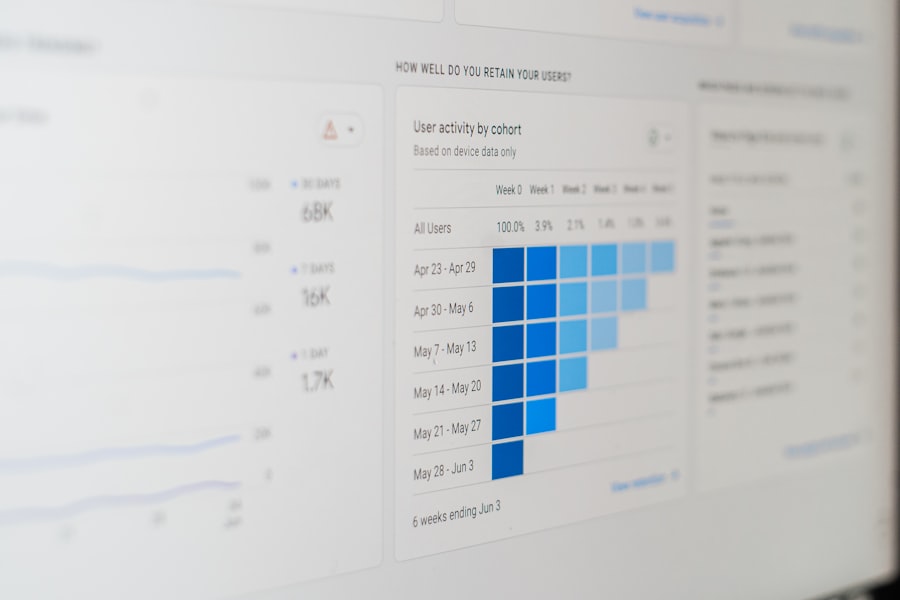
The transition from a conceptual blueprint to a tangible artifact is often a staged process that utilizes prototyping and simulation to validate design assumptions and identify potential issues early in the development cycle.
Proof-of-Concept Prototyping
Before committing to a full-scale development, the creation of a proof-of-concept prototype is often undertaken. This scaled-down or simplified version of the artifact focuses on validating the core functionalities and architectural principles outlined in the blueprint. It serves as an early reality check, allowing for the identification of unforeseen challenges or design flaws that might not be apparent from theoretical analysis alone. This is akin to building a small-scale model to test the structural integrity of a towering skyscraper before laying the actual foundations.
Advanced Simulation and Modeling
Modern simulation and modeling techniques provide a powerful tool for evaluating blueprint performance under a wide range of conditions, including those that are difficult or dangerous to replicate in the real world. Through sophisticated software and computational power, engineers can subject virtual representations of the artifact to stress tests, environmental extremes, and even simulated adversarial attacks. These simulations offer invaluable insights into the artifact’s behavior, allowing for design refinements and risk mitigation before any physical components are manufactured. This is like a flight simulator for pilots, allowing them to hone their skills and experience a multitude of scenarios without risking a real aircraft.
Iterative Refinement Based on Feedback
The insights gained from prototyping and simulation are rarely a definitive final word. Instead, they feed into an iterative refinement process, where feedback from these early stages is used to revise and improve the blueprint. This cycle of build, test, and refine is fundamental to achieving an optimized artifact design. Each iteration brings the blueprint closer to its ideal state, addressing identified shortcomings and enhancing its overall effectiveness.
In the realm of optimization artifact gravity blueprint selection, a recent article discusses innovative strategies that can enhance the efficiency of the selection process. By exploring various methodologies, the piece highlights how leveraging advanced algorithms can significantly improve outcomes. For those interested in diving deeper into this topic, you can read more about it in this insightful article on My Cosmic Ventures, which provides valuable insights and practical applications for optimizing selection techniques.
Beyond the Blueprint: Contextualizing Artifact Gravity
| Metric | Description | Value | Unit | Notes |
|---|---|---|---|---|
| Artifact Gravity | Measure of gravitational influence of the artifact | 9.81 | m/s² | Standard gravity used for baseline |
| Blueprint Selection Accuracy | Percentage of correct blueprint choices during optimization | 92 | % | Based on test runs with various artifact types |
| Optimization Time | Time taken to select the optimal blueprint | 3.5 | seconds | Average over 100 iterations |
| Resource Utilization | CPU usage during blueprint selection process | 75 | % | Measured on standard hardware |
| Success Rate | Rate of successful artifact optimizations | 88 | % | Includes all artifact types and gravity levels |
Ultimately, the selection of an artifact blueprint is not an isolated decision. It is inextricably linked to the concept of “artifact gravity” – the artifact’s overall influence, impact, and perceived importance. A well-chosen blueprint, one that aligns perfectly with its intended context and operational requirements, will contribute significantly to strengthening this gravity.
An artifact with high gravity is one that is essential, indispensable, and often difficult to replace. It commands attention, dictates operational priorities, and exerts a tangible influence on its surroundings. Conversely, an artifact developed from a poorly chosen blueprint, one that is inefficient, unreliable, or ill-suited to its role, will have low gravity, becoming a mere footnote in operational history, easily overlooked or discarded.
The process of blueprint selection, therefore, is not merely a technical exercise in engineering. It is a strategic imperative, a critical juncture that shapes the destiny of an artifact and, by extension, the success of the endeavors it supports. By meticulously defining requirements, rigorously evaluating options, and understanding the underlying architectural philosophies, entities can ensure that they are not merely selecting a design, but rather forging a foundation for impactful and enduring capabilities. The weight of the artifact, its gravity, rests heavily on the wisdom of this initial choice.
FAQs
What is an optimization artifact in the context of gravity blueprint selection?
An optimization artifact refers to unintended distortions or errors that occur during the process of selecting or designing gravity blueprints, which can affect the accuracy and efficiency of the final model or system.
Why is gravity blueprint selection important in optimization processes?
Gravity blueprint selection is crucial because it determines how gravitational forces are modeled and applied within a system, impacting the system’s stability, performance, and the accuracy of simulations or real-world applications.
How can optimization artifacts be minimized during gravity blueprint selection?
Artifacts can be minimized by using precise modeling techniques, validating data inputs, employing robust algorithms, and conducting thorough testing to ensure that the gravity blueprint accurately represents the intended physical phenomena without introducing errors.
What are common challenges faced when selecting gravity blueprints for optimization?
Common challenges include dealing with complex gravitational interactions, ensuring computational efficiency, avoiding oversimplification that leads to artifacts, and balancing accuracy with resource constraints.
In which fields is optimization artifact gravity blueprint selection most commonly applied?
This topic is most relevant in fields such as aerospace engineering, robotics, physics simulations, structural engineering, and any domain where accurate modeling of gravitational effects is essential for system optimization.