
The concept of time travel, a staple of science fiction, invariably introduces various paradoxes that challenge our understanding of causality and reality. Among these, the Grandfather Paradox stands as perhaps the most iconic and perplexing. This article delves into the intricacies of the Grandfather Paradox, exploring its implications for time travel physics and examining the theoretical frameworks proposed to resolve it.
The Grandfather Paradox postulates a scenario where a time traveler goes back in time and prevents their own existence. The most common illustration involves traveling to a point before one’s grandparents met and causing the death of one’s grandfather. If the grandfather dies, the time traveler’s parent would never be born, and consequently, the time traveler would never be born. This leads to a logical inconsistency: if the time traveler was never born, they could not have traveled back in time to kill their grandfather.
The Problem of Causal Loops
The essence of the Grandfather Paradox lies in its creation of a causal loop that is inherently self-defeating. A causal loop, in general, describes a sequence of events where A causes B, B causes C, and C then causes A. While some causal loops, known as consistent causal loops or Novikov self-consistency principle loops, are theoretically permissible in time travel (e.g., knowledge from the future inspiring an invention in the past, leading to that knowledge existing in the future), the Grandfather Paradox presents an inconsistent causal loop. The time traveler’s action negates the very premise of their action, creating a logical impasse.
The Implications for Determinism vs. Free Will
The Grandfather Paradox also touches upon the philosophical debate between determinism and free will. If time is a fixed, immutable continuum, then any act of time travel that attempts to alter the past would be impossible by definition, as the past cannot be changed. This aligns with a deterministic view where all events, including future actions, are predetermined. Conversely, if free will exists and an individual can genuinely choose to alter the past, then the paradox emerges, suggesting a fundamental flaw in the fabric of causality as we understand it.
The grandfather paradox presents a fascinating dilemma in the realm of time travel physics, raising questions about causality and the nature of time itself. For those interested in exploring this topic further, a related article can be found at My Cosmic Ventures, which delves into various theories of time travel and their implications on our understanding of the universe. This article provides insights into how different interpretations of time might resolve the paradox and the philosophical implications that arise from such discussions.
Theoretical Resolutions to the Grandfather Paradox
Physicists and philosophers have proposed various theoretical frameworks to address and, in some cases, resolve the Grandfather Paradox. These resolutions often hinge on deeply speculative concepts, pushing the boundaries of current scientific understanding.
The Novikov Self-Consistency Principle
Perhaps the most well-known resolution, the Novikov Self-Consistency Principle, suggests that any time travel attempt to alter the past is inherently impossible. This principle posits that the laws of physics would conspire to prevent any paradox-inducing actions. If a time traveler were to attempt to kill their grandfather, some unforeseen event or chain of circumstances would invariably prevent the act from being successful. This could manifest as a jammed weapon, an unexpected slip, or even divine intervention, metaphorically speaking, ensuring that the past remains unchanged. The principle effectively argues that while time travel might be possible, changing the past in a way that creates a paradox is not. The timeline is, in essence, a rigid riverbed, and though you may travel upstream, you cannot divert the course of the water.
Many-Worlds Interpretation (Multiverse Theory)
A more radical solution comes from the Many-Worlds Interpretation of quantum mechanics. This theory suggests that every quantum measurement or decision splits the universe into multiple parallel realities. In the context of time travel, this would mean that when a time traveler goes to the past and makes a choice that would ordinarily create a paradox, they are not altering their original past. Instead, they are simply branching off into a new, parallel timeline where the altered event occurs. In this scenario, the time traveler’s original timeline remains untouched, thus preserving their existence. The act of killing the grandfather would occur in a newly created universe, while the time traveler’s existence in their original universe remains intact. You are not erasing the book you have read; you are simply starting a new, alternate version of the story.
Block Universe Theory
The Block Universe theory presents a fascinating, albeit counter-intuitive, perspective on time. This theory views time not as a flowing entity, but as a static, four-dimensional block where all past, present, and future events exist simultaneously. In this framework, there is no “altering” the past because all events are already eternally fixed within this block. A time traveler journeying to the past would not be changing anything; they would simply be experiencing a different part of the existing spacetime block. The Grandfather Paradox, in this context, becomes moot, as the idea of an individual “preventing” an event that is already an immutable part of the block universe is nonsensical. Your journey through time is akin to moving your finger across the pages of a book; the story and its conclusion are already written.
The Role of Causality in Time Travel
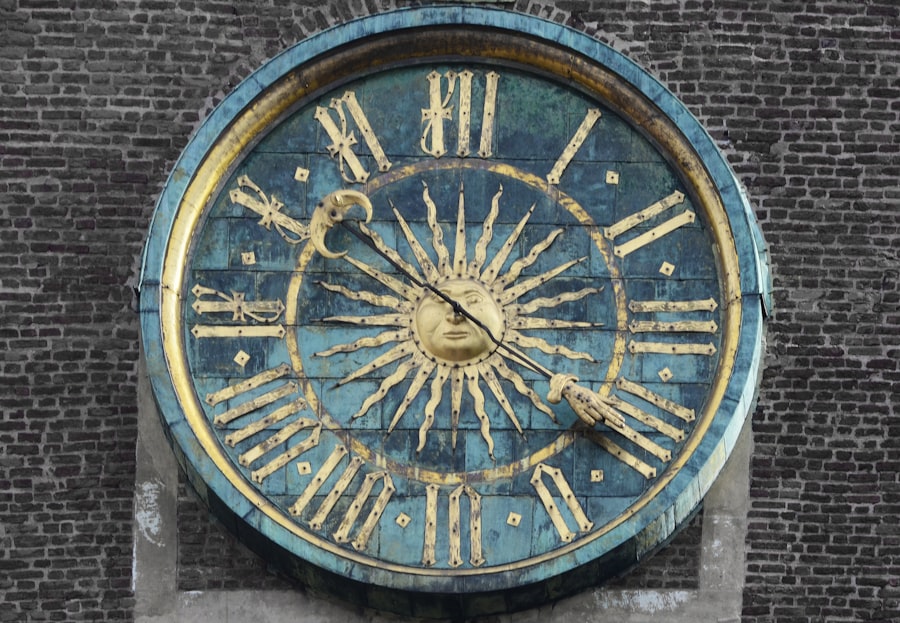
At the heart of the Grandfather Paradox and its potential resolutions lies our understanding of causality. The relationship between cause and effect is deeply ingrained in our perception of the world, and time travel challenges this fundamental principle.
Chronology Protection Conjecture
Stephen Hawking, among others, proposed the Chronology Protection Conjecture, which suggests that the laws of physics are structured in such a way as to prevent the formation of closed timelike curves (CTCs) that could lead to paradoxes. This conjecture implies that nature abhors time travel that alters causality, potentially through mechanisms yet unknown. It’s a sort of cosmic failsafe, preventing time from tying itself in knots. Hawking argued that such protection would be necessary because if macroscopic objects could travel through time and create paradoxes, the universe would become inherently unpredictable and chaotic.
The Paradox of Information
Beyond the Grandfather Paradox, time travel also introduces paradoxes related to information. Consider a scenario where a scientist receives the plans for a complex invention from their future self. The question then arises: where did the original information for this invention come from? This is known as an ‘ontological paradox’ or ‘bootstrapping paradox,’ where information appears to exist without an origin point. While not directly a Grandfather Paradox, it highlights the challenges time travel poses to the principle of conservation of information and the nature of knowledge itself. The idea of information without an origin is akin to a river flowing without a source; it challenges our intuitive understanding of how things begin.
Experimental and Observational Constraints
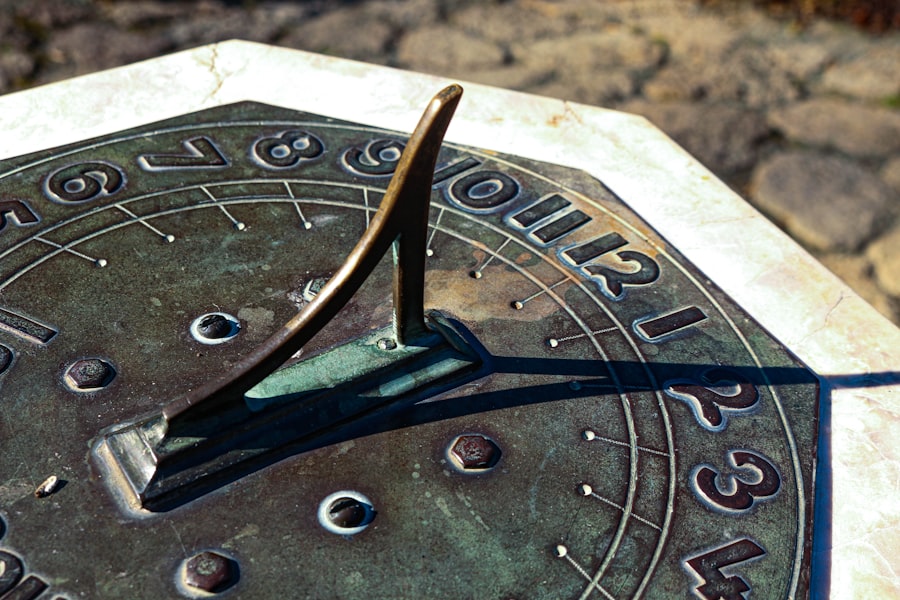
While the Grandfather Paradox is fundamentally a theoretical construct, its exploration informs our understanding of the universe’s fundamental properties and the limits of physical laws.
The Absence of Time Travelers
One of the most pragmatic arguments against the possibility of time travel to the past, and thus against the Grandfather Paradox ever becoming a real concern, is the observable absence of time travelers. If time travel were possible, one might expect to see evidence of visitors from the future. The lack of such evidence, while not conclusive, is often cited as a soft indicator against the feasibility of backward time travel. This absence, however, could be explained by various factors, such as the potential for time travelers to be discreet, the possibility of time travel being restricted to specific periods, or the inherent limitations on backward light cone visibility.
Limitations of General Relativity
General Relativity, Einstein’s theory of gravity, provides the theoretical framework for understanding spacetime. While it permits solutions that involve closed timelike curves, which are essential for time travel to the past, these solutions often involve exotic matter with negative energy density or highly extreme gravitational conditions that are currently not observed or understood. The Grandfather Paradox, therefore, acts as a theoretical litmus test for the viability of these extreme solutions to Einstein’s equations. It is a signpost indicating where current physical theories might be incomplete or where our understanding needs to be refined.
The grandfather paradox presents a fascinating challenge in the realm of time travel physics, raising questions about causality and the nature of time itself. For those interested in exploring this topic further, a related article can be found on My Cosmic Ventures, which delves into the implications of time travel and its paradoxes. You can read more about it here, where the complexities of altering past events are examined in detail, shedding light on the potential consequences of such actions.
Philosophical Considerations and the Nature of Time
| Aspect | Description | Relevance to Time Travel Physics | Key Theoretical Implications |
|---|---|---|---|
| Grandfather Paradox | A hypothetical scenario where a time traveler kills their grandfather before their parent is conceived, preventing their own existence. | Highlights logical contradictions in backward time travel. | Challenges the consistency of causality and temporal order. |
| Consistency Paradox | General term for paradoxes arising from actions that would prevent the cause of those actions. | Tests the limits of classical physics and causality in time travel. | Suggests the need for self-consistent solutions or constraints on time travel. |
| Novikov Self-Consistency Principle | Proposes that any actions taken by a time traveler were always part of history, preventing paradoxes. | Provides a theoretical framework to avoid paradoxes in time travel physics. | Implies that events are self-consistent and paradox-free. |
| Multiple Universes/Many-Worlds Interpretation | Suggests that time travel creates or accesses alternate timelines or universes. | Offers a resolution to paradoxes by branching timelines. | Allows contradictory events to coexist in separate universes. |
| Closed Timelike Curves (CTCs) | Paths in spacetime that return to the same point in time, theoretically allowing time travel. | Mathematically modeled in General Relativity; basis for time travel discussions. | Raises questions about causality and paradox resolution mechanisms. |
| Experimental Evidence | No direct experimental evidence for backward time travel or paradox resolution. | Limits current understanding and supports theoretical exploration. | Encourages development of quantum gravity and unified theories. |
Beyond the scientific theories, the Grandfather Paradox also prompts profound philosophical questions about the nature of time itself and our place within it.
The Open vs. Fixed Future
The paradox forces us to confront whether the future is open to change or if it is already determined. If the future is fixed, then time travel becomes a journey through an already written narrative, devoid of the ability to alter events. If the future is open, then the Grandfather Paradox presents a formidable logical obstacle to unimpeded time manipulation. This is the difference between navigating a pre-drawn map and charting your own course through an undiscovered territory.
The Fabric of Reality
Ultimately, the Grandfather Paradox serves as a stress test for our fundamental understanding of reality. It compels us to consider whether causality is an absolute law or a flexible principle, whether our universe is singular or part of a larger multiverse, and whether time itself is a fundamental dimension or an emergent property. The resolution of the Grandfather Paradox, should it ever be definitively found, would undoubtedly reshape our entire worldview. It is a puzzle whose solution could unlock profound insights into the very architecture of existence.
In conclusion, the Grandfather Paradox, while a thought experiment, remains a crucial intellectual battleground in the ongoing exploration of time travel physics. It forces physicists and philosophers alike to confront the limits of our understanding of causality, the nature of time, and the very fabric of reality. Whether resolved through self-consistency, parallel universes, or a complete re-evaluation of fundamental principles, the Grandfather Paradox continues to be a potent catalyst for scientific and philosophical inquiry. The journey to unravel its mysteries is, in itself, a journey through the timeless questions of existence.
FAQs
What is the grandfather paradox in time travel?
The grandfather paradox is a hypothetical scenario in time travel where a person travels back in time and prevents their grandfather from meeting their grandmother, thereby preventing the time traveler’s own birth. This creates a logical contradiction because if the time traveler was never born, they could not have traveled back in time to cause the event.
Why is the grandfather paradox important in physics?
The grandfather paradox highlights fundamental problems with the concept of time travel, particularly regarding causality and the consistency of events. It challenges physicists to develop theories that can resolve or avoid such contradictions, influencing research in quantum mechanics, general relativity, and the nature of time.
Are there any scientific theories that address the grandfather paradox?
Yes, several theories attempt to address the paradox. One is the “many-worlds” interpretation of quantum mechanics, which suggests that traveling back in time creates a new parallel timeline, avoiding contradictions. Another approach involves the Novikov self-consistency principle, which posits that events in time travel must be self-consistent, preventing paradoxical outcomes.
Is time travel physically possible according to current physics?
Current physics does not rule out time travel entirely but suggests it is highly speculative and likely limited. General relativity allows for solutions like wormholes that could theoretically enable time travel, but practical and paradoxical issues, such as the grandfather paradox, remain unresolved. No experimental evidence currently supports actual time travel.
How does the grandfather paradox influence popular culture?
The grandfather paradox is a popular theme in science fiction, often used to explore the consequences and complexities of time travel. It serves as a narrative device to create tension and explore philosophical questions about fate, free will, and the nature of time. Many books, movies, and TV shows reference or build upon this paradox.