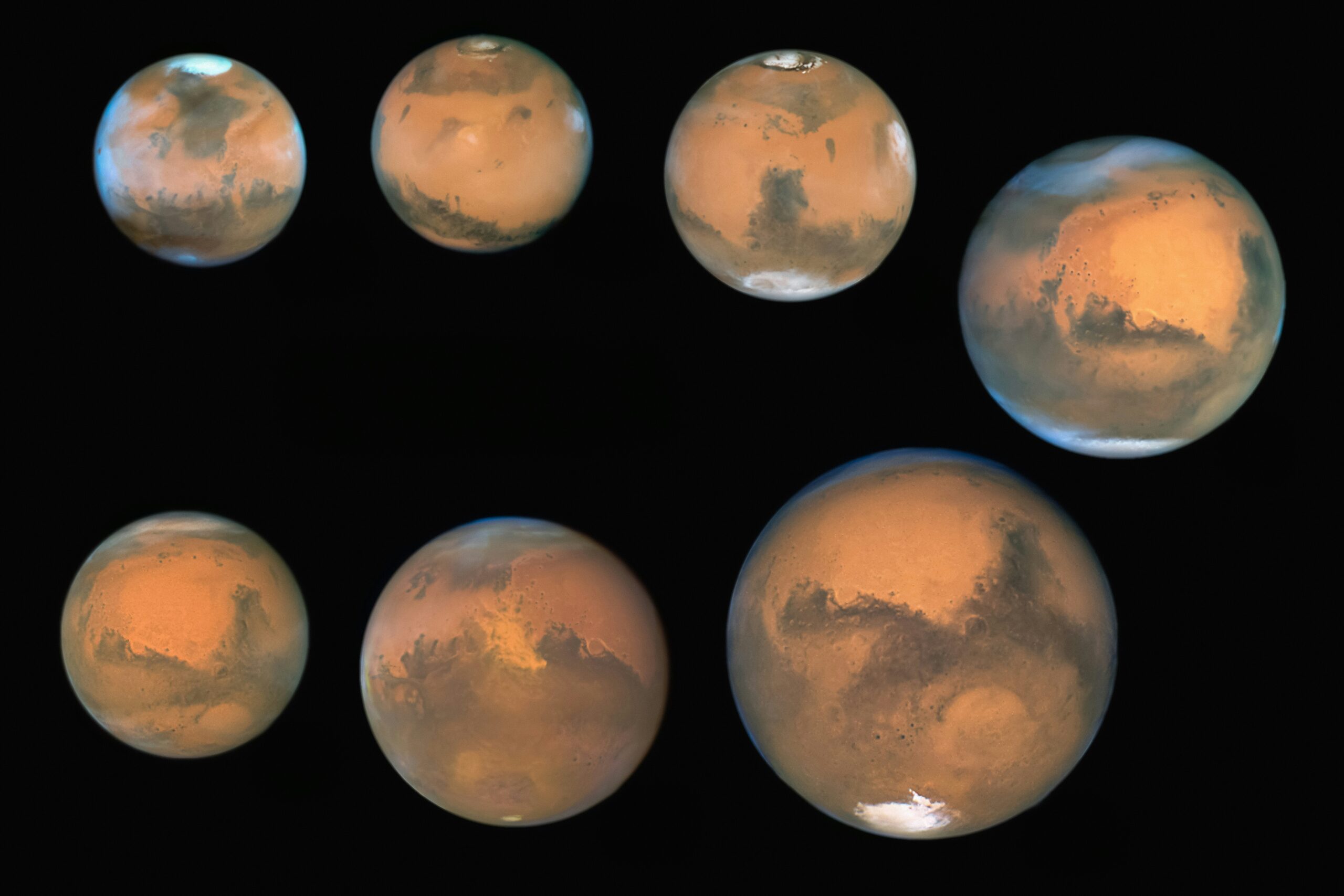
For decades, humanity has gazed at the crimson orb of Mars, captivated by the tantalizing possibility of life beyond Earth. This fascination has driven NASA’s ambitious exploration of the Red Planet, with a central scientific objective being the detection of past or present life. However, the definition and standards for what constitutes definitive evidence of Martian life have been a subject of intense scientific debate and evolution. Unlike finding a familiar bacterium on Earth, signs of alien life on Mars must be unambiguous, robust, and ideally, corroborated by multiple lines of evidence to overcome the inherent challenges of studying a distant, alien world. This article delves into NASA’s evolving standards for detecting life on Mars, exploring the scientific principles, the historical context, and the future directions of this monumental endeavor.
The Historical Context: From “Little Green Men” to Biosignatures
The early days of Mars exploration were characterized by a more simplistic, and arguably romantic, view of potential Martian life. The discovery of what were initially interpreted as “canals” on Mars in the late 19th and early 20th centuries fueled speculation about intelligent civilizations. While these observations were later attributed to optical illusions and atmospheric phenomena, they laid the groundwork for a persistent public and scientific interest in Martian life.
As spacecraft began to orbit and land on Mars, the focus shifted from speculative imaginings to a more rigorous scientific approach. The Viking missions of the 1970s were a watershed moment, carrying sophisticated biological experiments designed to detect metabolic activity in the Martian soil. These experiments yielded ambiguous results, with some showing transient positive responses that were later attributed to non-biological chemical reactions. This ambiguity underscored a critical challenge: how to distinguish between genuine biological processes and abiotic chemical mimicry. The Viking results, while not definitively detecting life, taught NASA a vital lesson about the need for stringent criteria in any future life detection efforts.
The Viking Experiments: A Lesson in Ambiguity
The Viking landers, equipped with instruments like the Gas Chromatograph Mass Spectrometer (GCMS) and several biological experiment packages, were designed to search for active microbial life in the Martian soil.
Metabolism Detection Experiments
The core of the Viking life detection strategy relied on three biological experiments: the Labeled Releasing Experiment (LRE), the Gas Exchange Experiment (GEX), and the Pyrolytic Release Experiment (PR).
Labeled Releasing Experiment (LRE)
The LRE introduced a nutrient solution containing radioactive carbon-14 into the Martian soil. If the soil contained microorganisms that metabolized these nutrients, they would release radioactive carbon dioxide gas. Several experiments showed a burst of radioactive gas production that peaked within the first few Martian sols, followed by a decline.
Gas Exchange Experiment (GEX)
The GEX experiment involved incubating Martian soil in a nutrient-rich water solution. It monitored for changes in gas composition, looking for signs of respiration or photosynthesis. This experiment also showed initial gas evolution, but the results were complex and difficult to interpret conclusively.
Pyrolytic Release Experiment (PR)
The PR experiment exposed Martian soil to a radioactive carbon-14-labeled gas mixture under simulated Martian conditions and then heated the soil to release any absorbed organic molecules. If microorganisms had incorporated the labeled carbon into their biomass, these molecules would be released. This experiment also yielded positive results, suggesting the presence of some form of carbon fixation or metabolism.
The Abiotic Counter-Arguments
Despite the initial excitement of some scientists, the interpretation of the Viking results was heavily debated. A significant concern was the possibility of non-biological chemical reactions mimicking biological activity. For example:
Perchlorates and their Role
The discovery of perchlorates in Martian soil, a class of salts that can act as oxidizing agents, provided a compelling abiotic explanation for some of the Viking results. When perchlorates are heated, they can decompose and release oxygen, which could have been misinterpreted as a sign of metabolic activity. Furthermore, if the nutrient solutions used in the experiments contained water, the perchlorates could react with organic molecules present in the soil, forming byproducts that could be misidentified as biological.
The “Hot Spot” Hypothesis
Another abiotic explanation proposed that certain highly reactive sites within the Martian soil, termed “hot spots,” might have been responsible for the observed chemical reactions, independent of any biological agents.
The inconclusive nature of the Viking experiments instilled a profound understanding within NASA: the bar for declaring the discovery of extraterrestrial life must be exceptionally high. It became clear that future missions would need to employ more sophisticated instrumentation and follow a hierarchical approach to evidence.
NASA’s Mars life detection standards are crucial for guiding future missions aimed at uncovering signs of life on the Red Planet. These standards ensure that the methodologies used in the search for extraterrestrial life are rigorous and scientifically sound. For more insights into the ongoing efforts and the implications of these standards, you can read a related article on this topic at My Cosmic Ventures.
Defining “Life”: The Biological and Chemical Benchmarks
A fundamental challenge in the search for Martian life lies in defining what we are actually looking for. Life on Earth, while diverse, shares a common biochemistry based on carbon, water, and DNA. However, alien life might have evolved along entirely different pathways, utilizing different building blocks or chemical processes. NASA’s approach to life detection, therefore, attempts to navigate this uncertainty by focusing on universal characteristics of life and by looking for specific “biosignatures.”
What Constitutes Life?
While a precise, universally agreed-upon definition of life remains elusive even on Earth, NASA and the scientific community generally consider life to be an entity that:
Exhibits organization and complexity
Living organisms are typically organized into cells or cellular-like structures, exhibiting a level of complexity far beyond simple chemical compounds.
Maintains homeostasis
Living systems are able to regulate their internal environment to maintain stable conditions, despite external fluctuations.
Undergoes metabolism
Life requires energy and matter, and living organisms engage in metabolic processes to acquire, transform, and utilize these resources.
Responds to stimuli
Living organisms can perceive and react to changes in their environment.
Reproduces
A hallmark of life is the ability to create offspring, passing on genetic information or replicating itself.
Evolves through natural selection
Over time, populations of living organisms adapt to their environment through the process of evolution.
Biosignatures: The Fingerprints of Life
Given the potential for life to be radically different, NASA’s primary strategy focuses on identifying “biosignatures.” Biosignatures are substances, patterns, or phenomena that provide evidence of past or present life. These can be broadly categorized into several types.
Morphology and Structure Biosignatures
These are physical structures or features that are indicative of biological processes.
Microfossils
Skeletal remnants or impressions of ancient microorganisms are a potential morphological biosignature. Structures analogous to stromatolites, layered sedimentary formations created by microbial communities on Earth, are also actively sought.
Cell-like structures
The discovery of microscopic structures that bear a strong resemblance to Earth-based cells, with internal organization and distinct boundaries, would be a significant indication.
Chemical Biosignatures
These are molecules or isotopic ratios that are highly unlikely to be produced by non-biological processes.
Organic Molecules
While organic molecules are not definitive proof of life (they can be formed abiotically), the presence of complex organic molecules, particularly chiral molecules (molecules that exist in left- or right-handed forms, with life on Earth predominantly using one form), or specific arrangements of organic matter, can be suggestive.
Isotopic Fractionation
Living organisms often preferentially utilize lighter isotopes of elements during metabolic processes, leading to distinct isotopic ratios in their tissues or byproducts compared to abiotic reservoirs. For instance, the ratio of carbon-13 to carbon-12 is often significantly different in biotic organic matter compared to inorganic carbon sources.
Chirality
Many organic molecules involved in biological processes, such as amino acids and sugars, exist as mirror images (enantiomers). Life on Earth exhibits strong homochirality, meaning it predominantly uses one type of enantiomer. Detecting a similar homochiral excess of certain organic molecules on Mars would be a powerful biosignature.
Energy Gradient Biosignatures
Life thrives on exploiting energy gradients. Detecting compounds that indicate the consumption or production of specific chemical species by biological activity would be a strong biosignature.
Redox Disequilibrium
On Earth, biological processes create and maintain areas of chemical disequilibrium, where certain chemical species are present in concentrations that would not be expected through purely geological processes. For example, the coexistence of methane and oxygen in Earth’s atmosphere is a testament to life’s ongoing production and consumption of these gases. Detecting similar chemical disequilibrium on Mars could point to biological activity.
Mineral and Geological Biosignatures
Certain minerals or geological formations are known to be either formed by biological activity or significantly altered by it.
Magnetite Nanocrystals
In some terrestrial microorganisms, the formation of specific iron-based mineral crystals like magnetite has a biological origin. Observing similar distinct morphologies and arrang

The NASA Lander That Found Life on Mars… and Was Told to Forget It
FAQs
What are NASA’s Mars life detection standards?
NASA’s Mars life detection standards are a set of criteria and protocols used to determine the presence of life on Mars. These standards are designed to ensure that any potential signs of life detected on Mars are rigorously tested and verified.
What are some of the key criteria for detecting life on Mars?
Some key criteria for detecting life on Mars include the presence of organic molecules, evidence of metabolism, and the potential for habitability. Scientists also look for signs of water, as it is essential for life as we know it.
How does NASA test for signs of life on Mars?
NASA uses a variety of instruments and techniques to test for signs of life on Mars. These include rovers equipped with cameras, spectrometers, and other analytical tools to study the Martian surface and atmosphere for potential signs of life.
What are the challenges of detecting life on Mars?
One of the main challenges of detecting life on Mars is the harsh and inhospitable environment. The Martian surface is exposed to high levels of radiation and extreme temperatures, making it difficult for life to survive. Additionally, any potential signs of life may be subtle and difficult to distinguish from non-biological processes.
Why is it important to have strict standards for detecting life on Mars?
Having strict standards for detecting life on Mars is important to ensure that any potential discoveries are credible and scientifically valid. By following rigorous protocols and criteria, scientists can confidently determine whether or not life exists on Mars, and what form it may take.