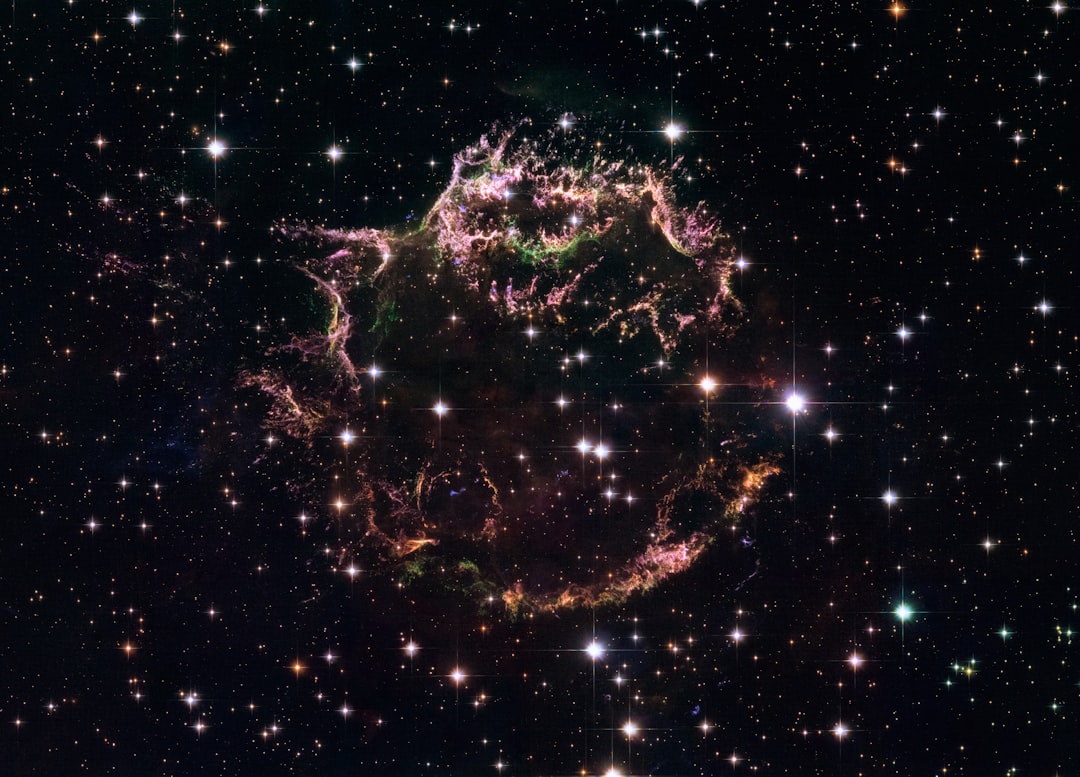
The Local Bubble, a vast, almost empty cavity in interstellar space encompassing our own solar system, is not a static entity. Instead, it is the product of a violent and prolonged period of cosmic activity, a spectacular chain reaction of supernovae that has dramatically shaped its environment over millions of years. Scientists refer to this epoch as the “Local Bubble Supernova Chain,” a period of intense star formation and subsequent stellar death that has left an indelible mark on the region of space we inhabit. Understanding this event is crucial for comprehending the current state of the interstellar medium around Earth and the potential for future astronomical phenomena.
The Local Bubble’s formation is believed to have begun in earnest approximately 14 million years ago. This period marks the onset of a series of energetic supernova explosions that, over vast timescales, carved out the enormous void we observe today. These supernovae were not isolated incidents but rather a clustering of events that occurred in relatively close proximity to what is now our Sun’s current location.
Stellar Nurseries and the Birth of Massive Stars
The precursor to the supernova chain was a phase of vigorous star formation within a preceding molecular cloud. Massive stars, those with at least 8 to 10 times the mass of our Sun, are the primary architects of supernovae. These stars have relatively short lifespans, burning through their nuclear fuel at an prodigious rate.
The Role ofMetallicity
The metallicity of the interstellar medium, which refers to the abundance of elements heavier than hydrogen and helium, plays a significant role in the type and frequency of star formation. Regions with higher metallicity can host a wider range of star masses. The molecular cloud that gave rise to the supernova chain likely possessed a favorable metallicity to foster the birth of numerous massive stars.
Initial Stellar Clusters
It is hypothesized that the initial star formation events spawned several stellar clusters. Within these clusters, the most massive stars would have evolved the quickest, reaching the end of their lives and exploding as supernovae. The proximity of these massive stars, born around the same epoch, is what initiated the cascading effect.
The First Explosions and Initial Expansion
The first supernovae in the chain would have released an immense amount of energy into the surrounding interstellar medium. This energy, in the form of powerful shock waves and hot, ionized gas, began to push and compress the ambient gas and dust.
Shockwave Propagation
The shock waves from these initial explosions traveled outward at supersonic speeds. As they encountered the dense material of the parent molecular cloud and surrounding interstellar medium, they swept it up, creating expanding shells of gas.
Ionization and Heating
The extreme temperatures of the supernova remnants (SNRs) also played a crucial role in shaping the void. The hot plasma within SNRs ionizes the surrounding gas, transforming it into a diffuse, low-density plasma. This heating process further contributes to the expansion and dispersal of material.
Recent studies have shed light on the fascinating phenomenon of the local bubble supernova chain, which occurred approximately 14 million years ago. This chain of supernovae has significantly influenced the interstellar medium in our region of the Milky Way, contributing to the formation of new stars and altering the dynamics of nearby gas clouds. For more in-depth information on this topic, you can read the related article here: Local Bubble Supernova Chain.
The Cascade Effect: A Chain Reaction of Stellar Demise
The key to understanding the Local Bubble’s continuous expansion and longevity lies in its nature as a “supernova chain.” The initial explosions did not occur in isolation. Instead, they triggered a cascade of subsequent events, prolonging the energetic activity and shaping the bubble over millions of years.
Triggering New Star Formation and Subsequent Supernovae
One of the most remarkable aspects of the supernova chain is its potential to trigger further star formation. While supernovae are destructive, their shock waves can also compress existing molecular clouds. If the compression is sufficient, it can reach the critical density required for gravitational collapse, leading to the birth of new stars.
Compression and Collapse
The expanding shells of gas from earlier supernovae could have encountered nearby molecular clouds. The pressure exerted by these shells could have compressed regions within the clouds, triggering their collapse under their own gravity.
The Birth of a Second Generation of Stars
These newly formed stars, if massive enough, would eventually evolve and explode as supernovae themselves, adding to the energetic output and thus propagating the chain reaction. This cyclical process of destruction and creation is a hallmark of the Local Bubble’s formation.
The Interplay of Multiple Supernova Remnants
The Local Bubble is not the remnant of a single supernova. Instead, it is a complex structure formed by the interaction and merging of multiple supernova remnants. This ongoing process has sculpted the bubble into its current irregular and filamentary shape.
Merging Shells and Cavities
As multiple supernova remnants expand, their shock waves and hot gas eventually interact and merge. This merging can create larger, more diffuse cavities and interconnected structures within the interstellar medium.
Creation of Filaments and Structures
The interactions between expanding shells can also lead to the formation of filaments and other complex structures within the bubble. These filaments are often denser regions of gas and dust that have been swept up and compressed by the shock waves.
The Local Bubble’s Impact on the Interstellar Medium

The Local Bubble supernova chain has had a profound and lasting impact on the interstellar medium in our immediate celestial neighborhood. It has fundamentally altered the density, temperature, and composition of the gas and dust surrounding our solar system.
Clearing of Dense Interstellar Clouds
The primary effect of the supernova chain has been the significant clearing of dense interstellar clouds from the region. The powerful shock waves and the energetic outflow of material have effectively pushed aside and dispersed much of the ambient gas and dust.
Reduced Density Within the Bubble
The Local Bubble is characterized by its exceptionally low density compared to the surrounding interstellar medium. This rarefaction is a direct consequence of the energetic explosions that have swept the material outward.
Formation of the “Local Cavity”
The extreme rarefaction of gas within the Local Bubble has led to it being termed the “Local Cavity.” This void is a striking anomaly in the otherwise more populated interstellar medium of the Milky Way.
Heating and Ionization of the Surrounding Gas
The supernovae have not only cleared the material but also significantly heated and ionized the gas within and around the bubble. This heating creates a plasma state, where electrons are stripped from their atoms.
High Temperatures of the Bubble Plasma
The plasma within the Local Bubble exhibits significantly higher temperatures than the surrounding interstellar medium. These temperatures are a direct result of the energy injected by the supernovae.
Observational Signatures of Ionized Gas
The presence of this hot, ionized gas can be observed through various astronomical instruments, particularly those sensitive to X-ray and ultraviolet emissions, providing key evidence for the supernova chain’s activity.
Our Solar System’s Position Within the Void
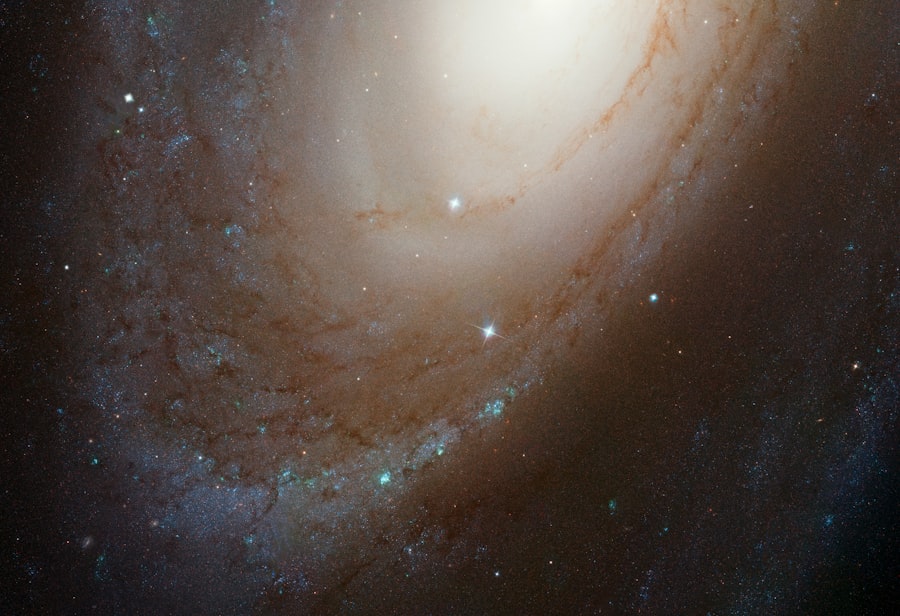
Our solar system’s current location within the Local Bubble is not coincidental. It is a consequence of the history of stellar evolution and supernova activity in our galactic neighborhood. The formation of the bubble has influenced the conditions under which our Sun and its planets formed.
The Sun’s Birthpoint
The prevailing hypothesis is that our Sun was born in a region that was eventually affected by the supernova chain. The conditions within the parent molecular cloud, including its eventual disruption by stellar explosions, played a role in the Sun’s formation and the subsequent evolution of the solar system.
The Interstellar Medium at the Time of Solar Birth
The exact conditions of the interstellar medium at the time of the Sun’s birth are still a subject of research. However, it is understood that the region was likely influenced by the nascent stages of the supernova chain.
Possible Influence on Planetary Formation
The energetic environment created by the supernovae could have influenced the early protoplanetary disk around the young Sun, potentially affecting the composition and distribution of material available for planet formation.
The Changing Environment of the Solar System
The Local Bubble is not a static phenomenon and continues to evolve. While the most intense period of the supernova chain may have passed, the bubble is still expanding and interacting with its surroundings. This ongoing evolution means that the interstellar environment around our solar system is constantly changing.
Future Expansion and Interaction
The ongoing expansion of the Local Bubble will continue to clear and heat the surrounding interstellar medium. It may also interact with other structures in the galaxy, leading to further complex dynamics.
Implications for Interstellar Travel
Understanding the dynamics of the Local Bubble and the surrounding interstellar medium is also relevant for future interstellar travel, as it dictates the density and energetic conditions that spacecraft would encounter.
Recent studies have shed light on the fascinating phenomenon of the local bubble supernova chain, which occurred approximately 14 million years ago. This cosmic event has significant implications for our understanding of stellar evolution and the dynamics of interstellar space. For a deeper dive into this topic, you can explore a related article that discusses the origins and effects of supernovae in our galaxy. The article provides insights into how these explosive events shape the surrounding environment and contribute to the formation of new stars. To read more about this captivating subject, visit this article.
The Ongoing Study and Future Implications of the Local Bubble
| Property | Value |
|---|---|
| Age of the supernova chain | 14 million years |
| Distance from Earth | Approximately 300 light years |
| Impact on local environment | Formation of the Local Bubble, a cavity in the interstellar medium |
| Effects on Earth | Possible influence on climate and evolution of life |
The Local Bubble remains a significant area of research for astronomers and astrophysicists. Continued observation and theoretical modeling are crucial for a comprehensive understanding of its formation, evolution, and impact.
Observational Evidence and Challenges
Astronomers utilize a variety of observational techniques to study the Local Bubble, including X-ray astronomy, radio astronomy, and optical observations of gas and dust emission. However, the vastness and diffuse nature of the bubble present observational challenges.
X-ray Observations of Hot Gas
X-ray observations are particularly useful for detecting the hot, ionized gas that permeates the Local Bubble. The intensity and distribution of X-ray emissions provide insights into the temperature and density of this plasma.
Mapping Gas and Dust Structures
Optical and radio telescopes are employed to map the distribution of cooler gas and dust, often found in the filamentary structures and shells associated with the bubble. These observations reveal the large-scale structure of the void.
Challenges in Probing the Bubble’s Edge
Precisely defining the boundaries of the Local Bubble and understanding its interaction with the surrounding interstellar medium can be difficult due to the low density of material.
Theoretical Modeling and Simulations
Computational models and simulations are essential tools for understanding the complex physics involved in the supernova chain. These models allow researchers to test hypotheses and explore scenarios that cannot be directly observed.
Simulating Supernova Interactions
Researchers use sophisticated simulations to model the explosive events of supernovae and the subsequent propagation of shock waves and the dispersal of matter.
Tracing the Evolution of the Bubble
These simulations help to trace the long-term evolution of the Local Bubble, from its initial formation to its current state and potential future development.
Understanding Stellar Feedback Mechanisms
The study of the Local Bubble provides valuable insights into the broader concept of “stellar feedback,” the processes by which stars influence their surrounding environments, including star formation rates and the distribution of matter in galaxies.
Future Research Directions and Unanswered Questions
Despite significant progress, several questions regarding the Local Bubble and its supernova chain remain open. Future research will aim to address these outstanding issues and refine our understanding.
Pinpointing the Exact Location of the First Supernovae
Determining the precise location and number of the initial supernovae that initiated the chain remains an active area of investigation.
The True Extent and Shape of the Bubble
Precisely mapping the full extent and accurate three-dimensional shape of the Local Bubble and its interaction with external structures are ongoing endeavors.
The Role of Dark Matter and Magnetic Fields
Investigating the potential influence of dark matter and interstellar magnetic fields on the dynamics and evolution of the Local Bubble could provide further insights.
The Long-Term Impact on Galactic Structure
Understanding the cumulative effect of the Local Bubble supernova chain and similar events on the larger structure and evolution of the Milky Way galaxy is a significant future research goal.
FAQs
What is the local bubble supernova chain 14 million years?
The local bubble supernova chain 14 million years refers to a series of supernova explosions that occurred within a relatively short period of time, approximately 14 million years ago, in the vicinity of our solar system.
How did the local bubble supernova chain 14 million years impact our solar system?
The supernova explosions from the local bubble supernova chain 14 million years ago may have had significant effects on our solar system, including potentially influencing the Earth’s climate and the evolution of life on our planet.
What evidence supports the existence of the local bubble supernova chain 14 million years?
Scientists have found evidence of the local bubble supernova chain 14 million years ago through the presence of radioactive isotopes in deep-sea sediments and lunar samples, as well as through the analysis of cosmic rays and other astronomical data.
Could a similar supernova chain occur in the future?
While it is possible for supernova explosions to occur in the future, the likelihood of a similar chain of supernovae happening in close proximity to our solar system is considered to be very low based on current astronomical observations.
What are the implications of the local bubble supernova chain 14 million years for our understanding of the universe?
Studying the local bubble supernova chain 14 million years ago can provide valuable insights into the dynamics of supernova explosions, their potential impact on planetary systems, and the broader evolution of the universe.