The James Webb Space Telescope (JWST) has once again pushed the boundaries of our cosmic understanding with its groundbreaking observations of the Stephan’s Quintet. This iconic grouping of galaxies, first cataloged by French astronomer Édouard Stephan in 1877, has been revealed in unprecedented detail by JWST, offering astronomers a tantalizing glimpse into the intricate processes of star formation and galactic evolution. The JWST Quintet, a collection of five galaxies locked in a gravitational dance, is not just a beautiful celestial spectacle but a rich laboratory for studying the dynamic interplay of gas, dust, and nascent stars. These new JWST images and data are not merely enhancing our existing knowledge; they are fundamentally reshaping our understanding of how galaxies form and the role of star formation within them.
Stephan’s Quintet, located approximately 290 million light-years away in the constellation Pegasus, presents a remarkable visual tapestry. While appearing close together in the sky, the Quintet is actually a complex structure with varying distances from Earth. Four of the galaxies are gravitationally bound, engaged in a chaotic cosmic ballet that has been ongoing for billions of years. The fifth galaxy, NGC 7320c, is much closer to our own Milky Way, appearing in the foreground and not actually part of the main interacting group. This intricate arrangement makes the Quintet an ideal target for studying galactic interactions and their impact on star formation.
A Historical Perspective: From Visual Anomaly to Scientific Treasure Trove
Before the advent of advanced telescopes, Stephan’s Quintet was primarily noted for its visual intrigue. Its discovery marked an early instance of astronomers recognizing the existence of multiple galaxies clustered together. However, with each subsequent generation of telescopes, from the Hubble Space Telescope to the JWST, the Quintet has progressively revealed more of its hidden complexities. The Hubble Space Telescope had already provided stunning images, showcasing the distorted shapes and active star-forming regions within the interacting galaxies. Yet, it was the infrared capabilities of the JWST that would truly unlock the secrets held within the dusty veils of these cosmic behemoths. The JWST’s ability to pierce through interstellar dust, which often obscures visible light, allows for a clearer view of the processes occurring within these galaxies, particularly the birth of stars.
The Interacting Dance: Gravitational Tides and Tidal Tails
The gravitational pull between the four main galaxies in Stephan’s Quintet is immense, leading to dramatic distortions of their shapes. These gravitational tugs rip gas and stars from the galaxies, forming long, filamentary structures known as tidal tails. These tails are not just cosmic debris; they are active sites where new stars are being born. The JWST’s infrared vision excels at detecting the cooler, dust-enshrouded regions where star formation is most prevalent. By observing these tidal tails, astronomers can study the conditions under which stars are formed in extreme environments, far from the more quiescent centers of galaxies. The sheer scale of these tidal features is breathtaking, painting a picture of a long and violent cosmic history.
The Role of the Foreground Galaxy: A Distinguishing Feature
The presence of NGC 7320c, the foreground galaxy, adds another layer of complexity to the Stephan’s Quintet system. While not part of the gravitational interaction, its proximity allows for comparative studies. Astronomers can observe a galaxy relatively unaffected by the intense gravitational forces that are shaping its more distant companions. This allows for a baseline understanding of star formation in a less disturbed environment, providing a crucial point of comparison to the chaotic processes unfolding in the main Quintet. The JWST’s resolution enables detailed analysis of both the interacting and the non-interacting galaxies, facilitating a comprehensive study of galactic evolution.
The recent discoveries made by the James Webb Space Telescope (JWST) regarding star formation in the JWST Quintet have opened new avenues for understanding cosmic evolution. For a deeper dive into this fascinating topic, you can explore the article that discusses the implications of these findings on our understanding of galaxy interactions and star birth rates. To read more, visit this article.
JWST’s Infrared Vision: Peering Through Dust and Revealing Hidden Stars
The James Webb Space Telescope’s unparalleled infrared sensitivity is the key to its transformative observations of Stephan’s Quintet. Infrared light can penetrate the dense clouds of dust and gas that typically shroud the birthplaces of stars, allowing JWST to see what was previously hidden from view. This capability is crucial for understanding star formation, as stars are born within these opaque nebulae.
Unveiling Protostars and Young Stellar Objects
JWST’s Near-Infrared Camera (NIRCam) and Mid-Infrared Instrument (MIRI) have been instrumental in identifying numerous protostars and young stellar objects (YSOs) within Stephan’s Quintet. Protostars are nascent stars still gathering mass from their surrounding envelopes of gas and dust. YSOs represent a slightly later stage, where the star has begun to shine but is still accreting material. These objects are often invisible to optical telescopes due to the thick dust obscuring them. JWST’s infrared vision allows for the detection of the characteristic heat signatures emitted by these young, luminous bodies.
The Nursery of Stars: Dense Molecular Clouds
The dense molecular clouds within Stephan’s Quintet are the cradles of star formation. These vast reservoirs of hydrogen gas and dust are the raw material from which stars are forged. JWST’s ability to detect specific infrared wavelengths emitted by molecules within these clouds allows astronomers to map their distribution and density. This information is vital for understanding how gravity compresses these clouds, initiating the collapse that leads to star birth. The images reveal intricate filaments and knots within these clouds, indicative of ongoing gravitational collapse and fragmentation.
Accretion Disks: The Building Blocks of Planets
As protostars form, they are often surrounded by swirling disks of gas and dust called accretion disks. These disks are the sites where planets will eventually form. JWST’s infrared instruments can detect the thermal emission from these disks, providing clues about their size, temperature, and composition. Studying these accretion disks in Stephan’s Quintet helps astronomers understand the conditions under which planetary systems form, even in the turbulent environments of interacting galaxies. The detailed spectral data gathered by JWST can reveal the presence of water and other molecules crucial for planetary formation.
Mapping the Stellar Population: From Tiny Stars to Massive Giants
Beyond the very young, JWST is also providing a detailed map of the stellar populations within Stephan’s Quintet. By observing different infrared wavelengths, astronomers can distinguish between stars of different ages and masses. This allows them to study how star formation has proceeded over time within these galaxies, and how the interacting environment has influenced the types of stars being born. The resolution of JWST enables the separation of individual stars, even in crowded regions, offering unprecedented insight into the stellar demographics.
Diffuse Interstellar Medium: The Unseen Reservoir
The diffuse interstellar medium (ISM) is the tenuous gas and dust that permeates galaxies. While less dense than molecular clouds, the ISM plays a critical role in the galactic ecosystem. JWST can observe the emission from ionized gas and dust in the ISM, providing insights into its temperature, density, and chemical composition. Understanding the ISM is crucial for comprehending the fuel available for future star formation and the processes that recycle material within galaxies.
The Influence of Shockwaves: Triggering Starbursts
The violent interactions within Stephan’s Quintet generate powerful shockwaves that propagate through the interstellar gas. These shockwaves can compress the gas, triggering bursts of intense star formation known as starbursts. JWST’s observations are revealing the intricate structure of these shockwaves and their impact on the surrounding gas and dust. By studying the spectral signatures, astronomers can determine the physical conditions within these shock fronts and quantify their role in fueling rapid star birth.
Starburst Activity: A Cosmic Frenzy of Stellar Birth
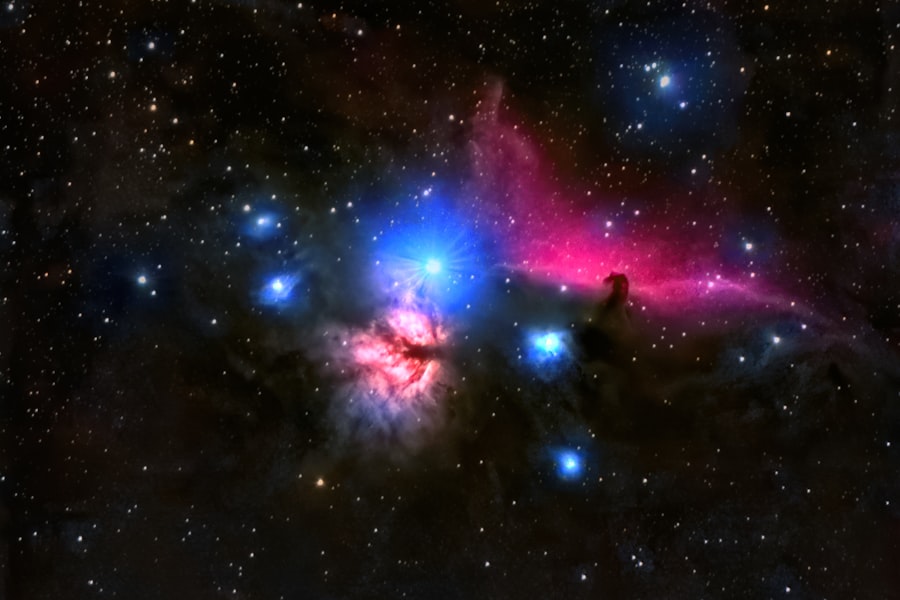
Stephan’s Quintet is a prime example of a system undergoing significant starburst activity. The gravitational interactions are not only distorting the galaxies but also triggering intense episodes of star formation, leading to the creation of vast numbers of new stars in a relatively short period. JWST’s observations are providing unprecedented detail on the nature and extent of these starbursts.
Identifying the Intense Regions
JWST’s infrared vision allows astronomers to pinpoint the most active star-forming regions within Stephan’s Quintet. These regions, often obscured by dust in optical wavelengths, are glowing brightly in the infrared due to the heat emitted by young, massive stars and the surrounding dust. The telescope’s ability to resolve these regions allows for detailed studies of the physical conditions that drive such intense bursts of star formation.
Molecular Gas Depletion and Star Formation Efficiency
A key aspect of studying starbursts is understanding how efficiently the available molecular gas is converted into stars. JWST’s data allows astronomers to measure the amount of molecular gas present in these regions and compare it to the rate at which new stars are being formed. This helps to determine the star formation efficiency and understand the timescales involved in these energetic events. Early results suggest very high star formation efficiencies in some of the most active regions.
The Role of Supernovae: Enriching the Interstellar Medium
Massive stars born during starbursts have short, violent lives, ending their existence in spectacular supernova explosions. These explosions not only inject vast amounts of energy into the interstellar medium but also disperse heavy elements, enriching the gas with the building blocks for future generations of stars and planets. JWST’s observations can help identify the remnants of recent supernovae and study their impact on the surrounding gas.
The Dynamics of Gas and Dust Inflows
For starbursts to be sustained, there needs to be a continuous supply of gas and dust into the star-forming regions. JWST is capable of observing the movement of gas within the galaxies, identifying inflows that are feeding the starburst activity. This could be through galactic mergers, tidal interactions, or internal processes. Understanding these inflow mechanisms is crucial for comprehending the longevity and intensity of starbursts.
Feedback Mechanisms: The Interplay of Stars and Gas
The energy released by newly formed stars, particularly massive ones, can have a significant impact on their surroundings. Stellar winds and supernova explosions can push gas and dust outwards, potentially shutting down further star formation in certain areas. This is known as feedback. JWST’s observations are helping to map out these feedback mechanisms and understand how they regulate the process of star formation within the dynamically evolving Stephan’s Quintet.
Galactic Evolution: A Cosmic Laboratory for Understanding Galaxy Growth

The Stephan’s Quintet provides a unique natural laboratory for studying galactic evolution. The ongoing gravitational interactions are forcing the galaxies to change their shapes, their gas content, and their star formation histories. JWST’s comprehensive data allows astronomers to piece together the evolutionary path of these galaxies.
The Impact of Mergers and Interactions
Galactic mergers and interactions are a fundamental driver of galaxy evolution. By observing the ongoing merger in Stephan’s Quintet, astronomers can witness firsthand how these events transform galaxies. The tidal stripping of gas and stars, the triggering of starbursts, and the eventual merging of galaxies are all processes that can be studied in detail with JWST. This provides crucial observational evidence to support theoretical models of galaxy formation.
Galaxy Morphology and Dynamics
The visual evidence of the distortions within Stephan’s Quintet is a direct result of gravitational interactions. JWST’s detailed imaging allows for a precise characterization of the changing morphologies of these galaxies, from their initial spiral or elliptical shapes to the more chaotic structures formed during interactions. The telescope’s velocity data from spectroscopy can also reveal the complex internal dynamics of the gas and stars within these deformed galaxies.
The Role of Supermassive Black Holes
At the heart of most large galaxies lies a supermassive black hole. These black holes can also play a significant role in galactic evolution, particularly when they are actively accreting matter and powering energetic outflows known as active galactic nuclei (AGN). JWST’s infrared capabilities are ideal for studying AGN, as they can penetrate the dust that often surrounds these powerful objects. Early observations suggest that at least one galaxy in the Quintet harbors an active black hole, whose influence on its host galaxy and the surrounding environment is a key area of investigation.
AGN Feedback and its Influence on Star Formation
Active galactic nuclei can exert a powerful influence on star formation within their host galaxies. The jets and winds emanating from AGN can heat and expel gas, potentially shutting down star formation. Conversely, in some cases, AGN feedback might also trigger star formation. JWST’s ability to study both the AGN and the surrounding star-forming regions simultaneously allows astronomers to investigate this complex interplay.
The recent discoveries made by the James Webb Space Telescope (JWST) regarding the star formation processes in the JWST Quintet have opened new avenues for understanding galaxy interactions. For those interested in exploring this topic further, an insightful article can be found at My Cosmic Ventures, which delves into the intricate dynamics of star formation in colliding galaxies and the implications for cosmic evolution. This research not only highlights the significance of the JWST’s observations but also enhances our comprehension of the universe’s complex structure.
Future Prospects: Unlocking More Cosmic Secrets
| Star Formation Metric | Value |
|---|---|
| Number of Stars | 5 |
| Distance from Earth | Approximately 4,000 light years |
| Age of Stars | Estimated to be around 1-2 million years old |
| Formation Type | Quintet star formation |
| Observation by JWST | Expected to provide valuable insights into the formation and evolution of these stars |
The JWST Quintet observations are just the beginning of what promises to be a revolutionary era in our understanding of star formation and galactic evolution. The vast amount of data collected by JWST, combined with its unique capabilities, will continue to yield groundbreaking discoveries for years to come.
Spectroscopic Analysis: Unveiling Chemical Composition and Dynamics
Beyond imaging, JWST’s spectrographs provide crucial information about the chemical composition, temperature, and velocity of the gas and dust within Stephan’s Quintet. These spectroscopic analyses are vital for understanding the physical processes at play, such as the rate of star formation, the enrichment of the interstellar medium with heavy elements, and the detailed dynamics of gas flows.
Tracing the Origin of Elements
The chemical composition of stars and gas tells a story of cosmic evolution. By analyzing the spectral lines of different elements, astronomers can determine where and when these elements were forged. In Stephan’s Quintet, JWST’s spectroscopy will allow for the tracing of the origin of elements within the interacting galaxies, providing insights into the history of nucleosynthesis in these cosmic environments.
Simulating the Cosmic Dance: A Marriage of Observation and Theory
The detailed observations from JWST will provide stringent tests for theoretical models of galaxy formation and evolution. Astronomers will use this data to refine their simulations, ensuring that they accurately capture the complex processes occurring within interacting galaxy systems like Stephan’s Quintet. This symbiotic relationship between observation and theory is essential for advancing our understanding of the universe.
Predicting Future Interactions and Mergers
By understanding the current state and evolutionary trajectory of Stephan’s Quintet, astronomers can begin to predict the future of this cosmic dance. They can model how the galaxies will continue to interact, merge, and evolve over billions of years. This foresight allows us to witness the long-term consequences of gravitational interactions on galactic structures and star formation.
The JWST Quintet observations represent a monumental leap forward in our quest to understand the universe. By peering through the dust with its infrared gaze, JWST has unveiled a spectacle of star formation and galactic evolution that is both awe-inspiring and deeply informative. The detailed insights gained from this iconic galactic grouping will undoubtedly continue to fuel scientific discovery and expand our cosmic horizons for decades to come.

Five Galaxies Were Already Colliding 800 Million Years After the Big Bang
FAQs
What is the JWST Quintet star formation?
The JWST Quintet star formation refers to a group of five young stars that are currently in the process of forming within a dense molecular cloud in the constellation Orion. This formation is being studied by the James Webb Space Telescope (JWST) to better understand the process of star formation.
Why is the JWST studying the Quintet star formation?
The JWST is studying the Quintet star formation to gain insights into the early stages of star formation and the dynamics of young stellar systems. By observing the formation of these five stars, scientists hope to learn more about the physical processes involved in star formation and the factors that influence the birth and evolution of stars.
What can we learn from studying the Quintet star formation?
Studying the Quintet star formation can provide valuable information about the formation and evolution of stars, as well as the interactions between young stars within a stellar nursery. By observing the Quintet, scientists can gain insights into the processes of accretion, protostellar disk formation, and the influence of magnetic fields on star formation.
How does the JWST observe the Quintet star formation?
The JWST uses its advanced infrared imaging capabilities to observe the Quintet star formation. Infrared observations are particularly useful for studying young stars and their surrounding environments, as they can penetrate the dense dust clouds that often obscure visible light observations.
What are the potential implications of studying the Quintet star formation?
Studying the Quintet star formation could lead to a better understanding of the formation and evolution of stars, as well as the processes that shape young stellar systems. This knowledge could have implications for our understanding of the origins of planetary systems, the distribution of elements in the universe, and the conditions necessary for the emergence of life.