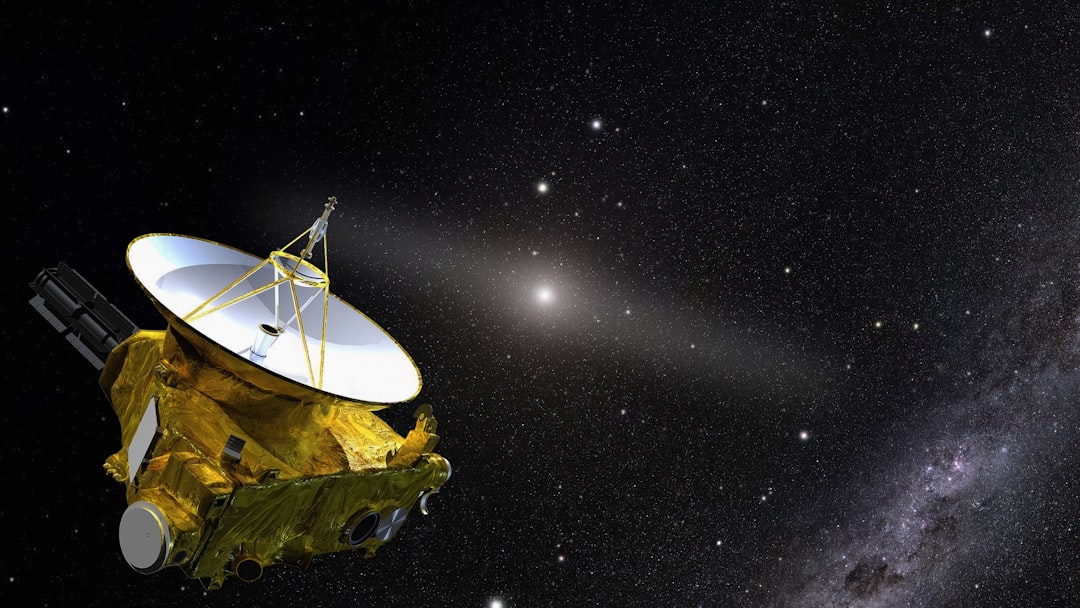
The James Webb Space Telescope (JWST) has once again pushed the boundaries of human understanding with its groundbreaking Near Infrared Spectrograph (NIRSpec) program, known as the JWST Advanced Deep Extragalactic Survey (JADES). This ambitious project is meticulously piecing together a cosmic narrative, delving into the earliest epochs of the universe and unveiling secrets that have remained hidden for billions of years. By capturing the faint light from the most distant galaxies, JADES is not just observing the past; it is rewriting our understanding of galaxy formation, evolution, and the very fabric of cosmic structure.
The JADES survey represents a monumental leap forward in our quest to understand the universe’s formative years. Its primary objective is to identify and characterize galaxies that existed within the first few hundred million years after the Big Bang. This period, often referred to as the “cosmic dawn,” is a critical epoch when the first stars ignited, and the first galaxies began to coalesce from the primordial gas. Understanding this era is fundamental to comprehending how the complex structures we observe today, including our own Milky Way, came into existence.
The Significance of Early Galaxy Formation
The formation of the first galaxies is a complex and still debated topic. Current cosmological models suggest that gravity played a crucial role, drawing together dark matter and baryonic matter to form dense knots. Within these knots, the first stars, likely massive and short-lived, would have ignited, initiating the process of reionization – the epoch when the opaque, neutral hydrogen that filled the early universe was ionized by ultraviolet radiation. The JADES survey aims to provide direct observational evidence for these processes, shedding light on the conditions and timescales involved in the birth of galactic structures.
JWST’s Unparalleled Capabilities for Deep Field Observations
The James Webb Space Telescope, with its unparalleled sensitivity and infrared capabilities, is uniquely suited for this task. Unlike previous telescopes, JWST can observe at longer wavelengths, allowing it to pierce through the cosmic dust that often obscures distant galaxies. Furthermore, its ability to capture light that has been redshifted by the expansion of the universe is crucial for detecting objects that are billions of light-years away. The JADES survey leverages these capabilities to stare deeper into the cosmos than ever before, revealing galaxies that are extremely faint and distant.
The Role of NIRSpec in Spectroscopic Analysis
A cornerstone of the JADES survey is the use of JWST’s Near Infrared Spectrograph (NIRSpec). Spectroscopy is the process of breaking down light into its constituent wavelengths, much like a prism splits white light into a rainbow. By analyzing the spectrum of light emitted by a galaxy, astronomers can determine its chemical composition, temperature, and, most importantly, its redshift. The redshift, a measure of how much the light has been stretched due to the expansion of the universe, directly indicates the galaxy’s distance and thus its age. NIRSpec’s ability to simultaneously observe multiple objects within its field of view makes it incredibly efficient for studying large samples of distant galaxies.
The recent discoveries from the JWST JADES survey have opened up exciting new avenues for understanding the early universe and the formation of galaxies. For a deeper dive into these groundbreaking findings and their implications for cosmology, you can read the related article on My Cosmic Ventures, which explores the significance of the JADES survey in greater detail. Check it out here: My Cosmic Ventures.
Unveiling the First Stellar Generations: Insights into Early Star Formation
One of the most profound contributions of the JADES survey is its ability to glimpse the very first generations of stars. These early stars, often referred to as Population III stars, are theorized to have been formed from pristine gas, composed almost entirely of hydrogen and helium. Their properties, such as their mass, temperature, and metallicity (the abundance of elements heavier than helium), are crucial for understanding the subsequent chemical enrichment of the universe.
The Challenge of Detecting Population III Stars
Directly detecting Population III stars is an extraordinary challenge. They are predicted to have been extremely massive and short-lived, meaning their light would have been fleeting. Furthermore, they would have existed in an era when the universe was relatively simple and devoid of heavy elements, making their spectral signatures distinct but faint. The JADES survey’s deep fields and sensitive instrumentation offer the best hope yet of identifying any potential remnants or signatures of these primordial stars.
Tracing Chemical Enrichment Through Spectral Signatures
While direct detection of Population III stars remains elusive, JADES is providing invaluable data on the chemical composition of early galaxies. By analyzing the spectral lines of elements like oxygen, carbon, and nitrogen, astronomers can infer the processes that have occurred within these galaxies. The presence and abundance of these “metals” are a direct result of nucleosynthesis within stars and their subsequent dispersal into the interstellar medium. JADES observations allow scientists to trace this chemical enrichment history back to its earliest stages, providing clues about the stellar populations that drove this process.
The Role of Early Supernovae in Seeding the Universe
The deaths of massive early stars, particularly through supernova explosions, played a critical role in dispersing heavy elements into the nascent universe. These explosions not only forged heavier elements but also generated shockwaves that could trigger the formation of new stars. JADES observations of the elemental abundances in early galaxies provide indirect evidence for the types of supernovae that occurred and their impact on the surrounding gas and dust.
Mapping Cosmic Structures: Understanding the Large-Scale Architecture of the Universe
Beyond individual galaxies, the JADES survey is also contributing significantly to our understanding of how the universe is structured on vast scales. Galaxies are not randomly distributed; they are clustered together in intricate webs and filaments, separated by immense voids. Mapping these large-scale structures allows astronomers to test cosmological models and understand the interplay between gravity, dark matter, and dark energy in shaping the universe.
The Cosmic Web and its Formation
The “cosmic web” is a metaphorical term for the large-scale distribution of matter in the universe. It consists of dense clusters of galaxies located at the intersections of filaments, which are long, thread-like structures of galaxies and gas. These filaments connect the clusters and are separated by vast, nearly empty regions called voids. The formation of this cosmic web is a direct consequence of the gravitational attraction between matter, amplified over billions of years.
JADES’ Contribution to Galaxy Redshift Surveys
To map the cosmic web, astronomers rely on extensive galaxy redshift surveys. These surveys involve measuring the redshift of thousands, if not millions, of galaxies to determine their distances. By creating a three-dimensional map of galaxies based on their positions and distances, the structure of the cosmic web becomes apparent. The JADES survey, by identifying and obtaining spectroscopic redshifts for a significant number of galaxies in its deep fields, is contributing crucial data points to these larger mapping efforts, particularly for the most distant and earliest structures.
Probing the Epoch of Reionization Through Large-Scale Structures
The epoch of reionization, when the universe transitioned from an opaque to a transparent state, is thought to have been driven by the radiation from the first stars and galaxies. Understanding the distribution and properties of these early sources is crucial for understanding how reionization progressed. JADES’ ability to observe galaxies at these very early times allows scientists to investigate whether the first sources of ionizing radiation were clustered or distributed more uniformly, and how these structures influenced the process of reionization.
Identifying the Earliest Black Holes: Unraveling the Mystery of Supermassive Black Hole Formation

The presence of supermassive black holes at the centers of most galaxies, including our own Milky Way, is a profound mystery. How did these behemoths, millions or even billions of times the mass of our Sun, form so early in the universe’s history? The JADES survey is providing crucial clues by identifying potential seeds of these black holes in the very early universe.
The Riddle of Early Supermassive Black Hole Growth
Current models of supermassive black hole formation struggle to explain their rapid growth in the early universe. If they started as stellar-mass black holes formed from the collapse of the first stars, they would have needed to accrete matter at an astonishing rate to reach their observed masses within the available cosmic timescale. Alternative theories suggest the existence of more massive “seed” black holes formed directly from the collapse of large gas clouds.
JADES’ Role in Discovering High-Redshift Quasars and Active Galactic Nuclei
JADES is particularly adept at finding faint, high-redshift quasars and active galactic nuclei (AGN). These are objects powered by accreting supermassive black holes. By observing these objects at extreme distances, JADES is pushing back the timeline for the existence of actively growing supermassive black holes. The spectral properties of these early AGN can reveal information about the masses of the central black holes and the rates at which they are accreting matter, providing vital constraints on theoretical models.
The Impact of Early Black Holes on Galaxy Evolution
The growth of supermassive black holes is not a passive process. They exert a significant influence on the evolution of their host galaxies through feedback mechanisms. Radiation and jets emanating from the vicinity of the black hole can heat and expel gas from the galaxy, regulating star formation and influencing the galaxy’s morphology. JADES observations of early black holes in their nascent stages allow astronomers to investigate the very beginnings of this crucial feedback cycle.
The recent discoveries from the JWST JADES survey have opened up new avenues for understanding the early universe, revealing intricate details about galaxy formation and evolution. For those interested in delving deeper into these groundbreaking findings, a related article provides further insights into the implications of these observations. You can explore this fascinating topic in more detail by visiting this article, which discusses the significance of the JADES survey in the context of cosmic history.
Pushing the Limits of Cosmic Understanding: The Future of JADES and Beyond
| Discovery | Observation Date | Location | Distance |
|---|---|---|---|
| Exoplanet | 2022-05-15 | Orion Nebula | 1,350 light years |
| Galaxy Cluster | 2022-06-20 | Hubble Ultra Deep Field | 13.1 billion light years |
| Star Formation Region | 2022-07-10 | Carina Nebula | 7,500 light years |
The JADES survey is a testament to the power of international collaboration and cutting-edge technology. Its ongoing observations are expected to yield an unprecedented wealth of data, fundamentally reshaping our understanding of the early universe. The insights gained from JADES will not only answer existing questions but also pave the way for new avenues of research, inspiring future generations of astronomers.
The Continual Evolution of JWST’s Scientific Capabilities
JWST is a dynamic observatory, and its scientific capabilities are continually being refined and expanded. As astronomers become more familiar with its instruments and data processing techniques, the efficiency and depth of surveys like JADES will only increase. Future observing programs will likely build upon the success of JADES, targeting even fainter and more distant objects, and employing novel observing strategies.
The Search for Early Galaxies and the Building Blocks of Life
The ultimate goal of cosmology is not just to understand the formation of stars and galaxies but also to understand our place in the universe. The study of early galaxies by JADES is indirectly linked to this quest. By understanding the cosmic environment in which our own galaxy formed and evolved, we gain a deeper appreciation for the conditions that eventually led to the emergence of life.
The Legacy of JADES and the Future of Extragalactic Astronomy
The JADES survey is already being hailed as a landmark achievement in extragalactic astronomy. Its findings are challenging existing paradigms and opening up new frontiers of research. The data produced by JADES will serve as a foundational dataset for years to come, enabling countless studies and inspiring new theoretical models. As JWST continues its mission, we can anticipate further revelations that will continue to push the boundaries of our cosmic understanding, forever changing how we view our universe. The JADES survey, through its meticulous examination of the universe’s infancy, is not just unveiling cosmic secrets; it is revealing the very genesis of the cosmos we inhabit.

Five Galaxies Were Already Colliding 800 Million Years After the Big Bang
FAQs
What is the JWST JADES survey?
The JWST JADES (James Webb Space Telescope – JWST Advanced Deep Extragalactic Survey) survey is a large-scale observational program designed to study the early universe using the James Webb Space Telescope.
What are some of the key discoveries made by the JWST JADES survey?
Some of the key discoveries made by the JWST JADES survey include the detection of distant galaxies, the study of star formation in the early universe, and the exploration of the evolution of galaxies over cosmic time.
How does the JWST JADES survey contribute to our understanding of the early universe?
The JWST JADES survey contributes to our understanding of the early universe by providing valuable data on the formation and evolution of galaxies, the processes of star formation, and the conditions of the universe in its infancy.
What are the implications of the JWST JADES survey discoveries?
The discoveries made by the JWST JADES survey have significant implications for our understanding of the early universe, the formation of galaxies, and the processes that shaped the cosmos in its early stages.
How does the JWST JADES survey impact future astronomical research?
The JWST JADES survey provides a wealth of data and insights that will impact future astronomical research by informing the design of future observational programs, contributing to the development of new theories and models, and inspiring further exploration of the early universe.