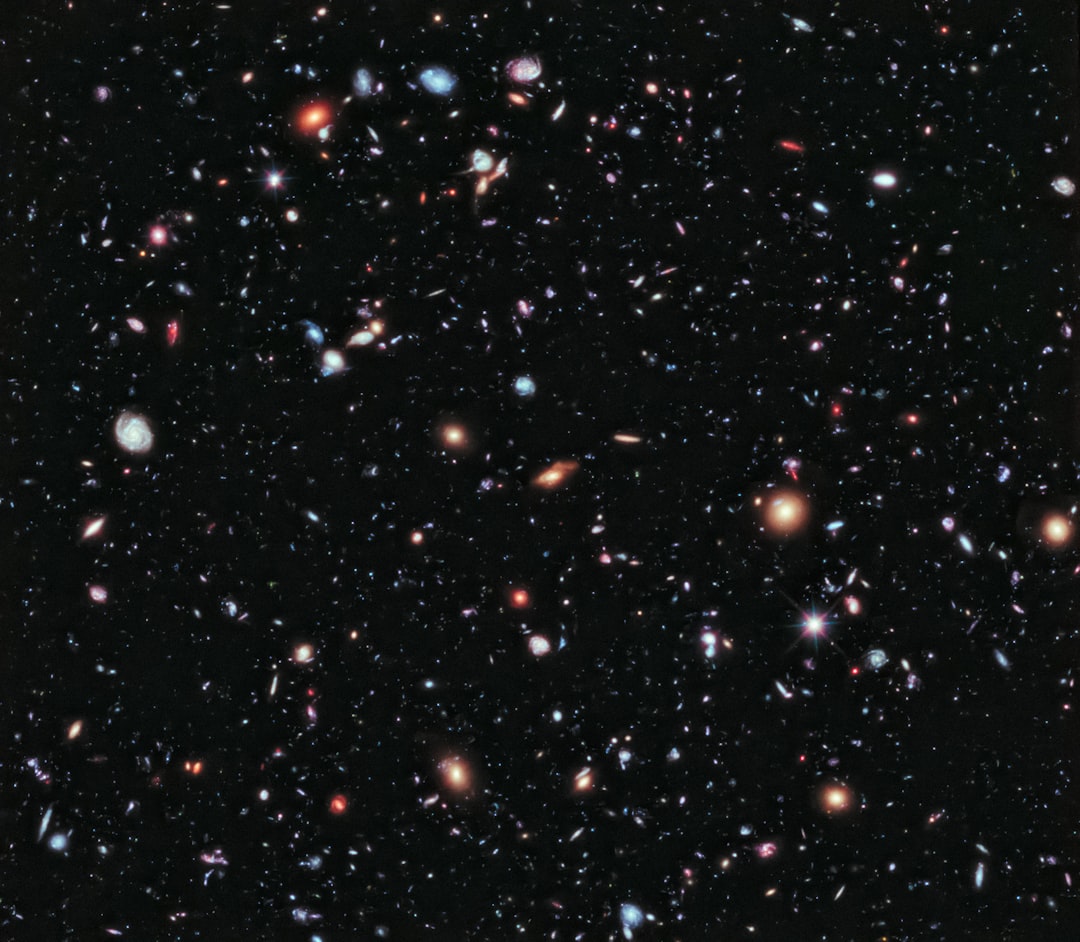
The assertion that the universe might be a simulation, rather than fundamental reality, has become a prominent topic of discussion across scientific, philosophical, and popular discourse. This concept, often termed the “simulation hypothesis,” proposes that reality, including Earth and the entire cosmos, is an artificial simulation, perhaps akin to a vast computer program. This article will explore the various arguments supporting and challenging the simulation hypothesis, examining its theoretical underpinnings, potential implications, and the ongoing quest for empirical evidence.
The notion of a simulated reality is not an entirely contemporary one; its roots can be traced to ancient philosophical thought experiments and religious texts.
Plato’s Allegory of the Cave
Plato’s allegory, penned around 380 BCE, describes prisoners chained in a cave, only able to see shadows projected onto a wall. These shadows represent the only reality they know, while the true objects casting them remain unseen. This allegorical framework parallels the simulation hypothesis by suggesting that our perceived reality might be a mere shadow of a more fundamental truth. The prisoners, upon escaping, find themselves in a brighter, more complex world, illustrating the potential for a deeper, unsimulated reality beyond our current comprehension.
Descartes’ Evil Demon Argument
René Descartes, in his Meditations on First Philosophy (1641), posited the idea of an “evil demon” or “malicious genie,” an all-powerful deceiver who systematically tricks him into believing in the external world. This thought experiment raises fundamental questions about the reliability of sensory perception and the possibility of being perpetually misled by a superior intelligence. While not directly positing a simulated reality, Descartes’ demon challenges the self-evident nature of our existence and lays groundwork for questioning the true nature of reality.
Bostrom’s Trilemma
In 2003, philosopher Nick Bostrom, in his paper “Are You Living in a Computer Simulation?”, popularized a modern formulation of the simulation hypothesis through a probabilistic argument. He proposed what is commonly known as Bostrom’s Trilemma, which states that at least one of the following propositions is very likely to be true:
- The fraction of human-level civilizations that reach a posthuman stage is very close to zero: This suggests that advanced civilizations capable of creating simulations are exceedingly rare, implying that humanity itself may not survive long enough to achieve such a state.
- The fraction of posthuman civilizations that are interested in running ancestor-simulations is very close to zero: Even if civilizations reach a posthuman stage, they might choose not to run simulations of their ancestors for various ethical, resource, or existential reasons.
- The fraction of all people with our kind of experiences that are living in a simulation is very close to one: If advanced civilizations are common and do run ancestor-simulations, then the number of simulated individuals would vastly outnumber those in the base reality, making it statistically probable that any given conscious being, including yourself, is simulated.
Bostrom’s argument does not claim the universe is a simulation, but rather suggests that if current technological trends continue and advanced civilizations are plausible, then the probability of being in a simulation becomes remarkably high.
The intriguing question of whether the universe is a simulation has sparked numerous discussions and debates among scientists and philosophers alike. For those interested in exploring this concept further, a related article titled “Exploring the Simulation Hypothesis” delves into the various theories and implications surrounding this idea. You can read more about it by visiting this link: Exploring the Simulation Hypothesis. This article provides a comprehensive overview of the arguments for and against the simulation theory, making it a valuable resource for anyone curious about the nature of reality.
Arguments Supporting the Simulation Hypothesis
Proponents of the simulation hypothesis offer several lines of reasoning, drawing from physics, computer science, and philosophical considerations.
Computational Limits and Observed Regularities
The laws of physics, particularly quantum mechanics, exhibit certain characteristics that some interpret as suggestive of a simulated environment.
The Planck Length and Discrete Reality
The Planck length, approximately 1.6 x 10⁻³⁵ meters, represents the smallest meaningful unit of distance in physics. Below this scale, current theories of space-time break down. Some argue that this fundamental discreteness, much like pixels on a screen or bits in a computer program, suggests that reality is not infinitely continuous but rather quantized. If the universe were a simulation, such a fundamental “pixelation” would be a natural consequence of computational limitations.
The Fine-Tuning Problem
The fundamental constants of the universe (e.g., the gravitational constant, the strong nuclear force, the cosmological constant) appear to be exquisitely fine-tuned for the emergence of life. Even slight variations in these values would result in a universe incapable of supporting complex structures or conscious observers. While some attribute this to a multiverse or divine design, others argue it’s a feature of a designed simulation, where parameters are meticulously set to achieve a specific outcome.
The Finite Speed of Light
The universal speed limit, the speed of light in a vacuum, could be seen as an imposed processing constraint within a simulated environment. Just as a computer processor has a maximum clock speed, the universe might have a fundamental limit on information propagation.
“Bugs” and Anomalies in Reality
While speculative, some theoretical physicists and computer scientists have considered how “glitches” or “bugs” in such a simulation might manifest.
Quantum Indeterminacy and Observer Effect
The perplexing nature of quantum mechanics, where particles exist in a superposition of states until observed, has been interpreted by some as a resource optimization strategy. In a simulation, rendering every detail of unobserved particles would be computationally expensive. Instead, the simulation might only “compute” a particle’s state when an observation forces a collapse of its wave function, thereby conserving processing power.
Dark Matter and Dark Energy
The existence of dark matter and dark energy, which constitute approximately 95% of the universe’s mass-energy content but remain largely undetectable, presents a significant cosmological mystery. Some playfully suggest these might be “filler code” or placeholders within the simulation that influence gravity but don’t require full rendering.
Arguments Against the Simulation Hypothesis
Despite the intriguing nature of the simulation hypothesis, several significant counterarguments and challenges exist.
The Problem of Infinite Regress
If our universe is a simulation, then the “base reality” in which it is running must also exist. What if that base reality is also a simulation? This leads to an infinite regress of simulations within simulations, posing a significant logical challenge. At some point, there must be a fundamental, unsimulated reality, and there is no inherent reason why our reality could not be that fundamental one.
The Irrelevance of Evidence
Proving or disproving the simulation hypothesis presents an enormous epistemological hurdle. If we are indeed in a simulation, then any “evidence” we uncover would itself be part of the simulation and therefore potentially unreliable or misleading. It would be akin to a character in a video game trying to find evidence of the computer it’s running on from within the game itself.
The Definition of “Reality”
The very concept of a “simulation” implies a “real” thing being simulated. But if our experience is our reality, then does it matter if it’s “simulated” by some external force? This argument suggests that the distinction might be largely semantic, especially if the simulation is indistinguishable from true reality for those within it. For a simulated being, their experience is real.
Lack of Testable Predictions
A robust scientific hypothesis typically offers testable predictions that can be verified or falsified through experiment. Currently, the most compelling arguments for the simulation hypothesis are philosophical or rely on interpretations of existing scientific observations rather than proposing novel, falsifiable experiments directly aimed at detecting a simulation. While some physicists have proposed extremely high-energy particle collider experiments to look for artifacts or “grid lines” in spacetime, these remain highly speculative and beyond current technological capabilities.
The Nature of the Simulators
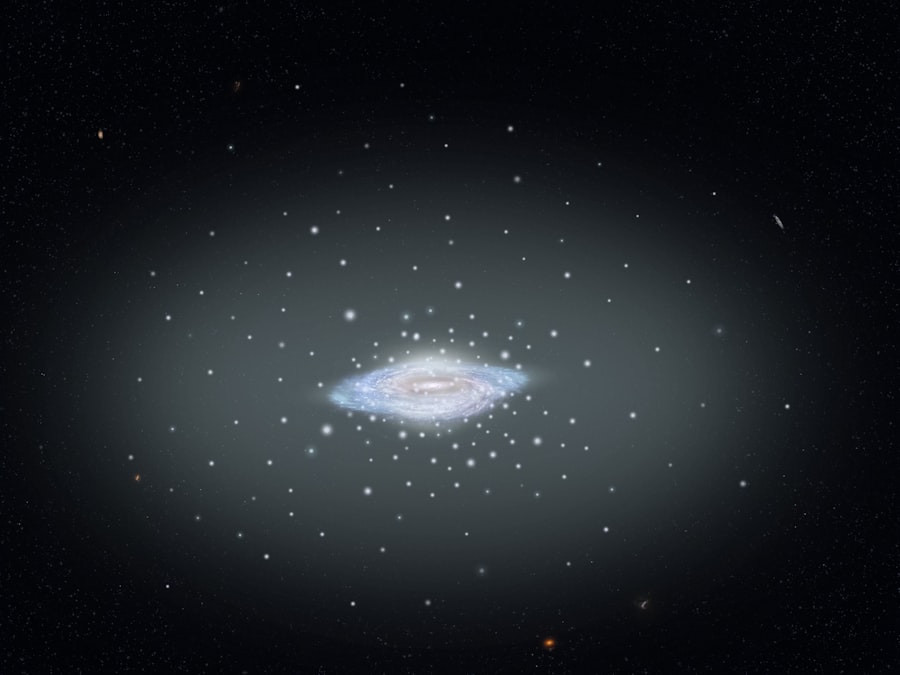
If the universe is a simulation, questions naturally arise about the nature and motivations of the hypothetical “simulators.”
Posthuman Civilizations
Bostrom’s hypothesis largely centers on the idea that posthuman civilizations (humanity or another species far advanced technologically) would be the most likely candidates for creators of such simulations. These entities would possess immense computational power and potentially have motivations ranging from scientific curiosity (ancestor-simulations for historical research) to entertainment, or even as a form of virtual reality development.
Motivations for Simulation
What would compel such immensely powerful beings to undertake such a monumental project? Possible motivations include:
- Historical Research: Running simulations of their past to understand their origins, societal development, or pivotal historical events.
- Scientific Experimentation: Observing the emergence of consciousness, the evolution of complex systems, or the behavior of physical laws under varying conditions.
- Entertainment or Recreation: Creating highly detailed and immersive virtual worlds for leisure, similar to advanced video games.
- Resource Optimization: Living in a simulated reality might be more efficient or sustainable than existing in a computationally more expensive base reality.
Ethics of Simulation
The ethical implications of running ancestor-simulations are profound. If the simulated beings are conscious, do the simulators have moral obligations towards them? Should they intervene in simulated disasters or allow suffering for the sake of scientific purity? These questions echo contemporary debates surrounding artificial intelligence and the rights of sentient digital entities.
The intriguing question of whether the universe is a simulation has captivated scientists and philosophers alike, prompting discussions about the nature of reality. A related article explores the implications of this theory and delves into the philosophical ramifications of living in a potentially simulated environment. For those interested in a deeper understanding of this concept, you can read more about it in this insightful piece found at My Cosmic Ventures.
Conclusion: A Persistent Enigma
| Metric | Description | Current Understanding | Source/Research |
|---|---|---|---|
| Simulation Hypothesis Probability | Estimated likelihood that our universe is a computer simulation | Varies widely; some philosophers like Nick Bostrom suggest it could be high, but no empirical proof | Bostrom (2003), Philosophical Papers |
| Computational Limits of Universe | Estimated computational capacity required to simulate the universe | Estimated at ~10^120 operations per second (Lloyd, 2000) | Lloyd, S. (2000), “Ultimate physical limits to computation” |
| Quantum Indeterminacy | Randomness in quantum mechanics possibly indicating simulation artifacts | Quantum randomness is fundamental; some argue it could be pseudo-randomness | Various quantum physics studies |
| Pixelation of Space-Time | Hypothetical discrete structure of space-time as evidence of simulation | No conclusive evidence; some theories like loop quantum gravity suggest discreteness | Loop Quantum Gravity research |
| Cosmic Ray Anomalies | Search for energy limits or patterns in cosmic rays that could indicate simulation constraints | No definitive anomalies found yet | Studies by CERN and astrophysics observatories |
| Philosophical Arguments | Arguments for and against the simulation hypothesis based on logic and probability | Debated; no consensus | Philosophical literature and debates |
The question of whether the universe is a simulation remains one of the most profound and tantalizing enigmas of our time. It challenges our fundamental understanding of reality, existence, and the very nature of consciousness. While compelling philosophical arguments and intriguing interpretations of physical laws lend credence to the idea, definitive empirical evidence remains elusive.
The simulation hypothesis serves as a powerful thought experiment, urging individuals to critically examine their perceptions of reality and to consider the limits of human knowledge. It encourages a deeper engagement with fundamental physics, cosmology, and the future of artificial intelligence. Until empirical tests can provide more conclusive answers, the universe’s true nature will continue to be a subject of intense speculation and intellectual exploration, leaving us to ponder if the reality we inhabit is a foundational truth or merely a meticulously crafted illusion.
FAQs
What does the simulation hypothesis propose?
The simulation hypothesis suggests that the universe and everything within it might be an artificial simulation, such as a computer-generated environment, created by an advanced civilization.
Who popularized the idea that the universe could be a simulation?
Philosopher Nick Bostrom popularized the simulation hypothesis in 2003 with his paper “Are You Living in a Computer Simulation?” where he argued that one of three propositions is likely true, including the possibility that we live in a simulation.
Is there scientific evidence supporting the universe as a simulation?
Currently, there is no direct scientific evidence proving the universe is a simulation. Some researchers explore theoretical and experimental approaches, but the hypothesis remains speculative.
What are some arguments against the universe being a simulation?
Critics argue that the simulation hypothesis is unfalsifiable, meaning it cannot be tested or disproven, and that it raises philosophical questions about consciousness and reality without providing concrete proof.
How does the simulation hypothesis relate to physics and cosmology?
Some physicists have considered whether physical laws and constants could be indicative of underlying computational rules, but mainstream physics treats the universe as a natural phenomenon governed by observable laws rather than a simulation.