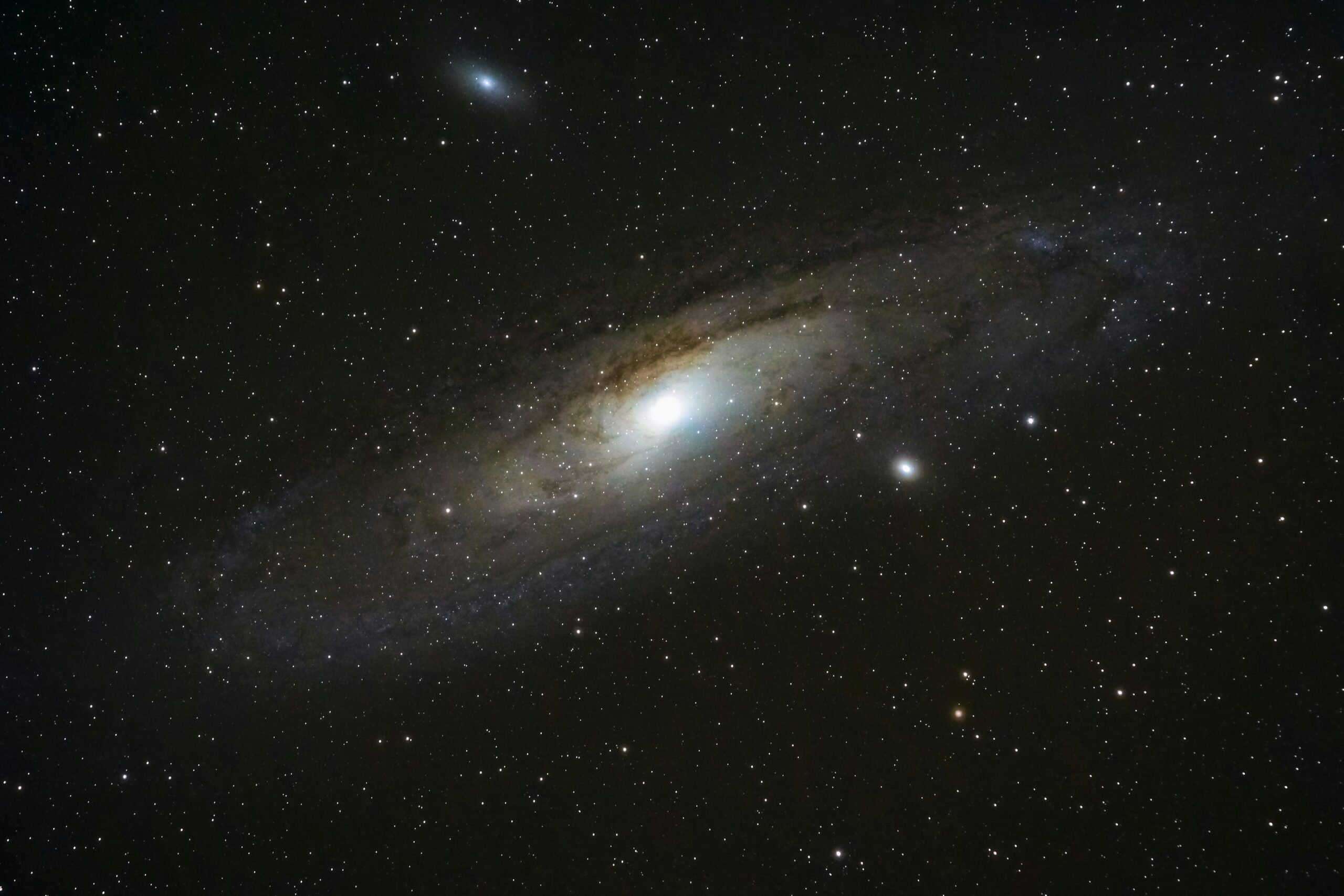
- The Whispers of the Cosmos: Is the Universe a Vast, Cosmic Record?
The sheer immensity of the universe has long sparked profound philosophical and scientific inquiry. From the earliest stargazers to contemporary cosmologists, humanity has grappled with fundamental questions about our place within the grand tapestry of existence. Among these questions, one that particularly ignites the imagination is the possibility that the universe itself might function as a colossal, information-rich record. This isn’t just a poetic notion; it’s a concept that subtly weaves through various scientific disciplines, from the laws of physics to the very nature of information preservation. As the Listicle Content Architect, tasked with dissecting complex ideas into engaging narratives, this investigative quest into the universe as a record offers a rich landscape to explore. We will delve into the fascinating implications of this idea, examine the scientific underpinnings that lend it credence, and ponder the profound philosophical shifts it could necessitate.
- The Echoes of Creation: Gravitational Waves and the Big Bang’s Imprint
One of the most compelling arguments for viewing the universe as a record lies in the physical evidence of its origins. The Big Bang, the prevailing cosmological model for the universe’s birth, is not a silent event but one that left indelible marks, akin to the initial inscription on a fresh parchment. These imprints are not mere curiosities; they are foundational to our understanding of cosmic evolution.
Decoding the Cosmic Microwave Background (CMB)
- The Universe’s Baby Picture: The Cosmic Microwave Background radiation is perhaps the most direct “recording” of the early universe available to us. Discovered in 1964, it’s essentially the afterglow of the Big Bang, a faint microwave radiation permeating all of space. This ancient light, from a time when the universe was only about 380,000 years old, provides a snapshot of its conditions at that crucial juncture.
- Temperature Fluctuations as Data Points: The CMB isn’t perfectly uniform. It exhibits tiny temperature fluctuations, on the order of parts per hundred thousand. These subtle variations are not random noise; they represent the seeds of structure formation – the initial overdensities and underdensities in the primordial plasma from which galaxies, stars, and planets would eventually coalesce. Analyzing these fluctuations allows cosmologists to infer critical parameters about the universe’s composition, geometry, and expansion rate. It’s like deciphering ancient ink strokes to understand the artist’s intent and the canvas’s initial texture.
- Polarization: A Deeper Layer of Information: Beyond temperature, the CMB also exhibits polarization. This polarization pattern carries even more information, including evidence of primordial gravitational waves generated during the inflationary epoch, a hypothetical period of rapid expansion shortly after the Big Bang. Detecting and analyzing these polarized signals can offer insights into the very earliest moments of cosmic history, a period otherwise inaccessible to direct observation.
The concept of the universe as a record has intrigued scientists and philosophers alike, prompting discussions about the nature of reality and existence. For a deeper exploration of this topic, you can read a related article that delves into the implications of viewing the universe as a vast repository of information. This article can be found at My Cosmic Ventures, where it examines how this perspective influences our understanding of time, space, and the fundamental laws of physics.
The Symphony of Gravitational Waves
- Ripples in Spacetime: Predicted by Albert Einstein’s theory of general relativity, gravitational waves are disturbances in the fabric of spacetime that propagate outwards from massive, accelerating objects. They are generated by cataclysmic events such as the merger of black holes or neutron stars, and importantly, potentially by the Big Bang itself.
- A direct Record of Cosmic Catastrophes: Unlike light, which can be absorbed or scattered, gravitational waves travel unimpeded through the universe. This makes them potentially pristine messengers from events that occurred in the universe’s infancy. The recent detection of gravitational waves by observatories like LIGO and Virgo has opened a new window into the cosmos, allowing us to “hear” the universe’s most violent events.
- Unraveling the Inflationary Epoch: The detection of specific patterns in the polarization of the CMB, known as B-modes, would provide strong evidence for the existence of primordial gravitational waves from inflation. The detection of such waves would be a monumental discovery, confirming a key aspect of the inflationary theory and offering a direct glimpse into the universe’s state during its first fraction of a second – a truly original “recording” of creation.
- Information as the Universal Currency: Entropy and the Persistence of Data
The concept of the universe as a record is deeply intertwined with the fundamental principles of information theory and thermodynamics, particularly the concept of entropy. Entropy, often misunderstood as simply “disorder,” is more precisely a measure of the number of possible microscopic arrangements (microstates) that correspond to a given macroscopic state (macrostate). In the context of information, it relates to the uncertainty or lack of knowledge about a system.
The Laws of Thermodynamics and Information Retention
- The Second Law and Irreversibility: The Second Law of Thermodynamics states that the total entropy of an isolated system can only increase over time, or remain constant in ideal cases where the system is in a steady state or undergoing a reversible process. In practical terms, this means that processes in the universe tend to move towards states of higher entropy. However, this doesn’t necessarily mean information is lost.
- Information is Not Lost, Merely Scrambled: A key insight from statistical mechanics and information theory is that information is not destroyed in irreversible processes; it is merely dispersed and becomes exceedingly difficult to access. Imagine a drop of ink in water. The ink molecules spread out, integrating into the water. The information about the ink’s initial concentrated location is not gone, but it’s now diluted across a vast volume, making it practically impossible to retrieve the ink as a distinct drop.
- The Universe as a Giant Information Processing System: Many physicists view the universe as a colossal, albeit incredibly slow and complex, information processing system. Every interaction, every particle collision, every change in state, can be seen as an operation that transforms or encodes information. If information is conserved (even if scrambled), then the universe, from its inception to its potential end, contains a comprehensive history of all states it has ever inhabited.
The Black Hole Information Paradox: A Case Study
- The Paradoxical Absorption: Black holes, with their immense gravitational pull, pose a significant challenge to the conservation of information. According to classical general relativity, anything that falls into a black hole is lost forever, without any possibility of retrieval. This would imply that information about the infalling matter is irretrievably destroyed.
- Hawking Radiation and the Dilemma: Stephen Hawking proposed that black holes are not entirely black but emit thermal radiation, known as Hawking radiation. While this radiation carries energy, an early interpretation suggested it was purely thermal and thus lacked specific information about what fell into the black hole, exacerbating the paradox.
- Toward Conservation: Modern theoretical physics, particularly string theory and the holographic principle, leans towards information being conserved even in black hole evaporation. The idea is that information is encoded on the event horizon of the black hole and is subtly imprinted onto the Hawking radiation, albeit in a highly scrambled form. If information is preserved during one of the most extreme known phenomena, it strengthens the argument for its conservation throughout the broader universe. This suggests that even the most destructive cosmic events might act as sophisticated data encoders, rather than destroyers.
- The Cosmic “Rosetta Stone”: Fundamental Constants and Universal Laws
The universe operates under a set of fundamental physical laws and constants that appear remarkably consistent across vast distances of space and time. These constants and laws act as the underlying code, the “rules of the game,” and in a sense, are the fundamental symbols within the grand cosmic record. Their very existence and apparent universality suggest an underlying order that could be interpreted as encoded information.
The intriguing concept of whether the universe serves as a record has sparked numerous discussions among scientists and philosophers alike. A related article that delves deeper into this fascinating topic can be found at My Cosmic Ventures, where various theories about the nature of reality and the cosmos are explored. This exploration raises questions about the fundamental structure of existence and how our understanding of the universe might evolve over time.
The Unchanging Pillars of Physics
- The Speed of Light (c): A cornerstone of special relativity, the speed of light in a vacuum is considered a universal constant. It dictates the maximum speed at which information and causality can travel. Its constancy across the universe implies a fundamental structural property, a watermark of sorts.
- Planck’s Constant (h): This constant is central to quantum mechanics, defining the fundamental unit of action or energy. It governs the quantized nature of energy and matter at the smallest scales, revealing a discrete, rather than continuous, reality. Its universal applicability speaks to a foundational encoding of reality at its most granular level.
- Gravitational Constant (G): This constant determines the strength of gravitational attraction between any two objects with mass. It governs the large-scale structure of the universe, from the orbits of planets to the formation of galaxies. Its invariant nature across the cosmos implies a consistent gravitational “language” being spoken everywhere.
The Fine-Tuning Argument: A Deliberate Script?
- Unlikely Parameters: The “fine-tuning” argument highlights the observation that many fundamental physical constants and the initial conditions of the universe seem to be exquisitely tuned within a very narrow range to allow for the existence of life as we know it. If these values were even slightly different, stars might not form, atoms might not be stable, or the universe might have collapsed back on itself long ago.
- Anthropic Principle Interpretations: This extreme fine-tuning has led to various interpretations, including the anthropic principle. The weak anthropic principle states that our observations of the universe are necessarily biased by the fact that we exist to make them. Hence, we live in a universe capable of supporting life.
- A Designed Code? From another perspective, the fine-tuning could be interpreted as evidence for an intentional design or a deeply encoded set of parameters intended to facilitate complex outcomes. If the universe is a record, then these finely tuned constants represent critical “settings” or “parameters” within that record, designed to enable specific, complex information to emerge and persist, such as consciousness and life.
Universal Laws as Grammatical Structures
- The Grammar of Reality: The laws of physics – Newton’s laws of motion, Maxwell’s equations for electromagnetism, Einstein’s field equations for gravity, and the principles of quantum mechanics – can be seen as the grammatical structures of the universe’s language. They dictate how elements within the universe interact, evolve, and express themselves.
- Consistency Across Vastness: The incredible consistency of these laws across the observable universe suggests a universal grammar. Whether observing a distant galaxy or our own solar system, the fundamental rules of engagement remain the same. This universality implies that these laws are not arbitrary but are integral to the very nature of the cosmic “text.”
- Decoding and Recoding: Our scientific endeavors are essentially an ongoing effort to decode this cosmic grammar. By understanding these laws, we are learning to read and interpret the universe’s “message.” Furthermore, our ability to discover and apply these laws in our own technological endeavors can be seen as a form of “recoding” or interacting with the universe’s fundamental information.
- The Memory of Existence: Fossils, Cosmic Structures, and the Trace of Time
Beyond the initial imprint of creation and the fundamental laws, the universe actively records its history through the structures it forms and the remnants it leaves behind. These observable formations, from the microscopic to the macroscopic, serve as tangible archives, offering glimpses into epochs long past.
Imprints in Matter: Cosmic Fossils and Geological Archives
- Dating the Ancient: The study of radioactive decay in rocks provides a precise method for dating geological formations on Earth and other celestial bodies. The relative abundance of parent isotopes and their daughter products acts as a “clock,” recording the time elapsed since a mineral solidified – a direct chronological record etched in stone.
- Isotopic Signatures: The isotopic composition of elements found in meteorites, ancient Earth rocks, and even stellar atmospheres can tell us about the conditions under which they formed. These isotopes act like unique fingerprints, providing clues about the nucleosynthesis processes in stars or the early solar nebula. For instance, the isotopic ratios of oxygen in meteorites help us understand the mixing and composition of the early solar system.
- Paleontology on a Cosmic Scale: Just as fossils on Earth tell us about ancient life, the distribution and composition of celestial bodies can be considered cosmic fossils. The types of stars we observe, the composition of nebulae, and the structure of galaxies all tell a story of cosmic evolution, from the first generation of stars to the complex structures we see today.
The Grand Architecture: Galaxies, Clusters, and the Cosmic Web
- Galaxies as Stellar Libraries: Each galaxy is a vast repository of stellar history. The color and spectral characteristics of stars within a galaxy can indicate their age and evolutionary stage. By studying different populations of stars within a galaxy, astronomers can reconstruct its formation history, understanding when star formation was most active, when mergers with other galaxies occurred, and how its structure evolved.
- The Cosmic Web as a Historical Map: The large-scale structure of the universe, often described as a “cosmic web” of filaments and voids, is a direct consequence of the initial density fluctuations imprinted in the early universe, amplified by gravity over billions of years. The distribution, size, and connectivity of galaxies and galaxy clusters within this web act as a historical map, illustrating the growth of cosmic structure from the early, more homogeneous state.
- Cosmic Archaeology: The study of distant galaxies and quasars is akin to cosmic archaeology. Because light takes time to travel across the vast expanse of space, observing these distant objects allows us to see them as they were billions of years ago, providing a look back in time. This allows us to study the universe in its youth, observing early galaxy formation and the conditions of the early cosmos.
The Faint Traces of Previous Cycles
- The Cyclical Universe Hypothesis: While the current dominant cosmological model suggests a universe that will continue to expand indefinitely, some speculative theories propose cyclical models of the universe. These models suggest that the universe might undergo cycles of expansion and contraction, with each “big bang” potentially arising from the collapse of a previous universe.
- Echoes of Past Eras: If such cyclical models hold true, then the universe might contain faint, subtle traces of previous cosmic eras. These could manifest as unusual patterns in the CMB, specific properties of dark matter, or even subtle anisotropies in the distribution of large-scale structures that are not easily explained by the standard model. These would be the most profound forms of “memory,” remnants of cosmic experiences that predate our own observable reality.
- The Philosophical Implications: Our Place in a Record of Existence
Contemplating the universe as a record isn’t merely an academic exercise; it carries profound philosophical implications that challenge our understanding of consciousness, free will, and our fundamental role in the cosmos. If the universe is a record, then existence itself takes on a new dimension, prompting introspection about the nature of reality.
Consciousness as a Reader and Writer
- The Observational Bias: If the universe is a record, then conscious beings like ourselves can be viewed as emergent readers of this record. Our ability to observe, analyze, and interpret the universe’s patterns means we are actively engaged with its stored information. We are not just passive observers but active interpreters.
- The Act of Creation as Recording: Furthermore, our actions, thoughts, and creations contribute to the ongoing evolution of the universe. Every piece of art, every scientific discovery, every act of love or kindness could potentially be seen as a new inscription, a new layer of information being added to the cosmic record. In this sense, conscious beings are not just readers but also co-writers.
- The Nature of Experience: Our subjective experience of reality, our memories, our emotions – these are all forms of information processing and storage. If the universe is a record, then consciousness might be a highly sophisticated mechanism for processing and experiencing the vast informational content of existence. Our individual lives become unique datapoints within this grander narrative.
Determinism vs. Free Will: A Re-evaluation
- The “Coded” Universe Argument: The idea of a universe as a record, particularly if it implies perfect conservation of information and adherence to deterministic laws, can raise questions about free will. If every event is fundamentally recorded and governed by prior states, does this imply that all future events are predetermined?
- Information as Potentiality: However, viewing the universe as a record doesn’t necessarily negate free will. The record might contain not just outcomes but also the probabilities and potentialities that lead to those outcomes. Our choices could be seen as the active selection and realization of specific informational pathways within this vast record. The “record” is not necessarily a fixed script, but a dynamic ledger of causes and effects, where emergent properties and novel information can arise.
- The Observer Effect in Quantum Mechanics: The observer effect in quantum mechanics, where the act of observation can influence the state of a quantum system, offers a tantalizing hint that consciousness and observation might play a more active role in shaping reality than traditionally assumed. This could suggest that readers of the cosmic record are not entirely passive.
Our Cosmic Significance: Threads in a Timeless Narrative
- Part of a Larger Story: If the universe is a record, then our existence, however fleeting, is part of an immense, ongoing narrative. Our individual lives and collective human history become chapters, perhaps even crucial plot points, within this overarching cosmic saga.
- The Quest for Meaning: The search for meaning in life can be recontextualized as an endeavor to understand our place and contribution to this grand record. Our purpose might lie in reading, understanding, and perhaps even enriching the information landscape of existence.
- Humility and Wonder: The sheer scale and complexity of a universe meticulously recording its own history should inspire a profound sense of humility and wonder. It underscores the interconnectedness of all things and the enduring legacy of every event, from the formation of a star to the thought of a single human. We are not isolated entities but integral components of a continuously unfolding chronicle of existence.

What If the Laws of Physics Have a Past?
FAQs

What is the concept of the universe as a record?
The concept of the universe as a record suggests that the entire history of the universe, including every event and interaction that has ever occurred, is somehow encoded or recorded in the fabric of space-time.
What evidence supports the idea of the universe as a record?
There is currently no scientific evidence to support the idea of the universe as a record. This concept falls outside the realm of mainstream scientific understanding and is considered more of a philosophical or speculative idea.
Are there any scientific theories or models that support the concept of the universe as a record?
While there are various theories and models in physics and cosmology that seek to explain the fundamental nature of the universe, none of them explicitly support the idea of the universe as a record. Most scientific theories focus on understanding the physical laws and processes that govern the behavior of the universe.
How does the concept of the universe as a record relate to theories of time and causality?
The concept of the universe as a record is often tied to ideas about time, causality, and determinism. Proponents of this concept may argue that if the universe is a record, then every event is predetermined and causality is an illusion. However, these ideas are highly speculative and not widely accepted in the scientific community.
What are some criticisms of the concept of the universe as a record?
Critics of the concept of the universe as a record argue that it lacks empirical evidence and is based more on philosophical speculation than scientific inquiry. Additionally, the idea raises questions about free will, determinism, and the nature of reality that are difficult to address within the framework of current scientific understanding.