
The question of whether the universe is a two-dimensional projection, a concept that emerges from theoretical physics and cosmology, challenges our fundamental understanding of reality. It suggests that the three-dimensional world we perceive might, in fact, be an illusion, a shadow cast from a more fundamental, lower-dimensional reality. This idea is not a mere philosophical musing but a serious proposition explored through advanced mathematical frameworks and observational anomalies. To understand this hypothesis, one must delve into the realms of quantum mechanics, gravity, and the very fabric of spacetime.
The most prominent theoretical foundation for the idea of a 2D projection of our universe lies in the Holographic Principle. This principle, born from explorations into black hole thermodynamics and string theory, posits that the information content of any region of space can be described by a theory living on the boundary of that region. Imagine a three-dimensional sphere. The Holographic Principle suggests that all the information contained within that sphere – every atom, every particle, every force – could equally be encoded on its two-dimensional surface.
Black Holes as the Genesis of the Idea
The journey towards the Holographic Principle began with the study of black holes. When matter falls into a black hole, it appears to disappear from our universe. However, early work by Jacob Bekenstein and Stephen Hawking indicated that black holes possess entropy, a measure of their disorder or information content. Crucially, this entropy was found to be proportional to the area of the black hole’s event horizon, its two-dimensional boundary, rather than its volume. This was a perplexing discovery, as entropy in ordinary systems is typically proportional to volume.
The Information Paradox and its Implications
The “black hole information paradox,” which questions whether information is truly lost when it falls into a black hole (a violation of quantum mechanics), further fueled research. If information is conserved, as quantum mechanics dictates, then it must be stored somewhere. The proportional relationship between black hole entropy and the area of its event horizon suggested that the information about everything that falls into a black hole is somehow encoded on its surface. This is akin to how a hologram stores a three-dimensional image on a two-dimensional film.
Anti-de Sitter Space and Boundary Theories
The Holographic Principle was rigorously formulated within the context of Anti-de Sitter (AdS) space, a specific type of spacetime geometry with negative curvature. In this theoretical framework, a gravitational theory in d+1 dimensions (where d is the spatial dimension plus time) can be shown to be equivalent to a non-gravitational quantum field theory (QFT) living on the d-dimensional boundary of that space. This is known as the AdS/CFT correspondence, a powerful duality that allows physicists to study complex gravitational phenomena by mapping them to simpler, well-understood quantum field theories.
The intriguing concept of whether the universe is a 2D projection has sparked numerous discussions in the scientific community. For those interested in exploring this topic further, a related article can be found on My Cosmic Ventures, which delves into the implications of holographic theories and their impact on our understanding of reality. You can read more about it in their article here: My Cosmic Ventures.
Testing the Boundaries: Observational Anomalies and Theoretical Puzzles
While the Holographic Principle is a compelling theoretical framework, the question of whether our universe, which appears to be a de Sitter (dS) space (with positive curvature in its large-scale expansion) or flat, can also be described holographically remains a subject of intense debate and ongoing research. Physicists are actively seeking observational evidence or theoretical puzzles that might point towards a holographic description of our own reality.
The Cosmic Microwave Background as a Potential Clue
The Cosmic Microwave Background (CMB) radiation, the afterglow of the Big Bang, offers a snapshot of the early universe. Researchers have proposed that anomalies or specific patterns within the CMB could, in theory, provide hints of a holographic origin. For instance, some studies have looked for correlations that might be indicative of information being projected from a lower-dimensional boundary onto our apparent three dimensions. However, such interpretations are highly speculative and require robust theoretical models to support them.
Limits to Information Density and the Planck Scale
The Holographic Principle implies a fundamental limit on the amount of information that can be contained within a given volume of space. This limit is often expressed in terms of the Bekenstein bound. This concept suggests that our three-dimensional reality might be “pixelated” at the most fundamental level, with each fundamental unit of information occupying an area on some boundary. The smallest possible unit of area, related to the Planck length, is often considered in these discussions.
The Nature of Spacetime: A Smooth Illusion?
If the universe is a 2D projection, then the smooth, continuous nature of spacetime we perceive might be an emergent phenomenon, much like how a 3D image is projected from a 2D surface. The underlying reality could be discrete and fundamentally two-dimensional, with our experience of depth and volume arising from complex interactions and correlations within that 2D framework. This would dramatically alter our understanding of fundamental physics, where spacetime is often treated as a fundamental, continuous entity.
Implications for Gravity and Quantum Mechanics

The idea of a holographic universe has profound implications for our understanding of gravity and its relationship with quantum mechanics, the two pillars of modern physics that have famously resisted unification.
Bridging the Quantum Gravity Divide
One of the most significant motivations behind exploring the Holographic Principle is its potential to help reconcile general relativity (our theory of gravity) with quantum mechanics. Gravity, as described by Einstein, is a consequence of the curvature of spacetime. Quantum mechanics, on the other hand, describes the universe in terms of discrete quanta and probabilities. The AdS/CFT correspondence provides a concrete example of a gravitational theory (in the bulk) being equivalent to a quantum field theory (on the boundary) without gravity. This suggests that gravity itself might not be a fundamental force in the same way as others, but rather an emergent property of a more fundamental, lower-dimensional quantum system.
The “Fuzziness” of Spacetime at Small Scales
If spacetime is not fundamental, but rather emergent from a 2D projection, then at the smallest scales, approaching the Planck length, spacetime might not be the smooth manifold we imagine. Instead, it could exhibit a certain “fuzziness” or even a granular structure. This is consistent with some quantum gravity theories that predict a departure from classical spacetime at these incredibly small distances. A holographic universe would provide a new perspective from which to investigate this potential “quantum foam.”
Rethinking Fundamental Degrees of Freedom
In a holographic universe, the fundamental degrees of freedom, the basic building blocks of reality, would reside on a lower-dimensional boundary. All the apparent complexity and dimensionality of our universe would arise from the way these boundary degrees of freedom interact. This is a radical departure from the traditional view where degrees of freedom are spread throughout a 3D volume. It’s like thinking that all the information in a vast library is actually stored on a single, meticulously organized shelf.
Theoretical Frameworks and Analogies
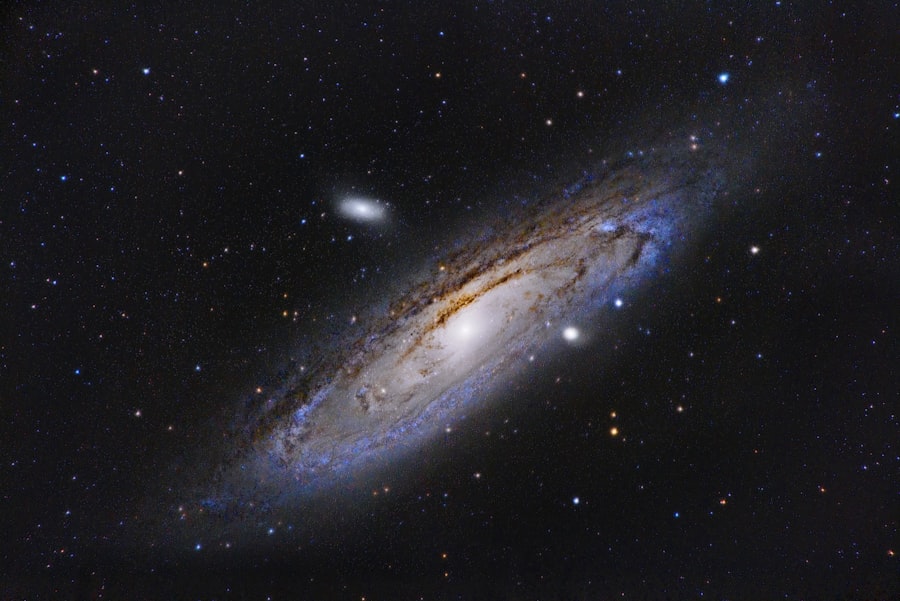
To grasp the concept of a 2D projection, several theoretical frameworks and analogies are employed by physicists. These help to conceptualize how a higher-dimensional reality can emerge from a lower-dimensional one.
The Illusion of Depth on a Screen
Perhaps the most accessible analogy is the 2D screen of a television or computer. It is a flat surface, yet it displays images that appear to have depth and three-dimensionality. This is achieved through the use of perspective, shading, and the arrangement of pixels. The 2D screen itself doesn’t possess depth; it projects the illusion of it. Similarly, a holographic universe suggests that our perception of volume and depth might be a sophisticated illusion generated from a fundamental 2D substrate.
String Theory and Branes
String theory, a candidate for a unified theory of everything, also plays a role in these discussions. In string theory, fundamental entities are not point-like particles but one-dimensional strings. Higher-dimensional objects called “branes” are also central. Some models within string theory explore scenarios where our observed universe could be a brane embedded within a higher-dimensional “bulk.” The idea of a 2D projection can be seen as a specific case or manifestation of such brane-world scenarios, where the information defining our 3D experience is contained on a 2D boundary.
Quantum Entanglement as a Structural Element
Quantum entanglement, a phenomenon where particles become linked in such a way that they share the same fate, regardless of distance, is also being explored for its potential role in holographic descriptions. Some research suggests that the “connectedness” of spacetime itself, the way different points in space are linked, might be a consequence of underlying quantum entanglement on a boundary. This implies a profoundly interconnected reality where seemingly separate parts are intricately woven together by quantum correlations.
In exploring the intriguing concept of whether the universe is a 2D projection, one might find it enlightening to read a related article that delves into the implications of this theory on our understanding of reality. This article discusses how the holographic principle suggests that all the information contained within our three-dimensional universe could be encoded on a two-dimensional surface. For a deeper dive into these fascinating ideas, you can check out the article here.
Challenges and Future Directions
| Metric | Value/Description |
|---|---|
| Holographic Principle | Theoretical concept suggesting the universe can be described as a 2D information structure projected onto a 3D space |
| Dimensions of Universe | 3 spatial dimensions + 1 time dimension (4D spacetime) |
| Evidence Supporting 2D Projection | Black hole entropy proportional to surface area, not volume; AdS/CFT correspondence in string theory |
| Counterarguments | Observable 3D spatial phenomena; lack of direct experimental proof for holographic universe |
| Key Researchers | Gerard ‘t Hooft, Leonard Susskind, Juan Maldacena |
| Current Status | Hypothetical framework in theoretical physics; ongoing research and debate |
While the concept of a holographic universe is tantalizing, it faces significant theoretical and observational challenges. The primary hurdle is to develop concrete, testable predictions that can be verified or falsified through experiments.
The Universe’s Geometry: Flat or Curved?
The Holographic Principle is most robustly formulated in Anti-de Sitter (AdS) space. Our universe, however, appears to be either flat or, on cosmological scales, governed by de Sitter (dS) geometry due to dark energy. Extending the holographic principle to dS space is a major theoretical challenge. While progress has been made, a complete and universally accepted holographic description of our universe is still lacking. Physicists are working on developing holographic dualities for dS space, which would be a significant step towards validating the hypothesis for our own cosmos.
Designing Definitive Experiments
One of the most significant challenges is designing experiments that can definitively test the holographic hypothesis. Unlike traditional physics where we can probe forces and particles directly in three dimensions, the holographic principle suggests that the fundamental reality lies on a boundary. Detecting direct evidence of this boundary and the information encoded on it is an immense undertaking. Researchers are exploring possibilities like subtle correlations in the distribution of matter or specific patterns in gravitational waves that might betray the underlying holographic nature of spacetime.
The Ongoing Quest for a Unified Theory
Ultimately, the quest to understand whether the universe is a 2D projection is intrinsically linked to the search for a unified theory of everything. If a holographic description proves correct, it will revolutionize our understanding of gravity, quantum mechanics, and the very nature of reality. The journey is far from over, but the questions being asked and the theoretical avenues being explored are pushing the boundaries of human knowledge and offering a glimpse into potential new paradigms of existence. The universe, in its unfathomable complexity, may yet reveal that its grandest dimensions are but elegantly projected shadows of simpler truths.
FAQs
What does it mean to say the universe is a 2D projection?
The idea that the universe is a 2D projection refers to the holographic principle, which suggests that all the information contained within a three-dimensional space can be described by data encoded on a two-dimensional boundary. In this context, our 3D universe might be understood as a projection of information stored on a distant 2D surface.
What is the holographic principle?
The holographic principle is a theoretical concept in physics proposing that the description of a volume of space can be thought of as encoded on a lower-dimensional boundary to that region. It originated from studies of black hole thermodynamics and quantum gravity, implying that the universe’s fundamental description might be two-dimensional.
Is there experimental evidence supporting the universe as a 2D projection?
Currently, there is no direct experimental evidence confirming that the universe is a 2D projection. The holographic principle remains a theoretical framework supported by mathematical models and indirect observations, such as properties of black holes and quantum field theories, but it has not been empirically proven.
How does the holographic principle relate to black holes?
The holographic principle was inspired by the study of black holes, particularly the observation that the entropy (a measure of information) of a black hole is proportional to the area of its event horizon, a two-dimensional surface, rather than its volume. This suggests that the information about the black hole’s interior is encoded on its surface, supporting the idea of a 2D description of 3D phenomena.
What are the implications if the universe is indeed a 2D projection?
If the universe is a 2D projection, it would revolutionize our understanding of space, time, and gravity, potentially unifying quantum mechanics and general relativity. It could imply that the fundamental nature of reality is encoded on a two-dimensional surface, changing how we perceive dimensions and the fabric of the cosmos. However, this remains a theoretical possibility rather than an established fact.