
Inflation: Solving the Horizon Problem
The universe, as we observe it today, presents a remarkable homogeneity. Regions of the cosmic microwave background (CMB) radiation, separated by vast distances – so great that light has not had time to travel between them since the Big Bang – exhibit an almost identical temperature. This apparent paradox, known as the horizon problem, poses a significant challenge to standard Big Bang cosmology. How could these causally disconnected regions have reached thermal equilibrium? The theory of cosmic inflation offers a compelling solution to this enigma.
The standard Big Bang model, while successful in explaining many cosmological observations like the expansion of the universe and the abundance of light elements, struggles to account for the striking uniformity of the CMB. Imagine receiving postcards from two individuals who claim to have visited completely isolated islands, never having communicated with each other. If these postcards meticulously describe the very same, specific type of seashell found on their respective shores, you would naturally suspect they must have coordinated their efforts or, perhaps, the islands are not as isolated as initially thought. The CMB presents a similar scenario on a cosmic scale.
The CMB: A Snapshot of the Early Universe
The cosmic microwave background radiation is a faint afterglow from the early universe, approximately 380,000 years after the Big Bang. At this epoch, the universe had cooled sufficiently for electrons and protons to combine, forming neutral atoms. This event, known as recombination, allowed photons to travel freely, marking the last scattering surface from which the CMB we observe today originated.
Causal Disconnection and the Problem
The key issue lies in the distances involved. According to the standard Big Bang model, the observable universe today subtends an angle of roughly 1 degree in the sky. Regions of the CMB separated by more than a degree are considered to be outside each other’s causal horizon at the time of recombination. This means that no information, not even light, could have traveled between them to equalize their temperatures. Yet, measurements from missions like COBE, WMAP, and Planck have revealed temperature fluctuations in the CMB of only tens of microkelvins across the entire sky. This extreme similarity points to a shared past, a common origin of thermal equilibrium that standard cosmology cannot readily explain.
The “Flatness” Problem: A Related Puzzle
The horizon problem is closely intertwined with another challenge to the standard Big Bang model: the flatness problem. The universe appears to be remarkably flat, meaning its spatial geometry is close to Euclidean. This flatness implies a very specific initial density of the universe, precisely tuned to the critical density required for a flat universe. Any deviation from this precise value in the early universe would have been amplified over cosmic time, leading to either a universe that quickly collapsed under its own gravity or one that expanded so rapidly that no structures could have formed. The observed flatness suggests that the early universe was even more finely tuned than the horizon problem implies.
The horizon problem, which questions why different regions of the universe appear to have the same temperature despite being too far apart to have ever interacted, finds a compelling solution in the theory of cosmic inflation. This rapid expansion of the universe in its earliest moments allows distant regions to have been in close contact before being pushed apart, leading to the uniformity we observe today. For a deeper exploration of this concept and its implications for our understanding of the universe, you can read more in the article available at My Cosmic Ventures.
Inflation: A Period of Exponential Expansion
The theory of cosmic inflation, first proposed by Alan Guth in 1980 and subsequently developed by Andrei Linde, Paul Steinhardt, and Andreas Albrecht, offers an elegant solution to both the horizon and flatness problems. Inflation posits a period of extremely rapid, exponential expansion of the universe that occurred a tiny fraction of a second after the Big Bang, from roughly $10^{-36}$ to $10^{-32}$ seconds. During this fleeting interval, the universe is thought to have expanded by a factor of at least $10^{26}$ in linear scale.
The Mechanism of Inflation: A Hypothetical Field
The driving force behind inflation is generally believed to be a scalar field, often referred to as the “inflaton field.” This field, possessing a high energy density and a potential energy that drives its rapid decay, permeated the early universe. As this field slowly rolled down its potential, it released its energy, causing the exponential expansion. This is akin to a ball slowly rolling down a gently sloping hill, but in this case, the ‘hill’ is a very steep energy potential, leading to a rapid cascade of energy release and expansion.
The Speed of Inflation
It is crucial to understand that inflation did not involve objects moving faster than light through spacetime. Instead, it was spacetime itself that was expanding at an extraordinary rate. Imagine points on a balloon being rapidly inflated; the points themselves are not moving on the rubber, but the rubber between them is stretching, increasing the distance. During inflation, the universe expanded so quickly that regions that were once in causal contact were stretched far beyond the observable horizon.
The End of Inflation: Reheating
Inflation did not last forever. Eventually, the inflaton field reached the bottom of its potential well, and its energy was released into a hot soup of particles and radiation—a process known as “reheating.” This reheating phase effectively set the stage for the standard hot Big Bang evolution, providing the initial conditions for baryogenesis (the creation of matter over antimatter) and nucleosynthesis (the formation of light elements).
How Inflation Solves the Horizon Problem

Inflation provides a straightforward explanation for the CMB’s homogeneity by positing that the large-scale homogeneity we observe today was established before inflation began.
Pre-Inflationary Causal Contact
In the very early moments of the universe, before inflation, the universe was much smaller and all regions were in causal contact. Imagine a small, perfectly mixed pot of soup. Everything within that pot has had a chance to interact and reach a uniform temperature. Inflation then took this small, homogeneous region and stretched it to an enormous size, far exceeding the size of our observable universe today. The regions we now see as causally disconnected were once in close proximity, allowing them to reach thermal equilibrium.
Stretching Quantum Fluctuations
Inflation’s proposed solution to the horizon problem is conceptually simple: the homogeneity was already present in a small region, and inflation simply stretched that uniformity to cosmic scales. However, it also elegantly addresses the origin of the small temperature fluctuations observed in the CMB, which are the seeds of large-scale structure formation. These tiny anisotropies are thought to arise from quantum fluctuations in the inflaton field during inflation. These microscopic quantum jitters, amplified to macroscopic scales by the immense expansion, became the density variations that eventually led to the formation of galaxies and clusters of galaxies.
The “Pocket Universe” Analogy
Another way to visualize this is through the concept of a “pocket universe.” Imagine a boiling pot of water. Bubbles form within the water, each representing a tiny, self-contained region that is uniform. Inflation, in this analogy, is like a massive, rapid expansion of the entire pot. Our observable universe would be just one such bubble that has been stretched to an enormous size. The uniformity within that bubble is explained by the initial conditions within the small, pre-inflationary region.
Addressing the Flatness Problem with Inflation

Inflation also offers a compelling solution to the flatness problem. The extreme expansion during inflation naturally drives the universe towards a flat geometry, regardless of its initial curvature.
The Stretching of Spacetime’s Curvature
The curvature of spacetime depends on its energy density. If the early universe had a significant curvature (either positive, like the surface of a sphere, or negative, like a saddle), the exponential expansion of inflation would have effectively flattened it out. Consider stretching a small, curved piece of rubber. If you stretch it exponentially, any initial curvature becomes negligible over the magnified surface area.
The “Zooming In” Effect
Inflation acts like an extreme zoom lens on spacetime. As the universe expands exponentially, any initial deviation from flatness is stretched out and becomes progressively smaller relative to the overall size of the universe. What appears nearly flat from our current vantage point was even flatter in the very early universe, and inflation made it so.
The Problem of Initial Conditions
Without inflation, the standard Big Bang model requires an incredibly fine-tuned initial condition for the universe to be as flat as we observe it today. The required precision is akin to balancing a pencil on its infinitesimally small tip for billions of years. Inflation removes this requirement by providing a dynamical mechanism that forces the universe towards flatness.
The horizon problem in cosmology, which questions how regions of the universe that are far apart can have similar temperatures and properties, has been effectively addressed by the theory of inflation. This rapid expansion of the universe in its earliest moments explains how these distant regions could have been in thermal equilibrium before being separated. For a deeper understanding of this concept and its implications, you can read more in this insightful article on the topic. To explore further, check out this link.
Evidence Supporting Inflation
| Metric | Description | Value/Explanation |
|---|---|---|
| Horizon Problem | Why distant regions of the universe have the same temperature despite being out of causal contact | Observed uniformity of Cosmic Microwave Background (CMB) temperature across regions separated by more than the particle horizon |
| Particle Horizon at Recombination | Maximum distance light could have traveled since the Big Bang until recombination (~380,000 years) | ~280,000 light years |
| Angular Scale of Horizon at Recombination | Angular size on the sky corresponding to the particle horizon at recombination | ~1° (degree) |
| Inflation Duration | Time period during which exponential expansion occurred | ~10^-36 to 10^-32 seconds after the Big Bang |
| Number of e-folds | Amount of exponential expansion during inflation | Typically > 60 e-folds |
| Effect of Inflation on Horizon | Expansion of a tiny causally connected region to encompass the entire observable universe | Explains uniform temperature and isotropy of CMB |
| Temperature Uniformity of CMB | Measured temperature variation across the sky | ΔT/T ~ 10^-5 |
While inflation is a theoretical framework, it has made specific predictions that can be tested against observational data, and the results have been remarkably consistent.
The Angular Power Spectrum of the CMB
One of the most crucial predictions of inflation is the form of the angular power spectrum of the CMB. This spectrum describes the amplitude of temperature fluctuations at different angular scales. Inflation predicts a nearly scale-invariant spectrum of primordial fluctuations, meaning that the magnitude of the fluctuations is roughly the same across all scales. Observations from WMAP and Planck have confirmed this prediction with high precision.
Large-Scale Structure Formation
Inflation also predicts the distribution of matter in the universe, which is observed in the large-scale structure of galaxies and clusters. The density fluctuations generated by inflation are the seeds from which these structures grow over cosmic time. The observed distribution and clustering of galaxies are consistent with inflationary predictions.
Gravitational Waves
A key prediction of many inflationary models is the generation of primordial gravitational waves. These ripples in spacetime, produced during the inflationary epoch, would leave a distinct signature on the polarization of the CMB, known as B-modes. Detecting these B-modes would be a definitive confirmation of inflation. While definitive detection remains a goal, ongoing experiments are pushing the boundaries of sensitivity.
The Absence of Magnetic Monopoles
Another problem that inflation elegantly solves is the magnetic monopole problem. Grand Unified Theories, which describe fundamental forces at very high energies, predict the existence of magnetic monopoles – isolated north or south magnetic poles. If these monopoles were produced at the beginning of the universe, they should be abundant today, but they have not been observed. Inflation dilutes their density to undetectable levels, just as it dilutes other unwanted relics from the early universe.
Challenges and Future Directions
Despite its considerable success, inflation is not without its challenges and open questions, fueling ongoing research and theoretical development.
The Nature of the Inflaton Field
The exact nature of the inflaton field, its potential, and the mechanism by which it interacted with other fundamental forces remain unknown. Understanding the inflaton is a major goal of theoretical physics, potentially linking cosmology with particle physics beyond the Standard Model.
Multiverse Scenarios
Some inflationary models suggest the possibility of eternal inflation, where inflation never truly ends everywhere. Instead, regions of the universe stop inflating and become “pocket universes,” while inflation continues in other regions, spawning new universes. This scenario leads to the concept of a “multiverse,” a collection of potentially infinite universes. While a fascinating theoretical implication, the multiverse presents challenges in terms of testability and falsifiability.
Fine-Tuning in Some Inflationary Models
While inflation generally alleviates the fine-tuning problem of the standard Big Bang model, some specific inflationary models still require certain parameters to be finely tuned. Researchers are actively exploring “natural inflation” models that aim to reduce or eliminate this residual fine-tuning.
Alternative Theories
While inflation is the leading paradigm for solving the horizon problem, alternative models exist, such as cyclic cosmologies or bouncing cosmologies, which propose different mechanisms for overcoming these early universe puzzles. The ongoing quest for a complete understanding of the universe’s origin involves a continuous comparison of theoretical predictions with observational data, pushing the boundaries of our knowledge.
The horizon problem stands as a significant observation that demands an explanation beyond the standard Big Bang cosmology. Inflation, with its hypothesis of a brief period of exponential expansion, provides a compelling and elegantly simple solution. By stretching a small, causally connected, and homogeneous region of the early universe to encompass our entire observable cosmos, inflation renders the remarkable uniformity of the CMB understandable. Furthermore, its ability to address the flatness problem and explain the seeds of cosmic structure solidify its position as a cornerstone of modern cosmology. While challenges and open questions remain, the theory of inflation continues to be a vibrant area of research, guiding our exploration into the most fundamental questions about the origin and evolution of our universe.
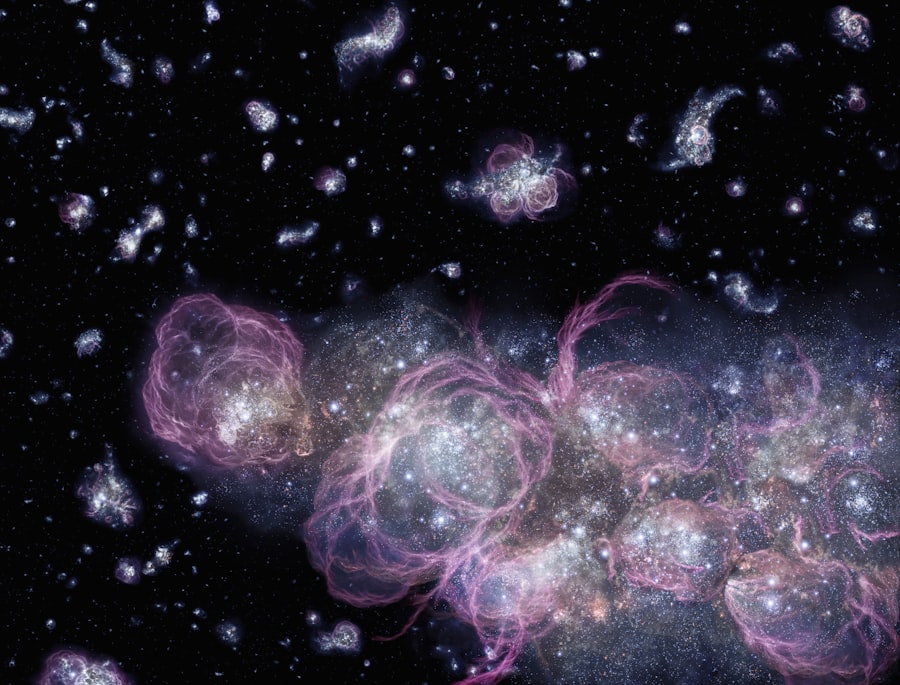
SHOCKING: Why Physicists Are Finally Admitting The Big Bang Failed
FAQs
What is the horizon problem in cosmology?
The horizon problem refers to the question of why different regions of the universe, which are too far apart to have ever been in causal contact, have nearly the same temperature and other physical properties. This uniformity is difficult to explain under the standard Big Bang model without additional mechanisms.
How does cosmic inflation solve the horizon problem?
Cosmic inflation proposes a period of extremely rapid expansion in the early universe. This expansion stretched a small, causally connected region to a size much larger than the observable universe today, explaining why distant regions have similar properties despite being out of causal contact now.
When did inflation occur in the history of the universe?
Inflation is believed to have occurred very shortly after the Big Bang, approximately between 10^-36 and 10^-32 seconds after the initial event, during which the universe expanded exponentially.
What evidence supports the inflationary solution to the horizon problem?
Observations of the cosmic microwave background (CMB) radiation show a high degree of uniformity and specific patterns of fluctuations that match predictions made by inflationary models. These include the nearly scale-invariant spectrum of density perturbations and the flatness of the universe.
Are there alternative explanations to the horizon problem besides inflation?
While inflation is the most widely accepted solution, alternative theories have been proposed, such as varying speed of light models or cyclic universe scenarios. However, these alternatives generally lack the same level of observational support as inflation.