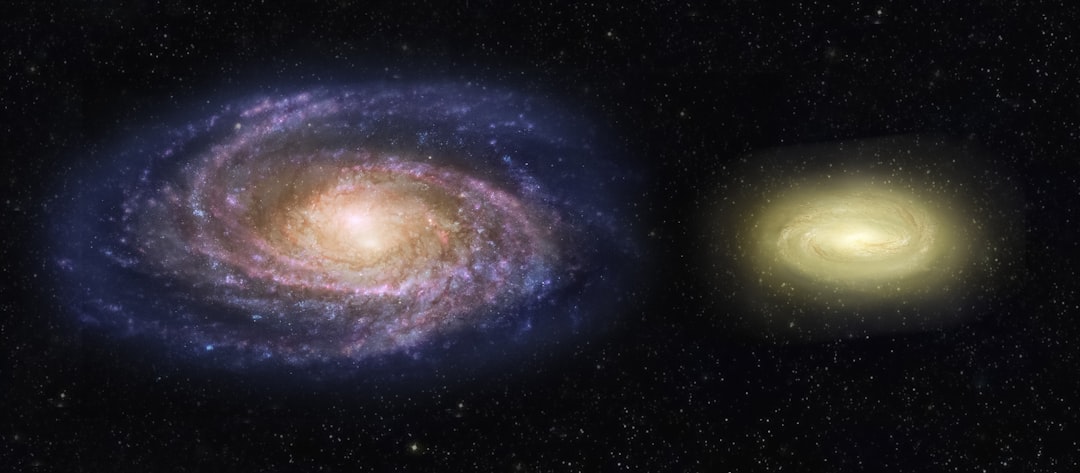
Gravity’s relentless pull, a fundamental force, orchestrates the grand cosmic ballet of galaxy formation and evolution. From the nascent whispers of the early universe to the intricate structures observed today, gravity is the primary architect, shaping these vast stellar islands over billions of years. Its influence is not a single, immediate act, but a continuous, pervasive force that dictates the aggregation of matter, the growth of structures, and the very dynamics of these celestial behemoths. Understanding gravity’s role is paramount to unraveling the mysteries of cosmic structure.
In the aftermath of the Big Bang, the universe was a far more homogeneous place than it appears today. However, microscopic quantum fluctuations, amplified by cosmic inflation, left subtle variations in the density of matter and energy. These tiny overdensities, though minuscule at the earliest stages, became the gravitational seeds around which larger structures would eventually coalesce. Gravity, acting on these denser regions, began to draw in surrounding matter, initiating the process of cosmic structure formation.
Early Universe Micro-perturbations and Inflation
The primordial soup of the early universe was a sea of plasma, an intricate dance of particles and radiation. While overall remarkably uniform, there were infinitesimally small regions where the density of matter was slightly higher or lower than average. These density fluctuations are crucial; without them, gravity would have had no initial impetus to act upon. The theory of cosmic inflation proposes a period of rapid expansion in the universe’s first fraction of a second. This inflationary epoch is believed to have stretched these quantum fluctuations to macroscopic scales, imprinting them onto the fabric of spacetime.
Dark Matter’s Gravitational Dominance
While ordinary baryonic matter, comprising stars, gas, and dust, is what we directly observe, it is the invisible influence of dark matter that truly dictates the large-scale gravitational dynamics. Dark matter interacts gravitationally but does not emit, absorb, or reflect light, making it undetectable through electromagnetic means. Cosmological models consistently indicate that dark matter constitutes a significant majority of the universe’s matter content, estimated to be around 85%. This dark matter, being non-baryonic, began to clump together gravitationally much earlier than baryonic matter, which was coupled to photons and thus subject to radiation pressure. Consequently, dark matter formed extended, invisible halos that provided the gravitational scaffolding for baryonic matter to assemble.
The Gravitational Collapse of Primordial Gas Clouds
As the universe expanded and cooled, baryonic matter – predominantly hydrogen and helium – began to decouple from radiation. These diffuse gas clouds, influenced by the gravitational pull of pre-existing dark matter halos, started to contract. Gravity’s insistent tug compressed the gas, leading to increasing density. This gravitational collapse is not a uniform process; it is driven by the initial overdensities. Larger overdensities attracted more matter, leading to proportionally larger dark matter halos and, consequently, larger potential gravitational wells.
Gravity plays a crucial role in shaping the structure of galaxies, influencing everything from their formation to their eventual evolution. For a deeper understanding of this fascinating topic, you can explore the article titled “The Role of Gravity in Galactic Formation” which discusses how gravitational forces affect the distribution of stars and dark matter within galaxies. To read more about this, visit this article.
The Building Blocks: Gravitational Accretion and Mergers
Once protogalaxies began to form within their dark matter halos, they were not static entities. Gravity continued to drive their growth through a dual process: the gradual accretion of smaller cosmic structures and the more dramatic, disruptive events of galaxy mergers. These processes are fundamental to understanding the diverse morphologies and sizes of galaxies observed across the cosmos.
Hierarchical Structure Formation: Small to Large
The prevailing cosmological model, known as the Lambda-CDM model, posits a hierarchical approach to structure formation. This means that smaller structures form first and then merge to create larger ones. In this context, gravity dictates that the smallest dark matter halos, and the nascent baryonic structures within them, are the first to assemble. These smaller halos then merge under mutual gravitational attraction, forming larger halos and, in turn, larger galaxies. This process of accretion is continuous, with galaxies constantly drawing in filaments of gas and smaller galaxies from their surroundings.
Accretion of Gas Streams and Dwarf Galaxies
The intergalactic medium is not entirely empty; it contains vast filaments of gas and isolated dwarf galaxies. Gravity acts as a cosmic sieve, drawing these smaller components towards the gravitational centers of more massive galaxies. These gas streams provide fuel for ongoing star formation within galaxies, while the accretion of dwarf galaxies can significantly alter the morphology and stellar population of the host galaxy. The gravitational influence of a massive galaxy can disrupt smaller satellite galaxies, stripping them of their gas and stars, or it can lead to their complete assimilation.
Galaxy Mergers: A Gravitational Dance of Destruction and Creation
Galaxy mergers are among the most energetic and transformative events in the universe. When two or more galaxies approach each other, their mutual gravitational attraction can lead to a violent collision. These mergers are not instantaneous but can involve a prolonged period of gravitational interaction, leading to tidal distortions, the stripping of gas and stars, and ultimately, the merging of the galactic cores.
Transformation of Morphologies through Mergers
The impact of mergers on galaxy morphology is profound. Spiral galaxies, characterized by their flat disks and spiral arms, can be transformed into elliptical galaxies after a major merger. The chaotic gravitational forces involved can disrupt the ordered disk structure, scattering stars into a more spheroidal distribution. Mergers also play a role in driving intense bursts of star formation, as the gravitational perturbations compress gas clouds, triggering their collapse.
The Role of Satellite Galaxies in Shaping Central Galaxies
While major mergers between galaxies of comparable mass are dramatic, the continuous accretion of smaller satellite galaxies also plays a significant role in shaping the structure of larger galaxies. These smaller galaxies can be tidally disrupted, their stars and gas contributing to the extended stellar halos and disks of their more massive hosts. In some cases, the ordered accretion of satellite galaxies can even contribute to the formation of bars and spiral arms in the central galaxy.
Galactic Dynamics: Gravity Dictating Motion
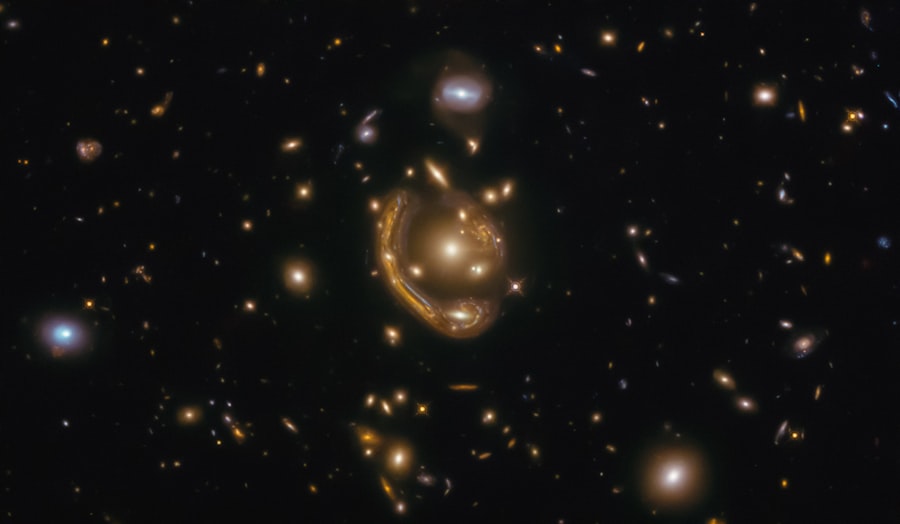
Within galaxies, gravity is the unseen hand that dictates the intricate movements of stars, gas, and dark matter. It is the force responsible for holding these vast systems together and for shaping their internal dynamics, from the ordered rotation of disk galaxies to the chaotic orbits within elliptical galaxies.
Stellar Orbits and Velocity Dispersions
The stars within a galaxy do not move randomly. They follow Keplerian orbits around the galactic center of mass, a region where the gravitational influence is strongest, often dominated by a supermassive black hole. The speed at which stars orbit is determined by the distribution of mass within the galaxy, including both luminous matter and the pervasive dark matter halo. In elliptical galaxies, where the structure is more spherical and less ordered than in spiral galaxies, stars exhibit a wider range of orbital orientations and velocities. This random motion is characterized by a velocity dispersion, a measure of the spread of stellar velocities around the average.
The Orbital Mechanics of Disk Galaxies
In disk galaxies, like our own Milky Way, stars in the disk primarily orbit the galactic center in roughly circular paths, lying within the plane of the disk. The rotational velocity of these stars is expected to decrease with distance from the center according to Newtonian physics if all the mass were luminous. However, observations consistently show that rotational velocities remain high even at large distances from the galactic center, a phenomenon known as the galaxy rotation curve problem. This discrepancy is a key piece of evidence supporting the existence of dark matter.
The Velocity Dispersion of Elliptical Galaxies
Elliptical galaxies, in contrast to the ordered rotation of disk galaxies, exhibit a more isotropic distribution of stellar velocities. Stars within an elliptical galaxy move in a complex, three-dimensional pattern, with orbits that are not confined to a single plane. The magnitude of this velocity dispersion is a measure of the galaxy’s internal kinetic energy and is directly related to the strength of its gravitational potential. Higher velocity dispersions generally indicate more massive galaxies.
The Influence of Supermassive Black Holes
At the heart of most massive galaxies lies a supermassive black hole, an object with a gravitational pull so immense that nothing, not even light, can escape its event horizon. While these black holes are minuscule in comparison to the galaxy itself, their immense mass concentrated in a small region makes them significant gravitational influences, particularly in the central regions of galaxies.
Direct Gravitational Effects on Stellar Orbits
The gravitational force exerted by a supermassive black hole dominates the dynamics of stars in its immediate vicinity. Observations of stellar orbits around the center of the Milky Way, for instance, provide compelling evidence for a supermassive black hole called Sagittarius A*. The precise, elliptical orbits of stars very close to the galactic center can be accurately modeled by assuming the presence of a compact, massive object.
Indirect Effects: Feedback and Galaxy Evolution
Beyond their direct gravitational influence on immediate stellar orbits, supermassive black holes can also indirectly affect galaxy evolution through feedback mechanisms. As matter accretes onto a black hole, it can power energetic outflows of radiation and particles. These outflows can heat or expel gas from the galaxy, suppressing further star formation and influencing the galaxy’s overall growth. This gravitational-driven accretion and subsequent energetic feedback are critical components of the co-evolution of supermassive black holes and their host galaxies.
The Cosmic Web: Gravity’s Large-Scale Structure
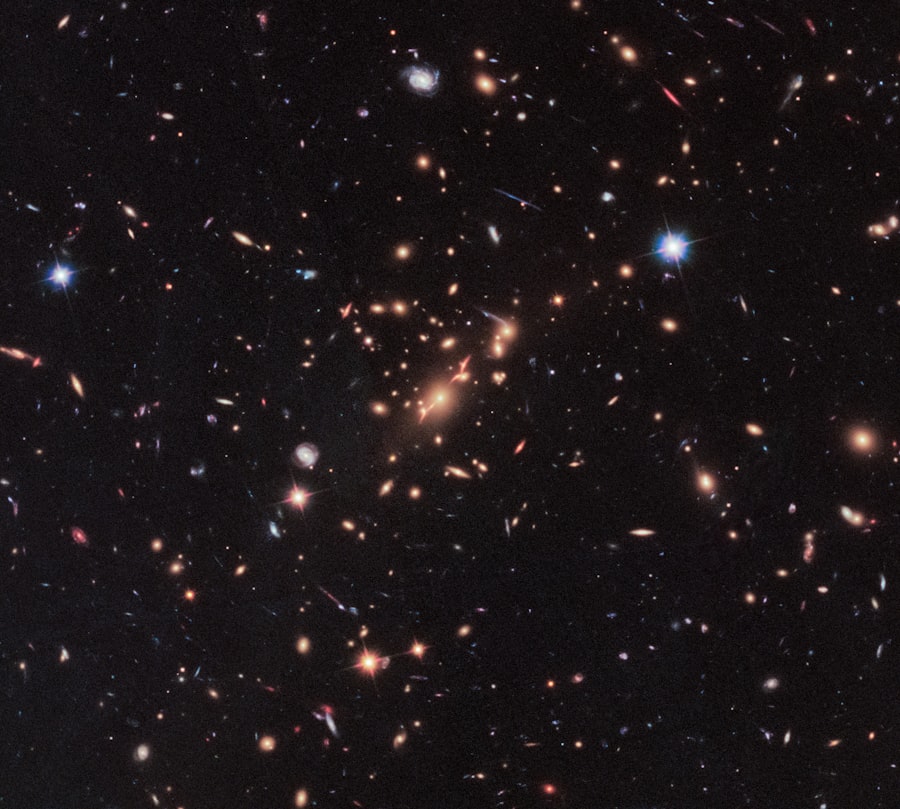
Gravity’s influence extends far beyond individual galaxies. On the grandest scales, it is responsible for the formation of the cosmic web, a vast, interconnected network of galaxy clusters, filaments, and voids that structures the universe. This intricate pattern is a direct consequence of gravity’s long-range pull, acting on matter over immense cosmic distances.
Filamentary Structures and Voids
The distribution of galaxies in the universe is not uniform. Instead, it forms a sponge-like structure characterized by dense knots of galaxies called clusters, connected by long, thread-like filaments. The regions between these filaments are vast, largely empty expanses known as voids. Gravity draws matter into the denser regions, creating the filaments and clusters, while the intervening regions become depleted.
The Gravitational Pull of Overdense Regions
Gravity’s persistent pull amplifies initial density fluctuations. Regions that were initially slightly denser than average attracted more matter, while underdense regions became even emptier. This process, driven by gravity over billions of years, leads to the formation of the large-scale filamentary structures observed today. The gravitational influence of each mass element draws in other mass elements, leading to a hierarchical assembly of matter.
Galaxy Clusters: Gravitational Minima
Galaxy clusters are the largest gravitationally bound structures in the universe. They consist of hundreds to thousands of galaxies, along with vast amounts of hot gas and dark matter, all held together by their collective gravitational pull. These clusters represent deep gravitational wells where galaxies congregate.
The Dynamics within Clusters
Within galaxy clusters, galaxies are in constant motion, orbiting the cluster’s center of mass. Their velocities are much higher than those within isolated galaxies, reflecting the much stronger gravitational field of the cluster. The hot gas found in clusters, known as the intracluster medium, is also bound by gravity and emits X-rays, allowing us to map the distribution of mass within the cluster.
The Role of Dark Matter in Shaping the Cosmic Web
As with individual galaxies, dark matter plays a crucial role in the formation and sustenance of the cosmic web. The vast, invisible halos of dark matter provide the gravitational scaffolding for the large-scale structure. The filaments and clusters are essentially the visible manifestation of the underlying dark matter distribution. Without dark matter, the observed large-scale structure of the universe would not have formed.
Gravity plays a crucial role in shaping the structure of galaxies, influencing everything from their spiral arms to the distribution of stars and dark matter. This fascinating interplay of forces not only determines the formation of galaxies but also affects their evolution over billions of years. For those interested in exploring this topic further, a related article can be found at My Cosmic Ventures, which delves into the intricate dynamics of galactic formation and the impact of gravitational forces on cosmic structures.
Gravity’s Ongoing Influence: Galaxy Evolution and Fate
| Galaxy | Gravity Effect | Structure |
|---|---|---|
| Milky Way | Central bulge and spiral arms | Barred spiral galaxy |
| Andromeda | Central bulge and spiral arms | Barred spiral galaxy |
| Messier 87 | Central supermassive black hole | Giant elliptical galaxy |
Gravity is not a static force that simply shaped galaxies in the past. It continues to influence their evolution and ultimately dictates their eventual fate. The ongoing interactions between galaxies, the internal dynamics governed by gravity, and the large-scale cosmic environment all contribute to the continuous process of galactic transformation.
Tidal Stripping and Galactic Harassment
Galaxies in dense environments, such as within clusters, are subject to continuous gravitational interactions with their neighbors. Tidal forces from nearby galaxies can strip away stars and gas from the outer regions of a galaxy, a process known as tidal stripping. Even more subtle, frequent close encounters, known as galactic harassment, can gradually disrupt the structure of a galaxy over time, slowing its rotation and altering its star formation rate.
The Ram Pressure Stripping of Gas
In dense environments, galaxies moving through the intracluster medium can experience ram pressure stripping. The motion of the galaxy through this hot, dense gas exerts a pressure that can effectively push gas out of the galactic disk, effectively starving the galaxy of its fuel for star formation. This process is a direct consequence of gravity holding the gas within the cluster and the motion of galaxies through it.
Galaxy Mergers as Transformative Events
As previously discussed, galaxy mergers are not a historical relic but an ongoing process. The constant gravitational interactions within the universe mean that galaxies continue to collide and merge. These events are crucial drivers of galaxy evolution, leading to changes in morphology, triggering bursts of star formation, and influencing the growth of supermassive black holes at their centers. The gravitational pull between galaxies is the engine driving these transformations.
The Long-Term Evolution of Galaxies
The combined effects of accretion, mergers, and ongoing environmental influences, all dictated by gravity, lead to the long-term evolution of galaxies. Whether a galaxy evolves into a quiescent elliptical or remains an active star-forming spiral depends on its formation history, its environment, and the cumulative gravitational forces it has experienced. The universe is a dynamic place, and gravity ensures that galaxies are not static entities but are continuously shaped and transformed.
The Ultimate Fate of Galaxies
The ultimate fate of galaxies is also dictated by gravity. In the distant future, if the universe continues to expand at an accelerating rate, galaxies will become increasingly isolated from each other. However, within gravitationally bound groups and clusters, galaxies will continue to interact and merge. Over cosmological timescales, the most massive galaxies are expected to grow by accreting their smaller satellite galaxies, eventually forming even larger, more dominant elliptical systems. The ongoing gravitational dance will continue, albeit in a vastly different cosmic landscape.
FAQs
What is the role of gravity in shaping the structure of galaxies?
Gravity plays a crucial role in shaping the structure of galaxies by pulling together gas, dust, and stars to form the distinct spiral, elliptical, or irregular shapes that we observe.
How does gravity affect the rotation of galaxies?
Gravity affects the rotation of galaxies by causing the outer regions to rotate at the same speed as the inner regions, leading to a flat, disk-like shape. This is known as the “flat rotation curve” and is a result of the gravitational pull of dark matter.
What is the impact of gravity on the formation of galaxy clusters?
Gravity is responsible for the formation of galaxy clusters by pulling together individual galaxies and their surrounding dark matter into larger structures. These clusters are the largest gravitationally bound structures in the universe.
How does gravity influence the distribution of dark matter in galaxies?
Gravity influences the distribution of dark matter in galaxies by causing it to form a halo around the visible matter. This dark matter halo provides the gravitational pull necessary to hold galaxies together and affects their overall structure.
What are some current theories about the role of gravity in galaxy formation and evolution?
Current theories about the role of gravity in galaxy formation and evolution include the hierarchical model, which suggests that small structures formed first and then merged to form larger galaxies due to gravitational interactions. Additionally, simulations and observations continue to refine our understanding of how gravity shapes the structure of galaxies over cosmic time.