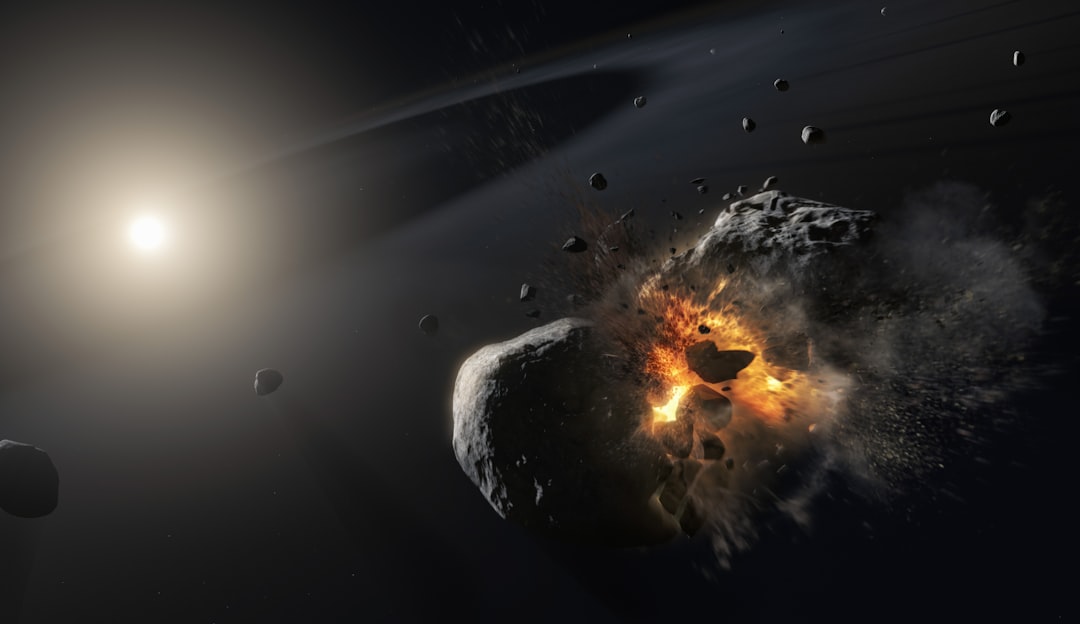
Gravity’s fundamental influence on the self-organization of protoplanetary disks is an area of continuous investigation in astrophysics. These vast, rotating clouds of gas and dust are the birthplaces of planets, and their evolution from a chaotic primordial state to a structured system is governed by the ubiquitous force of gravity. Understanding this process is crucial for comprehending the diversity of planetary systems observed throughout the galaxy.
Protoplanetary disks are not static entities but are dynamic environments that form around young stars. Their formation is intrinsically linked to the collapse of larger molecular clouds.
Initial Cloud Collapse
The lifecycle of a star begins within a molecular cloud, a cold and dense region of interstellar gas and dust. When a portion of this cloud becomes sufficiently massive and dense, it can overcome internal pressure forces, initiating a gravitational collapse. As the cloud collapses, conservation of angular momentum causes it to spin faster and flatten into a disk shape. The central region of this infalling material continues to contract, eventually forming a protostar.
Disk Formation and Composition
The material that does not fall onto the protostar settles into a planar structure surrounding it, known as a protoplanetary disk. These disks are primarily composed of hydrogen and helium gas, with a smaller but significant fraction of heavier elements in the form of dust grains. The properties of the initial molecular cloud, such as its mass, metallicity, and rotation rate, directly influence the characteristics of the resulting protoplanetary disk, including its size, mass, and temperature profile.
Recent studies have shed light on the fascinating process of protoplanetary disk self-organization through gravitational interactions, highlighting how these disks evolve and form planetary systems. For a deeper understanding of this phenomenon, you can explore a related article that discusses the dynamics and implications of gravitational forces in protoplanetary disks. To read more about this topic, visit this article.
Gravitational Instabilities and Disk Structure
Gravity plays a pivotal role in shaping the large-scale structure of protoplanetary disks, particularly in massive disks where gravitational instabilities can arise.
The Toomre Instability Criterion
A key concept in understanding disk instabilities is the Toomre parameter, Q. This dimensionless quantity relates the gravitational forces within the disk to the forces resisting gravitational collapse, such as pressure and rotation. A disk is considered gravitationally stable if Q is sufficiently large (typically Q > 1), meaning internal pressure and rotation counteract gravity. However, in massive and/or cold disks, Q can become less than 1, making the disk prone to fragmentation due to gravitational instabilities.
Fragmentation and Spiral Arms
When gravitational instabilities are dominant, the protoplanetary disk can fragment into denser clumps. These clumps can then collapse under their own gravity, potentially forming gas giant planets or brown dwarfs. This process is often visualized as the formation of prominent spiral arms within the disk. These spiral structures are not rigid but are dynamic density waves that propagate through the disk, redistributing angular momentum and influencing the distribution of matter. Gravity is the driving force behind the formation and maintenance of these arms, as overdensities attract more material, reinforcing the spiral pattern.
Angular Momentum Transport
One of the most critical functions of gravity in protoplanetary disks is its role in angular momentum transport. For a disk to evolve and for material to accrete onto the central star or form planets, angular momentum must be efficiently transported outwards. While viscosity plays a role, particularly through mechanisms like the magnetorotational instability (MRI), gravity itself contributes significantly, especially in the context of gravitational instabilities. The gravitational interactions between different parts of the disk, particularly through spiral waves, can effectively move angular momentum from the inner regions to the outer regions, allowing accretion and disk evolution to proceed.
Planet Formation as a Gravitational Process
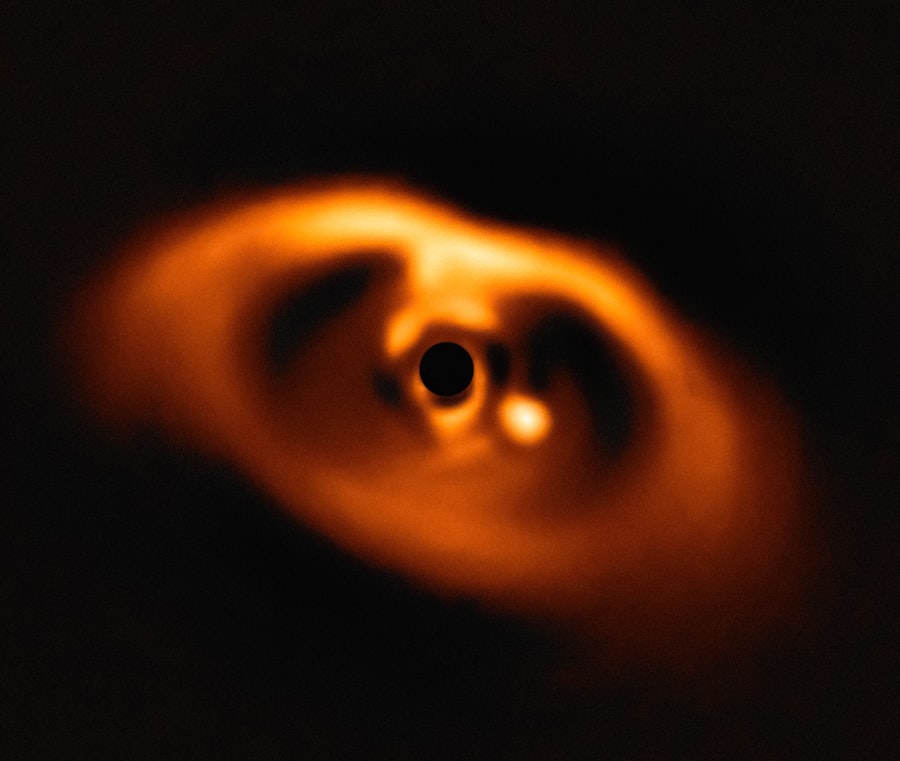
The ultimate outcome of protoplanetary disk evolution is the formation of planets, a process driven by gravity at multiple scales.
Core Accretion Model
The dominant paradigm for planet formation is the core accretion model. This model posits that planets begin as small solid bodies, or planetesimals, formed from the dust grains in the disk. These planetesimals collide and merge, growing larger over time. Gravity becomes increasingly important as these bodies grow. Larger planetesimals exert a stronger gravitational pull, attracting smaller particles and planetesimals more efficiently. This leads to a runaway growth phase where the largest bodies grow at an accelerated rate.
Gravitational Perturbations and Collisions
As planetesimals grow into protoplanets, their gravitational influence becomes significant. Protoplanets can gravitationally scatter smaller objects, either ejecting them from the disk or directing them into collisions with other protoplanets or their own surfaces. These gravitational perturbations can scatter planetesimals into orbits that make them more likely to encounter larger bodies, thus facilitating further accretion. The cumulative effect of these gravitational interactions shapes the distribution and eventual orbital configurations of the forming planets.
Gas Giant Formation
Gravity plays a particularly crucial role in the formation of gas giant planets like Jupiter and Saturn. Once a protoplanet reaches a critical mass (typically around 5-10 Earth masses), its gravitational pull becomes strong enough to rapidly accrete a massive envelope of gas from the surrounding protoplanetary disk. This rapid gas capture is a gravitational phenomenon, where the planet’s gravity well is deep enough to hold onto the abundant hydrogen and helium. The timescale of this gas accretion is strongly dependent on the ambient gas density and the planet’s mass and hence its gravitational pull.
Gravitational Interactions within Planetary Systems
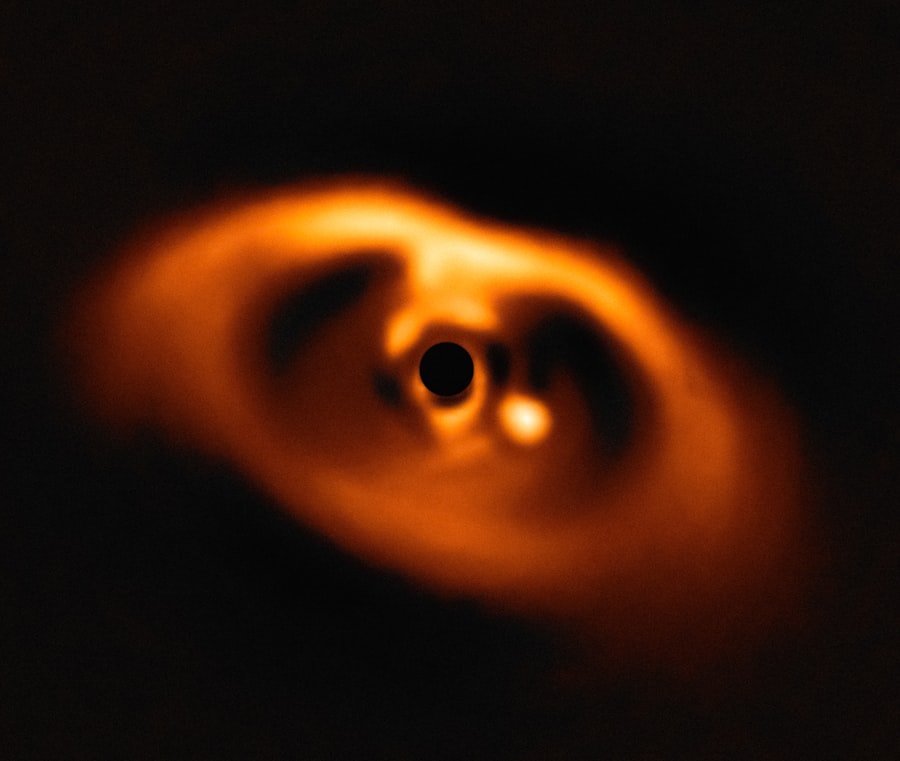
Once planets have formed, their gravitational interactions continue to shape the protoplanetary disk and the nascent planetary system.
Orbital Migration
The gravitational influence of planets on the disk can lead to orbital migration. Planets can exchange angular momentum with the disk, causing them to spiral inwards or outwards. For example, a planet embedded in a gas-rich disk can create density waves through its gravitational pull. The interaction of these waves with the planet can lead to a net transfer of angular momentum, causing the planet to change its orbital radius. This phenomenon is important for explaining the wide range of orbital parameters observed in exoplanetary systems.
Resonance and Stability
Gravitational resonances occur when the orbital periods of two or more planets are related by a simple integer ratio. These resonant interactions can dramatically influence the stability and evolution of planetary system architectures. For instance, two planets in a 2:1 resonance will have their orbital periods such that one planet completes two orbits for every one orbit of the other. While resonances can stabilize certain configurations by preventing close encounters, they can also lead to orbital eccentricities and inclinations, and in some cases, can destabilize the system, leading to planet ejections. These stable or unstable configurations are entirely governed by the interplay of gravitational forces.
Clearing the Disk
As a planetary system matures, the growing planets play a significant role in clearing the remaining material from the protoplanetary disk. Their gravitational influence can scatter dust and gas outwards or inwards, or even eject it from the system. This process is crucial for the eventual cessation of planet formation and the establishment of a relatively stable orbital configuration for the planets. The gravitational “shepherding” by massive planets is essential for creating gaps and clearing orbits, allowing for the formation of distinct planetary zones.
Recent studies have shed light on the fascinating process of protoplanetary disk self-organization through gravity, revealing how these disks evolve into structured systems that can eventually form planets. For a deeper understanding of this phenomenon, you can explore a related article that discusses the intricate dynamics at play in these celestial environments. This research highlights the role of gravitational interactions in shaping the disk’s architecture and the implications for planetary formation. To learn more about this topic, check out the article on My Cosmic Ventures.
The Enduring Role of Gravity in Disk Dynamics
| Metrics | Data |
|---|---|
| Mass of Protoplanetary Disk | 10^(-2) to 10^(-1) solar masses |
| Temperature Range | 10 to 100 Kelvin |
| Size of Protoplanetary Disk | 100 to 1000 astronomical units |
| Time Scale for Self-Organization | 10^5 to 10^6 years |
Even after the active phase of planet formation has subsided, gravity continues to influence the remnants of protoplanetary disks.
Debris Disks
Many stars host debris disks, which are composed of dust and larger debris left over from the planet formation process. These disks are often maintained by the gravitational influence of planets. For example, planets can create gaps in debris disks or sculpt their structures through gravitational interactions. The dynamics of these disks, including the distribution and motion of their constituent particles, are primarily governed by the gravitational forces exerted by the central star and any embedded planets.
Gravitational Scattering and Collisions
In later stages, gravitational scattering events between planets, or between planets and smaller bodies like asteroids and comets, can still occur. These scattering events can lead to significant changes in orbital parameters, potentially resulting in collisions between celestial bodies. The frequency and intensity of these events are directly proportional to the gravitational potential of the planets within the system.
Long-Term System Evolution
Over astronomical timescales, gravity continues to orchestrate the evolution of planetary systems. It dictates the long-term stability of orbits, the potential for future collisions, and the eventual fate of the system as stars evolve. The gravitational framework established during the protoplanetary disk phase sets the stage for the ongoing gravitational ballet of celestial bodies for billions of years. Understanding these gravitational processes is therefore essential for predicting the long-term evolution and ultimate fate of planetary systems, including our own. The intricate dance of planets, moons, and other celestial objects is a testament to the pervasive and enduring power of gravity.
FAQs
What is a protoplanetary disk?
A protoplanetary disk is a rotating circumstellar disk of dense gas and dust surrounding a young newly formed star. It is the birthplace of planets and other celestial bodies in a developing planetary system.
How does self-organization through gravity occur in a protoplanetary disk?
Self-organization through gravity in a protoplanetary disk occurs as the gas and dust particles within the disk are influenced by their own gravitational forces, leading to the formation of structures such as rings, gaps, and spiral arms. These structures can eventually coalesce into planetesimals and protoplanets.
What role does gravity play in the formation of planets within a protoplanetary disk?
Gravity plays a crucial role in the formation of planets within a protoplanetary disk by causing the gas and dust particles to clump together and form larger bodies. These bodies can then continue to grow through further gravitational attraction and accretion of material.
What are the implications of protoplanetary disk self-organization through gravity for our understanding of planetary formation?
The self-organization of protoplanetary disks through gravity provides valuable insights into the processes involved in planetary formation. It helps scientists understand how planets and other celestial bodies can emerge from the chaotic environment of a protoplanetary disk, shedding light on the diversity and complexity of planetary systems.
How do scientists study protoplanetary disk self-organization through gravity?
Scientists study protoplanetary disk self-organization through gravity using a combination of observational data from telescopes, computer simulations, and theoretical models. By analyzing the structure and dynamics of protoplanetary disks, researchers can gain a better understanding of the role of gravity in shaping planetary systems.