Gravitational lensing, a phenomenon predicted by Albert Einstein’s theory of general relativity, offers an extraordinary window into the universe. It arises from the curvature of spacetime caused by mass, acting like a cosmic magnifying glass or a distorted mirror. When light from a distant source, such as a galaxy or quasar, passes by a massive object in the foreground – like another galaxy, a galaxy cluster, or even a single star – its path is bent. This bending can distort, magnify, or even create multiple images of the background object. Among the most striking manifestations of this effect are the luminous arcs observed around distant galaxies.
Gravitational arcs are not physical structures in space but rather optical illusions created by the bending of light. They are a direct consequence of the gravitational field of a foreground mass distorting the path of light emitted by a background source. The greater the mass of the foreground object and the closer the light from the background source passes to it, the more pronounced the bending of light will be. This bending can transform the usually circular or elliptical shape of a distant galaxy into elongated, curved arcs or even complete rings known as Einstein rings.
Einstein’s Foresight and the Concept of Spacetime Curvature
The theoretical foundation for gravitational lensing was laid by Albert Einstein in his general theory of relativity, published in 1915. Prior to Einstein, gravity was understood as a force acting instantaneously between objects. Einstein revolutionized this concept by proposing that gravity is not a force in the traditional sense but rather a manifestation of the curvature of spacetime. Massive objects warp the fabric of spacetime around them, and what we perceive as gravity is simply objects following the curves in this warped spacetime. Light, being a form of energy, also travels along these curved paths. This fundamental insight allowed for the prediction that massive objects could bend light, a phenomenon later experimentally verified.
The Role of Forefront Masses
The “lens” in gravitational lensing is the massive object situated between the observer and the distant light source. These foreground masses are typically galaxies, galaxy clusters, or massive elliptical galaxies. The more massive the foreground object, the stronger its gravitational pull and the greater the curvature of spacetime it induces. This increased curvature leads to a more significant bending of light from background objects. Galaxy clusters, being collections of hundreds or even thousands of galaxies bound together by gravity, represent some of the most massive structures in the universe and are therefore particularly effective gravitational lenses, capable of creating multiple, often spectacular, lensed images.
Light Paths in a Warped Universe
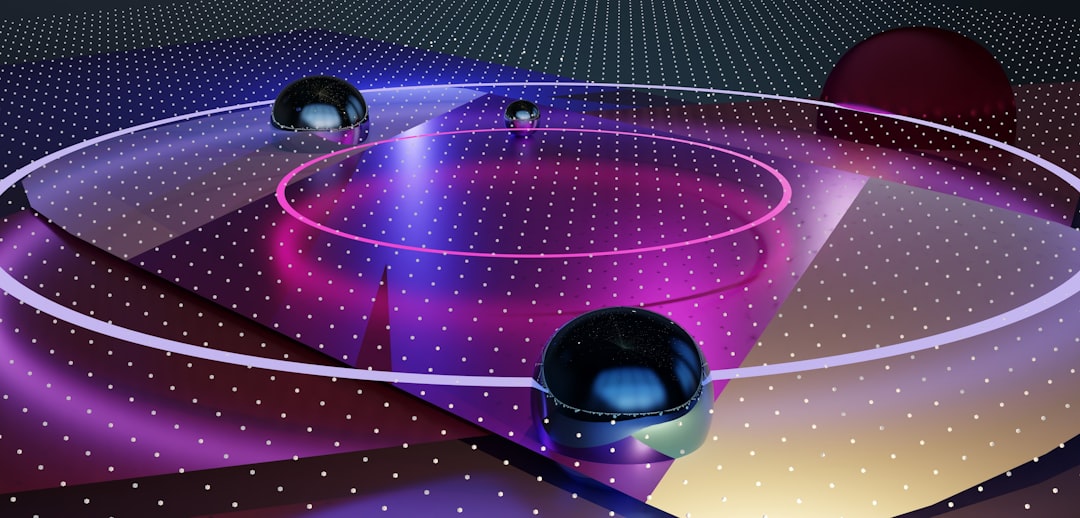
Imagine spacetime as a stretched rubber sheet. Placing a heavy ball on the sheet creates a dip, or curvature. If you roll a small marble near the ball, it will not travel in a straight line but will follow the curvature of the sheet, curving around the heavy ball. In a similar analogy, light rays originating from a distant galaxy travel through spacetime. When these rays encounter the massive foreground object, their paths are deflected. Instead of traveling in a straight line from the source to the observer, the light rays are bent, following the curvature of spacetime created by the foreground mass. The Einstein radius, a theoretical construct, defines the angular radius of the image of a source that is perfectly aligned behind a spherical lens.
Gravitational lensing arcs around distant galaxies provide fascinating insights into the distribution of dark matter and the structure of the universe. For a deeper understanding of this phenomenon, you can explore the article on cosmic phenomena and their implications for astrophysics at My Cosmic Ventures. This resource delves into the mechanics of gravitational lensing and highlights recent discoveries that have expanded our knowledge of the cosmos.
The Formation and Appearance of Gravitational Arcs
Gravitational arcs are specifically shaped distortions of background galaxies. Their formation is highly dependent on the alignment between the observer, the foreground lensing mass, and the background source. When this alignment is not perfect, resulting in a lens that is not perfectly spherical or a source not directly behind the center of the lens, the resulting images of the background galaxy can be stretched and curved into arc-like shapes. The more the source is off-center relative to the gravitational lens, the more pronounced the arc becomes.
Cosmic Alignments: A Matter of Geometry
The precise geometrical alignment between the observer, the foreground lens, and the background source is critical for the formation of discernible gravitational arcs. Unlike a perfectly aligned scenario that can produce a complete Einstein ring, slight deviations in this alignment lead to the stretching and bending of the background galaxy’s image into an arc. The closer the source is to the optical axis of the lens (the line connecting the observer and the center of the lens), the more elongated and stretched the arc will appear. Conversely, if the source is further from the optical axis, the arc will be shorter and more compact.
Distortion and Magnification: The Lensing Effect
When a background galaxy is lensed by a foreground mass, its light is not only bent but also magnified. This magnification can be substantial, bringing faint and distant galaxies within the reach of our telescopes that would otherwise be too dim to observe. The distortion also plays a key role in the appearance of arcs. The light from different parts of the background galaxy is lensed by different parts of the foreground mass, leading to varying degrees of stretching and bending. This differential lensing effect is what imbues the background galaxy with its characteristic arc-like shape.
Symmetry and Asymmetry in Arc Formation
The symmetry of the foreground lensing mass influences the symmetry of the lensed images. A perfectly spherical foreground mass would, in theory, produce symmetrical lensed images around a central point. However, real galaxies and galaxy clusters are rarely perfectly spherical. Their irregular shapes and the presence of substructures within them lead to asymmetric lensing effects. This asymmetry can result in arcs of varying lengths and curvatures, and sometimes even tangential or radial arcs depending on the orientation of the background source relative to the lensing mass.
Observing and Studying Gravitational Arcs

The discovery of gravitational arcs has revolutionized observational cosmology. These celestial phenomena are not just visually striking but also provide invaluable data for scientists. By studying the characteristics of these arcs, astronomers can infer the properties of both the lensing foreground objects and the lensed background galaxies, as well as probe the distribution of matter, including dark matter, in the universe.
Telescopes as Cosmic Detectives
The detection of gravitational arcs requires powerful telescopes capable of resolving faint, distant objects and characterizing their detailed structures. Ground-based observatories like the Hubble Space Telescope and the Atacama Large Millimeter/submillimeter Array (ALMA) have been instrumental in capturing exquisite images of gravitational arcs. By analyzing the light from these arcs, astronomers can determine their colors, brightness, and spectral properties, providing clues about the redshift (and thus distance) of the lensed galaxy and its composition.
Unveiling the Properties of Lensing Galaxies
The light from the background galaxy is distorted as it passes by the foreground galaxy or cluster. By analyzing the shape and intensity of the gravitational arcs, astronomers can reconstruct the gravitational potential of the foreground lensing mass. This allows them to estimate its total mass, including the contribution from dark matter, which does not emit or interact with light. The detailed study of arc distortions provides a powerful tool for mapping the distribution of dark matter within galaxies and clusters.
Probing Distant Galaxies Through Magnification
The magnification effect of gravitational lensing is a significant boon for studying the most distant and faintest galaxies. These lensed background galaxies are effectively amplified, allowing astronomers to observe them in greater detail than would otherwise be possible. This magnification enables the study of the early universe, providing insights into the formation and evolution of galaxies in the cosmic dawn. The study of these magnified galaxies helps answer fundamental questions about the universe’s history, such as when the first stars and galaxies formed.
The Significance of Arcs in Cosmology
Gravitational arcs are more than just beautiful cosmic phenomena; they are vital tools for understanding the universe. Their existence and characteristics provide critical data points for testing cosmological models, measuring the expansion rate of the universe, and understanding the distribution of matter.
Testing Cosmological Models
The precise shapes and arrangements of multiple lensed images, including arcs, can be compared to predictions made by different cosmological models. By analyzing how much light is bent and how images are distorted, scientists can assess the validity of these models. If observations of gravitational lensing effects do not align with the predictions of a particular model, it suggests that the model may need revision or that our understanding of fundamental physics might be incomplete.
Measuring the Hubble Constant
The Hubble constant ($H_0$) represents the rate at which the universe is expanding. Gravitational lensing can be used as an independent method to measure $H_0$. By observing the time-delay between variations in the light from a lensed source that arrive at Earth via different paths (creating multiple images or arcs), and knowing the distances involved, astronomers can calculate the expansion rate. This method offers a valuable cross-check against other techniques for measuring $H_0$, helping to resolve ongoing tensions in cosmology.
Mapping the Distribution of Dark Matter
Dark matter, an invisible substance that interacts only gravitationally, constitutes a significant portion of the universe’s mass. Gravitational lensing is one of the most effective methods for detecting and mapping the distribution of dark matter. The shape and intensity of gravitational arcs are directly influenced by the total mass of the lensing object, including its dark matter content. By analyzing these arcs, astronomers can create detailed maps of dark matter within galaxies and galaxy clusters, providing crucial insights into its nature and role in cosmic structure formation.
Gravitational lensing is a fascinating phenomenon that allows astronomers to observe distant galaxies through the bending of light caused by massive objects. Recent studies have revealed striking gravitational lensing arcs around these galaxies, providing valuable insights into the distribution of dark matter and the expansion of the universe. For a deeper understanding of this captivating topic, you can explore a related article that delves into the mechanics and implications of gravitational lensing by following this link.
Future Prospects and Unanswered Questions
| Galaxy Name | Redshift | Arc Length (arcseconds) | Source |
|---|---|---|---|
| SDSS J1004+4112 | 0.68 | 5.2 | Astronomy & Astrophysics |
| Abell 370 | 0.375 | 20 | NASA/ESA Hubble Space Telescope |
| MACS J0717.5+3745 | 0.55 | 30 | Monthly Notices of the Royal Astronomical Society |
While significant progress has been made in understanding gravitational lensing and the arcs it produces, there are still many avenues for future research and numerous unanswered questions. Continued advancements in observational technology and theoretical modeling promise to further illuminate these celestial phenomena.
Advancements in Observational Techniques
Future generations of telescopes, both ground-based and space-based, will offer unprecedented sensitivity and resolution, enabling the detection and detailed study of an even larger number of gravitational arcs. The Square Kilometre Array (SKA) and the Thirty Meter Telescope (TMT) are examples of instruments poised to revolutionize our ability to probe the universe through lensing. These telescopes will be able to resolve finer details of arcs, allowing for more precise measurements of lensing properties and the detailed mapping of dark matter.
Exploring New Frontiers with Lensing
Gravitational lensing is not limited to the observation of arcs. It also produces other phenomena like Einstein rings, multiple images, and the shear of background galaxies. By studying these various manifestations, astronomers can gain a more comprehensive understanding of the universe. Furthermore, the extreme magnification provided by lensing can be used to study the faintest and most distant objects, including the very first stars and galaxies that formed after the Big Bang. This opens up new avenues for exploring the early stages of cosmic evolution.
The Nature of Dark Matter and Dark Energy
The precise nature of dark matter and dark energy remains one of the most profound mysteries in modern physics. Gravitational lensing, through its ability to map dark matter distribution and potentially constrain cosmological parameters related to dark energy, plays a crucial role in this ongoing quest. Future studies of gravitational arcs and other lensing phenomena, combined with theoretical advancements, may provide critical clues that help us unravel the composition and behavior of these enigmatic components of the universe. The ultimate goal is to build a more complete and accurate picture of the cosmos, from its fundamental constituents to its large-scale structure and evolution.
FAQs
What is gravitational lensing?
Gravitational lensing is a phenomenon in which the light from a distant object is bent by the gravitational pull of a massive object, such as a galaxy or a cluster of galaxies, that lies between the distant object and the observer.
What are gravitational lensing arcs around distant galaxies?
Gravitational lensing arcs around distant galaxies are curved and elongated shapes formed by the bending of light from even more distant galaxies or quasars as it passes around the massive galaxy acting as a gravitational lens.
How are gravitational lensing arcs useful to astronomers?
Gravitational lensing arcs provide valuable information about the distribution of dark matter in the universe, as well as the mass and structure of the massive galaxies and galaxy clusters that act as gravitational lenses.
What causes the formation of gravitational lensing arcs?
Gravitational lensing arcs are formed when the light from a background object is bent and distorted by the gravitational field of a massive foreground object, creating the appearance of an arc or multiple arcs around the foreground object.
What are some famous examples of gravitational lensing arcs around distant galaxies?
One of the most famous examples of gravitational lensing arcs is the “Cosmic Horseshoe” observed by the Hubble Space Telescope, which is a nearly complete ring of light formed by the gravitational lensing effect of a massive galaxy. Another well-known example is the “Bullet Cluster,” where the gravitational lensing arcs provide evidence for the existence of dark matter.