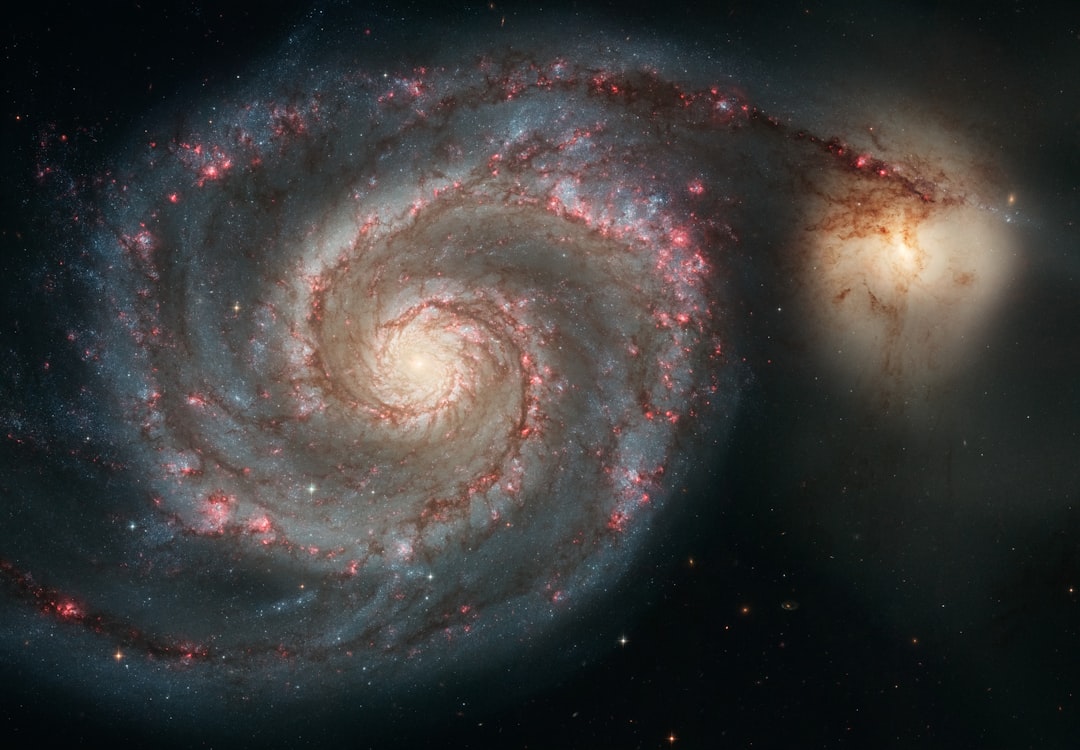
The rotation curve of a galaxy is a plot that illustrates the orbital velocities of stars or gas at varying distances from the galactic center. For a significant period, observations of these curves have presented a profound astrophysical puzzle, famously known as the ‘flat plateau’ of the galaxy rotation curve. This phenomenon has been instrumental in shaping modern understanding of galactic structure and composition, profoundly influencing the investigation into exotic matter and fundamental physics.
The genesis of the galaxy rotation curve mystery can be traced back to the work of several pioneering astronomers in the 20th century. Their meticulous observations of galactic dynamics began to reveal discrepancies between theoretical predictions and observed velocities.
Jan Oort and the Milky Way
In the 1930s, Jan Oort, while studying the rotation of the Milky Way, noted that stars in the outer regions of the galaxy were orbiting faster than expected based on the visible matter alone. His calculations, grounded in Newtonian mechanics and the luminous mass distribution, suggested a decline in orbital velocity with increasing radius. However, the data presented a more complex picture, hinting at additional, unseen gravitational influences.
Vera Rubin’s Definitive Work
The most compelling evidence for the flat rotation curve came from the meticulous work of Vera Rubin and her colleagues in the 1970s. Utilizing advanced spectroscopic techniques, they measured the Doppler shifts of emission lines from gas and stars in numerous spiral galaxies. These measurements provided definitive data on their rotational velocities.
The Andromeda Enigma
Rubin’s observations of the Andromeda galaxy (M31) were particularly impactful. She found that the orbital speeds of stars and gas clouds remained remarkably constant, or even slightly increased, at large distances from the galactic center, far beyond where the visible matter significantly thinned out. This contradicted the expectation that velocities should decline, following Kepler’s laws, much like planets orbiting the Sun. If the galaxy’s mass was dominated by its visible components, stars further out should orbit slower due to less enclosed mass.
Departure from Keplerian Expectation
To grasp the significance of this, consider the solar system. Planets closer to the Sun orbit faster than those further away, a direct consequence of the Sun’s concentrated mass. This “Keplerian decline” is a fundamental prediction for a system where mass is centrally concentrated. Galaxies, with their visible mass largely assembled in a central bulge and spiral arms, were intuitively expected to follow a similar pattern. However, the observed flat rotation curves dramatically diverged from this expectation, presenting a profound challenge to established astrophysical models.
The phenomenon of galaxy rotation curves exhibiting a flat plateau has intrigued astronomers for decades, leading to significant insights into the nature of dark matter. For a deeper understanding of this topic, you can explore a related article that discusses the implications of these rotation curves on our comprehension of galaxy formation and the distribution of mass within galaxies. To read more, visit this article.
The Dark Matter Hypothesis
The persistent discrepancy between the observed rotation curves and predictions based solely on luminous matter led to the formulation of one of the most significant hypotheses in modern astrophysics: the existence of dark matter. This hypothetical form of matter does not interact with electromagnetic radiation, making it invisible to telescopes, yet it exerts gravitational influence.
Unseen Gravitational Influence
The flat rotation curve implies that the mass enclosed within a given radius continues to increase even in the outer regions of a galaxy, where visible matter is sparse. To account for this additional gravitational pull, a substantial amount of non-luminous mass must be distributed in an extended halo surrounding the galactic disk. This invisible matter, dubbed “dark matter,” is posited to constitute the majority of a galaxy’s mass.
Mass-to-Light Ratio Anomaly
The concept of dark matter addresses the observed anomaly in the mass-to-light ratio of galaxies. For a galaxy composed entirely of visible matter, one would expect a certain ratio between its total mass (derived from its gravitational effects) and its total luminosity. However, observations consistently show that galaxies possess significantly more mass than can be accounted for by the light they emit. This discrepancy is precisely what dark matter aims to resolve, providing the “missing mass” that governs the orbital dynamics.
Dark Matter Halo Prevalence
The prevalence of dark matter halos has become a cornerstone of cosmological models. Our current understanding suggests that galaxies are embedded within vast, roughly spherical halos of dark matter, whose gravitational influence dictates the structure and evolution of the visible baryonic matter within them. These halos extend far beyond the visible boundaries of the galaxy, providing the gravitational scaffolding upon which luminous structures are built.
Alternative Explanations and Modified Gravity

While the dark matter hypothesis is the prevailing explanation for the flat rotation curves, alternative theories have been proposed. These theories generally do not invoke new forms of matter but rather modify our understanding of gravity itself on galactic scales.
Modified Newtonian Dynamics (MOND)
One prominent alternative is Modified Newtonian Dynamics (MOND), first proposed by Mordehai Milgrom in 1983. MOND posits that Newton’s laws of gravity, and by extension Einstein’s general relativity, require modification in regimes of extremely low accelerations, such as those found in the outer regions of galaxies.
Break-down of Newtonian Gravity
According to MOND, when the gravitational acceleration falls below a certain critical value (approximately $1.2 \times 10^{-10} \text{ m/s}^2$), the gravitational force no longer follows the inverse square law. Instead, it becomes proportional to the square of the acceleration, leading to a stronger gravitational pull than predicted by Newtonian physics at large distances. This enhancement in gravity could, in principle, explain the flat rotation curves without the need for dark matter.
Implications for Galactic Dynamics
MOND predicts a direct relationship between the baryonic mass of a galaxy and its rotation curve, a phenomenon known as the baryonic Tully-Fisher relation. This observed relationship, where the luminosity (and thus baryonic mass) of a spiral galaxy is correlated with its rotation velocity, is naturally explained by MOND without recourse to dark matter. However, MOND faces challenges in explaining observations at larger cosmological scales, such as galaxy clusters and the cosmic microwave background.
Other Modified Gravity Theories
Beyond MOND, various other modified gravity theories have been explored. These often involve introducing new fields or modifying the geometry of spacetime at cosmological scales. Examples include f(R) gravity, entropic gravity, and others that attempt to provide a unified description of gravity across all scales without the need for hypothetical dark matter particles.
Challenges of Verification
A significant challenge for all modified gravity theories is their ability to consistently explain a wide range of astrophysical and cosmological observations. While some theories might successfully explain galaxy rotation curves, they often struggle to account for phenomena like the dynamics of galaxy clusters, gravitational lensing observations, or the acoustic peaks in the cosmic microwave background, which are well-explained by the Lambda-CDM model (which includes dark matter).
Observational Evidence and Constraints

Beyond the flat rotation curves themselves, numerous other lines of observational evidence provide strong constraints on both the dark matter hypothesis and modified gravity theories. These observations contribute to the broader picture of dark matter’s pervasive influence throughout the cosmos.
Gravitational Lensing
One of the most compelling pieces of evidence for dark matter comes from gravitational lensing. This phenomenon occurs when the gravitational field of a massive object, such as a galaxy or a galaxy cluster, bends the light from a more distant background object. The程度 of this bending depends on the total mass of the foreground object, including its dark matter component.
Cosmic Mirages
Observations of strong gravitational lensing, where multiple images of a background galaxy are formed, and weak gravitational lensing, which subtly distorts the shapes of distant galaxies, consistently reveal that the mass responsible for the lensing effect is far greater than the visible baryonic mass. This “excess” mass can only be explained by the presence of a substantial amount of dark matter distributed within the lensing structure. The Bullet Cluster, for instance, provides a stark visual separation between baryonic matter (mostly hot gas emitting X-rays) and the gravitational potential (inferred from lensing), strongly supporting the existence of collisionless dark matter.
Galaxy Cluster Dynamics
Galaxy clusters, the largest gravitationally bound structures in the universe, offer another powerful probe of dark matter. The velocities of galaxies within these clusters are significantly higher than expected if only their visible mass were present, indicating the presence of a vast, invisible mass component binding them together.
Missing Mass Problem Revisited
Fritz Zwicky, in the 1930s, first noted the “missing mass problem” in the Coma Cluster, observing that the velocities of constituent galaxies were too high for the cluster to remain gravitationally bound based on its luminous matter. This early observation, though initially met with skepticism, laid the groundwork for the modern understanding of dark matter’s role in cosmic structures. Modern x-ray observations of the hot gas in clusters also reveal that the total gravitating mass substantially exceeds the baryonic mass, further supporting the dark matter paradigm.
The phenomenon of galaxy rotation curves exhibiting a flat plateau has intrigued astronomers for years, leading to various theories about dark matter and the structure of galaxies. A related article that delves deeper into this topic can be found on My Cosmic Ventures, where it discusses the implications of these rotation curves on our understanding of the universe. For more insights, you can read the article here. This exploration not only highlights the mysteries surrounding dark matter but also emphasizes the importance of observational data in shaping our cosmic theories.
The Quest for Dark Matter Detection
| Galaxy Name | Distance (Mly) | Maximum Rotation Velocity (km/s) | Radius at Flat Plateau (kpc) | Rotation Curve Shape | Notes |
|---|---|---|---|---|---|
| Milky Way | 0 | 220 | 8 | Flat | Typical spiral galaxy rotation curve |
| NGC 3198 | 47 | 150 | 10 | Flat | Classic example of flat rotation curve |
| NGC 2403 | 8 | 130 | 7 | Flat | Well-studied spiral galaxy |
| NGC 7331 | 40 | 260 | 12 | Flat | Similar to Milky Way in rotation |
| IC 2574 | 12 | 70 | 5 | Rising then flat | Dwarf spiral with dark matter influence |
The profound implications of the flat rotation curve and other evidence for dark matter have spurred a global scientific endeavor to directly detect these elusive particles. Numerous experiments are underway, employing a variety of techniques to search for tangible evidence of dark matter.
Direct Detection Experiments
Direct detection experiments aim to observe the faint interactions of dark matter particles with ordinary matter in terrestrial laboratories. These experiments are typically located deep underground to shield them from cosmic rays and other background radiation, allowing for the detection of extremely rare dark matter interactions.
WIMPs as Prime Candidates
A leading candidate for dark matter particles are Weakly Interacting Massive Particles (WIMPs). If WIMPs exist, they would occasionally collide with the nuclei of atoms in specialized detectors, producing a tiny recoil that could be measured. Experiments like XENON, LUX-ZEPLIN (LZ), and PandaX utilize large quantities of noble gases like xenon in ultra-low background environments to search for these elusive interactions. So far, no definitive detection has been made, placing increasingly stringent limits on the properties of WIMPs.
Indirect Detection Experiments
Indirect detection experiments seek to observe the products of dark matter annihilation or decay in astronomical environments. If dark matter particles interact with each other, they could annihilate or decay into observable particles such as gamma rays, neutrinos, or antimatter.
Cosmic Ray Anomalies
Telescopes sensitive to gamma rays (e.g., Fermi-LAT), cosmic rays, and neutrinos are used to search for these signatures emanating from regions where dark matter is expected to be abundant, such as the galactic center or dwarf spheroidal galaxies. Anomalies in cosmic ray spectra, particularly an excess of positrons, have been observed and are sometimes interpreted as potential indirect dark matter signatures, though astrophysical explanations (e.g., pulsars) currently remain more favored.
Collider Experiments
Particle accelerators, such as the Large Hadron Collider (LHC), are also playing a role in the search for dark matter. These facilities attempt to create dark matter particles in high-energy collisions, much like how other fundamental particles are produced.
Creating Dark Matter in the Lab
If dark matter particles are sufficiently light and interact with standard model particles, they could be produced in these collisions. The experimental signatures of dark matter would be “missing energy” – an imbalance in the momentum of detected particles, indicating that some particles (the dark matter) escaped the detector without interacting. While the LHC has not yet directly produced dark matter, it continues to set important limits on the properties and interactions of hypothetical dark matter candidates.
The mystery of the flat plateau in galaxy rotation curves remains a cornerstone of modern astrophysics. It serves as a persistent reminder that our universe holds profound secrets, pushing the boundaries of our understanding of matter, gravity, and the cosmos itself. Whether dark matter particles are eventually discovered, or a revolutionary modification to gravity is confirmed, the resolution of this enigma promises to reshape our understanding of the universe in fundamental ways.

WARNING: NASA’s Dark Matter Secret Revealed
FAQs
What is a galaxy rotation curve?
A galaxy rotation curve is a plot that shows the variation of orbital velocity of stars or gas in a galaxy as a function of their distance from the galaxy’s center. It helps astronomers understand the distribution of mass within the galaxy.
What does it mean when a galaxy rotation curve has a flat plateau?
A flat plateau in a galaxy rotation curve means that the orbital velocity of stars remains roughly constant at large distances from the galaxy’s center, rather than decreasing as expected from visible matter alone. This suggests the presence of additional unseen mass.
Why do galaxy rotation curves not decline as predicted by visible matter?
According to Newtonian dynamics, orbital velocities should decrease with distance from the center if only visible matter is present. However, observations show flat rotation curves, indicating that there is more mass than what is visible, commonly attributed to dark matter.
How does the flat plateau in rotation curves support the dark matter theory?
The flat plateau implies that galaxies contain a large amount of mass distributed in a halo around them, which does not emit light. This unseen mass, or dark matter, provides the gravitational pull needed to keep stars moving at constant speeds far from the center.
Are there alternative explanations to the flat rotation curve plateau besides dark matter?
Yes, some alternative theories include modifications to the laws of gravity, such as Modified Newtonian Dynamics (MOND), which attempt to explain the flat rotation curves without invoking dark matter. However, dark matter remains the most widely accepted explanation.