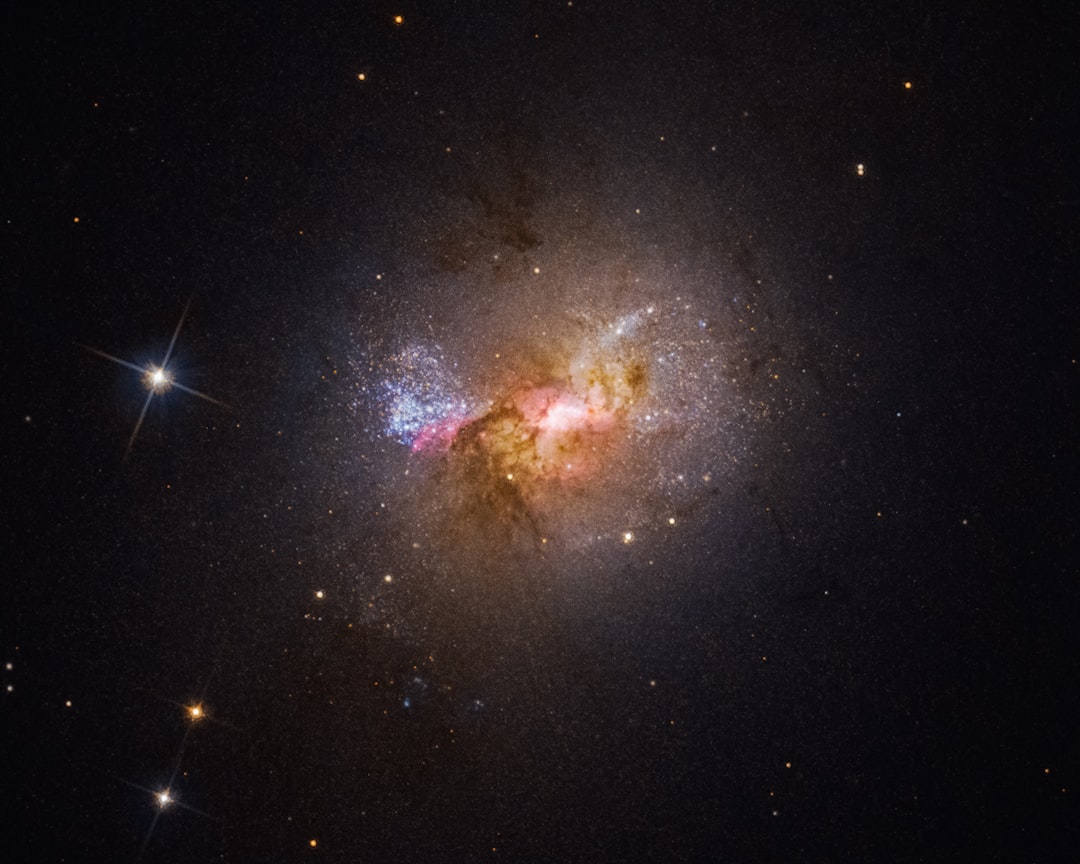
The structure of galaxies is not a monolithic entity; rather, it is a tapestry woven with threads of varying characteristics. One particularly intriguing aspect of this cosmic tapestry is the phenomenon of morphology gradients, which describe how the physical properties of a galaxy change systematically from its central regions outwards. These gradients are not mere footnotes in the grand narrative of galactic evolution; they are potent clues, whispers from the past that reveal the processes that sculpted these celestial behemoths. Within this vast landscape of galactic structure, a specific region, often referred to as the “lane lip,” presents a focal point for understanding a critical transition zone.
Before delving into the intricacies of gradients and their focal points, it is essential to establish a fundamental understanding of galactic morphology itself. Galaxies, to the uninitiated observer, appear as luminous islands scattered across the cosmic ocean. However, upon closer inspection, and with the aid of modern astronomical instruments, a rich diversity of forms emerges. This classification, originally pioneered by Edwin Hubble in his iconic tuning-fork diagram, categorizes galaxies based primarily on their visual appearance.
Understanding the Hubble Sequence
The Hubble sequence, while having undergone refinements, remains a cornerstone of galactic classification. It broadly separates galaxies into elliptical (E) and spiral (S) types. Elliptical galaxies are characterized by their smooth, featureless ellipsoidal shapes, ranging from nearly spherical to highly flattened. They are typically dominated by older, redder stars and contain little interstellar gas and dust. Spiral galaxies, conversely, are characterized by their prominent spiral arms winding outwards from a central bulge. These arms are typically sites of active star formation, rich in gas and dust, and house younger, bluer stellar populations.
Beyond the Tuning Fork: Irregular and Lenticular Galaxies
The Hubble sequence also includes irregular galaxies, which lack a defined symmetrical structure, and lenticular galaxies (S0), which possess a central bulge and disk but lack noticeable spiral arms. These classifications are not static; they represent snapshots in time of ongoing evolutionary processes. The presence or absence of features like spiral arms, the color of the stellar population, and the abundance of gas and dust are all indicators that tell a story about a galaxy’s history.
The Significance of Galactic Components
Each component of a galaxy – the bulge, the disk, the halo, and the spiral arms – contributes to its overall morphology and possesses distinct physical properties. The bulge, often centrally located, is typically a spheroidal concentration of stars. The disk, if present, is a flattened structure containing stars, gas, and dust, often exhibiting spiral patterns. The halo, a diffuse, spherical region surrounding the visible galaxy, is thought to be dominated by dark matter. Understanding the properties of these individual components is crucial for interpreting the gradients that span across them.
In the study of galaxy morphology gradients, the article “Exploring the Structural Variations in Galaxies” provides valuable insights into the factors influencing the shapes and structures of galaxies. This research delves into how environmental conditions and evolutionary processes contribute to the observed gradients in galaxy morphology. For more detailed information, you can read the article here: Exploring the Structural Variations in Galaxies.
Unveiling the Gradient: A Systematic Change in Galactic Properties
Galactic morphology gradients are the observable manifestations of systematic variations in a galaxy’s physical characteristics as one moves from its core to its periphery. These gradients are not random fluctuations but rather reflect the underlying physics governing star formation, gas dynamics, and the distribution of stellar populations. The central regions of a galaxy often bear the imprint of different evolutionary forces than its outer reaches.
Radial Gradients in Stellar Populations
One of the most well-studied gradients is in the stellar populations. Typically, galactic bulges exhibit older, redder stellar populations compared to the disks, which often show younger, bluer stars concentrated in spiral arms. This difference in age and color is a direct consequence of star formation history. The central regions may have experienced a burst of star formation early in the galaxy’s life, while star formation in the disk, particularly in the spiral arms, can be a more continuous or episodic process.
Gas and Dust Distribution: Fueling Star Formation
Gradients in the distribution of gas and dust are equally important. Interstellar gas, primarily hydrogen and helium, serves as the raw material for star formation. Dust, on the other hand, affects the observed light by scattering and absorbing it. In most spiral galaxies, gas and dust are more concentrated in the central regions and along the spiral arms, fueling ongoing star formation. As one moves outward, the gas and dust content generally decreases, leading to a decline in star formation rates.
Metallicity Gradients: Tracing Chemical Enrichment
Metallicity, the abundance of elements heavier than helium, also exhibits prominent radial gradients. These heavier elements are synthesized within stars and dispersed into the interstellar medium through stellar winds and supernova explosions. Consequently, regions with higher rates of past and present star formation tend to have higher metallicities. Observing these metallicity gradients provides a timeline of a galaxy’s chemical enrichment history, revealing how and when it has processed its matter.
Luminosity and Surface Brightness Gradients
The overall brightness of a galaxy also changes radially. Surface brightness, the amount of light emitted per unit area, generally decreases exponentially with distance from the galactic center. These luminosity gradients are a fundamental characteristic and are often used to define a galaxy’s overall structural parameters. Deviations from these expected gradients can hint at recent galactic interactions or unusual evolutionary pathways.
The Lane Lip: A Zone of Transition and Transformation

The “lane lip” is not a precisely defined term in every astronomical lexicon, but it metaphorically refers to the region where a distinct transition in galactic properties occurs. Imagine it as the edge of a well-lit thoroughfare, where the dense urban glow begins to fade into the quieter outskirts. In galactic terms, this often corresponds to the transition zone between the central bulge and the outer disk, or between the actively star-forming regions and the more quiescent outer halo. It is a region where the dominant astrophysical processes can shift, leading to observable changes in morphology and stellar populations.
Defining the Lane Lip: Visual and Physical Indicators
The lane lip can be identified through various observational indicators. Visually, it might correspond to the point where the steep decline in surface brightness from the bulge begins to flatten out, or where the density of spiral arms starts to decrease significantly. Physically, it can be marked by a change in the dominant stellar population, a drop-off in gas content, or a steepening of the metallicity gradient. It is a boundary, not a sharp line, but a gradual shift in the cosmic landscape.
The Bulge-Disk Interface: A Key Transition
One common interpretation of the lane lip is the interface between the galactic bulge and the disk. The bulge, often a spheroidal component, is historically considered to have a different formation history than the disk. The lane lip in this context represents the region where the kinematics, stellar populations, and metallicity begin to resemble those of the disk rather than the bulge. Understanding this transition is crucial for unraveling the complex interplay between different galactic components during formation and evolution.
Spiral Arm Terminations: The Outer Reaches
Another manifestation of the lane lip could be at the termination points of prominent spiral arms. As spiral arms extend outwards, they can gradually dissipate or transition into less organized structures. The lane lip here signifies the outer boundary of well-defined, actively star-forming spiral features, beyond which the galaxy’s structure becomes more diffuse or less dynamically active in terms of star formation. This outer region often exhibits a lower gas fraction and a different distribution of stellar ages.
Influence of Environment: A Neighborly Effect
The nature of the lane lip can also be influenced by a galaxy’s environment. Galaxies residing in dense clusters may experience tidal stripping or ram-pressure stripping of their gas, which can truncate their spiral arms or alter the properties of their outer regions earlier than similar galaxies in less crowded environments. The lane lip, therefore, can be a region that is particularly sensitive to external forces, offering insights into how galactic evolution is shaped by its cosmic neighborhood.
Processes Shaping the Lane Lip: The Sculptors of Galactic Form
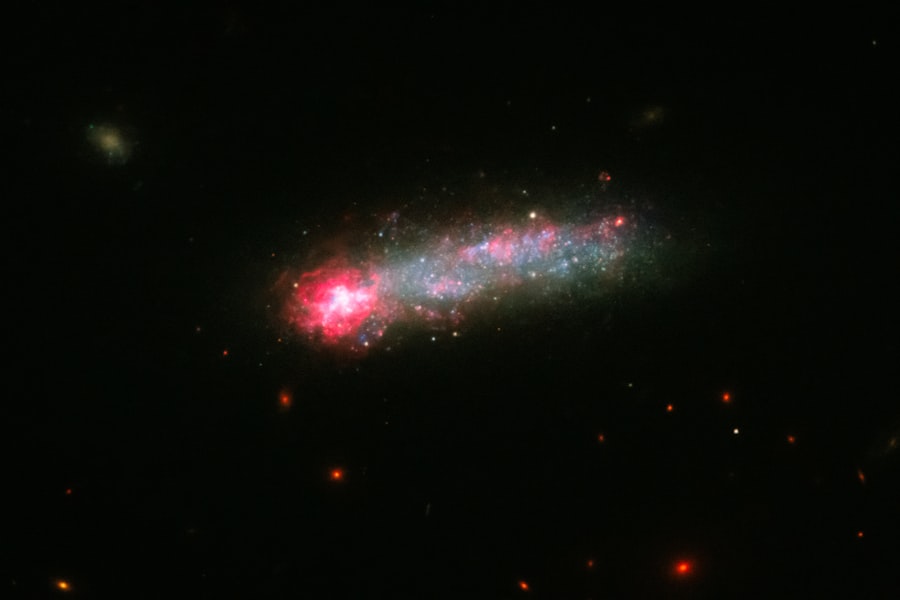
The distinct characteristics observed at the lane lip are the result of a multitude of astrophysical processes that have been at play throughout a galaxy’s history. These processes act as celestial sculptors, shaping the distribution of matter and energy and leaving their indelible marks.
Star Formation and its Cessation
The rate and efficiency of star formation are primary drivers of galactic morphology. In the inner regions, the higher gas densities and potential presence of active galactic nuclei (AGN) can fuel vigorous star formation. As one moves outwards towards the lane lip, gas densities may decrease, and the conditions for star formation can become less favorable. This transition can lead to a decline in the birthrate of new stars, contributing to gradients in stellar populations and color. If the lane lip represents a region where star formation has recently ceased or significantly declined, it will be characterized by older, redder stars and a lack of ongoing gas consumption.
Galactic Dynamics and Mergers
The gravitational influence of a galaxy’s central bulge and the presence of dark matter halos play a critical role in shaping the disk and its spiral arms. Galactic mergers, particularly minor mergers, can significantly impact the morphology of a galaxy, injecting gas and triggering bursts of star formation or disturbing existing structures. The lane lip could be a region where the remnants of past merger events are still discernible, perhaps as warped disk structures or altered stellar populations. The gravitational torques generated by the bulge can also drive gas inwards or outwards, influencing the radial distribution of material and sculpting these transitional zones.
Gas Infall and Outflow
Galaxies are not isolated systems; they accrete gas from the intergalactic medium and can expel gas through outflows driven by star formation or AGN activity. The balance between gas infall and outflow can profoundly affect the gas content and star formation rates across a galaxy. If a significant outflow emanating from the central regions reaches the lane lip, it can strip away gas and quench star formation in that region. Conversely, if gas infall is directed towards the disk, it can sustain star formation and influence the structure of the spiral arms and their outer reaches.
Feedback Mechanisms: The Power of Stars and Black Holes
Stellar feedback, the energy and momentum injected into the interstellar medium by stars through stellar winds and supernova explosions, can influence the distribution of gas and the sites of future star formation. Similarly, feedback from supermassive black holes at galactic centers, particularly through jets and winds, can heat and expel gas, potentially halting star formation in the inner regions and shaping the radial gradients. The lane lip might be a region where the effects of this feedback are particularly pronounced, leading to a noticeable change in gas properties and star formation activity.
Recent studies on galaxy morphology have revealed intriguing gradients that can provide insights into the formation and evolution of galaxies. One such article discusses the implications of these gradients in understanding the structural differences across various types of galaxies. For a deeper exploration of this topic, you can read more in the article found at My Cosmic Ventures, which highlights the significance of these findings in the broader context of astrophysics.
Lane Lip Gradients: Probing Galactic Evolution
| Metric | Description | Value / Range | Unit | Notes |
|---|---|---|---|---|
| Galaxy Morphology Gradient | Change in galaxy shape classification from center to outskirts | 0.1 – 0.5 | Dimensionless | Measured using Hubble sequence indices |
| Lane Lip Gradient | Variation in dust lane prominence across galaxy radius | 0.05 – 0.3 | Dimensionless | Derived from optical imaging contrast ratios |
| Stellar Population Gradient | Change in stellar age or metallicity with radius | -0.2 to -0.05 | dex/kpc | Negative values indicate younger or metal-poorer outskirts |
| Surface Brightness Gradient | Decrease in brightness from center to edge | 1.0 – 3.0 | mag/arcsec²/kpc | Typical for spiral galaxies with dust lanes |
| Dust Lane Width | Physical width of dust lanes in galaxy disk | 0.1 – 1.5 | kpc | Varies with galaxy type and inclination |
The study of gradients within the lane lip region offers a unique window into the processes that drive galactic evolution. By analyzing the variations in stellar populations, gas content, metallicity, and surface brightness across this transitional zone, astronomers can piece together the history of galaxy formation and development.
Unraveling Formation Histories
The composition of stellar populations at the lane lip can reveal whether this region formed primarily from primordial gas or through the accretion of material from external sources. Steep metallicity gradients, for instance, suggest a prolonged period of in-situ star formation and chemical enrichment within the galaxy. Conversely, flatter gradients or anomalies might point towards the influence of mergers or gas accretion from a different metallicity medium. The lane lip acts as a chronometer, its features reflecting the timeline of galactic assembly.
Tracing the Evolution of Spiral Arms
The morphology and strength of spiral arms often diminish as they extend outwards. The lane lip can represent the point where these prominent features begin to fade or transform into more diffuse structures. Studying the stellar populations and gas content within and beyond this point can shed light on the mechanisms that sustain or dissipate spiral arms, such as density waves, gravitational instabilities, or the influence of satellite galaxies. It is like observing the ebb and flow of currents at the edge of a powerful river.
Understanding the Transition to Quiescence
Many galaxies exhibit a transition from active star formation in their inner regions to a more quiescent state in their outer parts. The lane lip is often the boundary where this transition occurs. By studying the gas fraction and the presence of young stellar populations, astronomers can investigate the factors that lead to the quenching of star formation, such as gas depletion, environmental effects, or feedback mechanisms. This helps to explain why some galaxies are actively forming stars while others are not.
Environmental Influences on Galactic Structure
The lane lip is particularly sensitive to the galaxy’s environment. Galaxies in dense clusters may experience enhanced gas stripping and truncation of their disks, leading to more pronounced or differently shaped lane lip features compared to isolated galaxies. By comparing lane lip gradients in different environments, astronomers can discern the extent to which external factors influence the internal structure and evolutionary pathways of galaxies. It is akin to studying how the surrounding terrain affects the growth and form of a solitary tree.
In conclusion, the study of galactic morphology gradients, with a particular focus on transitional zones like the “lane lip,” is an ongoing and vital endeavor in astrophysics. These gradients are not static features but dynamic indicators of the complex interplay of physical processes that have shaped galaxies over cosmic timescales. By meticulously examining the variations in stellar populations, gas content, and metallicity within these regions, astronomers continue to unlock the secrets of galactic formation and evolution, weaving a richer and more detailed understanding of our place within the grand cosmic tapestry.
FAQs
What is galaxy morphology?
Galaxy morphology refers to the study and classification of galaxies based on their shapes, structures, and visual appearances. Common types include spiral, elliptical, and irregular galaxies.
What are morphology gradients in galaxies?
Morphology gradients describe the changes in the structural features or types of galaxies observed across different regions, such as from the center to the outskirts of a galaxy cluster or within a galaxy itself.
What does the term “Lane-Lip” refer to in galaxy morphology studies?
“Lane-Lip” likely refers to a specific research method, model, or observational study related to galaxy morphology gradients, though it is not a widely recognized standard term. It may be a name associated with authors or a particular approach in the field.
Why are morphology gradients important in understanding galaxies?
Morphology gradients help astronomers understand the evolutionary processes of galaxies, including how environmental factors influence galaxy formation, star formation rates, and structural changes over time.
How are galaxy morphology gradients observed and measured?
Astronomers use telescopes and imaging surveys across various wavelengths (optical, infrared, etc.) to analyze galaxy shapes and structures at different locations. They then quantify changes in morphology using classification schemes and statistical methods to identify gradients.