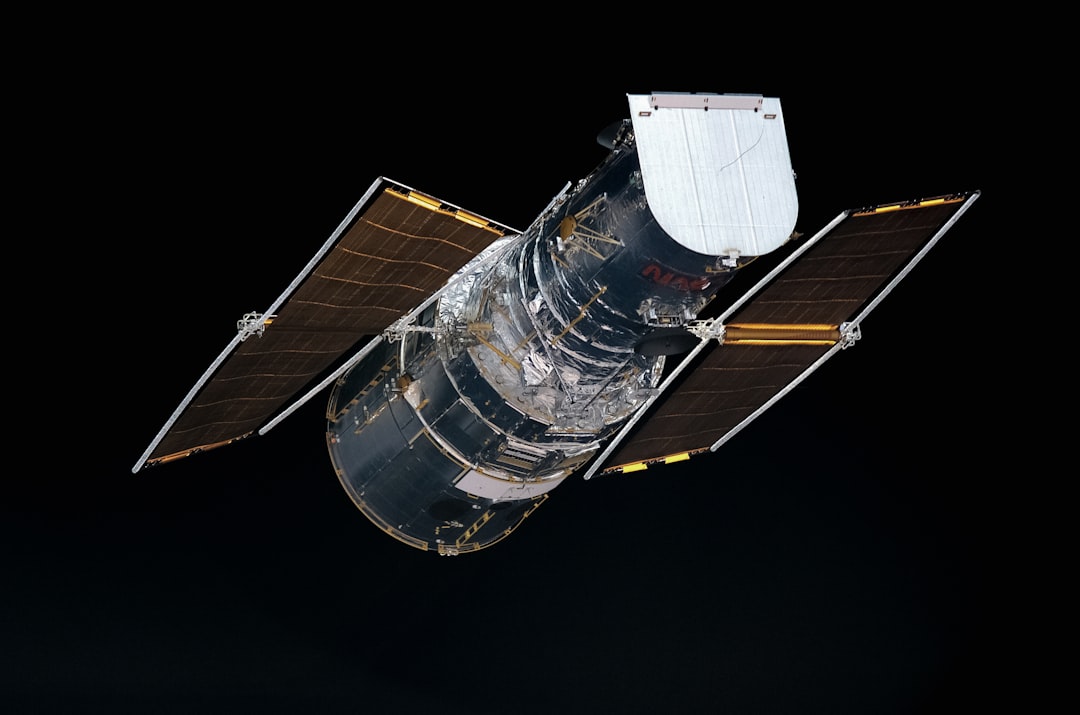
The raw fury of atmospheric reentry is a spectacle of physics and engineering, a ballet of fire and deceleration that allows humanity to return from the cosmos. For decades, space agencies and private companies have strived to master this perilous journey, each pushing the boundaries of what is possible. This relentless pursuit of speed and safety has led to the development of spacecraft capable of enduring and, in some cases, exceeding previous reentry records. The quest for the fastest atmospheric reentry spacecraft is not merely about breaking speedometers; it is a testament to our enduring desire to explore, to innovate, and to understand the extreme environments our creations can withstand.
Atmospheric reentry is a formidable obstacle to overcome for any object returning from orbital or sub-orbital velocities. The Earth’s atmosphere, thin as it may seem from space, becomes a significant and often violent barrier at these speeds. As a spacecraft plunges into the upper reaches of this gaseous envelope, it encounters increasing friction. This friction, a direct consequence of the immense kinetic energy of the spacecraft being converted into heat, generates plasma that can reach thousands of degrees Celsius. Without robust thermal protection systems, any material would be instantly vaporized. The challenge, therefore, is to dissipate or withstand this intense heat while simultaneously decelerating the spacecraft from orbital speeds that can exceed 28,000 kilometers per hour (approximately 17,500 miles per hour).
The Physics of Deceleration
The primary mechanism for slowing down a spacecraft during reentry is aerodynamic drag. As the spacecraft interacts with the atmospheric molecules, it experiences a force that opposes its motion. The magnitude of this drag force is dependent on several factors, including the spacecraft’s velocity, its shape (specifically its drag coefficient), and the density of the atmosphere. At hypersonic speeds, the density of the atmosphere is relatively low, but the sheer velocity means the drag experienced is still substantial. This drag force converts the spacecraft’s kinetic energy into heat, a crucial aspect of the reentry process.
Aerodynamic Drag and its Influence
The shape of a reentry vehicle is meticulously designed to maximize drag and control the heating. Blunt bodies, for example, tend to create a large detached shock wave in front of them. This shock wave compresses the incoming air, preheating it and diverting some of the flow around the vehicle, thereby reducing the direct impact of the hottest plasma on the heat shield. Conversely, sharp, pointed vehicles, while potentially more aerodynamically efficient at lower speeds, would experience more direct heating at reentry velocities. The design therefore involves a delicate balance between minimizing drag for efficient deceleration and managing the intense thermal loads.
The Role of the Shock Wave
The shock wave formed during hypersonic reentry is a region of extremely rapid compression and heating of the air. The energy from the spacecraft’s motion is largely deposited in this shock layer. Understanding the physics of shock wave formation and its interaction with the vehicle’s surface is critical for designing effective thermal protection systems. The temperature within the shock layer can be significantly higher than the surface temperature of the spacecraft itself, a phenomenon known as shock layer radiation.
Thermal Management: The Ultimate Hurdle
The generation of intense heat during reentry is arguably the most significant engineering challenge. Without adequate thermal protection, the spacecraft would disintegrate. Various materials and strategies have been developed to combat this fiery onslaught.
Ablative Heat Shields
Ablative heat shields are a cornerstone of reentry technology. These materials are designed to vaporize, char, or melt in a controlled manner, sacrificing themselves to absorb and dissipate the heat. As the material ablates, it carries away thermal energy from the spacecraft. This process effectively insulates the underlying structure from the extreme temperatures. The composition and thickness of ablative materials are carefully chosen based on the expected heat flux and the duration of the reentry.
Reusable Heat Shield Tiles
For reusable spacecraft, such as the Space Shuttle, heat-resistant tiles are employed. These tiles, often made of reinforced carbon-carbon or silica-based materials, are designed to withstand repeated exposure to high temperatures. While not ablative, they are excellent insulators and radiators of heat. The challenge with these systems lies in their durability and the need for meticulous inspection and maintenance between missions.
Heat Dissipation Through Radiation
In addition to protective layers, spacecraft are also designed to radiate heat away into space. The outer surfaces of many reentry vehicles are designed to be highly emissive, meaning they can efficiently radiate thermal energy. This process, combined with ablative or tile-based protection, forms a multi-layered approach to thermal management.
For those interested in the latest advancements in aerospace technology, a fascinating article discussing the fastest atmospheric reentry spacecraft can be found at this link: Fastest Atmospheric Reentry Spacecraft. This article delves into the engineering marvels that allow these spacecraft to withstand extreme temperatures and pressures during reentry, showcasing the innovations that make modern space travel safer and more efficient.
Historical Milestones in Reentry Speed
The pursuit of faster atmospheric reentry has been driven by various factors, including the need for rapid return of crewed missions, the desire for more efficient cargo delivery, and the exploration of new technological frontiers. Each significant increase in reentry speed represents a leap forward in our understanding of physics and engineering.
Early Rocketry and Orbital Reentry
The dawn of the space age saw the first attempts at returning from orbit. The early Soviet Vostok and Voskhod capsules, and the American Mercury and Gemini capsules, demonstrated the feasibility of human spaceflight and subsequent reentry. While these missions were crucial, their reentry speeds were primarily dictated by orbital mechanics and the capabilities of their heat shields.
The Vostok Program
The Vostok program, which saw Yuri Gagarin become the first human in space, involved a single-stage reentry. The spacecraft would fire retrorockets to slow down and then descend into the atmosphere, relying on a blunt-body design and an ablative heat shield to survive. The reentry profile was characterized by a relatively high angle of attack to maximize drag.
The Mercury and Gemini Programs
The American Mercury and Gemini programs followed a similar approach, with capsules designed for atmospheric reentry. These programs further refined the understanding of reentry aerodynamics and thermal protection. The Gemini program, in particular, saw the development of more sophisticated guidance and control systems that allowed for more precise reentry trajectories.
The Space Shuttle Era: Pushing the Envelope
The Space Shuttle was a revolutionary reentry vehicle, designed for reusable access to space. Its winged design allowed for a gliding reentry, similar to an aircraft, offering more control and a less violent deceleration profile compared to capsule-based systems. This enabled longer stays in orbit and more flexible return capabilities.
The Orbiter’s Gliding Reentry
The Space Shuttle’s reentry was a carefully orchestrated process. After undocking from the ISS or releasing its payload, the orbiter would orient itself for deorbit burn. Upon entering the atmosphere, it would fly a hypersonic glide path, using its control surfaces to manage its descent and heat. This gliding maneuver allowed for a longer deceleration period and less extreme peak heating compared to ballistic reentry.
Reusable Thermal Protection System (RTSP)
The Space Shuttle’s reusable thermal protection system, consisting of thousands of silica-based tiles and carbon-carbon panels, was a marvel of engineering. These materials were designed to withstand multiple reentries, though they required significant maintenance. The success of the Shuttle demonstrated the viability of reusable reentry systems.
Supersonic and Hypersonic Reentry Vehicles
As the ambition for space exploration grew, so did the need for spacecraft that could return from higher energy trajectories or achieve faster reentry speeds for specific mission profiles. This led to the development of vehicles capable of withstanding the extreme conditions of supersonic and hypersonic reentry.
The X-15: A Precursor to Hypersonic Flight
The North American X-15 was a rocket-powered aircraft that played a pivotal role in hypersonic research. While not a spacecraft in the traditional sense of orbiting Earth, it reached altitudes exceeding the Kármán line and achieved speeds of Mach 6.7. Its reentry, though from suborbital altitudes, provided invaluable data on hypersonic aerodynamics and thermal loads.
Flight Dynamics and Control
The X-15’s ability to reach such high speeds and altitudes required sophisticated flight control systems. Its unique design, with its delta wing and ventral fins, was optimized for hypersonic flight. The data gathered from its numerous flights informed the development of future high-speed atmospheric vehicles.
Thermal Challenges of the X-15
The extreme speeds of the X-15 generated significant aerodynamic heating. The aircraft was equipped with a specialized heat-resistant skin, demonstrating the early challenges of thermal management in high-speed flight. The lessons learned from the X-15 were directly transferable to the design of reentry vehicles.
Ballistic Reentry: Maximizing Drag for Deceleration
Ballistic reentry is characterized by a steeper descent angle and a greater reliance on aerodynamic drag for deceleration. This approach is often employed when rapid return is a priority, even at the cost of higher g-forces and more intense heating.
The Principle of Ballistic Reentry
In a ballistic reentry, the spacecraft essentially follows a ballistic trajectory, with the atmosphere providing the primary braking force. This contrasts with a gliding reentry, where the vehicle uses aerodynamic surfaces to control its descent and extend the deceleration phase. Ballistic reentry typically results in higher peak heating and acceleration loads.
Applications and Limitations
Ballistic reentry is often used for uncrewed cargo missions or for capsules designed for rapid crew return. The higher g-forces can be a significant limitation for human occupants. The design of the heat shield is paramount in ballistic reentry to withstand the intense and concentrated thermal loads.
The Drive for Faster Reentry: Mission Requirements and Technological Advancements
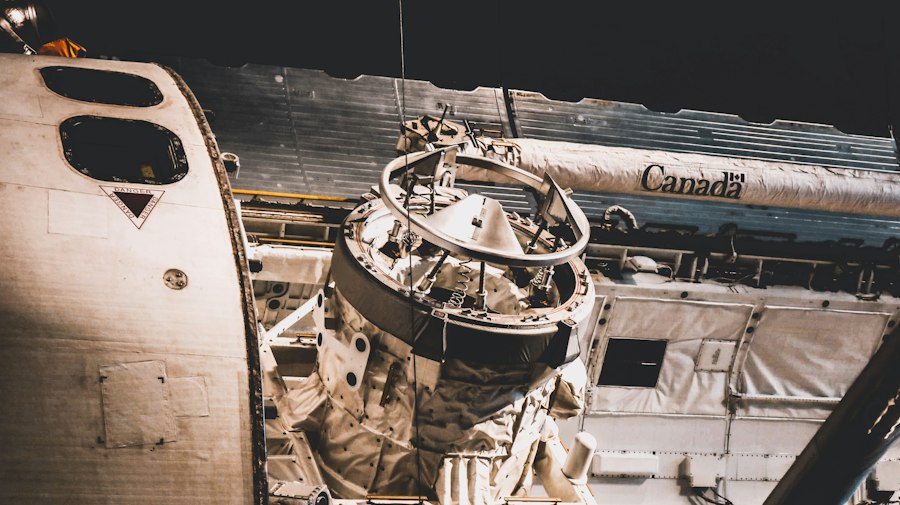
The pursuit of faster atmospheric reentry is not an arbitrary endeavor; it is driven by concrete mission requirements and the continuous evolution of technological capabilities. These advancements allow for more versatile and efficient space operations.
Rapid Return Capabilities
In certain scenarios, a rapid return from orbit is essential. For example, if a spacecraft experiences a critical system failure or if a crew needs to be brought back to Earth quickly, a fast reentry profile is required. This necessitates vehicles that can decelerate effectively without compromising crew safety.
Emergency Scenarios
Space missions, by their very nature, carry inherent risks. The ability to execute a rapid and controlled reentry in emergency situations is a critical aspect of mission assurance for crewed flights. This requires robust systems and well-rehearsed procedures.
Timeliness for Cargo and Experiments
Beyond crewed missions, fast reentry can be advantageous for returning scientific experiments or valuable cargo from space. Timely retrieval can preserve the integrity of samples or allow for quicker analysis of experimental results.
Reentry from Higher Energy Trajectories
Spacecraft that have traveled to destinations beyond Earth orbit, such as lunar or interplanetary missions, return with significantly higher velocities. Reentering Earth’s atmosphere from these trajectories requires vehicles capable of handling much greater kinetic energy and thus more intense heating.
Lunar and Interplanetary Return
Missions to the Moon, for example, involve returning from a trajectory that imparts a higher velocity upon Earth arrival compared to returning from low Earth orbit. The challenge of reentry increases proportionally with the incoming velocity.
Advanced Thermal Protection Systems
To cope with the extreme conditions of reentry from higher energy trajectories, advanced thermal protection systems are indispensable. These systems often involve more sophisticated materials, thicker ablative layers, or innovative heat management techniques.
The Role of Computational Fluid Dynamics (CFD) and Simulation
Modern engineering relies heavily on advanced computational tools to design and test complex systems like reentry vehicles. Computational Fluid Dynamics (CFD) and sophisticated simulation software have revolutionized the way engineers approach reentry challenges.
Modeling Aerodynamic Heating
CFD allows engineers to accurately model the complex airflow and heat transfer phenomena that occur during reentry. By simulating the flow of air around the vehicle, they can predict temperature distributions and pressure loads on the heat shield.
Optimizing Vehicle Design
These simulations enable engineers to iterate on vehicle designs, optimizing their shape, size, and material selection for the most efficient and safe reentry. This reduces the need for costly and time-consuming physical testing, allowing for faster development cycles.
The quest for the fastest atmospheric reentry spacecraft has captured the attention of aerospace enthusiasts and scientists alike, highlighting the incredible advancements in technology and engineering. For those interested in exploring this topic further, a related article can be found at My Cosmic Ventures, which delves into the latest developments and innovations in spacecraft design. This resource provides valuable insights into the challenges and achievements in achieving rapid reentry speeds, showcasing the remarkable progress made in the field of space exploration.
The Future of Fast Atmospheric Reentry
| Spacecraft | Reentry Speed (km/h) | Reentry Temperature (°C) |
|---|---|---|
| SpaceX Dragon | ~28,000 | ~1,600 |
| Space Shuttle | ~28,000 | ~1,650 |
| Soyuz | ~28,000 | ~1,600 |
The ongoing advancements in aerospace technology suggest that the pursuit of faster and more efficient atmospheric reentry is far from over. New materials, innovative designs, and a deeper understanding of physics will continue to push the boundaries of what is achievable.
Next-Generation Reentry Systems
The development of next-generation reentry systems is focused on achieving higher speeds, greater reusability, and enhanced safety margins. This includes exploring new vehicle concepts and materials that can withstand even more extreme conditions.
Hypersonic Glide Vehicles
Hypersonic glide vehicles (HGVs), capable of sustained flight at speeds above Mach 5, represent a significant leap in reentry technology. Their ability to maneuver at these speeds introduces new challenges and opportunities for controlled reentry.
Advanced Materials and Composites
The development of new high-temperature-resistant materials and advanced composites is crucial for future reentry systems. These materials can offer improved thermal insulation, increased strength, and reduced weight.
The Quest for Higher Reentry Speeds
While current reentry speeds are impressive, the ultimate goal may lie in reentering from even higher energy states. This could unlock new possibilities for rapid transit to and from space, and for missions to distant celestial bodies.
Reentry from Interstellar Trajectories (Theoretical)
While purely theoretical at present, the concept of reentering from interstellar trajectories would represent an unprecedented challenge, requiring technologies far beyond our current capabilities. However, it serves as a conceptual benchmark for extreme reentry.
Potential for Space Tourism and Beyond
As space exploration expands, the demand for faster and more accessible travel to and from space will likely increase. This could include ultra-fast return trips for space tourism or more efficient methods for deploying and retrieving assets in orbit.
The Role of International Collaboration and Private Innovation
The future of fast atmospheric reentry will undoubtedly be shaped by both international collaboration and the rapid innovation seen in the private space sector. Companies like SpaceX and Blue Origin are pushing the boundaries of reusable launch systems and reentry technologies.
SpaceX’s Starship Program
SpaceX’s ambitious Starship program, designed for fully reusable interplanetary transport, aims for very high-speed reentry capabilities. Its ability to land propulsively on Earth after returning from orbit or from lunar/Martian missions represents a significant departure from traditional reentry methods.
Emerging Private Sector Technologies
Numerous other private companies are developing novel reentry capsules and technologies, focusing on areas like precision landing, rapid turnaround, and cost-effectiveness. This diverse ecosystem of innovation is accelerating progress in the field.
In conclusion, the quest for the fastest atmospheric reentry spacecraft is an ongoing narrative of human ingenuity. From the early days of orbital flights to the sophisticated hypersonic vehicles of today, each step has been a triumph of scientific understanding and engineering prowess. The challenges of extreme heat, immense deceleration, and precise control continue to drive innovation, promising a future where returning from the cosmos is not just possible, but increasingly faster, safer, and more accessible. The records continue to fall, not just in speed, but in our ability to conquer the fiery embrace of Earth’s atmosphere.

At 25,000 MPH, Earth Becomes the Brake — Here’s How They Survive
FAQs
What is the fastest atmospheric reentry spacecraft?
The fastest atmospheric reentry spacecraft is the Stardust reentry capsule, which reentered Earth’s atmosphere at a speed of 28,900 miles per hour in 2006.
How does the speed of a spacecraft affect its reentry into the atmosphere?
The speed of a spacecraft affects its reentry into the atmosphere by generating intense heat due to friction with the air. Faster speeds result in higher temperatures during reentry.
What materials are used to protect spacecraft during atmospheric reentry?
Spacecraft are typically protected during atmospheric reentry by heat-resistant materials such as ablative heat shields, thermal protection tiles, and carbon composites.
What are the challenges of designing a spacecraft for fast atmospheric reentry?
Designing a spacecraft for fast atmospheric reentry presents challenges such as managing extreme temperatures, ensuring structural integrity, and minimizing the effects of aerodynamic forces.
What are the potential applications of fast atmospheric reentry spacecraft?
Fast atmospheric reentry spacecraft have potential applications in scientific missions, space exploration, and the development of technologies for high-speed travel and reentry.