
The relentless, fiery embrace of Venus has long captivated and confounded humanity. A planet shrouded in an impenetrable, toxic atmosphere, it presents a formidable challenge to exploration, a stark contrast to its Earth-like size. Yet, for some, this infernal world has harbored whispers of possibility, a tantalizing hint that life, in some form, might persist. At the forefront of these inquiries stood Leonid Ksanfomality, a Soviet astronomer whose bold pronouncements and groundbreaking, albeit controversial, findings ignited a debate that continues to echo in the scientific community. His work, particularly in the late 20th century, offered a tantalizing glimpse into a Venus that defied conventional expectations, suggesting that the planet was not merely a desolate wasteland, but potentially a cradle for exotic, resilient life.
The exploration of Venus in the latter half of the 20th century was largely dominated by the Soviet Union’s Venera program. These missions, characterized by their audacity and resilience, were designed to penetrate the planet’s crushing atmosphere and hostile surface conditions. The Venera landers, despite their often brief operational lives due to the extreme environment, sent back invaluable data, painting a picture of a world far more dynamic and intriguing than previously imagined. Ksanfomality, as a key figure in this endeavor, meticulously analyzed the data transmitted by these probes, seeking patterns and anomalies that hinted at processes beyond mere geology.
Challenges of the Venusian Surface
- Crushing Atmospheric Pressure: Venus’s atmosphere exerts a pressure at its surface equivalent to that found nearly 1 kilometer deep in Earth’s oceans. This immense pressure posed a significant engineering challenge for the Venera landers, requiring robust construction and precise pressure regulation.
- Extreme Temperatures: Surface temperatures on Venus hover around a scorching 462 degrees Celsius (864 degrees Fahrenheit), hot enough to melt lead. This thermal onslaught limited the operational time of electronics and instruments, demanding rapid data transmission.
- Corrosive Atmosphere: The dense atmosphere is composed primarily of carbon dioxide, with thick clouds of sulfuric acid. This highly corrosive environment posed a threat to the integrity of the landers’ exterior and internal components.
Ksanfomality’s Role in Data Interpretation
Leonid Ksanfomality was not just a passive observer of the Venera data; he was an active interpreter, a detective piecing together clues from a distant, alien world. His scientific background, rooted in astronomy and atmospheric physics, allowed him to approach the incoming information with a unique perspective. While many scientists focused on confirming the hostile nature of Venus, Ksanfomality was looking for the exceptions, the unexpected, the phenomena that might suggest the presence of something more. He meticulously scrutinized images, sensor readings, and telemetry, searching for deviations from expected chemical and physical behaviors.
In exploring the intriguing possibility of life on Venus, Leonid Ksanfomality’s research has sparked significant interest in the scientific community. For those looking to delve deeper into the subject, a related article that discusses the implications of Ksanfomality’s findings can be found at My Cosmic Ventures. This article provides a comprehensive overview of the ongoing debates surrounding Venusian life and the potential for future exploration of our neighboring planet.
The “Disc-Like” Objects: A Photographic Enigma
Perhaps Ksanfomality’s most controversial and talked-about findings stemmed from his analysis of images transmitted by the Venera 13 and Venera 14 landers. In these grainy, black-and-white photographs, Ksanfomality identified objects that he interpreted as evidence of mobile, disc-like organisms. These objects, often appearing as dark, vaguely disc-shaped forms, were observed moving across the Venusian landscape, sometimes appearing and disappearing from the frame between successive images.
Visual Evidence and Ksanfomality’s Interpretation
- The “Black Spot” Anomaly: Ksanfomality pointed to specific instances where a dark, disc-like shape would be present in one frame and absent in the next, or appear to have shifted its position. He argued that this pattern suggested movement rather than static artifacts or photographic defects.
- Shape and Structure: The objects, while indistinct, often possessed a rounded or flattened shape. Ksanfomality hypothesized that these were not inanimate geological formations but rather biological entities.
- Behavioral Interpretation: The perceived movement of these objects led Ksanfomality to suggest they were alive, capable of locomotion. He proposed they might be some form of simple, extremophile life adapted to the harsh Venusian environment.
Skepticism and Alternative Explanations
- Geological Formations: The most common scientific explanation for these “objects” was that they were simply rocks, pebbles, or other geological features that were either obscured by the camera’s limited resolution or were shifted by wind, seismic activity, or the lander’s own exhaust.
- Instrumental Artifacts: Dust, condensation on the camera lens, or even light reflections within the camera system could also have created the appearance of moving objects.
- Panspermia Hypothesis (Indirectly Related): While not directly explained by Ksanfomality’s findings, the idea of life originating elsewhere and being transported to Venus was a background consideration in the broader discussion of extraterrestrial life. However, the “disc-like” objects were presented as indigenous life.
The “Schtoller” and its Significance

Beyond the disc-like objects, Ksanfomality also identified other potential biological indicators. One such phenomenon, which he termed the “schtoller” (Russian for “umbrella”), was described as a fleeting, umbrella-shaped structure that appeared in some of the images. Ksanfomality believed these fleeting appearances, coupled with the disc-like objects, were suggestive of a more complex ecosystem than previously thought.
Describing the “Schtoller” Phenomenon
- Ephemeral Appearances: The “schtoller” was characterized by its brief presence in the photographic record, often vanishing in subsequent frames. This transience was interpreted as a sign of biological activity, as inorganic objects would typically remain stationary unless acted upon by external forces.
- Distinctive Shape: The umbrella-like form, while still vague, was considered by Ksanfomality to be too regular and distinct to be a random geological formation or an artifact. He posited it might be a biological structure related to reproduction or nutrient absorption.
- Comparison to Earthly Organisms: Ksanfomality sometimes drew analogies to microscopic organisms on Earth that exhibit rapid changes in form or briefly manifest observable structures.
The Debate on Biological Interpretation
- Ambiguity of Visuals: The low resolution and limited color information of the Venera images made definitive identification of any object incredibly challenging. This ambiguity fueled the skepticism surrounding Ksanfomality’s interpretations.
- Lack of Independent Verification: Without additional missions or independent observers to confirm the presence and nature of the “schtoller” and disc-like objects, Ksanfomality’s claims remained largely uncorroborated.
- The Principle of Parsimony (Occam’s Razor): Scientists often favor the simplest explanation that fits the evidence. In this case, geological or instrumental explanations were considered far simpler and more probable than the existence of complex, mobile life forms.
Ksanfomality’s Hypothesis on Venusian Life

Ksanfomality was not merely pointing out anomalies; he was attempting to construct a coherent hypothesis for how life might exist on Venus. He understood the extreme conditions of the surface and proposed that any life would need to be uniquely adapted to survive them. His ideas, while speculative, demonstrated a willingness to think outside the box and consider biological possibilities in the most unlikely of places.
Adapting to Extreme Conditions
- Atmospheric Niches: Ksanfomality suggested that life might not exist on the scorching surface but rather in cooler, more hospitable layers of the Venusian atmosphere. Sulfuric acid clouds, while corrosive to humans, could potentially be a medium for extremophilic life.
- Chemosynthesis: He theorized that Venusian organisms might derive energy from chemical reactions, rather than relying on sunlight, which would be heavily filtered by the thick atmosphere.
- Resilience and Extremophilia: The proposed life forms would need to be incredibly resilient, capable of withstanding high temperatures, pressures, and corrosive environments. This aligns with the concept of extremophiles found in extreme environments on Earth.
The Nature of Proposed Venusian Organisms
- Microbial or Simple Multicellular: Ksanfomality’s proposals generally leaned towards microbial or very simple multicellular life. The “disc-like” objects were not envisioned as complex animals but rather as basic life forms with limited mobility.
- Unique Biochemistry: It was understood that any Venusian life would likely possess a biochemistry fundamentally different from Earth-based life, potentially utilizing different solvents or energy pathways.
- Defense Mechanisms: The ability to withstand the corrosive atmosphere might involve protective shells or a unique cellular structure.
In the fascinating realm of astrobiology, the work of Leonid Ksanfomality has sparked significant interest regarding the possibility of life on Venus. His research suggests that the planet’s harsh conditions may not be as inhospitable as previously thought. For those intrigued by this topic, a related article can be found that delves deeper into the implications of Ksanfomality’s findings and explores the potential for microbial life in Venus’s clouds. You can read more about it in this insightful piece here.
The Enduring Legacy and Future Prospects
| Metric | Details |
|---|---|
| Researcher | Leonid Ksanfomality |
| Field | Astrobiology / Planetary Science |
| Focus | Potential for life on Venus |
| Key Hypothesis | Microbial life could exist in Venus’ cloud layers |
| Research Method | Analysis of Venus atmospheric data and imagery |
| Notable Publication Year | 2019 |
| Significant Findings | Possible signs of microbial life in Venus’ atmosphere |
| Impact | Renewed interest in Venus as a candidate for extraterrestrial life |
Despite the widespread skepticism and the lack of definitive proof, Leonid Ksanfomality’s work on Venus continues to hold a certain fascination. His willingness to challenge conventional wisdom and pursue unconventional interpretations of scientific data serves as a reminder that the universe often holds surprises. While his specific claims about mobile disc-like organisms remain largely unaccepted, his broader inquiry into the possibility of life on Venus opened doors for further scientific investigation.
The Importance of Continued Exploration
- New Missions and Technologies: Future missions to Venus, equipped with more advanced imaging, sensing, and analytical capabilities, are essential to either confirm or refute Ksanfomality’s observations and to conduct a more thorough search for biosignatures.
- Atmospheric Probes and Balloons: The exploration of Venus’s atmosphere, rather than just its surface, is a promising avenue. Atmospheric probes and balloons could sample different layers and analyze chemical compositions for signs of biological activity.
- Understanding Extremophiles: The study of extremophiles on Earth provides valuable insights into the potential for life in extreme environments, bolstering the theoretical possibility of Venusian life.
Ksanfomality’s Contribution to Astrobiology
- Challenging Assumptions: Ksanfomality’s bold hypotheses, even if ultimately unproven, encouraged scientists to think more broadly about the conditions under which life might arise and survive, pushing the boundaries of astrobiology.
- Inspiring Future Research: His work served as a catalyst for debate and discussion, stimulating further research into Venus’s potential habitability and the methods for detecting life beyond Earth.
- The “What If?” Factor: The allure of Ksanfomality’s findings lies in their “what if?” factor. They remind us that our current understanding of life and its potential forms may be limited, and that the universe might harbor biological wonders that are yet to be discovered. The legend of Leonid Ksanfomality and his “dancing discs” on Venus continues to inspire curiosity and a deeper quest for answers in the vast expanse of space.
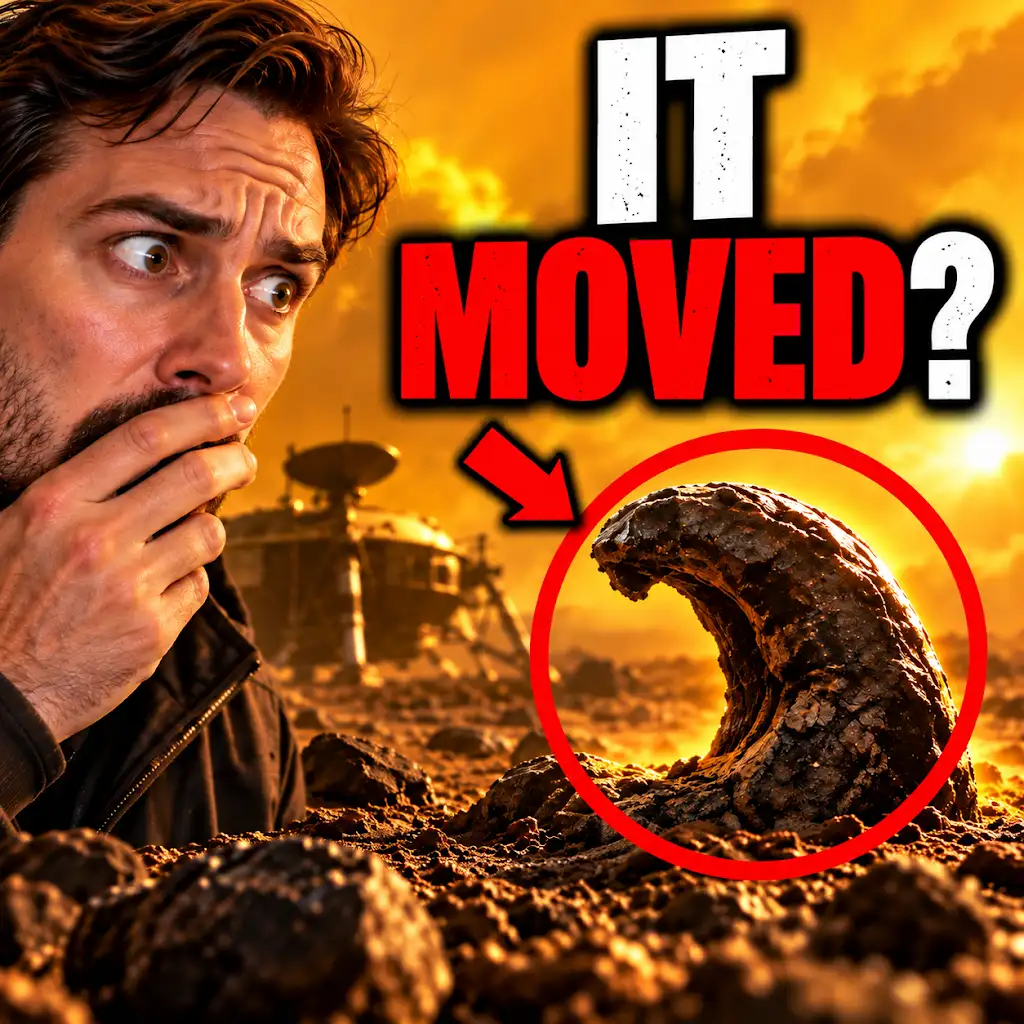
Something Moved on Venus — But Was It Alive?
FAQs
What is the article “Leonid Ksanfomality Venus life” about?
The article discusses the research and findings of Russian scientist Leonid Ksanfomality regarding the potential existence of life on Venus.
Who is Leonid Ksanfomality?
Leonid Ksanfomality is a Russian scientist who has conducted extensive research on Venus and has proposed theories about the possibility of life on the planet.
What evidence does Leonid Ksanfomality present to support the idea of life on Venus?
Ksanfomality has analyzed data from various space missions to Venus, including the Soviet Venera missions, and has identified anomalies that he believes could be indicative of microbial life on the planet.
How has the scientific community responded to Leonid Ksanfomality’s theories?
While some scientists have shown interest in Ksanfomality’s research, the majority of the scientific community remains skeptical of his claims about the presence of life on Venus. Further research and evidence are needed to support his theories.
What are the implications of the potential discovery of life on Venus?
The discovery of life on Venus would have significant implications for our understanding of the universe and the possibility of life existing beyond Earth. It could also impact future space exploration missions and the search for extraterrestrial life.