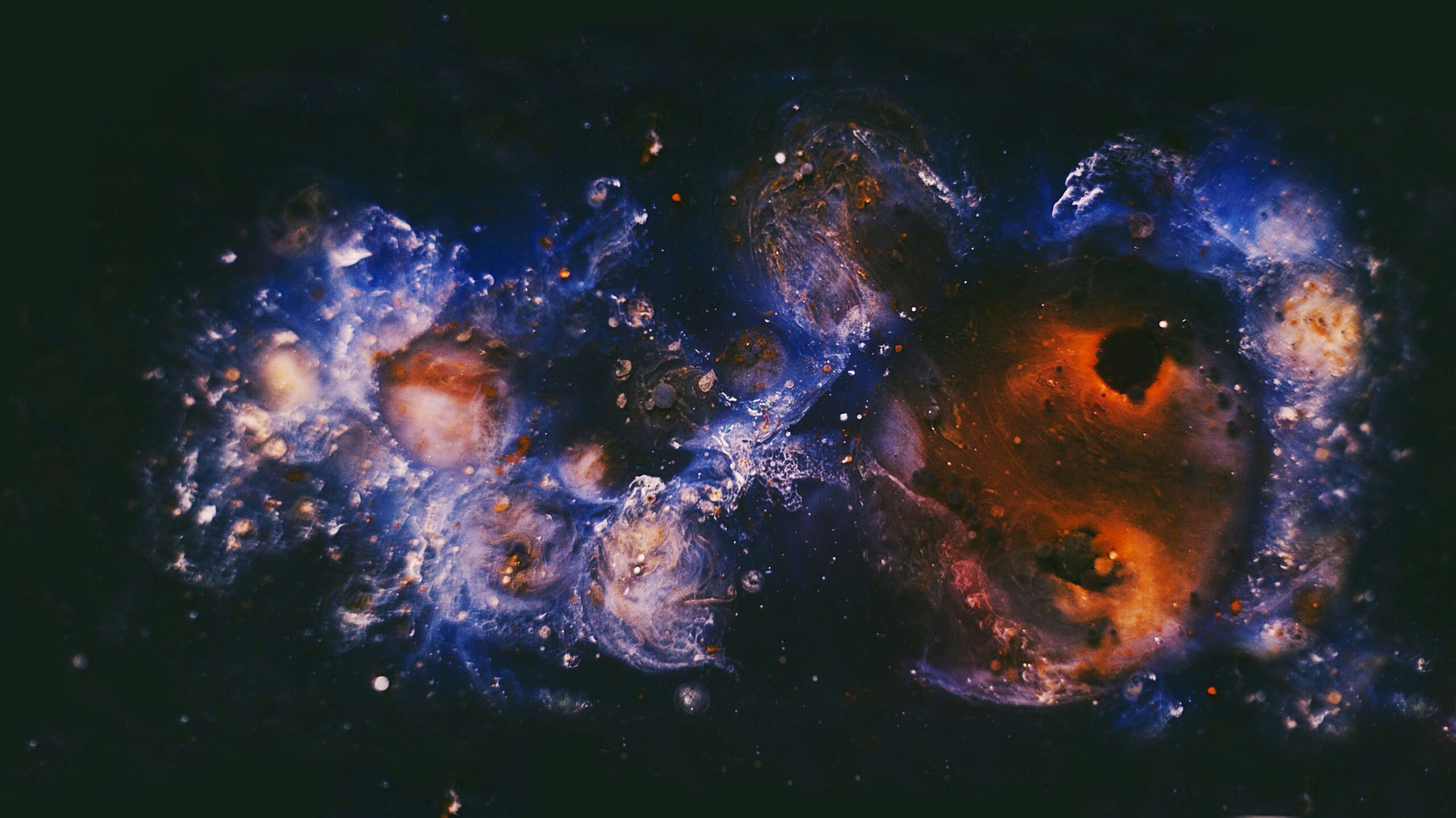
Exploring the vast expanse of the cosmos has long captivated the human imagination. From the earliest stargazers charting constellations to modern-day astrophysicists probing the depths of black holes, our quest to understand the universe is a perpetual journey of discovery. A recent science documentary, “[Title of Documentary – e.g., Cosmos: A Spacetime Odyssey]” offers a breathtaking and illuminating exploration of these cosmic wonders, inviting viewers on a spectacular voyage through time and space. This ambitious production, narrated by renowned scientist [Narrator’s Name – e.g., Carl Sagan or Neil deGrasse Tyson], masterfully blends scientific accuracy with stunning visuals, making complex astronomical concepts accessible and awe-inspiring.
The documentary begins by delving into the very origins of existence, taking viewers back to the Big Bang, the explosive event that is believed to have birthed our universe. This section is not merely a recounting of a scientific theory; it is a visual symphony, depicting the nascent moments of creation with an artist’s touch and a scientist’s precision. The filmmakers utilize cutting-edge CGI to render the chaotic, incandescent plasma that filled the early universe, offering a glimpse into a reality almost incomprehensible in its scale and intensity.
The Genesis of Everything
The Big Bang is presented not as a violent explosion in space, but rather as an expansion of space itself. The initial moments are characterized by unimaginable temperatures and densities, a state where the fundamental forces of nature were unified. The documentary patiently unpacks the theoretical framework, making the concepts of inflation and rapid expansion understandable through engaging analogies and illustrative animations. Viewers are guided through the cooling process, the formation of the first subatomic particles, and eventually, the creation of the first atoms, primarily hydrogen and helium. It is a narrative of cosmic alchemy, where elemental ingredients were forged from pure energy.
Inflation: A Universe’s Rapid Growth Spurt
The concept of cosmic inflation, a period of exponential expansion in the earliest fractions of a second after the Big Bang, is a cornerstone of modern cosmology. The documentary explains how this theory addresses several perplexing problems in astrophysics, such as the horizon problem and the flatness problem. Through clever visualizations, the filmmakers illustrate how a tiny, initial region of the universe could have expanded so rapidly to become the vast, seemingly uniform cosmos we observe today. The analogy of a rapidly inflating balloon, with every point on its surface moving away from every other point, is a recurring and effective motif.
The First Light: The Cosmic Microwave Background
A pivotal element in understanding the universe’s infancy is the detection of the Cosmic Microwave Background (CMB). The documentary highlights the significance of this faint glow of radiation, a relic from about 380,000 years after the Big Bang, when the universe cooled enough for protons and electrons to combine into neutral atoms, allowing photons to travel freely. The CMB’s almost uniform temperature, with tiny fluctuations, is presented as a “baby picture” of the universe, providing crucial evidence for the Big Bang model and revealing the seeds of the large-scale structures we see today. The visual representation of the CMB map, with its subtle variations in color, becomes a canvas upon which the future fate of the cosmos is implicitly painted.
The Stellar Nurseries: Forging the Elements
From the primordial hydrogen and helium, the documentary then transitions to the birth of stars. These celestial furnaces are depicted as the true artisans of the universe, responsible for the creation of heavier elements. The immense gravitational collapse of vast gas clouds ignites nuclear fusion, powering the stars and transforming them into cosmic crucibles. The journey from nebulae to stellar ignition is portrayed with a sense of awe-inspiring grandeur, showcasing the sheer scale of these stellar nurseries.
Star Formation: Gravity’s Sculpting Hand
The process of star formation is explained through detailed animations that illustrate how gravity pulls together diffuse interstellar gas clouds, causing them to spin and condense. As the core of a collapsing cloud becomes denser and hotter, the pressure and temperature reach a critical point where nuclear fusion begins. The documentary emphasizes that stars are not static objects but dynamic entities, undergoing complex life cycles. The visual depictions of swirling gas and dust, coalescing into brilliant points of light, are both accurate and artistically compelling, evoking a sense of wonder at the sheer power of cosmic processes.
Stellar Evolution: From Birth to Dramatic Endings
The documentary also explores the diverse evolutionary paths of stars, from small, long-lived red dwarfs to massive, short-lived supergiants. The dramatic spectacle of stellar death, whether through graceful shedding of outer layers in planetary nebulae or the cataclysmic explosions of supernovae, is rendered with breathtaking visual effects. These supernovae are not just presented as destructive events; they are highlighted as crucial cosmic recycling processes, scattering the heavy elements forged within stars across the galaxy, providing the raw materials for future generations of stars and planets.
If you’re fascinated by the mysteries of the universe, you might find the article “Exploring the Cosmic Web: The Structure of the Universe” on My Cosmic Ventures particularly enlightening. This article delves into the intricate network of galaxies and dark matter that shapes our cosmos, offering insights that complement the themes presented in the latest science documentary about the universe. To read more about this captivating topic, visit Exploring the Cosmic Web.
Architects of Galaxies: Cosmic Structures Unveiled
Having laid the foundation of cosmic origins and stellar creation, the documentary moves on to the grandest structures in the universe: galaxies. These majestic islands of stars, gas, and dust are presented as the dynamic building blocks of the cosmos, evolving over billions of years through gravitational interactions and mergers. The filmmakers bring to life the sheer variety of galactic forms, from the elegant spirals of our own Milky Way to the more chaotic shapes of interacting galaxies.
The Milky Way: Our Cosmic Home
The documentary dedicates significant time to exploring our own galaxy, the Milky Way. Viewers are taken on an imaginary journey from our solar system, navigating through the spiral arms, and venturing towards the bustling galactic center. The immense scale of the Milky Way is conveyed through stunning visualizations, showcasing its hundreds of billions of stars and its enigmatic supermassive black hole at its core. The narrative unfolds the ongoing research and discoveries being made within our own galactic neighborhood.
Spiral Arms: Galactic Traffic Jams and Stellar Highways
The iconic spiral arms of barred spiral galaxies like our own are explained not as physical structures of stars, but rather as regions of higher density in the galactic disk. These are depicted as transient phenomena, like cosmic traffic jams, where gas and dust are compressed, triggering bursts of star formation. The documentary uses compelling analogies to illustrate how these density waves propagate through the galaxy, creating the beautiful swirling patterns that are so characteristic of spiral galaxies. The viewer feels as though they are witnessing the dynamic interplay of forces shaping our cosmic home.
The Galactic Center: A Supermassive Black Hole’s Dominion
At the heart of the Milky Way, and indeed most large galaxies, lies a supermassive black hole. The documentary explores the evidence for Sagittarius A*, the supermassive black hole at our galaxy’s center, and its profound influence on the surrounding environment. While black holes themselves are invisible, their gravitational pull is undeniable, and the filmmakers utilize simulations and observations of stars orbiting this unseen behemoth to convey its immense power and presence. The discussion of accreting matter and the formation of powerful jets emanating from the vicinity of black holes adds another layer of cosmic drama.
Galactic Collisions and Mergers: Cosmic Dances of Destruction and Creation
The universe is a dynamic place, and galaxies are not static entities. The documentary vividly portrays the inevitable process of galactic collisions and mergers, often over billions of years. These cosmic encounters, while seemingly violent, are presented as essential drivers of galactic evolution, fueling intense bursts of star formation and reshaping galaxies into new forms. The visual simulations of galaxies interacting, their stars and gas streams intertwining, are both beautiful and humbling, illustrating the slow, inexorable march of cosmic evolution.
Andromeda’s Approaching Embrace
A particularly fascinating aspect explored is the impending collision between our Milky Way and the Andromeda galaxy. The documentary presents a timeline of this monumental event, scheduled to occur in several billion years, and the scientific predictions for how our galaxies will merge to form a larger elliptical galaxy. This long-term perspective emphasizes the vast timescales involved in cosmic processes and provides a tangible example of galactic evolution in action, right in our own cosmic backyard.
The Enigma of Dark Matter and Dark Energy: Unseen Dominators
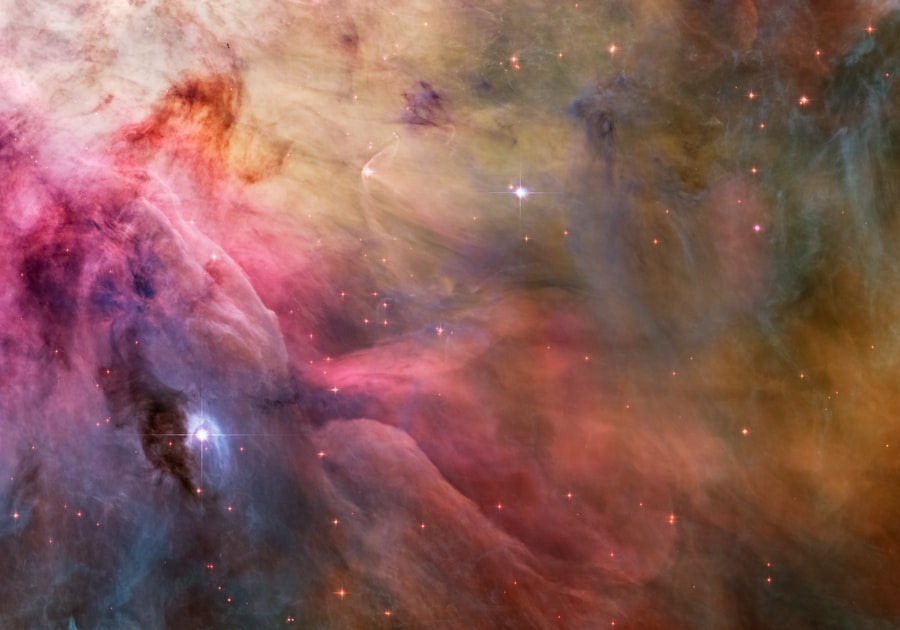
As the documentary progresses, it tackles some of the universe’s most profound mysteries: dark matter and dark energy. These enigmatic components, which make up the vast majority of the universe’s mass and energy, are invisible to our telescopes, yet their gravitational effects are undeniable. The filmmakers skillfully explain the observational evidence for these unseen forces and the ongoing scientific endeavors to unravel their nature.
In exploring the vastness of the universe, one can gain a deeper understanding of our cosmic origins and the intricate workings of celestial bodies. A fascinating resource that complements this journey is an article that delves into the latest discoveries in astrophysics and their implications for our understanding of space. For more insights, you can check out this informative piece at My Cosmic Ventures, which provides a captivating overview of the universe’s mysteries and the ongoing quest for knowledge.
Dark Matter: The Invisible Scaffold
The concept of dark matter is introduced through observations of galaxy rotation curves and the gravitational lensing of light. The documentary explains how galaxies spin much faster than they should based on the visible matter they contain, suggesting the presence of an unseen mass providing additional gravitational pull. Similarly, the bending of light around massive objects, a phenomenon known as gravitational lensing, provides further evidence for this invisible scaffolding that holds galaxies and galaxy clusters together.
Evidence Beyond Visible Light
The documentary emphasizes that our understanding of dark matter is based on its gravitational interactions rather than direct observation. It explores the various candidates for dark matter, from WIMPs (Weakly Interacting Massive Particles) to sterile neutrinos, and the ambitious experiments underway to detect these elusive particles. The narrative underscores the ingenuity of scientists in devising detection methods that can probe phenomena beyond the visible spectrum, highlighting the detective work involved in modern astrophysics.
Dark Energy: The Accelerating Expansion
Perhaps the most perplexing discovery in modern cosmology is dark energy, the force responsible for the accelerating expansion of the universe. The documentary explains how observations of distant supernovae revealed that the universe’s expansion is not slowing down, as expected due to gravity, but is actually speeding up. This inexplicable acceleration points to the existence of a pervasive energy field that is pushing spacetime apart.
The Accelerating Universe: A Scientific Shockwave
The discovery of dark energy was a significant paradigm shift in cosmology. The documentary explores the implications of this accelerating expansion, including the possibility of a “Big Rip” scenario, where the accelerating expansion eventually tears apart all matter in the universe. The ongoing research to understand the equation of state of dark energy and its potential connection to Einstein’s theory of general relativity is presented as a frontier of scientific inquiry. The mystery of dark energy is presented not as a dead end, but as an exciting puzzle waiting to be solved.
The Quest for Exoplanets and the Search for Life
The documentary then shifts its focus to the tantalizing possibility of life beyond Earth, exploring the discovery and study of exoplanets – planets orbiting stars other than our Sun. The increasing number of identified exoplanets, ranging from gas giants to rocky worlds, has fueled speculation about the prevalence of life in the universe.
Worlds Beyond Our Sun: The Exoplanet Revolution
The advent of sophisticated telescopes and observational techniques has revolutionized our understanding of planetary systems. The documentary showcases the methods used to detect exoplanets, such as the transit method and the radial velocity method, and presents a diverse gallery of these alien worlds. Viewers are treated to vivid artistic interpretations of what these distant planets might look like, based on the limited data scientists have gathered.
Habitable Zones: The Search for Earth-like Worlds
A central theme in the exoplanet search is the identification of planets within their star’s “habitable zone” – the region where temperatures could allow for liquid water to exist on a planet’s surface. The documentary highlights the ongoing efforts to find Earth-like exoplanets within these zones, paving the way for future missions to analyze their atmospheres for biosignatures. The excitement surrounding the discovery of potentially habitable worlds is palpable throughout this segment.
The Search for Extraterrestrial Intelligence (SETI): Listening to the Cosmos
The documentary concludes by touching upon the long-standing quest for extraterrestrial intelligence. It revisits the work of pioneers in the field of SETI (Search for Extraterrestrial Intelligence) and discusses the ongoing efforts to detect artificial signals from distant civilizations. While this aspect often delves into speculative territory, the documentary grounds it in scientific inquiry, emphasizing the vastness of the universe and the statistical likelihood, however small, of other intelligent life.
The Drake Equation: A Framework for Possibilities
The documentary briefly introduces the Drake Equation, a probabilistic argument used to estimate the number of active, communicative extraterrestrial civilizations in the Milky Way galaxy. While acknowledging the uncertainties in its variables, the equation serves as a powerful intellectual tool to frame the discussion about the potential prevalence of alien life, encouraging contemplation about our place in the cosmic tapestry.
The documentary “[Title of Documentary]” is more than just a visual spectacle; it is an intellectual journey that ignites curiosity and fosters a deeper appreciation for the immensity and complexity of the universe. By skillfully explaining intricate scientific concepts, showcasing breathtaking cosmic phenomena, and posing profound questions about our existence, it leaves viewers with a renewed sense of wonder and an insatiable desire to learn more about the breathtaking wonders that lie beyond our own blue planet. It is a testament to humanity’s enduring spirit of exploration and our unwavering quest to understand our place in the grand cosmic narrative.

The Universe Tried to Erase Itself
FAQs
What is a science documentary about the universe?
A science documentary about the universe is a film or television program that explores various aspects of the universe, including its origins, structure, and phenomena, using scientific research and evidence.
What topics are typically covered in a science documentary about the universe?
Topics covered in a science documentary about the universe may include the Big Bang theory, the formation of galaxies and stars, black holes, dark matter, dark energy, and the search for extraterrestrial life. Additionally, it may explore the latest discoveries and advancements in astrophysics and cosmology.
How are science documentaries about the universe created?
Science documentaries about the universe are typically created by a team of filmmakers, scientists, and researchers. They often involve collaborations with observatories, space agencies, and academic institutions to access the latest data and imagery. The production process may include interviews with experts, computer-generated visualizations, and on-location filming at astronomical sites.
What are the benefits of watching a science documentary about the universe?
Watching a science documentary about the universe can provide viewers with a deeper understanding of the cosmos, inspire curiosity about the universe, and foster an appreciation for the scientific method. It can also showcase the beauty and complexity of the universe while highlighting the importance of scientific exploration and discovery.
Where can I watch science documentaries about the universe?
Science documentaries about the universe can be found on various streaming platforms, such as Netflix, Amazon Prime Video, and Disney+. They may also be available on educational websites, science channels, and through DVD or Blu-ray purchases. Additionally, some documentaries may be screened at science museums or educational institutions.