You are about to embark on a journey unlike any you’ve ever known. You’ll delve into the bizarre, mind-bending reality that lies at the very core of existence – the quantum world. Imagine a universe where particles can be in two places at once, where observation dictates reality, and where the familiar rules of cause and effect seem to dissolve into pure possibility. This is the subject of our physics documentary, “Exploring the Quantum World: A Physics Documentary on Reality.” Prepare to have your perception of the universe fundamentally altered.
You’ve always understood the world through your senses. You see solid objects, feel their weight, and hear their sounds. But what if you were told that what you perceive is merely a macroscopic illusion, a smoothed-out average of an impossibly chaotic and probabilistic foundation? This is where our exploration begins.
The Pillars of Classical Physics: Building Blocks of Today
Before we shatter your preconceived notions, it’s essential to understand the framework that has served humanity so well for centuries. Think of classical physics, the physics of Newton and Maxwell, as the architecture of our everyday experience. It elegantly describes the motion of planets, the bouncing of a ball, the flow of electricity. You can predict with astonishing accuracy where a projectile will land given its initial velocity and angle. These are the predictable, deterministic laws that govern the world you interact with daily.
The Advent of the Quantum: A Paradigm Shift
However, as scientists peered deeper into the fundamental nature of matter and energy, cracks began to appear in this seemingly robust edifice. Experiments at the atomic and subatomic level yielded results that defied classical explanation. This was the dawn of quantum mechanics, a revolution in thought that would redefine our understanding of reality itself. It’s a realm so strange it feels like science fiction, yet it’s the very bedrock of our universe.
Quantization: The Discrete Nature of Reality
One of the first astonishing revelations was the concept of quantization. You are accustomed to thinking of energy as a continuous flow, like water from a tap. But in the quantum realm, energy, among other properties, comes in discrete packets, or “quanta.” Imagine it like a dimmer switch that only has specific settings, rather than a smooth, infinitely adjustable dial. This fundamental discreteness is the very essence of the “quantum” in quantum mechanics.
Planck’s Discovery: The Birth of the Quantum Hypothesis
It was Max Planck, grappling with the problem of blackbody radiation, who first proposed this radical idea at the turn of the 20th century. He suggested that energy could only be emitted or absorbed in these discrete packets, proportional to their frequency. This seemed like a mathematical trick at first, but it proved to be a profound insight that unlocked a new understanding of the universe.
The Photoelectric Effect: Einstein’s Confirmation
Albert Einstein further solidified this concept by explaining the photoelectric effect. He proposed that light itself, not just energy, could be thought of as discrete packets of energy called photons. When light hits certain metals, it can eject electrons, but only if the photons have enough energy. This was a pivotal moment, demonstrating that the quantum nature of light was not merely an abstract theoretical construct but a tangible phenomenon with real-world consequences.
In the fascinating realm of physics documentaries, one particularly intriguing article explores the nature of reality and its implications for our understanding of the universe. This piece delves into the intersection of quantum mechanics and consciousness, shedding light on how our perceptions shape the reality we experience. For those interested in expanding their knowledge on this captivating subject, you can read more about it in this article: My Cosmic Ventures.
The Enigmatic Nature of Particles: Waves and Probabilities
Once you accept that energy comes in discrete packets, the next bewildering discovery awaits: particles don’t behave like particles at all. Instead, they exhibit a dual nature, behaving sometimes as localized points and at other times as spread-out waves. This wave-particle duality is one of the most mind-boggling aspects of the quantum world.
De Broglie’s Hypothesis: Matter as Waves
Louis de Broglie, inspired by the wave nature of light, boldly proposed that all matter exhibits wave-like properties. This was a truly audacious idea. You think of an electron as a tiny, localized speck of matter. But de Broglie suggested it also has a wavelength, and this wavelength is inversely proportional to its momentum.
The Davisson-Germer Experiment: Experimental Proof
This seemingly fantastical hypothesis wasn’t just theoretical musings. The Davisson-Germer experiment provided compelling evidence, demonstrating that electrons, when fired through a crystal lattice, produced diffraction patterns – a hallmark of wave behavior. This experiment was a watershed moment, confirming that the quantum rules applied not just to light and energy, but to the very building blocks of matter itself.
The Uncertainty Principle: Limits on Our Knowledge
If particles can behave like waves, then pinpointing their exact location and momentum simultaneously becomes impossible. This is the essence of Werner Heisenberg’s Uncertainty Principle. You cannot know both the precise position and the precise momentum of a quantum particle with absolute certainty. The more accurately you measure one, the less accurately you can measure the other.
Position vs. Momentum: An Inherent Trade-off
Imagine trying to measure the position of a tiny electron. To see it, you need to interact with it, perhaps by bouncing a photon off it. But this interaction will inevitably impart momentum to the electron, changing its velocity in an unpredictable way. Conversely, if you try to measure its momentum very precisely, you lose information about its location. It’s a fundamental constraint of the universe, not a limitation of our measuring instruments.
The Probabilistic Universe: A Realm of Chance
This uncertainty leads directly to the probabilistic nature of the quantum world. Instead of deterministic trajectories, we deal with probabilities. We can calculate the probability of finding a particle in a certain location or with a certain momentum, but we can’t know with certainty what it will be. This is a profound shift from the deterministic clockwork universe of classical physics.
The Act of Observation: Shaping Reality?
Perhaps the most unsettling aspect of the quantum world is the role of observation. It appears that the very act of measuring a quantum system can influence its state, forcing it to commit to a definite reality from a multitude of possibilities. This is the famous measurement problem.
Superposition: Existing in Multiple States at Once
Before you observe a quantum system, it can exist in a superposition of states. Think of Schrödinger’s infamous cat, which, in a thought experiment, is simultaneously alive and dead until the box is opened. A quantum particle can be in multiple positions, or have multiple energy levels, all at the same time.
The Wave Function: A Symphony of Possibilities
The mathematical description of this superposition is called the wave function. It encapsulates all the possible states a quantum system can occupy and their associated probabilities. It’s a sophisticated probability amplitude, constantly evolving according to quantum rules.
Wave Function Collapse: The Moment of Truth
When you perform a measurement, you are essentially forcing the quantum system to “choose” one of its possible states. This is known as wave function collapse. The superposition collapses, and the system settles into a single, definite outcome. You observe the cat is either alive or dead, not both.
The Observer Effect: Are You the Architect of Reality?
This raises profound philosophical questions. Does your consciousness play a role in collapsing the wave function? Is the universe truly undefined until you look at it? While most physicists believe the collapse is triggered by any interaction that reveals information about the system, the debate about the precise nature of the measurement problem continues to be a fertile ground for research and speculation.
Entanglement: Spooky Action at a Distance
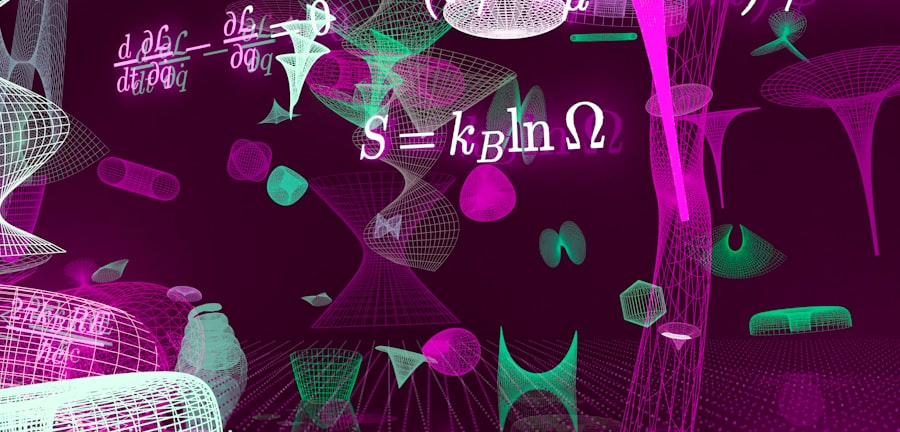
Prepare for what Albert Einstein famously called “spooky action at a distance.” Quantum entanglement is a phenomenon where two or more particles become linked in such a way that they share the same fate, no matter how far apart they are. Measuring the state of one instantly influences the state of the other.
The Entangled Pair: A Shared Destiny
Imagine you have two entangled particles, A and B. If particle A is measured to have a certain spin, and you know these particles were entangled with opposite spins, then you instantly know the spin of particle B, even if it’s light-years away. There’s no apparent communication between them, which is what made it so baffling to Einstein.
Bell’s Theorem: Challenging Local Realism
John Bell’s theorem provided a way to experimentally test whether this “spooky action” was really happening or if there were some hidden local variables dictating the outcomes. Numerous experiments have since confirmed that quantum entanglement is a real phenomenon, defying classical intuition.
Implications for Information and Communication
This entanglement has far-reaching implications. It suggests that information can be correlated instantaneously across vast distances, challenging our very notions of causality and locality. It’s a key ingredient in developing powerful quantum computers and secure quantum communication systems.
Quantum Cryptography: Unbreakable Codes
One of the most exciting applications of entanglement is in quantum cryptography. You can use entangled particles to generate encryption keys that are inherently secure. Any attempt to eavesdrop on the communication would inevitably disturb the entanglement, revealing the presence of the spy and rendering the intercepted information useless.
In exploring the intricate relationship between physics and our understanding of reality, the documentary “The Fabric of Reality” offers profound insights into the fundamental principles that govern our universe. This thought-provoking film delves into topics such as quantum mechanics and the nature of time, prompting viewers to reconsider their perceptions of existence. For those interested in further expanding their knowledge, a related article can be found at this link, which discusses the implications of these scientific theories on our everyday lives.
Beyond the Standard Model: The Frontiers of Quantum Physics
| Documentary Title | Release Year | Director | Duration |
|---|---|---|---|
| The Fabric of the Cosmos | 2011 | Joseph McMaster | 240 minutes |
| Particle Fever | 2013 | Mark Levinson | 99 minutes |
| Inside Einstein’s Mind | 2015 | Jamie Lochhead | 60 minutes |
While quantum mechanics has been incredibly successful, it doesn’t tell the whole story. Scientists are pushing the boundaries, seeking to unify quantum mechanics with gravity and explore even stranger phenomena.
Quantum Field Theory: The Fabric of Reality
Quantum Field Theory (QFT) is the framework that combines quantum mechanics with special relativity. It describes fundamental particles not as discrete entities, but as excitations of underlying quantum fields that permeate all of spacetime.
The Standard Model: Our Current Best Explanation
QFT gives rise to the Standard Model of particle physics, which successfully describes the fundamental particles that make up all matter and the forces that govern their interactions, with the exception of gravity. It’s a triumph of theoretical and experimental physics, but it’s not the final answer.
Gravity and Quantum Mechanics: The Unfinished Symphony
One of the biggest challenges in physics today is reconciling quantum mechanics with Einstein’s theory of general relativity, which describes gravity. At extreme scales, like inside black holes or during the Big Bang, both theories are crucial, but they currently contradict each other.
String Theory and Loop Quantum Gravity: Aspiring Unifications
Various theoretical frameworks, such as String Theory and Loop Quantum Gravity, are attempting to bridge this gap, proposing that the fundamental constituents of the universe are not point-like particles, but vibrating strings or loops of spacetime. These theories aim to provide a unified description of all fundamental forces, including gravity, within a quantum framework.
The Quest for a Theory of Everything
The ultimate goal for many physicists is to find a “Theory of Everything” – a single, coherent theoretical framework that explains all the fundamental forces and particles in the universe. This journey into the quantum world is not just about understanding the smallest things; it’s about understanding the very nature of reality, causality, and our place within the cosmos. As you’ve seen, the quantum world is a realm of profound mystery and astonishing beauty, constantly challenging your assumptions and inviting you to reconsider what you thought you knew. The journey of exploration is far from over.

Physicists Think Reality Might Be 2D
FAQs
What is the physics documentary about reality?
The physics documentary about reality is a film that explores the fundamental principles of physics and how they shape our understanding of the universe and reality.
What topics are covered in the documentary?
The documentary covers a wide range of topics including quantum mechanics, relativity, the nature of time, the structure of the universe, and the concept of reality itself.
Who are the experts featured in the documentary?
The documentary features interviews and insights from leading physicists and scientists who are at the forefront of research in their respective fields. These experts provide valuable perspectives on the nature of reality and the role of physics in understanding it.
What makes this documentary unique?
This documentary stands out for its in-depth exploration of complex physics concepts in a way that is accessible to a general audience. It also incorporates stunning visuals and cutting-edge research to bring these concepts to life.
Where can I watch the physics documentary about reality?
The documentary may be available for streaming on various platforms, or it may be aired on television networks. Check with your local listings or streaming services to find out where you can watch it.