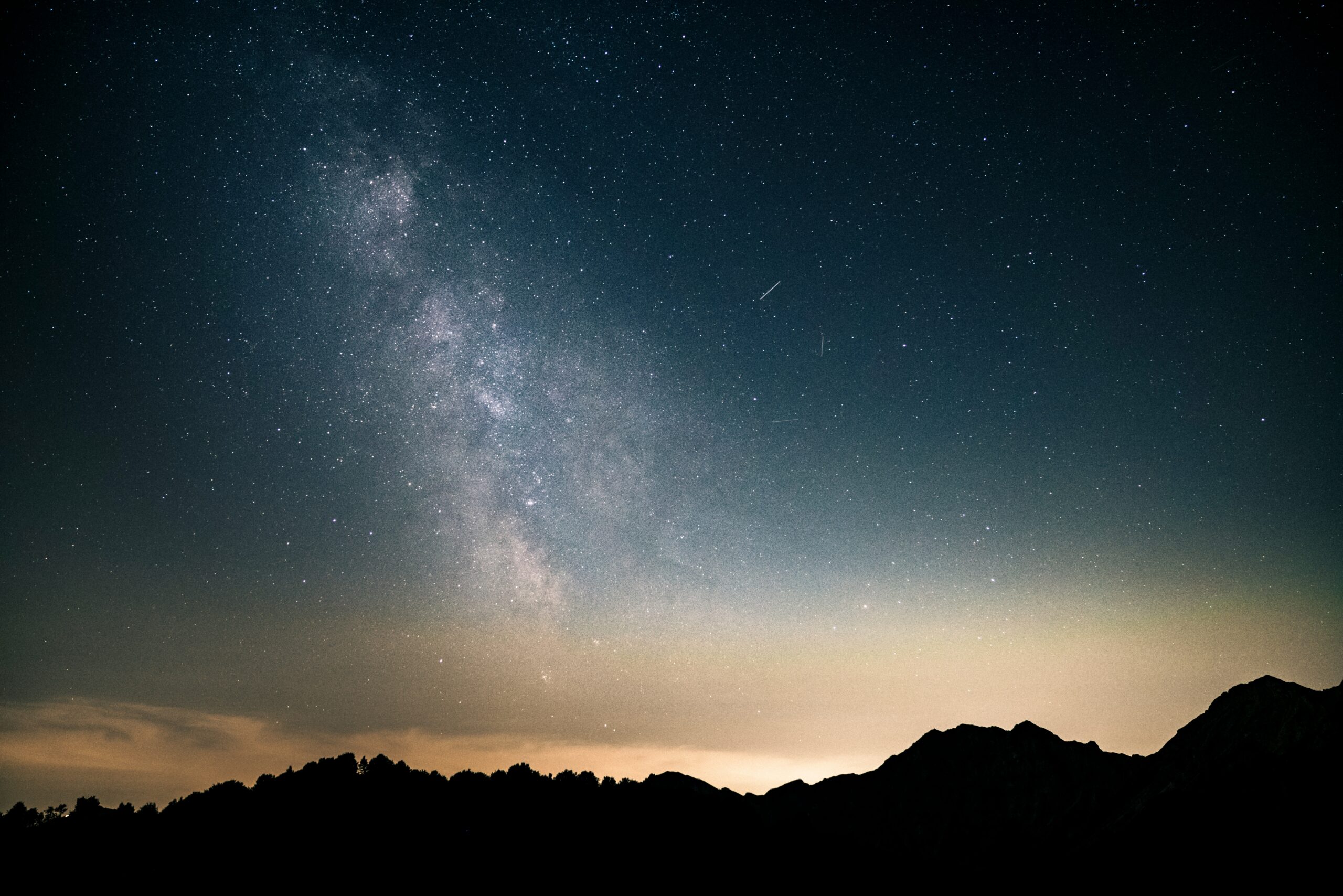
You’ve likely gazed at the night sky, tracing constellations, pondering the vastness. But have you ever considered that the cosmic ballet above might be more than just a spectacle for your eyes? Have you ever felt a profound sense of connection, a whisper of something grander, while adrift in starlight? This feeling, this intangible link, is the heart of an unfolding exploration: the connection between astronomy and consciousness. You might assume these are disparate fields – one observing the physical universe, the other delving into the subjective experience of being. Yet, as you delve deeper, you’ll discover a surprising and deeply resonant interplay, a dance between the external cosmos and your internal world that’s been hinted at for millennia and is now being re-examined with fresh scientific and philosophical lenses.
This journey isn’t about finding definitive answers etched in nebulae or definitive neurological scans for cosmic awareness. Instead, it’s about opening yourself to questions, about recognizing the limitations of our current understanding and embracing the potential for a more integrated view of reality. You’ll find yourself questioning the very nature of observation, the role of the observer in shaping what is observed, and how the immensity of the universe might inform, or even be informed by, the inner universe of your own mind.
Your consciousness, this enigmatic tapestry of thoughts, feelings, and perceptions, feels so intensely personal, so uniquely you. Yet, as you begin to explore the connection with astronomy, you’ll start to see your inner world not as an isolated island, but as a part of a much larger, interconnected system. This initial exploration is about recognizing the parallels, the surprising echoes between the macrocosm and the microcosm.
The Scale of Wonder: Immensity and Your Place in It
Think about the sheer scale of the universe. The billions of galaxies, each containing billions of stars, stretches your imagination to its breaking point. And at the center of this immensity, there you are. Your existence, a fleeting moment on a small planet orbiting an average star, might seem insignificant. But consider this: the very atoms that make up your body were forged in the hearts of stars. You are, quite literally, stardust. This fundamental truth is a powerful bridge between the cosmic and the personal.
Stardust: The Ancestry of Your Being
When you look up at the stars, you’re not just seeing distant lights; you’re glimpsing the cosmic forges where your fundamental building blocks were created. The carbon in your bones, the oxygen you breathe, the iron in your blood – all were once incandescent elements within dying stars. This realization shifts your perspective from mere observation to a profound sense of belonging. You are an intrinsic part of the universe’s ongoing story, not an outsider looking in.
The Anthropic Principle: A Universe Tuned for You?
When you consider the finely tuned constants of the universe – the precise values of physical laws that allow for stars to form, planets to coalesce, and life to emerge – you might find yourself wondering if it’s all just a cosmic accident. This is where the various forms of the anthropic principle come into play.
The Weak Anthropic Principle: A Selection Effect
The weak anthropic principle suggests that the universe’s properties must be compatible with the existence of conscious observers like you. In essence, if the universe were significantly different, you wouldn’t be here to observe it. This isn’t an explanation for why the universe is the way it is, but rather a statement about the conditions necessary for your existence. It implies that your presence as an observer is a selection effect.
The Strong Anthropic Principle: A Universe Conscious of Itself?
The strong anthropic principle takes a more provocative stance, suggesting that the universe must have properties that allow life to develop within it at some stage. This hints at a deeper teleology, a purpose or intention behind the cosmic design, perhaps suggesting a universe that is, in some way, striving towards consciousness itself. This is where the boundaries between physics and metaphysics begin to blur in your mind.
The Nature of Observation: More Than Meets the Eye
In astronomy, observation is key. You gather data, make measurements, and build models to understand the cosmos. But what if the act of observation itself, your very consciousness engaged in the process, plays a more significant role than you might initially assume? This is a territory explored by quantum physics and extended into philosophical considerations of consciousness.
The Observer Effect in Quantum Mechanics: A Universe in Flux
You’ve probably heard about quantum entanglement and superposition. What’s often overlooked is the role of the observer in these quantum phenomena. In the realm of the very small, the act of measuring a quantum system seems to influence its state, collapsing its wave function from a superposition of possibilities into a single, definite outcome.
Wave Function Collapse: A Decision Made by You?
When you observe a quantum particle, you are, in effect, forcing it to “choose” its state. Before your observation, it might exist in multiple states simultaneously. Your measurement, your conscious engagement with it, seems to bring it into a singular reality. This raises profound questions: Is consciousness the catalyst for collapsing possibilities into actualities? Does your mind play a role in shaping the very fabric of reality at its deepest level?
Schrödinger’s Cat: The Perils of Uncertainty
Schrödinger’s thought experiment of a cat in a box, simultaneously alive and dead until observed, beautifully illustrates the counterintuitive nature of quantum mechanics. Applied to you, it suggests that the universe might be in a state of flux, a sea of possibilities, until your conscious awareness brings it into being.
The Role of the Mind in Interpreting Cosmic Data
Even without delving into quantum mysteries, consider how your consciousness interprets astronomical data. Raw data from telescopes is just numbers and signals. It’s your mind, with its inherent biases, its learned frameworks, its capacity for pattern recognition and imagination, that transforms it into meaningful pictures, theories, and narratives about the universe.
Consciousness as a Filter and a Constructor
Your consciousness acts as both a filter and a constructor. It filters out what is irrelevant or overwhelming, and it constructs a coherent understanding of the universe based on the information it receives. The stories you tell about the cosmos, the scientific models you create, are deeply imprinted with the nature of your own consciousness.
The Subjectivity of Experience: A Universe Unique to You
Every astronomer, every individual gazing at the stars, experiences that vastness through their own unique lens of consciousness. Your emotional response to a supernova, your sense of awe at the Milky Way, are subjective experiences. Does this mean there isn’t an objective reality “out there,” or does it suggest that consciousness is the primary interface through which any perceived reality is accessed and understood?
In exploring the intriguing relationship between astronomy and consciousness, a fascinating article titled “The Cosmic Mind: How the Universe Influences Human Awareness” delves into the ways in which celestial phenomena may shape our understanding of consciousness. This piece examines various theories that connect the vastness of the universe with the intricacies of human thought and perception. For more insights on this captivating topic, you can read the full article here: The Cosmic Mind: How the Universe Influences Human Awareness.
Echoes in the Cosmos: Ancient Wisdom and Modern Speculations
The idea that the universe and consciousness are intertwined isn’t a new one. For millennia, spiritual traditions and philosophical schools have contemplated this very connection. You’ll find that many of their insights resonate remarkably with contemporary scientific inquiries.
Ancient Cosmologies and the Soul of the Universe
Many ancient cultures viewed the cosmos not as a dead, mechanistic entity, but as a living, breathing organism, imbued with a spirit or consciousness. Your engagement with these ancient perspectives can offer a valuable counterpoint to the purely materialistic view often prevalent today.
Indigenous Wisdom: The Sky as a Living Entity
Indigenous cultures across the globe have deeply intertwined their understanding of the cosmos with their spiritual beliefs and their own sense of being. For many, the stars, planets, and celestial events were not merely astronomical phenomena but were imbued with agency, intention, and consciousness, often acting as ancestors or deities.
Dreaming and the Celestial Realm
In many Indigenous traditions, a significant part of their understanding of the universe comes through altered states of consciousness, often referred to as “dreaming” or similar terms. This is not mere fantasy but a recognized mode of accessing knowledge, and the celestial realm is frequently a central part of these visionary journeys.
The Sacredness of Cosmic Cycles
The cyclical nature of celestial events – the phases of the moon, the procession of the seasons dictated by Earth’s orbit, the predictable movements of planets – were not just practical for navigation and agriculture, but were seen as reflections of cosmic order and divine intent. Your appreciation for these cycles can deepen your connection to the universe.
Eastern Philosophies: Consciousness as Fundamental Reality
Eastern philosophical traditions, particularly Hinduism and Buddhism, have long posited consciousness as the fundamental underlying reality of the universe, with the physical world as a manifestation or illusion arising from it.
Brahman and the Cosmic Consciousness
In Advaita Vedanta, the ultimate reality is Brahman, an undifferentiated, all-pervading consciousness. The individual soul, or Atman, is considered identical to Brahman, meaning your consciousness is, in essence, universal consciousness.
Maya: The Illusion of Separation
The concept of Maya in Hinduism refers to the illusion of separation and multiplicity that obscures the true, unified nature of reality. The physical universe, with its apparent divisions and independent objects, is seen as a product of Maya, a veil that your consciousness can, through spiritual practice, penetrate.
Modern Mysticism and Paranormal Phenomena: Uncharted Territories
In the fringe of scientific inquiry and popular fascination, you’ll encounter discussions of consciousness and the cosmos that venture into more speculative territories, often touching on what are sometimes termed paranormal phenomena. While these areas are often met with skepticism, they raise questions that, for some, highlight the potential limitations of our current understanding.
Extrasensory Perception (ESP) and Cosmic Communication
The idea that consciousness might extend beyond the physical body, allowing for phenomena like telepathy or precognition, is a persistent theme. Some speculate that if consciousness has such capabilities, then perhaps it can also be receptive to or even transmit information across vast cosmic distances.
Collective Consciousness and Universal Awareness
The concept of a “collective consciousness” suggests that minds are interconnected, forming a larger, unified field of awareness. If such a field exists, it’s not a stretch to imagine it extending beyond Earth’s atmosphere, potentially interacting with a cosmic consciousness or influencing events on a grander scale.
The Psychic Connection to the Stars
Anecdotal accounts and speculative theories suggest that certain individuals have experienced profound psychic connections to celestial events or have felt influenced by cosmic energies. While lacking robust scientific validation, these accounts point to a human desire to find deeper meaning in our relationship with the universe.
UFOs and the Question of Extraterrestrial Consciousness
The ongoing discussion around Unidentified Flying Objects (UFOs) and the possibility of extraterrestrial life naturally leads to questions about alien consciousness. If life exists elsewhere in the universe, it’s almost certain that it would have evolved some form of consciousness.
The Nature of Alien Consciousness: Beyond Human Frameworks
Imagining alien consciousness forces you to confront your anthropocentric biases. Would their consciousness be similar to yours? Or would it be so fundamentally different that it would be almost unrecognizable, perhaps even existing in dimensions or forms we cannot currently comprehend?
Interstellar Communication: A Consciousness Exchange?
If contact were to be made, it might not just be a technological exchange but a profound exchange of consciousness. Imagine trying to communicate with an intelligence whose very existence is shaped by a vastly different cosmic environment.
The Observer Creates Reality: A Quantum and Philosophical Dialogue
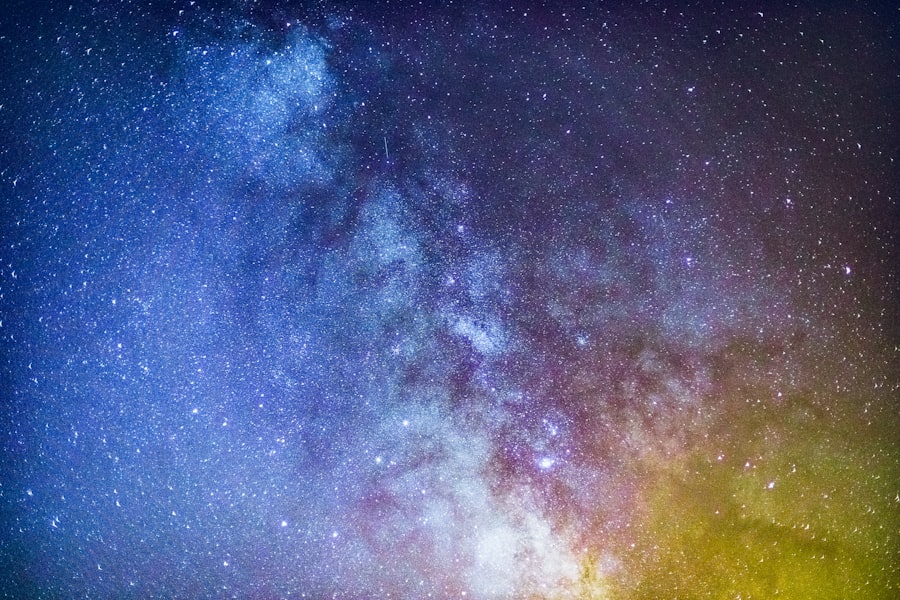
You’ve touched on this already, but let’s delve deeper into the profound implication that the observer isn’t merely a passive recipient of information, but an active participant in the creation of reality as you know it. This is where quantum mechanics and philosophical thought converge in intriguing ways.
Consciousness as the Cornerstone of Existence
The idea that consciousness is fundamental to reality, rather than an emergent property of complex matter, is a radical departure from traditional scientific materialism, but one that gains traction in certain philosophical and theoretical circles.
Idealism vs. Materialism: A Philosophical Divide
Materialism posits that only matter and energy are real, and consciousness arises from physical processes. Idealism, on the other hand, suggests that consciousness is primary, and the material world is a representation or manifestation of consciousness. Your exploration might lead you to question which perspective better encapsulates your own lived experience.
Panpsychism: Consciousness Everywhere
Panpsychism is a philosophical view suggesting that consciousness, or proto-consciousness, is a fundamental and ubiquitous feature of reality. In this view, even elementary particles possess some rudimentary form of consciousness, and more complex consciousnesses, like yours, emerge from the combination of these fundamental elements.
The Universe as a “Consciousness Field”
Some theories propose that the universe isn’t just a collection of physical entities, but a vast, interconnected field of consciousness. Your individual consciousness would be a localized expression or node within this universal field, capable of interacting with and influencing it.
The Measurement Problem and Your Role in Shaping Reality
The “measurement problem” in quantum mechanics is a persistent puzzle. It’s the question of how and why the act of observation or measurement causes a quantum system to transition from a state of superposition to a definite state.
The Role of Intentional Observation
Could it be that not just any observation, but a conscious, intentional observation is what triggers collapse? This elevates your mind from a mere detector to a fundamental shaper of physical reality.
The “Consciousness Causes Collapse” Hypothesis
This hypothesis, though controversial, directly addresses the measurement problem by proposing that it is the presence of consciousness itself that causes the wave function to collapse. This imbues your act of observation with immense significance.
The Implications for Free Will and Determinism
If your consciousness plays a role in determining the state of quantum reality, it could have profound implications for your understanding of free will. Are your choices truly free, or are they predetermined by the probabilistic nature of quantum events that your consciousness then solidifies?
Astronomical Phenomena as Catalysts for Consciousness Expansion

Beyond the theoretical, you can also explore how grand astronomical events and phenomena can act as profound catalysts for expanding your own consciousness, offering moments of deep insight and wonder.
The Dawn of a New Day: Cosmic Creation and Your Awakening
The grand narratives of cosmic creation, from the Big Bang to the formation of stars and planets, resonate with your own personal journey of awakening and self-discovery.
The Big Bang: The Primordial Consciousness Event?
While scientifically understood as a physical event, the immense energy and creation from the Big Bang can be interpreted metaphorically as a primordial explosion of consciousness, seeding the universe with potential.
Stellar Nurseries and the Birth of Worlds: A Reflection of Creative Potential
Regions of active star formation, like nebulae, are vast cosmic nurseries where new worlds are born. Observing these celestial birthing grounds can serve as a powerful metaphor for your own creative potential and the ongoing process of creation within and around you.
Cosmic Mysteries and the Limits of Human Understanding
The vast unknowns of the universe – dark matter, dark energy, the nature of black holes, the possibility of multiple universes – push the boundaries of your comprehension, forcing you to confront the limits of your current knowledge and embrace humility.
The Unknown as a Gateway to Deeper Awareness
These cosmic enigmas don’t just represent gaps in scientific knowledge; they represent areas where your consciousness must expand to even begin to grasp the possibilities. The very act of contemplating these mysteries can be a form of consciousness expansion.
The Awe-Inspiring Nature of the Unseen
The sheer magnitude of what remains unexplained in the universe can evoke a sense of awe. This awe isn’t just an emotional response; it’s a recognition of a reality far grander and more complex than your current understanding allows, hinting at deeper levels of existence.
The Quest for Understanding: A Cosmic Hunger
Your innate drive to understand the universe, your scientific curiosity, is itself a manifestation of consciousness seeking to explore and comprehend. This ongoing quest is the very engine of our progress, both scientifically and in terms of our awareness.
Recent discussions in the field of astronomy have begun to explore the intriguing relationship between the cosmos and human consciousness. A fascinating article on this topic can be found at My Cosmic Ventures, where researchers delve into how our understanding of the universe might influence our perception of reality and self-awareness. This intersection of science and philosophy opens up new avenues for contemplating the nature of existence and our place within the vast expanse of space.
Integrating the Cosmic and the Conscious: A Path Forward
| Category | Data/Metric |
|---|---|
| Astronomy | Number of known exoplanets |
| Astronomy | Age of the universe |
| Consciousness | Brain wave frequencies |
| Consciousness | Studies on meditation and brain activity |
The exploration of the connection between astronomy and consciousness isn’t an academic exercise in isolation. It’s a call to integrate these seemingly disparate realms into a more holistic understanding of yourself and your place in the cosmos.
Embracing a New Cosmology: Beyond Materialism
The journey of connecting astronomy and consciousness invites you to consider a cosmology that transcends pure materialism, one that acknowledges the potential significance of subjective experience and the interconnectedness of all things.
The “Conscious Universe” Perspective
This perspective views the universe not as a collection of inert objects, but as a dynamic, evolving system imbued with a form of consciousness, either universally present or emergent. Your role is that of an aware participant within this grand conscious tapestry.
The Spiritual and Scientific Synthesis
Many are seeking to bridge the perceived gap between science and spirituality. Exploring the astronomy-consciousness connection is a key part of this endeavor, suggesting that the profound questions posed by both fields might eventually lead to a unified understanding of reality.
Practical Applications and Personal Transformation
This exploration isn’t just about abstract ideas; it has the potential for profound personal transformation, influencing how you perceive yourself, your relationships, and your experience of life in general.
Cultivating Cosmic Awareness in Daily Life
By consciously connecting with astronomical cycles, by reflecting on stardust, by contemplating the vastness, you can cultivate a sense of cosmic awareness that can ground you, inspire you, and diminish feelings of isolation.
Mindfulness and Cosmic Contemplation
Practicing mindfulness, observing your thoughts and feelings without judgment, can be amplified by incorporating cosmic contemplation. Imagine applying that same mindful observation to the vastness of the universe; it can lead to a profound sense of peace and perspective.
The Ethics of a Cosmic Perspective
Understanding your interconnectedness with the universe can foster a deeper sense of ethical responsibility. Recognizing that the atoms in your body were forged in stars might lead to a greater appreciation for all life and a commitment to protecting the delicate balance of your home planet.
The Future of Research: Interdisciplinary Exploration
The future of understanding the astronomy-consciousness connection lies in fostering genuine interdisciplinary dialogue and research. This means encouraging physicists, astronomers, neuroscientists, philosophers, and psychologists to collaborate.
Bridging the Scientific and Experiential Divide
It requires developing methodologies that can bridge the gap between objective scientific measurement and subjective personal experience. How can we scientifically investigate the impact of cosmic wonder on human consciousness?
The Ongoing Human Quest for Meaning
Ultimately, your exploration of astronomy and consciousness is part of a timeless human quest for meaning. By looking out at the stars and looking within at your own mind, you are seeking to understand not just what the universe is, but what it means to be a conscious part of it. You are, in essence, exploring the most profound mystery of all: the mystery of existence itself.

You’ve Never Experienced “Now”
FAQs
What is astronomy?
Astronomy is the scientific study of celestial objects such as stars, planets, comets, and galaxies, as well as phenomena that originate outside the Earth’s atmosphere.
What is consciousness?
Consciousness refers to the state or quality of being aware of and able to perceive one’s surroundings, thoughts, and emotions. It is a complex and multifaceted aspect of human experience.
How are astronomy and consciousness related?
The relationship between astronomy and consciousness is a topic of philosophical and scientific inquiry. Some scholars argue that the study of the cosmos can inspire a sense of wonder and awe that can lead to a deeper understanding of consciousness and our place in the universe.
What are some theories about the connection between astronomy and consciousness?
Some theories suggest that the vastness and complexity of the universe can prompt contemplation about the nature of consciousness and the human mind. Others propose that the study of astronomical phenomena can provide insights into the fundamental nature of consciousness itself.
What are some practical applications of exploring the connection between astronomy and consciousness?
Exploring the connection between astronomy and consciousness can lead to a better understanding of human cognition, perception, and the nature of reality. It can also inspire new ways of thinking about our place in the universe and our relationship to the cosmos.