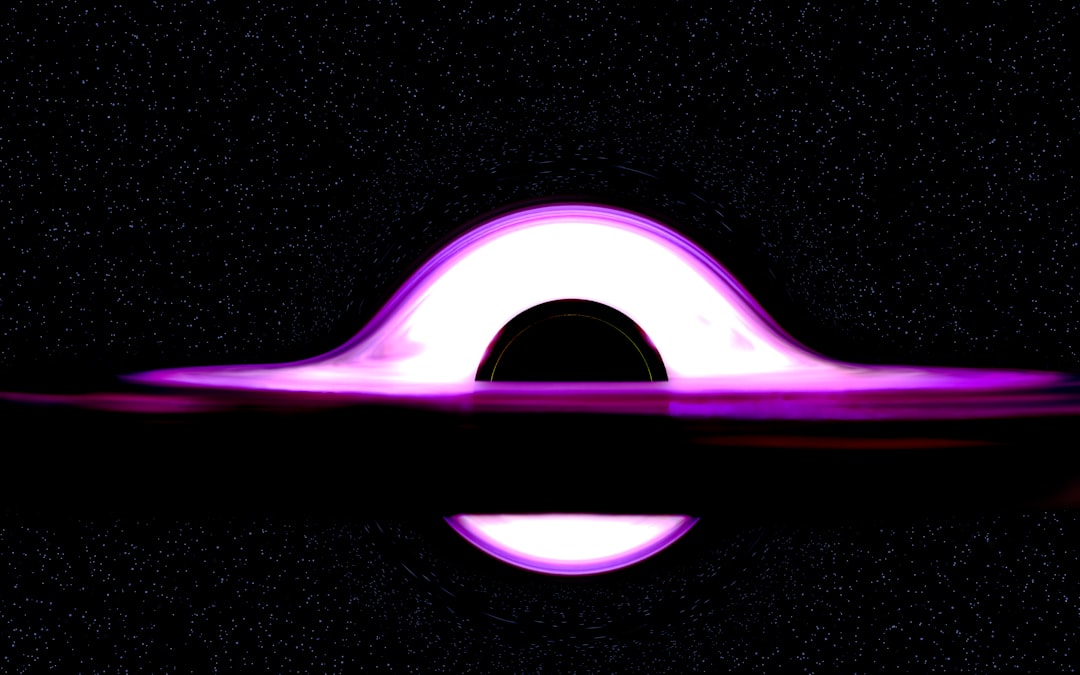
The event horizon of a black hole represents one of the most profound boundaries in the universe, a point of no return beyond which escape from gravitational pull is impossible. For centuries, this enigmatic region has been the subject of theoretical speculation and intense scientific inquiry. While direct exploration remains an insurmountable challenge with current technology, theoretical frameworks and indirect observational methods are paving a future path toward understanding this cosmic frontier. This article explores the evolving methodologies and anticipated advancements that may allow humanity to probe the secrets of the black hole event horizon.
The concept of the event horizon emerged from the solutions to Albert Einstein’s field equations in general relativity. Mathematically, it is defined as the boundary in spacetime beyond which events cannot affect an outside observer.
Schwarzschild’s Discovery and the Singular Point
The concept of a black hole’s event horizon has profound implications for our understanding of the universe, particularly in the context of future explorations in astrophysics. For those interested in delving deeper into this fascinating topic, a related article can be found at My Cosmic Ventures, which explores the latest theories and discoveries surrounding black holes and their event horizons. This resource offers insights into how these enigmatic phenomena could shape our understanding of space-time and the fundamental laws of physics in the years to come.
The Mathematical Definition of the Event Horizon
The first explicit description of an object with such a boundary came from Karl Schwarzschild in 1916. His solution to Einstein’s field equations for a non-rotating, uncharged black hole introduced a radius, now known as the Schwarzschild radius ($r_s$), which defines the event horizon. For a spherical object of mass M, $r_s = \frac{2GM}{c^2}$, where G is the gravitational constant and c is the speed of light. Objects at or within this radius are predicted to be unable to escape the gravitational pull, even traveling at the speed of light. This boundary is not a physical surface in the traditional sense but rather a geometrical consequence of extreme spacetime curvature.
The Nature of Singularities
Beyond the event horizon lies a singularity, a point where the predictions of general relativity break down. Here, spacetime curvature is thought to become infinite, and density is immeasurably high. The existence and nature of singularities are of significant theoretical interest, with ongoing research exploring quantum gravity theories to reconcile the seemingly contradictory concepts of infinite density and the fundamental discreteness of quantum mechanics.
FAQs
What is a black hole event horizon?
The event horizon of a black hole is the boundary surrounding the black hole beyond which nothing, not even light, can escape due to the immense gravitational pull.
How does the event horizon act as a future pointing path?
The event horizon of a black hole is often described as a future pointing path because any object or light that crosses the event horizon is inexorably drawn towards the singularity at the center of the black hole, leading towards the future of being consumed by the black hole.
Can anything escape from the event horizon of a black hole?
Once an object or light crosses the event horizon of a black hole, it cannot escape due to the extreme gravitational forces. This is a fundamental principle of black hole physics known as the “no-hair theorem.”
What happens at the event horizon of a black hole?
At the event horizon, the gravitational pull of the black hole becomes so strong that the escape velocity exceeds the speed of light. This means that anything crossing the event horizon is inevitably pulled towards the singularity at the center of the black hole.
How do scientists study black hole event horizons?
Scientists study black hole event horizons using a variety of methods, including observing the effects of gravitational lensing, analyzing the behavior of matter and radiation in the vicinity of black holes, and using simulations based on the principles of general relativity. The recent Event Horizon Telescope project also captured the first image of a black hole’s event horizon in 2019.