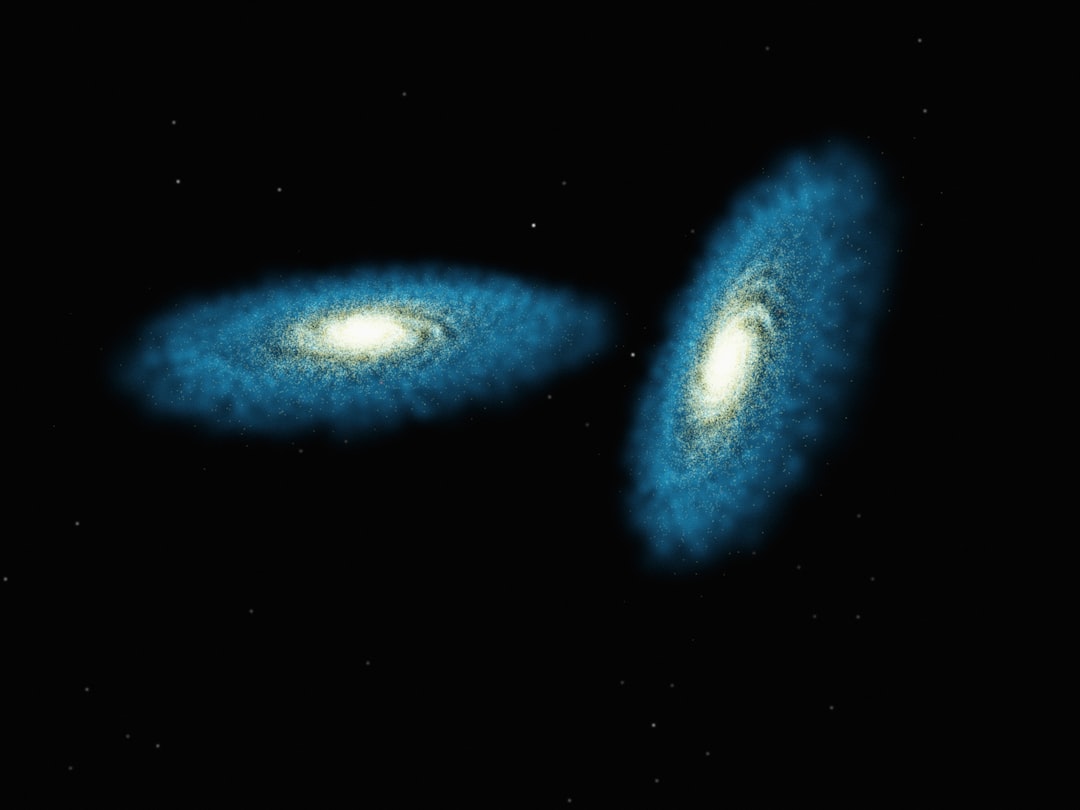
The universe, in its vastness and complexity, presents countless enigmas. Among these, the study of stellar populations stands as a cornerstone of modern astrophysics. It is through the analysis of groups of stars, rather than individual celestial bodies, that astronomers can unravel the developmental history of galaxies, understand the processes of star formation, and even probe the early universe. This field of study is akin to an anthropologist examining a society, not by focusing on one individual, but by observing the behaviors, demographics, and evolution of entire communities.
The Genesis of Stellar Population Studies
The concept of stellar populations did not emerge fully formed; it evolved through decades of astronomical observation and theoretical advancements. Early astronomers, while meticulously cataloging stars, often treated them as isolated entities. The realization that stars could be categorized into distinct groups with shared characteristics marked a significant paradigm shift.
Early Categorization and Spectroscopic Analysis
One of the earliest and most impactful steps in understanding stellar populations involved the development of stellar classification systems. Pioneers like Annie Jump Cannon at Harvard College Observatory, by meticulously analyzing photographic plates of stellar spectra, established a sequence of spectral types (OBAFGKM). This classification, initially based on the strength of hydrogen lines, later proved to correlate directly with stellar surface temperature. The spectral fingerprint of a star, therefore, became a crucial diagnostic tool.
The Hertzsprung-Russell Diagram: A Fundamental Tool
While spectral classification provided a snapshot of a star’s surface properties, a more comprehensive understanding of stellar evolution required relating luminosity to temperature. This was achieved by Ejnar Hertzsprung and Henry Norris Russell, who independently developed the Hertzsprung-Russell (HR) diagram in the early 20th century. Plotting stars by their absolute magnitude (intrinsic brightness) against their spectral type (or effective temperature) revealed distinct groupings, such as the main sequence, red giants, and white dwarfs. This diagram acts as a cosmic evolutionary track, allowing astronomers to infer the age and evolutionary stage of individual stars and, by extension, stellar populations. One can imagine the HR diagram as a sociological survey, where the distribution of individuals on the graph reveals underlying demographics and life cycles.
Distinguishing Stellar Populations: A Tale of Two Generations
The most significant distinction made in stellar population studies is the division into Population I and Population II stars. This dichotomy, initially proposed by Walter Baade in 1944 based on observations of the Andromeda galaxy and our own Milky Way, revolutionized our understanding of Galactic evolution.
Population I: The Young and Metal-Rich
Population I stars are typically found in the spiral arms of disk galaxies, often nestled within regions of active star formation. These stars are characterized by their relatively young ages, high metallicity (astronomical term for the abundance of elements heavier than hydrogen and helium), and a propensity to be blue and luminous (for massive stars) or yellow and medium-sized (like our Sun). Their orbits within the galaxy are generally circular and confined to the galactic plane. The Sun itself is a Population I star.
Characteristics of Population I Stars:
- Age: Relatively young, ranging from millions to a few billion years.
- Metallicity: High, indicating they formed from gas enriched by previous generations of stars.
- Location: Found in galactic disks, spiral arms, and open clusters.
- Kinematics: Generally circular orbits, low velocity dispersion.
- Examples: Our Sun, Rigel, Vega.
Population II: The Old and Metal-Poor
In stark contrast, Population II stars are ancient residents of the universe. They are found predominantly in the galactic halo, in globular clusters, and in the central bulge of galaxies. These stars are characterized by their old ages, low metallicity, and a tendency to be red and less luminous than their Population I counterparts. Their orbits are often eccentric and highly inclined to the galactic plane, reflecting the chaotic environment of the early universe from which they formed.
Characteristics of Population II Stars:
- Age: Very old, typically 10 billion years or more.
- Metallicity: Low, indicating they formed from nearly pristine gas from the Big Bang.
- Location: Found in galactic halos, globular clusters, and the central galactic bulge.
- Kinematics: Eccentric orbits, high velocity dispersion.
- Examples: Stars in Omega Centauri (a prominent globular cluster).
Population III: The Hypothetical First Stars
While direct observation of Population III stars remains elusive, theoretical models predict their existence. These would be the very first stars to form in the universe, originating from the primordial gas composed almost exclusively of hydrogen and helium. Consequently, they would possess virtually no metals. Their immense masses and extreme temperatures would have led to very short, but incredibly luminous, lifetimes, playing a crucial role in reionizing the early universe and seeding it with the first heavy elements. Detecting their faint cosmic echoes is a major goal of future astronomical missions.
Formation and Evolution of Stellar Populations
The distinct characteristics of stellar populations are not merely descriptive labels; they are profound indicators of fundamental astrophysical processes, particularly star formation and galactic evolution. The existence of these populations is a direct consequence of the universe’s chemical enrichment over cosmic time.
The Role of Chemical Enrichment
The primordial universe, immediately after the Big Bang, contained almost exclusively hydrogen and helium, with trace amounts of lithium. The first stars, the hypothetical Population III, forged heavier elements through nuclear fusion in their cores. Upon their demise, often in spectacular supernova explosions, these heavy elements (astronomers refer to all elements heavier than helium as “metals”) were dispersed into the interstellar medium. Subsequent generations of stars, like Population II, formed from this slightly enriched gas, inheriting a small but noticeable amount of metals. This process continued, with each generation of stars contributing to the increasing metallicity of the interstellar medium. Population I stars, therefore, are born from gas that has been enriched by many previous cycles of star formation and death, leading to their comparatively high metallicity. One can envision this as a cosmic recycling program, where the ashes of one generation become the building blocks for the next.
Star Formation Mechanisms and Environments
The environments in which stars form play a critical role in shaping their characteristics and thus, the properties of stellar populations. Population I stars typically form in dense molecular clouds within galactic disks, where gravitationally unstable clumps of gas and dust collapse under their own weight. These regions are characterized by ongoing star formation, evidenced by the presence of young, massive, blue stars and associated nebulae.
Conversely, Population II stars formed in the early universe, likely from more chaotic and turbulent gas clumps that eventually coalesced to form the galactic halo and globular clusters. The mechanisms of star formation in these pristine environments likely differed from those observed today, potentially favoring the formation of massive stars due to the lack of cooling agents provided by metals.
Stellar Populations as Probes of Galactic History
The study of stellar populations is not merely an exercise in classification; it provides a powerful toolkit for reconstructing the history of galaxies. By analyzing the distribution, kinematics, and chemical composition of different stellar populations within a galaxy, astronomers can piece together its formation, merger history, and evolutionary pathways.
Unraveling the Milky Way’s Past
Our own Milky Way galaxy serves as an excellent laboratory for stellar population studies. The distinct populations within it offer direct evidence of its multi-stage formation. The thin disk, where the Sun resides, is dominated by young to intermediate-age Population I stars, indicating ongoing star formation and a relatively quiescent past. The thick disk, an older and kinematically hotter component, contains a mix of Population I and older Population II stars, suggesting an earlier period of formation or interaction. The halo, populated almost exclusively by ancient, metal-poor Population II stars within its globular clusters and diffuse field stars, is a remnant of the galaxy’s initial collapse and subsequent accretion of smaller dwarf galaxies. The central bulge also presents a complex mix of stellar populations, hinting at a rapid and violent formation phase.
Tracing Galaxy Mergers and Accretion Events
When galaxies merge or accrete smaller satellite galaxies, the distinct stellar populations of the incoming galaxy become incorporated into the host. By identifying spatially and kinematically distinct stellar streams or overdensities of stars with anomalous chemical compositions, astronomers can detect the fossil remnants of past merger events. For example, the Gaia mission has revolutionized our understanding of the Milky Way’s accretion history by revealing numerous stellar streams and substructures that are the debris of disrupted dwarf galaxies. These stellar “fossils” act as galactic archaeologists, allowing us to uncover the ancient collisions that shaped the galaxies we see today.
Advances in Stellar Population Research
The field of stellar population studies is constantly evolving, driven by technological advancements in telescopes, instrumentation, and computational power. New observational capabilities are pushing the boundaries of what is possible, allowing astronomers to probe increasingly distant and faint stellar populations.
Large-Scale Spectroscopic Surveys
Surveys such as the Sloan Digital Sky Survey (SDSS), the Apache Point Observatory Galactic Evolution Experiment (APOGEE), and the Gaia-ESO Survey have provided unprecedented amounts of spectroscopic data for millions of stars. These surveys enable highly precise measurements of stellar radial velocities, metallicities, and elemental abundances, allowing for detailed mapping of galactic substructure and the chemical evolution of the Milky Way and other galaxies. The sheer volume of data is like an aerial reconnaissance photograph, revealing intricate patterns that were previously hidden.
High-Resolution Imaging and Adaptive Optics
Adaptive optics (AO) systems on ground-based telescopes, coupled with high-resolution imaging capabilities from space telescopes like Hubble and the James Webb Space Telescope (JWST), allow astronomers to resolve individual stars in crowded galactic environments, including the cores of globular clusters and nearby galaxies. This enables the construction of highly detailed HR diagrams, providing accurate age and metallicity estimates for remotely located stellar populations. JWST, with its infrared capabilities, is particularly adept at peering through dust to observe nascent star clusters and potentially even distant Population III candidates.
Computational Modeling and Simulations
Alongside observational efforts, computational modeling and simulations play a crucial role. N-body simulations track the gravitational interactions of billions of particles, allowing researchers to model the formation and evolution of galaxies and the dynamics of their stellar populations. Chemodynamical simulations combine gravitational dynamics with chemical evolution physics, providing a more complete picture of how galaxies build up their stellar content and metallicity gradients over time. These simulations act as time machines, allowing astronomers to rewind and fast-forward galactic evolution, testing different hypotheses about galaxy formation.
The study of stellar populations is a vibrant and essential branch of astrophysics. By classifying stars into distinct groups based on their age, metallicity, and spatial distribution, astronomers are able to reconstruct the intricate cosmic narratives of star formation, galactic evolution, and the chemical enrichment of the universe. From the earliest, elusive Population III stars to the teeming, metal-rich inhabitants of galactic disks, each stellar population offers unique insights into the grand tapestry of cosmic history, revealing that stars are not merely points of light, but vital historical markers in the ongoing saga of the cosmos.
FAQs
What are stellar populations?
Stellar populations refer to groups of stars that share similar properties such as age, chemical composition, and location within a galaxy. They help astronomers understand the formation and evolution of galaxies.
How are stellar populations classified?
Stellar populations are generally classified into Population I, Population II, and sometimes Population III stars. Population I stars are younger and metal-rich, Population II stars are older and metal-poor, and Population III stars are hypothetical, very early stars with virtually no metals.
Why is the study of stellar populations important?
Studying stellar populations allows scientists to trace the history of star formation, chemical enrichment, and the dynamic processes within galaxies. It provides insights into the age and evolution of different galactic components.
What methods are used to study stellar populations?
Astronomers use techniques such as photometry, spectroscopy, and color-magnitude diagrams to analyze the properties of stars in a population. These methods help determine ages, metallicities, and distances of stars.
What is the difference between Population I and Population II stars?
Population I stars are relatively young, found mostly in the disk of galaxies, and have higher metal content. Population II stars are older, located mainly in the halo and bulge of galaxies, and have lower metal content, indicating they formed earlier in the universe.