The Ethereal Art of Observing the Quantum World
Quantum mechanics, with its inherent strangeness and counter-intuitive predictions, has long challenged our classical understanding of reality. At the heart of this enigma lies the act of measurement. Unlike in the macroscopic world, where observation often merely reveals a pre-existing state, in the quantum realm, measurement fundamentally alters the system being observed. This interaction, the “collapse of the wave function,” is a cornerstone of quantum theory, yet it remains a subject of intense theoretical and experimental investigation. Emerging from this ongoing exploration is the fascinating concept of weak measurement and its associated phenomenon, the weak value. This article delves into the intricacies of exploring quantum measurement, shedding light on the profound insights offered by weak value phenomena.
Quantum measurement and the concept of weak values have garnered significant attention in recent years, particularly in their implications for understanding quantum mechanics. For those interested in exploring this topic further, a related article can be found at My Cosmic Ventures, which delves into the nuances of weak measurement and its potential applications in quantum information theory. This article provides a comprehensive overview of how weak values can challenge traditional notions of measurement in quantum systems, offering insights into the fundamental nature of reality itself.
Unveiling the Foundations of Quantum Measurement
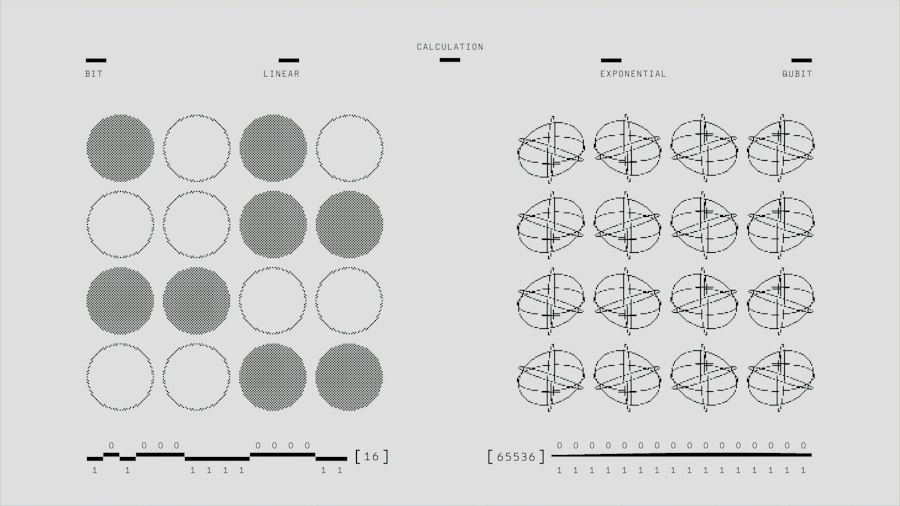
The transition from the probabilistic descriptions of quantum mechanics to the deterministic outcomes we experience in the classical world is mediated by the measurement process. Before measurement, a quantum system, such as an electron or a photon, exists in a superposition of states. This means it simultaneously possesses multiple properties, for instance, being in multiple locations or having multiple spin orientations. The act of measurement, according to the standard Copenhagen interpretation, forces the system to “choose” one of these superimposed states, a process often described as wave function collapse. This collapse is non-unitary and inherently probabilistic, governed by the Born rule, which relates the probability of obtaining a particular outcome to the square of the amplitude of the corresponding wave function.
The Heisenberg Uncertainty Principle and Its Measurement Implications
A fundamental constraint on quantum measurement is the Heisenberg Uncertainty Principle. This principle states that certain pairs of physical properties, such as position and momentum, or energy and time, cannot be simultaneously known with arbitrary precision. The more precisely one property is measured, the less precisely the other can be known. This is not a limitation of our measuring instruments, but rather an intrinsic property of quantum systems themselves. In the context of measurement, the act of precisely determining a particle’s position, for example, inevitably introduces a significant uncertainty in its momentum, and vice versa. This inherent trade-off underscores the active role measurement plays in shaping the quantum reality we perceive.
The Paradox of Observation and the Role of the Observer
The notion of an “observer” in quantum mechanics has been a source of philosophical debate. Does measurement require a conscious agent, or is any interaction with a macroscopic device sufficient? The prevailing view is that any irreversible interaction with a macroscopic system that leads to a definite outcome constitutes a measurement. However, the very act of defining what constitutes a “measurement” and how the transition from quantum superposition to classical definiteness occurs remains an active area of research, with various interpretations of quantum mechanics offering different perspectives. This ongoing debate highlights the profound philosophical implications of quantum measurement.
The Dawn of Weak Measurement: A Gentle Touch on Quantum Reality

Traditional quantum measurements are typically “strong” measurements, leading to a definite outcome and a complete collapse of the wave function. This process often destroys the very superposition that makes quantum mechanics so unique. Weak measurement, in contrast, represents a paradigm shift. It involves interacting with a quantum system in such a way that the disturbance is minimized, leaving the system in a state that is only weakly disturbed, or “weakly collapsed.” This allows for the extraction of information without completely destroying the quantum superposition.
The Formalism of Weak Measurement
The mathematical framework for weak measurement involves coupling the quantum system to a “pointer” observable. This pointer is typically a macroscopic variable, like the position of a needle on a dial. The interaction is designed to be weak, meaning the correlation between the quantum system’s property and the pointer’s displacement is small. Crucially, a second, post-selection measurement is then performed on the quantum system. This post-selection is key to the weak value phenomenon. By selecting for specific outcomes of the post-selection measurement, one can deduce information about the system’s state before the weak interaction, averaged over all possible outcomes of the initial measurement.
The Contrast with Strong Measurements
The distinction between weak and strong measurements lies in the degree of interaction and the information gained. A strong measurement yields a definite outcome with high certainty, but at the cost of significantly perturbing the system, effectively destroying its initial state. A weak measurement, on the other hand, provides less definitive information about any single measurement event. However, when combined with post-selection and repeated over many trials, it can reveal subtle properties of the quantum system that would be inaccessible through strong measurements. The information gained is averaged over a sub-ensemble of the system defined by the post-selection criteria.
The Enigmatic Weak Value: Amplifying the Unseen
The weak value, $A_w$, of an observable $A$ for a quantum system prepared in an initial state $|\psi_i\rangle$ and post-selected in a final state $|\psi_f\rangle$ is defined as:
$$
A_w = \frac{\langle \psi_f | A | \psi_i \rangle}{\langle \psi_f | \psi_i \rangle}
$$
This quantity, which is a ratio of expectation values, can exhibit peculiar behavior. Unlike the expectation value of an observable in a single state, which is always real and bounded by the eigenvalues of the observable, the weak value can be complex and can lie outside the range of possible outcomes for a strong measurement. This “anomalous” behavior is a direct consequence of the weak interaction and the specific choice of pre- and post-selection states.
Interpreting the Anomalous Nature of Weak Values
The fact that weak values can be larger than the maximum eigenvalue of an observable might seem paradoxical. However, it’s crucial to remember that the weak value is an average over a specific sub-ensemble of states defined by the post-selection. It does not represent a possible outcome of a single strong measurement. Instead, it provides information about how the system would have behaved had it been measured in a particular way, conditioned on a subsequent measurement. This counterfactual aspect is a hallmark of weak value phenomena and offers a new perspective on quantum probabilities.
Weak Values as Amplifiers of Quantum Effects
The remarkable property of weak values is their ability to amplify tiny quantum effects. Because the denominator $\langle \psi_f | \psi_i \rangle$ can be very small when the initial and final states are nearly orthogonal, even a small numerator $\langle \psi_f | A | \psi_i \rangle$ can lead to a dramatically large weak value. This amplification makes weak measurements powerful tools for detecting extremely subtle influences on quantum systems, such as the effect of a single photon on a mirror or the tiny phase shifts induced by external fields. This sensitivity is revolutionizing fields like quantum sensing and metrology.
In exploring the intriguing concept of quantum measurement and weak values, one can gain deeper insights by examining related discussions in the field. A particularly enlightening article can be found at this link, which delves into the implications of weak measurement techniques and their applications in quantum mechanics. Understanding these principles not only enhances our grasp of quantum phenomena but also opens up new avenues for research and experimentation.
Applications and Implications of Weak Value Phenomena
| Metric | Description | Typical Value / Range | Unit |
|---|---|---|---|
| Weak Value | Measured value obtained from a weak measurement, can be outside eigenvalue spectrum | Varies, can be complex or exceed eigenvalue bounds | Dimensionless or system-dependent |
| Pre-selection State | Initial quantum state before weak measurement | Varies (e.g., |ψ⟩) | Quantum state vector |
| Post-selection State | Final quantum state after weak measurement | Varies (e.g., |φ⟩) | Quantum state vector |
| Measurement Strength | Degree of interaction between system and measuring device | Typically ≪ 1 for weak measurements | Dimensionless |
| Pointer Shift | Shift in measuring device pointer proportional to weak value | Small, proportional to measurement strength and weak value | Depends on apparatus (e.g., position units) |
| Signal-to-Noise Ratio (SNR) | Ratio of signal strength to noise in weak measurement | Varies, often low due to weak interaction | Dimensionless |
| Post-selection Probability | Probability of successful post-selection outcome | Typically low in weak value amplification experiments | Probability (0 to 1) |
The exploration of weak value phenomena has opened up a wealth of new experimental possibilities and theoretical insights across various domains of physics. Their ability to extract information with minimal disturbance and to amplify subtle quantum effects makes them invaluable for pushing the boundaries of scientific understanding and technological innovation.
Precision Measurement and Quantum Sensing
The exquisite sensitivity of weak value measurements makes them ideal for developing ultra-precise sensors. For instance, researchers have used weak measurements to detect minute changes in magnetic fields, gravitational forces, and even the presence of single molecules. By amplifying the response of a quantum system to an external stimulus, weak measurements can achieve sensitivities far beyond what is possible with classical measurement techniques. This has profound implications for fields ranging from medical diagnostics to fundamental physics experiments. For example, experiments have demonstrated the ability to measure the displacement of a nanomechanical resonator induced by a single photon, a feat impossible with strong measurements.
Fundamental Tests of Quantum Mechanics
Weak value phenomena provide novel avenues for probing the foundational principles of quantum mechanics. They offer new ways to test the complementarity principle, which states that mutually exclusive properties of a quantum system cannot be simultaneously observed. By performing weak measurements of conjugate variables, researchers can explore the trade-offs between the information gained about these properties. Furthermore, weak measurements can be used to investigate the measurement problem itself, offering insights into the process of wave function collapse and the role of decoherence. Experiments have been designed to directly measure the “which-path” information in a double-slit experiment using weak measurements, showing how this information, even when weakly obtained, destroys interference.
Quantum Computing and Information Processing
The ability of weak measurements to extract information with minimal disturbance is also relevant to the development of quantum computing. In quantum computing, maintaining the delicate quantum states of qubits is paramount. Strong measurements can destroy these states, leading to errors. Weak measurements, by contrast, can be used to monitor the state of a quantum computer without causing significant decoherence, allowing for error detection and correction. Moreover, the unique properties of weak values themselves could potentially be harnessed for new quantum algorithms and information processing schemes that leverage the amplified quantum effects.
Challenges and Future Directions in Quantum Measurement
Despite the remarkable progress in understanding and applying weak value phenomena, several challenges and exciting future directions remain in the exploration of quantum measurement. The theoretical and experimental landscape is constantly evolving, promising further breakthroughs.
Addressing Theoretical Nuances and Interpretational Debates
While the mathematical formalism of weak measurement and weak values is well-established, the interpretation of these results continues to be a subject of discussion. The counterfactual nature of weak values and their potential to exceed classical bounds raise profound questions about the nature of quantum reality and the role of information. Further theoretical work is needed to fully reconcile these phenomena with different interpretations of quantum mechanics, such as the many-worlds interpretation or Bohmian mechanics, and to explore their implications for our understanding of causality and determinism at the quantum level.
Advancing Experimental Techniques and Controlling Quantum Systems
Translating theoretical insights into robust experimental realizations of weak measurements is an ongoing endeavor. Developing more precise control over quantum systems, reducing environmental noise, and improving the efficiency of post-selection are crucial for pushing the limits of weak value applications. Future research will likely focus on developing more sophisticated entanglement resources, implementing more advanced feedback control mechanisms, and exploring new quantum platforms, such as superconducting circuits and topological qubits, for highly sensitive weak measurements. The miniaturization and integration of weak measurement devices for practical applications also represent a significant engineering challenge.
Exploring New Quantum Phenomena Through Weak Measurement
The journey into the realm of quantum measurement is far from over. The development of weak value techniques is likely to unlock access to entirely new quantum phenomena that are currently inaccessible. Researchers are exploring the possibility of using weak measurements to study quantum criticality, to probe the entanglement properties of complex quantum systems, and to investigate the interface between quantum mechanics and gravity. The potential for weak value phenomena to reveal subtle quantum correlations and emergent behaviors in many-body systems is immense, promising to deepen our understanding of the fundamental laws of nature. The ongoing exploration of quantum measurement, particularly through the lens of weak value phenomena, continues to reveal the astonishing and profound nature of the quantum world.

Physicists Just Measured a Negative Second.
FAQs
What is a weak value in quantum measurement?
A weak value in quantum measurement is a concept that arises when a quantum system is subjected to a weak measurement, which involves obtaining partial information about the system without significantly disturbing it. The weak value is a complex number that characterizes the system’s behavior during the weak measurement process.
How is a weak value different from an eigenvalue in quantum mechanics?
A weak value differs from an eigenvalue in quantum mechanics in that an eigenvalue corresponds to a measurable quantity of a quantum system that can be obtained through a standard measurement, while a weak value is a complex number that provides information about the system’s behavior during a weak measurement process.
What is the significance of weak values in quantum mechanics?
Weak values in quantum mechanics have significance in various aspects of quantum theory, such as understanding the nature of quantum measurements, exploring quantum paradoxes, and investigating fundamental concepts like wave-particle duality. They offer insights into the behavior of quantum systems under weak measurements that are not accessible through standard measurements.
How are weak values experimentally determined in quantum systems?
Weak values in quantum systems are experimentally determined by performing a weak measurement on the system, followed by a post-selection process where the system is filtered based on a specific final state. By analyzing the outcomes of weak measurements on a large number of identically prepared systems, researchers can extract the weak values associated with the system.
What are some applications of weak values in quantum information processing?
Weak values in quantum information processing have applications in areas such as quantum metrology, quantum error correction, and quantum state tomography. They can be used to enhance the precision of measurements, improve the reliability of quantum computations, and reconstruct unknown quantum states with high accuracy.