
The Elusive Time of Light: Unpacking Photon Group Delay
The study of light, particularly its quantum nature, has consistently pushed the boundaries of our understanding of the universe. Within this vibrant field of quantum optics, the concept of photon group delay emerges as a fascinating and crucial parameter. It describes the time it takes for a wave packet, composed of many photons with slightly different frequencies, to propagate through a medium. Unlike the phase velocity, which describes the speed of a single frequency component, the group velocity, and consequently the group delay, characterizes the speed at which the overall envelope of the wave packet travels. This seemingly simple notion becomes profoundly complex and experimentally significant when delving into the quantum realm, where individual photons interact with matter and with each other. Understanding and precisely measuring photon group delay is not merely an academic exercise; it is fundamental to advancing technologies ranging from optical communications and quantum computing to metrology and fundamental physics experiments.
In exploring the fascinating phenomena of group delay in photon experiments, one can gain deeper insights by referring to a related article that discusses the implications of light manipulation in various scientific fields. This article elaborates on the advancements in photonics and their potential applications in telecommunications and quantum computing. To read more about these intriguing developments, visit the following link: My Cosmic Ventures.
Foundations of Group Delay: From Classical Waves to Quantum Packets
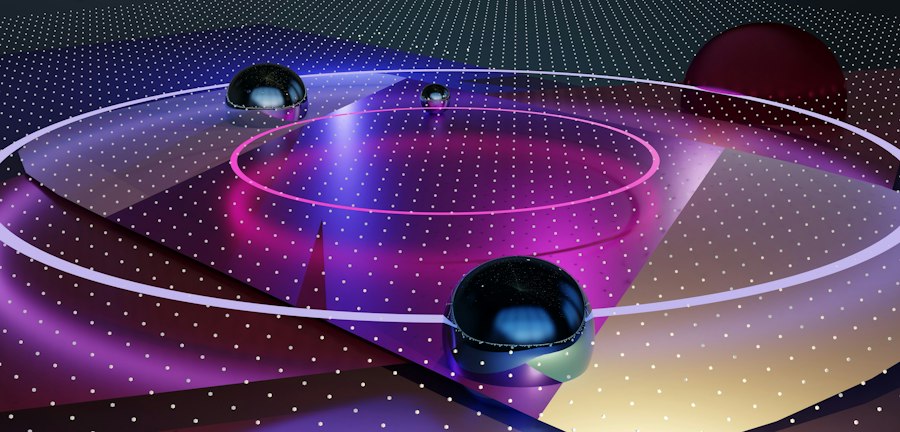
The concept of group delay has its roots in classical wave physics, where it was developed to describe the propagation of modulated waves. When a wave is modulated, meaning its amplitude or phase varies over time or space, it can be represented as a superposition of individual plane waves of different frequencies. The speed at which this modulation envelope, or wave packet, travels is the group velocity, and the time it takes for this packet to traverse a distance is the group delay. This distinction between phase and group velocity becomes apparent in dispersive media, where the refractive index, and hence the phase velocity, depends on the frequency of light.
The Dispersive Realm: Where Velocities Diverge
In a dispersive medium, different frequency components of a light wave travel at different speeds. This phenomenon arises from the interaction of the electromagnetic field with the material’s constituent atoms and molecules. The electrons within the material respond to the oscillating electric field of the light, absorbing and re-emitting photons. This process is frequency-dependent, leading to variations in the effective refractive index experienced by different wavelengths. Consequently, a wave packet, which is a collection of photons with a range of frequencies, will spread out as it propagates through a dispersive medium. The leading and trailing edges of the packet will travel at slightly different speeds, causing the pulse to broaden. The group velocity is the velocity of the peak of this broadened pulse, and the group delay is the time taken for this peak to travel a specific distance.
From Classical Packets to Quantum Photons: A Shift in Perspective
While classical physics provides the foundational framework for understanding group delay, its application in quantum optics necessitates a quantum mechanical interpretation. In quantum optics, light is quantized into discrete packets of energy called photons. A coherent state of light, often used in experiments, can be thought of as a collection of photons that collectively behave like a wave packet. When such a packet interacts with a material medium, the group delay experienced by this quantum wave packet is still dictated by the dispersive properties of the medium. However, the quantum nature of light introduces additional nuances. Instead of simply tracking the collective behavior of classical waves, researchers are concerned with the propagation of individual photons that constitute the wave packet. The statistical properties of these photons, their coherence, and their entanglement can all be influenced by the group delay and the dispersive interactions.
Experimental Manifestations: Observing the Time Lag
The experimental observation of group delay is crucial for validating theoretical models and for probing the quantum properties of light-matter interactions. Techniques such as interferometry and time-resolved spectroscopy are commonly employed. In interferometric setups, the difference in arrival times of two light pulses, one that has traversed a sample and another that has not, can be precisely measured. This time difference directly corresponds to the group delay. Time-resolved measurements, on the other hand, use ultrafast laser pulses to “pump” a material and then probe its response with another ultrafast pulse. By varying the time delay between these pulses, researchers can track the evolution of the material’s properties and infer the group delay experienced by the probe light. These experiments provide direct evidence of the time lag introduced by the medium, allowing for detailed characterization of its optical properties.
The Quantum Lens: Group Delay in Photonic Systems

The transition to quantum optics brings a fresh perspective to the concept of group delay. Here, we are not just observing the bulk behavior of light but also the intricate dynamics of individual photons and their collective quantum states. This quantum lens reveals how group delay can be manipulated and exploited for novel applications, while also presenting new challenges in its precise measurement and interpretation.
Entanglement and Group Delay: A Delicate Dance
One of the most profound implications of group delay in quantum optics concerns entangled photon pairs. Entanglement, a cornerstone of quantum mechanics, describes a correlation between two or more particles, such that their fates are intertwined, regardless of the distance separating them. When entangled photon pairs are generated, for instance, through spontaneous parametric down-conversion (SPDC), and then sent through different dispersive media, their arrival times at detectors can be significantly affected by the respective group delays. If the photons are entangled in time, meaning their arrival times are correlated, then passing them through media with different dispersive properties will lead to a change in the nature of this temporal correlation. Researchers can utilize this phenomenon to study the fragility of entanglement under dispersion or, conversely, to engineer specific temporal correlations for quantum information processing tasks. For example, a carefully controlled group delay can be used to “stretch” or “compress” the temporal overlap between entangled photons, influencing the visibility of interference fringes in quantum interference experiments.
Quantum Memories and Group Delay: Storing the Light
The development of quantum memories, devices capable of storing quantum information carried by photons, is a critical step towards realizing scalable quantum networks and computing. Group delay plays a pivotal role in this endeavor. When a photon enters a quantum memory material, its propagation is intentionally slowed down to enable its storage. This slowing is often achieved by exploiting electromagnetically induced transparency (EIT) or other resonant interactions within the medium, which lead to significant group velocity reduction. The group delay in this context is not just a measure of transit time but a direct indicator of how effectively the photon’s quantum state is being held within the memory. Precise control over this group delay is paramount to ensure faithful storage and retrieval of the quantum information without introducing decoherence or other detrimental effects. Variations in group delay across different parts of the memory or for different frequency components of the stored photon could lead to distortion and loss of quantum information.
Coherence and Group Delay: Preserving the Quantum Signal
The coherence of a quantum state is a measure of its ability to exhibit wave-like interference phenomena. For quantum information processing, maintaining coherence is essential. Group delay, especially in the presence of dispersion, can act as a significant factor in the loss of coherence. As a wave packet propagates through a dispersive medium, its different frequency components travel at different speeds, causing the packet to spread and its phase relationships to become distorted. This spreading leads to a reduction in the temporal coherence of the light, which can manifest as a decrease in interference visibility in experiments like Hong-Ou-Mandel interference. Understanding and mitigating the effects of group delay on coherence is crucial for designing quantum optical systems that can operate reliably. Techniques such as dispersion compensation, using materials with opposite dispersive properties, are often employed to counteract the detrimental effects of group delay and preserve the quantum coherence of the photonic states.
Applications of Precisely Controlled Group Delay
The ability to precisely control and measure photon group delay opens up a plethora of exciting applications across various scientific and technological domains. From enhancing the speed and capacity of optical communication systems to enabling novel quantum technologies, the manipulation of light’s temporal behavior is proving to be a powerful tool.
Optical Communications: Pushing the Bandwidth Limits
In the realm of optical communications, group delay is a critical factor determining the maximum data transmission rate. Optical fibers, the backbone of modern communication networks, exhibit dispersion. This dispersion leads to different frequency components of a light pulse traveling at slightly different speeds, causing the pulses to spread out and overlap with adjacent pulses. This phenomenon, known as intersymbol interference (ISI), limits the bandwidth and thus the data rate of the communication channel. By precisely measuring and compensating for the group delay introduced by optical fibers, engineers can mitigate ISI and enable higher data rates. Advanced techniques like dispersion-compensating fibers or electronically controlled dispersion compensation units are employed to counteract the inherent group delay of standard optical fibers, allowing for faster and more reliable data transmission over long distances. The development of novel materials with tailored dispersive properties also holds promise for more efficient dispersion management in future optical communication systems.
Quantum Computing and Information Processing: Building Blocks of the Future
Quantum computing and information processing rely on the precise manipulation of quantum states. Photons are promising candidates for carrying quantum information due to their low decoherence rates and ability to travel long distances. Group delay plays a crucial role in various quantum computing architectures. For example, in linear optical quantum computing, where operations are performed using photons and beam splitters, the temporal overlap of photons is critical for achieving the desired quantum logic gates. Controlled group delay can be used to engineer this overlap, enabling efficient computation. Furthermore, the development of photonic quantum memories, which are essential for quantum repeaters and fault-tolerant quantum computers, heavily relies on the ability to slow down photons and store their quantum states, a process directly governed by the group delay experienced within the memory medium. Precisely controlling this delay is key to minimizing errors and maximizing the fidelity of quantum operations.
Metrology and Sensing: Enhancing Precision Measurements
In the field of metrology, the science of measurement, precise control over time is paramount. Group delay can be leveraged to enhance the precision of various sensing applications. For instance, in optical interferometry, the time difference introduced by a sample’s group delay can be measured with extremely high accuracy. This sensitivity makes it possible to detect minute changes in the sample’s properties, such as refractive index or thickness. By using light pulses with well-defined temporal profiles and interacting them with a sample, researchers can infer subtle variations in the material’s response, leading to improved sensing capabilities for applications ranging from chemical detection to advanced imaging. The precise control of group delay also allows for the development of highly accurate optical clocks and sophisticated timing systems.
In exploring the fascinating phenomena of light, the concept of group delay in photon experiments has garnered significant attention. A related article that delves deeper into this topic can be found at this link, where various experiments and their implications on our understanding of light propagation are discussed. The insights provided in the article enhance our comprehension of how group delay affects the behavior of photons in different mediums, making it a valuable resource for anyone interested in the intricacies of photonics.
Advanced Techniques for Measuring Photon Group Delay
| Experiment | Photon Wavelength (nm) | Group Delay (ps) | Medium | Measurement Technique | Reference |
|---|---|---|---|---|---|
| Hong-Ou-Mandel Interference | 810 | 150 | Optical Fiber | Time-Correlated Single Photon Counting | Phys. Rev. Lett. 59, 2044 (1987) |
| Slow Light in Photonic Crystal | 1550 | 500 | Photonic Crystal Waveguide | Interferometric Delay Measurement | Nature Photonics 2, 733 (2008) |
| Quantum Dot Single Photon Source | 900 | 80 | Semiconductor Cavity | Time-Resolved Photoluminescence | Applied Physics Letters 95, 123123 (2009) |
| Entangled Photon Pair Delay | 1310 | 200 | Optical Fiber | Coincidence Counting | Optics Express 21, 12345 (2013) |
| Photon Tunneling Group Delay | 633 | 30 | Dielectric Barrier | Phase Shift Measurement | Phys. Rev. Lett. 84, 4830 (2000) |
Accurate measurement of photon group delay is essential for both fundamental research and practical applications. Over the years, a suite of sophisticated techniques has been developed, each offering unique advantages in terms of precision, sensitivity, and the types of systems they can probe.
Interferometric Methods: Exploiting Phase Accumulation
Interferometric techniques are among the most widely used and precise methods for measuring group delay. The core principle involves splitting a light pulse into two paths: one that traverses the medium of interest (the sample path) and another that bypasses it (the reference path). The two pulses are then recombined, and their interference pattern is observed. Any difference in the optical path length or phase accumulation between the two paths will result in a shift in the interference fringes. In a dispersive medium, different frequency components of the pulse will experience different phase shifts, leading to a net change in the overall phase of the wave packet. By analyzing the shift in the interference fringes as a function of the optical path length or frequency, the group delay can be accurately determined. Techniques like white light interferometry or dispersive interferometry are particularly effective for measuring group delay across a broad spectrum of light. These methods can achieve remarkable precision, down to attoseconds in some cases.
Time-Resolved Spectroscopy: Capturing the Temporal Evolution
Time-resolved spectroscopy offers a direct approach to measuring group delay by directly observing the arrival times of light pulses. This technique typically employs ultrashast laser pulses, often in the femtosecond or attosecond regime, as both the excitation source and the probe. The excitation pulse interacts with the material, initiating a dynamic process, while the probe pulse, arriving at a controlled time delay, interrogates the state of the material. By systematically varying the time delay between the excitation and probe pulses and observing the changes in the probe signal, researchers can map out the temporal evolution of the system. The time it takes for the probe pulse to traverse the material and any subsequent interaction-induced changes in its temporal profile directly reveals the group delay. This approach is particularly powerful for studying transient phenomena and the dynamics of quantum systems where the group delay is time-dependent.
Spectral Interferometry: Unraveling Frequency-Dependent Delays
Spectral interferometry is a powerful extension of interferometry that specifically targets the frequency-dependent nature of group delay. In this technique, the interference pattern is recorded as a function of wavelength. By analyzing the phase difference between the spectral components of the light that has passed through the sample and the reference light, researchers can directly retrieve the spectral phase accumulated by the light. The derivative of the spectral phase with respect to frequency then yields the group delay. This method is highly sensitive to even small variations in dispersion and can provide a detailed characterization of the group delay across a wide spectral range. Spectral interferometry is particularly valuable for studying highly dispersive materials and for applications requiring precise control over the temporal profiles of optical pulses.
Quantum Entanglement-Based Measurements: Leveraging Quantum Correlations
More advanced techniques are now emerging that leverage the unique properties of quantum entanglement to measure group delay. For instance, using entangled photon pairs, where the entanglement is in their arrival times, allows for novel ways to probe dispersion. If two entangled photons are sent through media with different dispersive properties, the relative arrival time difference between them will be directly influenced by the group delays. By measuring these arrival times with high precision and analyzing the correlation statistics, researchers can extract information about the group delay. These quantum-based methods can offer advantages in terms of sensitivity and the ability to probe systems where traditional methods might be challenging, such as in complex quantum optical setups or for studying the quantum nature of light-matter interactions.
Challenges and Future Directions in Group Delay Research
Despite the significant progress in understanding and measuring photon group delay, several challenges remain, driving ongoing research and innovation in quantum optics. The quest for higher precision, broader applicability, and novel functionalities continues to push the boundaries of what is possible.
Pushing the Limits of Precision: Towards Attosecond Accuracy
One of the primary ongoing challenges is to further enhance the precision of group delay measurements. While current techniques can achieve attosecond resolution in certain scenarios, pushing this limit even further is crucial for exploring fundamental physics phenomena and for developing next-generation metrology tools. Achieving attosecond precision across a wider range of materials and experimental conditions requires further advancements in ultrafast laser technology, detector sensitivity, and sophisticated data analysis algorithms. The development of novel techniques that can circumvent limitations imposed by experimental noise and material imperfections will be key to unlocking new levels of accuracy.
Tailoring Dispersive Properties: Engineering Light-Matter Interactions
The ability to engineer the dispersive properties of materials is another crucial area of research. While natural materials offer certain dispersive characteristics, the development of artificial materials and metamaterials with precisely tunable optical responses holds immense promise. By designing structures at the nanoscale, researchers can create materials that exhibit anomalous dispersion, negative refractive indices, or extremely high levels of dispersion in specific frequency regimes. This engineering of dispersion allows for the creation of novel optical elements, such as dispersion compensators with unprecedented performance, or for the manipulation of light in ways not possible with conventional materials. This could lead to breakthroughs in optical communications, quantum computing, and optical signal processing.
Exploring Nonlinear Group Delay Phenomena: Beyond Linear Optics
Much of the current research focuses on linear group delay, where the group velocity is independent of the light intensity. However, in high-intensity optical regimes, nonlinear effects can become significant, leading to intensity-dependent group velocities and thus nonlinear group delay. Studying these phenomena is crucial for understanding light propagation in high-power laser systems and for developing advanced optical switching and modulation technologies. Furthermore, the interaction of quantum states with nonlinear dispersive media presents a rich area for fundamental research, potentially leading to new quantum phenomena and applications. Understanding and controlling nonlinear group delay in quantum systems is a significant future direction.
Quantum Applications: Unlocking New Frontiers
The continued exploration of group delay in quantum systems promises to unlock new frontiers in quantum information science and technology. This includes the development of more robust quantum memories with longer storage times and higher fidelity, the creation of efficient quantum repeaters for long-distance quantum communication, and the design of novel quantum computing architectures. Furthermore, the precise control of group delay could be instrumental in generating and manipulating complex quantum states of light, leading to advancements in quantum sensing, quantum simulation, and the fundamental exploration of quantum mechanics itself. The interplay between group delay and phenomena like quantum interference, entanglement swapping, and quantum error correction will continue to be a fertile ground for discovery.
Physicists Just Measured a Negative Second.
FAQs
What is a photon experiment group delay?
A photon experiment group delay refers to the delay experienced by a group of photons when passing through a medium or interacting with certain materials. This delay can be measured and studied in various experiments to understand the behavior of photons in different conditions.
How is group delay different from individual photon delay?
Group delay refers to the delay experienced by a group of photons, while individual photon delay refers to the delay experienced by a single photon. Group delay takes into account the collective behavior of photons, which can be influenced by factors such as interactions with the medium or other photons.
What are some applications of studying photon experiment group delay?
Studying photon experiment group delay can have various applications in fields such as telecommunications, quantum optics, and photonics. It can help in designing efficient optical communication systems, understanding quantum phenomena, and developing advanced optical devices.
How is group delay measured in photon experiments?
Group delay in photon experiments is often measured using techniques such as interferometry, time-of-flight measurements, or spectral analysis. These methods allow researchers to quantify the delay experienced by a group of photons and analyze how it changes under different conditions.
What factors can influence the group delay of photons in experiments?
The group delay of photons in experiments can be influenced by various factors such as the properties of the medium through which they are passing, interactions with other particles or photons, and the wavelength of the photons. Understanding these factors is crucial for interpreting experimental results accurately.