The Heart of Matter: Unveiling Secrets in Dense Nuclear Environments
The universe, in its grand tapestry, presents phenomena that stretch the boundaries of our comprehension. Among the most extreme and fascinating are environments characterized by incredibly high densities of nuclear matter. These are not the everyday conditions found in terrestrial laboratories but rather the vestiges of cataclysmic cosmic events and the very core of stars. Within these dense nuclear environments, the fundamental constituents of matter, quarks and gluons, behave in ways dramatically different from their isolated manifestations. Exploring particle physics in these extreme conditions offers a unique window into the strong nuclear force, the fundamental interaction that binds quarks together to form protons and neutrons, and ultimately, all atomic nuclei.
The study of particle physics in dense nuclear matter is not merely an academic pursuit; it is crucial for understanding the evolution of the early universe, the physics of neutron stars, and the fundamental nature of matter itself. Imagine a state where the pressure is so immense that protons and neutrons, the building blocks of atomic nuclei, are squeezed so tightly that their constituent quarks and gluons can no longer be confined within their individual shells. This is the realm of quark-gluon plasma (QGP), a state of matter predicted by Quantum Chromodynamics (QCD), the theory of the strong interaction, and a key focus of research in dense nuclear environments.
The journey to probe these exotic states of matter involves sophisticated theoretical frameworks, cutting-edge experimental facilities, and the meticulous analysis of subatomic particles. Scientists are driven by a desire to answer fundamental questions: What is the phase diagram of nuclear matter? How does the strong force manifest at extreme densities and temperatures? What are the properties of the QGP? The answers to these questions hold the potential to revolutionize our understanding of physics and the cosmos.
Recent advancements in the study of dense nuclear matter have shed light on the fundamental interactions governing particle physics. A related article that delves into the implications of these findings can be found at My Cosmic Ventures, where researchers explore the properties of nuclear matter under extreme conditions and its relevance to astrophysical phenomena such as neutron stars and heavy-ion collisions. This research not only enhances our understanding of the universe but also paves the way for future experiments in particle physics.
Forging Extreme Matter: The Experimental Quest
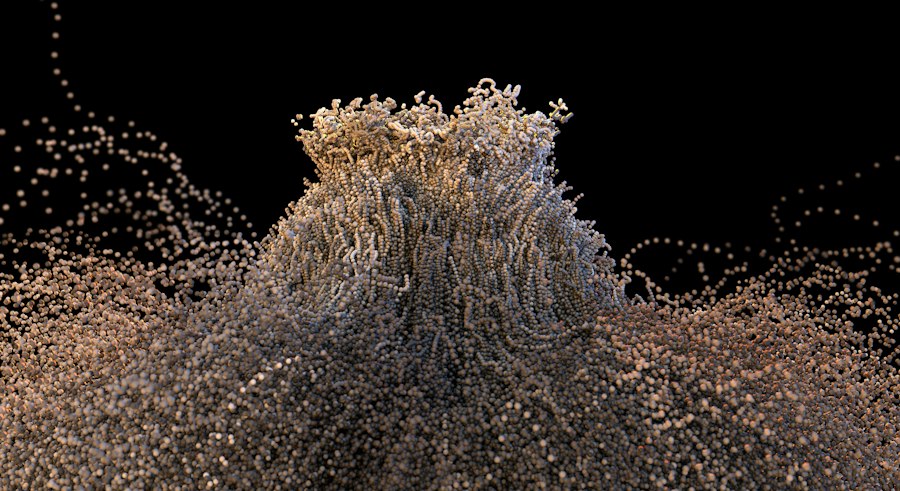
The creation and study of dense nuclear matter environments in terrestrial laboratories are monumental undertakings. Unlike fleeting snapshots of cosmic events, controlled experiments allow for systematic investigations and precise measurements. These experiments aim to replicate the conditions that existed fractions of a second after the Big Bang or within the core of supernovae. The primary tools for this endeavor are particle colliders, where atomic nuclei are accelerated to near the speed of light and smashed into each other with immense energy.
Relativistic Heavy-Ion Collisions
The cornerstone of experimental research into dense nuclear matter is the relativistic heavy-ion collider. Facilities like the Relativistic Heavy Ion Collider (RHIC) at Brookhaven National Laboratory and the Large Hadron Collider (LHC) at CERN are designed to collide heavy ions, such as gold or lead nuclei, at extremely high energies. The energy deposited in these collisions is so vast that it liberates the quarks and gluons from their usual confinement within protons and neutrons, creating a fleeting, superheated state of matter known as the quark-gluon plasma.
The sheer number of particles produced in these collisions is staggering, creating a miniature Big Bang. Detectors, some the size of multi-story buildings, surround the collision point, meticulously tracking the trajectories, energies, and identities of hundreds of thousands of particles emerging from the QGP. The analysis of these particle “showers” allows physicists to reconstruct the properties of the plasma, its temperature, its viscosity, and its characteristic flow.
Exploring the Phase Diagram of Nuclear Matter
The concept of a phase diagram is familiar from everyday experience: water can exist as ice, liquid, or steam depending on temperature and pressure. Similarly, nuclear matter exhibits different phases as a function of temperature and baryon (or quark) density. At low temperatures and densities, we have the familiar hadronic matter, composed of protons and neutrons. As temperature and/or density increase, we expect transitions to more exotic phases.
The quark-gluon plasma is one such exotic phase, believed to exist at extremely high temperatures and low baryonic densities, analogous to the early universe. Another fascinating region of the phase diagram is expected at high baryonic densities and moderate temperatures, which is thought to exist in the cores of neutron stars. Understanding the boundaries and characteristics of these phases is a major goal of current research. Experiments at RHIC and the LHC are probing different regions of this diagram by varying collision energies and the types of colliding nuclei, allowing for the investigation of the transition from hadronic matter to QGP and, indirectly, to understand the conditions that might prevail in other dense environments.
Precision Measurements and Exotic Signatures
The experimental study of dense nuclear matter is characterized by the need for exquisite precision. The fleeting nature of the QGP, existing for only a tiny fraction of a second (on the order of $10^{-23}$ seconds), means that every particle produced carries vital information. Physicists look for specific “signatures” that indicate the formation and properties of the QGP.
One such signature is the suppression of “hard probes,” such as high-energy jets of particles. In a vacuum, these jets would propagate unimpeded. However, within the dense QGP, they lose energy through interactions with the plasma constituents, a phenomenon known as “jet quenching.” The degree of suppression provides a measure of the plasma’s opacity. Another key signature is the collective flow of particles, where the QGP expands and behaves like a nearly perfect liquid, with very low viscosity. Studying the azimuthal anisotropy of particle emission reveals the intricate dynamics of this expansion. Furthermore, the production of exotic particles, like strange hadrons, can also serve as indicators of the QGP’s properties, as their yields are expected to be enhanced in a high-density environment.
Theoretical Frameworks: Decoding the Strong Force
While experiments provide the empirical evidence, theoretical physics provides the essential framework for interpreting these observations and predicting new phenomena. Quantum Chromodynamics (QCD), the theory of the strong nuclear force, is the bedrock upon which our understanding of dense nuclear matter is built. However, QCD at high densities and temperatures presents significant theoretical challenges, requiring sophisticated computational techniques and analytical approaches.
Quantum Chromodynamics and the Confinement-Deconfinement Transition
QCD describes the interactions between quarks and gluons. At low energies, quarks are tightly bound within hadrons (like protons and neutrons) due to a phenomenon called “color confinement.” The force between quarks increases with distance, making it impossible to isolate a free quark. However, at very high temperatures and/or densities, the overlapping wave functions of many quarks and gluons can overcome this confinement, leading to a phase transition where quarks and gluons become deconfined and can move relatively freely. This deconfined state is the quark-gluon plasma.
The theoretical study of this confinement-deconfinement transition is a major area of research. Lattice QCD, a numerical approach that discretizes spacetime, allows scientists to perform first-principles calculations of QCD at finite temperatures and densities. These calculations are computationally intensive but provide crucial insights into the phase structure of nuclear matter, including the critical temperature for the QGP formation.
Hydrodynamic Models and Collective Behavior
The experimental observation of collective flow in heavy-ion collisions has led to the extensive use of hydrodynamic models in theoretical studies. These models treat the QGP as a fluid and describe its expansion and evolution based on the principles of fluid dynamics. By comparing the predictions of these hydrodynamic models with experimental data, physicists can extract fundamental properties of the QGP, such as its viscosity, shear viscosity to entropy density ratio ($\eta/s$), which has been found to be remarkably small, suggesting the QGP behaves as a nearly perfect liquid.
These models also help in understanding the evolution of the system from the initial high-energy collision to the final state of observed particles. They capture the complex interplay of pressure gradients, particle interactions, and expansion, providing a deeper understanding of how the extreme matter cools and transforms back into hadrons.
Effective Field Theories and Dense Matter
Beyond the QGP, understanding the behavior of nuclear matter at high baryonic densities, relevant for neutron stars, requires different theoretical tools. In these environments, quarks are still somewhat confined, but their interactions are dominated by baryon resonances and other complex phenomena. Effective field theories are employed to describe these interactions at lower energies, where the fundamental degrees of freedom might not be simply quarks and gluons but rather composite particles like nucleons and mesons.
These theories allow for the construction of equations of state for dense nuclear matter, which are essential for modeling the structure and evolution of neutron stars. They also help in understanding potential exotic phases at high densities, such as the formation of hyperons or the possibility of a deconfined quark phase even at lower temperatures.
The Cosmic Laboratories: Neutron Stars and Beyond
While terrestrial accelerators offer controlled environments, the universe itself provides natural laboratories where dense nuclear matter exists under conditions that are often far more extreme than what we can create on Earth. Neutron stars, the collapsed remnants of massive stars, are prime examples, offering a unique opportunity to study matter at densities far exceeding those found in atomic nuclei.
Neutron Stars: Extreme Laboratories of Dense Matter
Neutron stars are incredibly compact objects, packing more than the mass of our Sun into a sphere only about 20 kilometers in diameter. Their incredibly strong gravitational pull creates immense pressures in their cores, reaching densities several times that of atomic nuclei. At these densities, protons and electrons are forced to combine to form neutrons, giving the star its name. However, the story does not end there.
The equation of state of matter at these extreme densities is not well understood. It is theorized that within neutron stars, nuclear matter might exist in various exotic forms, including a deconfined quark phase (a “quark star”), or states involving hyperons (baryons containing strange quarks). Understanding these possibilities is crucial for predicting the masses, radii, and rotational properties of neutron stars, and for interpreting observations of these celestial objects.
Astrophysical Observations and Constraints
Neutron stars are observed through various astrophysical phenomena, including pulsars, X-ray binaries, and gravitational wave events. Pulsars are rapidly rotating neutron stars that emit beams of radiation, acting like cosmic lighthouses. Their rotation periods and changes in these periods can provide information about the internal structure and composition of the neutron star. X-ray binaries involve neutron stars accreting matter from a companion star, allowing for studies of their thermal emission and gravitational effects.
The most direct probes of neutron star interiors are gravitational waves, ripples in spacetime generated by the merger of neutron stars or black holes. The detection of gravitational waves from binary neutron star mergers by LIGO and Virgo has provided unprecedented opportunities to constrain the equation of state of dense matter. The waveforms of these mergers carry information about the tidal deformation of the neutron stars, which is directly related to how stiff or soft their internal matter is. Future observations are expected to provide even more precise constraints, potentially revealing the presence of exotic phases of matter.
The Early Universe: A Glimpse of the QGP
The Big Bang theory describes the universe as originating from an extremely hot and dense state. In the earliest moments after the Big Bang, the universe was filled with a quark-gluon plasma. As the universe expanded and cooled, this plasma underwent a phase transition, transitioning into the hadronic matter that eventually formed the protons and neutrons of the atoms we see today.
The study of heavy-ion collisions in laboratories is a way to recreate these conditions and study the properties of the primordial QGP. By understanding the properties of the QGP created in colliders, scientists can better model the evolution of the early universe, from the formation of the first particles to the nucleosynthesis of light elements. The conditions in the early universe, characterized by extremely high temperatures and low baryon densities, offer a different perspective on the QGP compared to the high-baryon density conditions potentially found in neutron stars.
Recent advancements in the study of dense nuclear matter have opened new avenues for understanding the fundamental forces that govern particle physics. Researchers are increasingly focusing on the behavior of quarks and gluons under extreme conditions, which can be observed in heavy-ion collisions. For a deeper insight into this fascinating topic, you can explore a related article that discusses the implications of these findings on our understanding of the universe. To read more, visit this article for an in-depth analysis.
Unanswered Questions and Future Directions
| Parameter | Value / Range | Unit | Description |
|---|---|---|---|
| Nuclear Saturation Density (ρ₀) | 0.16 | fm⁻³ | Typical density of nuclear matter inside atomic nuclei |
| Fermi Momentum (k_F) | 1.33 | fm⁻¹ | Momentum of nucleons at the Fermi surface in nuclear matter |
| Energy per Nucleon at Saturation (E/A) | -16 | MeV | Binding energy per nucleon in nuclear matter at saturation density |
| Symmetry Energy (S) | 30-35 | MeV | Energy difference between symmetric nuclear matter and pure neutron matter |
| Speed of Sound (c_s) | 0.6-0.7 | c (speed of light units) | Speed of sound in dense nuclear matter, relevant for neutron stars |
| Neutron Star Central Density | 2-10 | ρ₀ (times nuclear saturation density) | Estimated density range at the core of neutron stars |
| Effective Mass of Nucleon (m*) | 0.7-0.9 | m (free nucleon mass units) | In-medium modification of nucleon mass in dense matter |
| Pressure at Saturation | 0 | MeV/fm³ | Pressure of nuclear matter at saturation density (equilibrium point) |
The exploration of particle physics in dense nuclear matter environments is a dynamic and rapidly evolving field. Despite significant progress, many fundamental questions remain unanswered, driving ongoing research and inspiring new experimental and theoretical endeavors. The quest to understand the fundamental forces and the nature of matter in its most extreme forms continues to push the boundaries of scientific inquiry.
The Nature of the QCD Phase Diagram
One of the most significant open questions is the precise nature of the QCD phase diagram, particularly in the region of high baryonic densities and low temperatures. While the transition to QGP at high temperatures and low densities is relatively well-understood, the phase structure at high densities remains largely unknown. Theoretical predictions suggest the possibility of a first-order phase transition, a critical endpoint where first-order transitions cease, or even more exotic phases. Experimental efforts at facilities like the future Electron-Ion Collider (EIC) are designed to probe this region with increased precision, offering new insights into the complex interplay of quarks and gluons under extreme compression.
The Properties of Quark Matter
The existence and properties of deconfined quark matter, either in the early universe or in the cores of neutron stars, are subjects of intense investigation. Is quark matter a distinct phase, or does it smoothly emerge from hadronic matter? What are its fundamental characteristics, such as its equation of state and its interaction properties? Understanding these questions has profound implications for our understanding of neutron stars, their maximum possible masses, and their gravitational wave signals. The theoretical challenges in describing strongly interacting quark matter are immense, requiring novel approaches and approximations.
The Role of Spin and Polarization
The role of spin and polarization in dense nuclear matter is another area that is gaining increasing attention. Experiments at RHIC have already demonstrated the possibility of creating polarized proton beams, allowing for the investigation of the spin structure of nucleons. Future research aims to understand how spin dynamics evolve in the extreme conditions of heavy-ion collisions and within neutron stars. Exploring the spin-dependent interactions of quarks and gluons in dense matter could reveal new aspects of the strong force and its role in the fundamental properties of matter.
Advances in Theoretical and Experimental Tools
The future of this field relies heavily on continued advancements in both theoretical and experimental tools. The development of more powerful supercomputers will enable more precise and comprehensive lattice QCD calculations, providing crucial insights into the QCD phase diagram and the properties of quark matter. New theoretical techniques, such as machine learning applications in physics, may also offer novel ways to analyze complex data and explore theoretical landscapes.
On the experimental side, next-generation accelerators and detectors, like the proposed Future Circular Collider (FCC) or updated capabilities at existing facilities, will provide access to even higher collision energies and unprecedented precision. The development of new detection technologies will allow for the measurement of rarer particles and subtle effects, further illuminating the complex phenomena occurring in dense nuclear matter. The synergy between increasingly sophisticated theoretical models and increasingly precise experimental measurements will continue to drive our understanding of the fundamental building blocks of the universe in its most extreme states.
The Broader Implications: From Cosmology to Fundamental Physics
The study of particle physics in dense nuclear matter environments extends far beyond the confines of nuclear and particle physics laboratories. Its implications ripple outwards, touching upon fundamental questions in cosmology, astrophysics, and the very nature of reality. By understanding the behavior of matter under extreme conditions, we gain a deeper appreciation for the universe’s past, its present structure, and its ultimate fate.
Understanding the Early Universe and Nucleosynthesis
The QGP, created in the initial moments after the Big Bang, played a crucial role in the evolution of the universe. The precise temperature and density conditions under which this phase transition occurred determined the abundance of light elements formed during Big Bang nucleosynthesis. By accurately modeling the QGP and its properties, scientists can refine our understanding of the cosmic microwave background radiation and the formation of the first structures in the universe. This research helps to paint a more complete picture of cosmic origins and the processes that shaped the cosmos into what we observe today.
Illuminating the Mysteries of Neutron Stars
As discussed, neutron stars are crucial laboratories for studying dense matter. The equation of state of matter within these stars dictates their observable properties, such as their maximum mass and radius. This, in turn, impacts the way neutron stars interact during mergers, producing gravitational waves and electromagnetic signals. Understanding the physics of neutron stars is therefore essential for interpreting astrophysical observations and for solidifying our understanding of gravity and nuclear forces in extreme environments. The potential for discovering new, exotic forms of matter within neutron stars also opens up exciting avenues for fundamental physics discoveries.
Testing the Limits of Quantum Chromodynamics
The exploration of dense nuclear matter serves as a stringent testbed for Quantum Chromodynamics (QCD), the theory of the strong nuclear force. At high energies and densities, the assumptions and approximations made in simplified QCD models are no longer valid, forcing theorists to confront the full complexity of the theory. Success in predicting and explaining experimental observations in these extreme regimes provides strong validation for QCD and deepens our understanding of its non-perturbative aspects. Conversely, discrepancies between theory and experiment can highlight areas where our understanding of QCD is incomplete, guiding future theoretical development.
The Search for New Physics
The extreme conditions found in dense nuclear matter might also provide a window into physics beyond the Standard Model. While the Standard Model is incredibly successful, it does not explain phenomena like dark matter or dark energy, nor does it fully unify all fundamental forces. It is conceivable that new particles or interactions could manifest themselves under these extreme conditions, offering subtle clues that could point towards new fundamental physics. The study of quark-gluon plasma and dense nuclear matter, therefore, is not just about understanding known physics but also about searching for the unexpected, the phenomena that lie just beyond our current theoretical grasp. The ongoing research in this vibrant field promises to continue yielding profound insights into the fundamental nature of matter and the universe.

A Collider Found a Strange Dip in Dense Matter. What Caused It?
FAQs
What is dense nuclear matter in particle physics?
Dense nuclear matter refers to a state of matter where atomic nuclei are packed closely together, resulting in extremely high densities. This state is often studied in particle physics to understand the behavior of matter under extreme conditions.
How is dense nuclear matter created in particle physics experiments?
In particle physics experiments, dense nuclear matter can be created by colliding heavy ions such as gold or lead nuclei at high energies. These collisions generate conditions similar to those found in the early universe or in the cores of neutron stars.
What are the properties of dense nuclear matter that particle physicists study?
Particle physicists study the properties of dense nuclear matter such as its equation of state, viscosity, temperature, and phase transitions. Understanding these properties can provide insights into the fundamental forces and interactions within atomic nuclei.
Why is the study of dense nuclear matter important in particle physics?
The study of dense nuclear matter is important in particle physics because it can help scientists understand the behavior of matter in extreme conditions, such as those present in neutron stars or during the early stages of the universe. This research can also shed light on the strong nuclear force and the structure of atomic nuclei.
What experimental techniques are used to study dense nuclear matter in particle physics?
Particle physicists use a variety of experimental techniques to study dense nuclear matter, including heavy ion collisions at particle accelerators like the Large Hadron Collider (LHC), as well as theoretical models and simulations to analyze the data collected from these experiments.