
The quest to uncover the existence of extraterrestrial life has captivated human imagination for centuries. From ancient civilizations that gazed at the stars and pondered the existence of other worlds, to modern scientific endeavors, the search for life beyond Earth has evolved significantly. Early thinkers, such as the Greek philosopher Anaxagoras, speculated about the possibility of life on other celestial bodies, laying the groundwork for future inquiries.
The invention of the telescope in the 17th century marked a pivotal moment in this quest, allowing astronomers like Galileo to observe the moons of Jupiter and the phases of Venus, igniting curiosity about the potential for life elsewhere in the cosmos. As the centuries progressed, the scientific community began to adopt a more empirical approach to the search for extraterrestrial life. The 20th century saw significant advancements in technology and understanding of biology, leading to a more structured investigation into the cosmos.
The development of radio astronomy in the 1930s opened new avenues for communication with potential extraterrestrial civilizations. Scientists began to formulate hypotheses about the conditions necessary for life, leading to a more focused search for planets that could harbor life. The launch of space missions, such as the Mariner and Voyager programs, further expanded humanity’s reach into the solar system, providing invaluable data about other planets and their potential to support life.
Key Takeaways
- The search for extraterrestrial life has evolved from early speculation to advanced scientific exploration using modern technology.
- Scientists focus on detecting signs like organic molecules, microbial life, and signals from intelligent civilizations.
- Exoplanets in habitable zones are prime targets for finding potential alien life forms.
- Discovering extraterrestrial life could profoundly impact society, religion, and our understanding of life’s uniqueness.
- Future missions and technological advancements will enhance our ability to explore and possibly communicate with alien life.
The Possibility of Life on Other Planets: What We Know
The possibility of life existing on other planets hinges on several key factors, primarily the presence of water, suitable temperatures, and essential chemical elements. Scientists have identified that water is a fundamental requirement for life as we know it, serving as a solvent for biochemical reactions. This understanding has led researchers to focus on celestial bodies within the so-called “Goldilocks Zone,” where conditions are just right for liquid water to exist.
Mars, Europa, and Enceladus are prime candidates in this search, as they exhibit signs of subsurface oceans or past water activity. Moreover, the discovery of extremophiles—organisms that thrive in extreme environments on Earth—has broadened the definition of habitable conditions. These resilient life forms can survive in extreme heat, acidity, and pressure, suggesting that life could potentially exist in environments previously deemed inhospitable.
This paradigm shift has encouraged scientists to explore a wider range of celestial bodies, including those with harsh conditions, such as Venus’s thick atmosphere or the icy surfaces of distant moons. The ongoing research into these environments continues to fuel speculation about the existence of extraterrestrial life.
Signs of Alien Existence: What Scientists Look For

In their quest to find signs of alien existence, scientists employ various methods and technologies to detect potential biosignatures—indicators that life may be present or may have existed in a given environment. One primary focus is on atmospheric composition; certain gases, such as oxygen and methane, can suggest biological activity. For instance, the simultaneous presence of these gases in significant quantities could indicate a biological process since they tend to react with each other and would not typically coexist in stable conditions without a replenishing source.
Additionally, scientists look for physical evidence of life through remote sensing techniques and lander missions. Instruments designed to analyze soil samples or atmospheric conditions can provide crucial data about a planet’s habitability. The search for microbial fossils or organic compounds on Mars has been a significant focus of recent missions, with rovers like Perseverance equipped with advanced tools to analyze rock samples for signs of ancient life.
By examining these potential biosignatures and geological features, researchers hope to piece together a clearer picture of whether life has ever existed beyond Earth.
The Role of Technology in the Search for Alien Life
Technology plays an indispensable role in humanity’s search for extraterrestrial life. Advancements in telescopes and imaging techniques have allowed astronomers to observe distant exoplanets and analyze their atmospheres from millions of light-years away. Instruments like the Kepler Space Telescope have revolutionized the field by identifying thousands of exoplanets, many of which reside within their stars’ habitable zones.
This wealth of data has provided researchers with a treasure trove of potential targets for further investigation. Moreover, developments in artificial intelligence and machine learning are enhancing data analysis capabilities. These technologies can sift through vast amounts of astronomical data more efficiently than human researchers alone, identifying patterns and anomalies that may indicate signs of life.
Additionally, robotic missions equipped with sophisticated instruments are venturing into our solar system and beyond, conducting experiments and gathering samples from celestial bodies that were once unreachable. As technology continues to advance, it opens new frontiers in the search for alien life, making what was once science fiction increasingly plausible.
The Search for Extraterrestrial Intelligence (SETI) and its Findings
| Metric | Description | Current Status | Source/Project |
|---|---|---|---|
| Number of Exoplanets in Habitable Zone | Planets orbiting stars where conditions may support liquid water | Over 50 confirmed | Kepler Space Telescope |
| Detected Biosignature Gases | Gases like oxygen, methane, or ozone indicating possible life | None conclusively detected yet | James Webb Space Telescope (JWST) |
| Radio Signal Detections | Unexplained radio signals potentially from extraterrestrial intelligence | Several candidates, none confirmed | SETI (Search for Extraterrestrial Intelligence) |
| Mars Organic Molecules Found | Organic compounds detected in Martian soil samples | Confirmed presence of complex organics | Mars Curiosity Rover |
| Extremophile Analogues on Earth | Microorganisms surviving in extreme conditions, informing life possibilities elsewhere | Thousands identified | Various microbiology studies |
| Interstellar Object Observations | Objects passing through solar system with unknown origin | 2 confirmed (Oumuamua, Borisov) | Pan-STARRS Telescope |
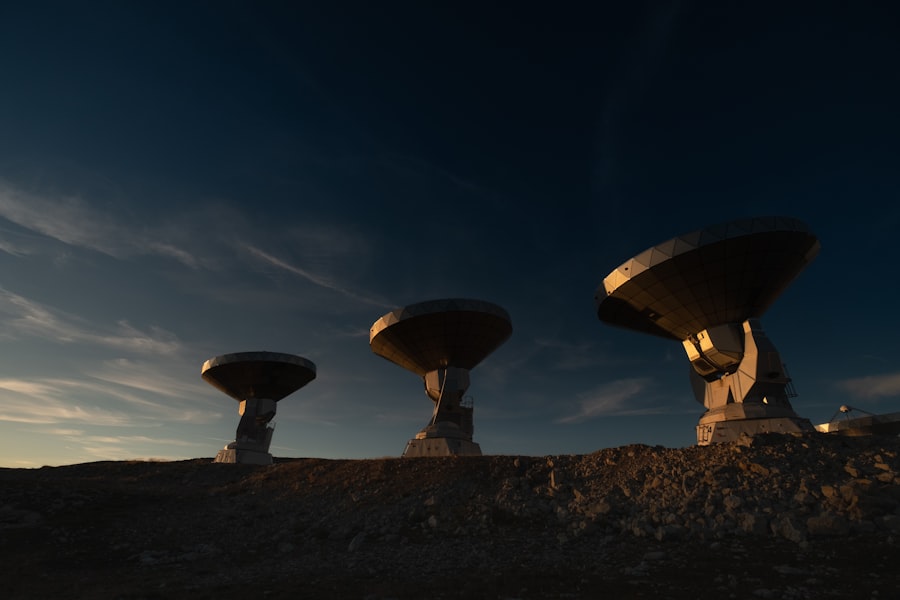
The Search for Extraterrestrial Intelligence (SETI) represents one of the most ambitious efforts to detect intelligent life beyond Earth. Established in the 1960s, SETI employs radio telescopes to listen for signals from advanced civilizations that may be attempting to communicate across the vastness of space. By scanning specific frequencies known to be used by human-made transmissions, SETI researchers hope to identify patterns or signals that could indicate intelligent origins.
Despite decades of searching, SETI has yet to find definitive evidence of extraterrestrial intelligence. However, this does not imply failure; rather, it highlights the challenges inherent in such an endeavor. The vast distances between stars mean that signals may take years or even centuries to reach Earth, and many civilizations may not use radio waves as a means of communication at all.
Nevertheless, SETI’s ongoing efforts have led to valuable insights into our own technological capabilities and have fostered collaborations across various scientific disciplines. The search continues with renewed vigor as new technologies emerge and our understanding of the universe deepens.
The Potential for Microbial Life on Other Planets
Microbial life represents one of the most promising avenues in the search for extraterrestrial organisms. Given that microbes are among the most resilient forms of life on Earth, capable of surviving extreme conditions—from deep-sea hydrothermal vents to polar ice caps—scientists speculate that similar organisms could thrive on other planets or moons within our solar system. Mars is often cited as a prime candidate due to its history of liquid water and evidence suggesting it once had a more hospitable climate.
In addition to Mars, icy moons like Europa and Enceladus are also considered potential havens for microbial life. These moons possess subsurface oceans beneath their icy crusts, creating environments where life could exist shielded from harsh surface conditions. Missions like NASA’s Europa Clipper aim to explore these moons further, seeking signs of microbial activity through detailed analysis of their ice-covered surfaces and potential plumes ejecting material from their oceans into space.
Exoplanets and Their Potential to Host Alien Life
The discovery of exoplanets—planets orbiting stars outside our solar system—has transformed the landscape of astrobiology and the search for alien life. Since the first confirmed detection in 1992, thousands of exoplanets have been identified using various methods such as transit photometry and radial velocity measurements. Among these discoveries are numerous Earth-sized planets located within their stars’ habitable zones, raising hopes that some may possess conditions suitable for life.
Researchers categorize exoplanets based on their characteristics—such as size, composition, and distance from their host stars—to assess their potential habitability. For instance, rocky planets with atmospheres rich in essential elements like carbon and nitrogen are prime candidates for hosting life as we know it. The James Webb Space Telescope (JWST), launched in late 2021, is expected to play a crucial role in characterizing these distant worlds by analyzing their atmospheres for biosignatures or organic molecules indicative of life processes.
As technology advances and more exoplanets are studied, humanity’s understanding of where alien life might exist continues to expand.
The Search for Organic Molecules in Space
The quest for organic molecules in space is a critical component in understanding the building blocks necessary for life beyond Earth. Organic molecules—composed primarily of carbon—are fundamental components of biological systems on our planet. Their presence elsewhere in the universe could suggest that the ingredients for life are widespread throughout space.
Scientists have detected organic compounds in various celestial environments, including comets, asteroids, and interstellar clouds. One notable example is the detection of complex organic molecules on comets like 67P/Churyumov-Gerasimenko by the Rosetta mission. These findings suggest that comets may have played a role in delivering organic materials to early Earth, potentially kickstarting life’s development here.
Additionally, missions like NASA’s Mars Curiosity rover have identified organic molecules within Martian soil samples, raising questions about whether they originated from biological processes or were formed through abiotic means. As researchers continue to explore these cosmic environments, they seek to unravel the mysteries surrounding organic chemistry’s role in life’s potential emergence across the universe.
The Impact of Discovering Alien Life on Society and Religion
The discovery of extraterrestrial life would undoubtedly have profound implications for society and religion alike. For many individuals and cultures, such a revelation could challenge long-held beliefs about humanity’s place in the universe and raise questions about creation narratives found in various religious texts. The prospect of intelligent alien civilizations might prompt philosophical debates regarding morality, ethics, and what it means to be sentient.
Conversely, some religious groups may embrace this discovery as an opportunity to expand their understanding of creation and divine purpose. Theologians might explore how extraterrestrial beings fit into existing frameworks or consider new interpretations that encompass a broader cosmic perspective. Regardless of individual beliefs, society would likely experience a paradigm shift as people grapple with the implications of sharing existence with other intelligent beings—potentially leading to increased interest in science and exploration while fostering a sense of unity among humanity as we confront our shared place in an expansive universe.
The Challenges of Communicating with Extraterrestrial Life
Communicating with extraterrestrial civilizations presents unique challenges that extend beyond mere technological limitations. One significant hurdle lies in deciphering potential languages or forms of communication that may be entirely foreign to human understanding. While humans rely heavily on verbal language and symbols rooted in cultural contexts, alien civilizations might employ entirely different methods—such as mathematical constructs or visual signals—to convey information.
This delay raises questions about how civilizations might evolve over time—what if one civilization advances significantly while waiting for a response? Additionally, there is no guarantee that any signals received would be intentional communications; they could simply be natural phenomena misinterpreted as messages from intelligent beings.
As researchers continue exploring these challenges through initiatives like SETI, they must consider not only technological solutions but also philosophical implications surrounding interstellar communication.
The Future of Exploring Extraterrestrial Life: Missions and Discoveries
The future exploration of extraterrestrial life promises exciting possibilities as humanity continues its quest into the cosmos. Upcoming missions aim to delve deeper into our solar system’s most promising candidates for habitability—Mars remains at the forefront with planned sample return missions designed to bring Martian soil back to Earth for detailed analysis. Additionally, missions targeting icy moons like Europa and Enceladus are set to investigate subsurface oceans that could harbor microbial life.
Beyond our solar system lies an even broader frontier—the study of exoplanets will continue to expand with next-generation telescopes capable of characterizing distant worlds’ atmospheres more effectively than ever before. As technology advances and international collaborations strengthen within astrobiology research communities worldwide, humanity stands poised at an unprecedented moment in history—a time when answers about life’s existence beyond Earth may finally come within reach. In conclusion, while challenges remain abundant in this pursuit—from technological limitations to philosophical dilemmas—the collective efforts across scientific disciplines fuel hope that one day humanity will uncover definitive evidence confirming we are not alone in this vast universe.
Each discovery brings us closer not only to understanding our place among the stars but also ignites curiosity about what lies beyond our current knowledge—a journey that promises endless wonder as we seek answers among distant worlds waiting patiently for exploration.
Recent advancements in the search for extraterrestrial life have sparked significant interest in the scientific community. A related article that delves into the latest findings and theories on this topic can be found at