The universe, as we perceive it, is a grand tapestry woven from the threads of physical laws. Yet, beneath the familiar surface of classical mechanics, lies a realm where probability reigns and observation itself can alter reality. This is the domain of quantum mechanics, and the double-slit experiment stands as its enigmatic cornerstone. This article delves into the concept of “Exploring Double Slit Experiment Simulation Theory,” acknowledging its speculative nature while grounding the discussion in the fundamental principles illustrated by the experiment. The simulation hypothesis proposes that our reality might be an elaborate artificial construct, and the double-slit experiment offers a peculiar lens through which to examine this idea, challenging our intuitive understanding of existence.
At the heart of the double-slit experiment lies the baffling phenomenon of wave-particle duality. Imagine throwing a handful of marbles at a wall with two adjacent openings. You would expect to see two distinct piles of marbles behind each opening. This is our classical intuition at play. However, when subatomic particles like electrons or photons are fired at a screen with two slits, the outcome deviates dramatically. Instead of two distinct lines, an interference pattern emerges on the detector screen behind the slits – a series of bright and dark bands, characteristic of waves interfering with each other.
What is Wave-Particle Duality?
Electrons as Waves?
Photons: Light’s Dual Nature
When light, traditionally understood as a wave, is passed through the double slits, it also exhibits particle-like behavior. The photoelectric effect, for instance, demonstrates that light energy is quantized into discrete packets called photons. This Janus-faced nature of light, behaving as both a wave and a particle depending on the experimental setup, is a fundamental revelation of quantum mechanics. The double-slit experiment visualizes this duality in a compelling manner.
The Philosophical Implications of Duality
The very notion that a single entity can possess contradictory properties – being both localized like a particle and spread out like a wave – challenges our deeply ingrained understanding of objects. It’s akin to a coin that can be heads and tails simultaneously until you look at it. This inherent uncertainty is not a flaw in our measurement tools; it’s a fundamental characteristic of the quantum world.
The Double Slit Experiment has long fascinated physicists and philosophers alike, as it challenges our understanding of reality and the nature of light and particles. For those interested in exploring the implications of simulation theory in relation to this groundbreaking experiment, a related article can be found at My Cosmic Ventures. This article delves into how the principles observed in the Double Slit Experiment might suggest that our universe could be a sophisticated simulation, offering intriguing insights into the intersection of quantum mechanics and theoretical philosophy.
The Observer Effect and the Collapse of the Wave Function
Perhaps the most counter-intuitive aspect of the double-slit experiment, and its crucial link to simulation theory, is the observer effect. When detectors are placed at the slits to determine which slit each particle passes through, the interference pattern vanishes. Instead, the particles behave as expected classically, forming two distinct lines. This suggests that the act of observation, of measuring the particle’s path, fundamentally alters its behavior.
The “Which-Way” Information
When the experimental setup is designed to obtain “which-way” information – to know which slit each individual particle traverses – the wave-like interference pattern disappears. This is as if the universe, or the simulation, is actively preventing us from knowing the precise path while it exhibits wave-like properties, and then forcing a classical outcome once that information is sought.
The Probabilistic Nature of Reality
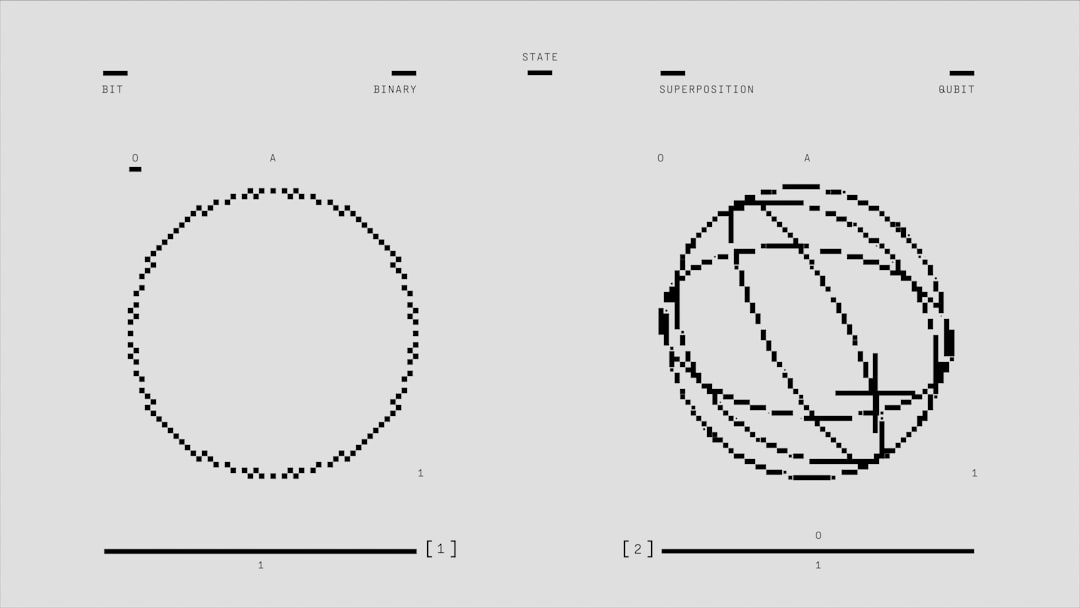
Before observation, the particle exists in a superposition of states, meaning it can be thought of as passing through both slits simultaneously. This probabilistic description is encapsulated in the wave function, a mathematical tool that describes the likelihood of finding the particle in a particular state or location. The act of measurement, or observation, causes the wave function to “collapse,” forcing the particle into a definite state – either here or there, passing through this slit or that one.
Does Consciousness Play a Role?
A common, though debated, interpretation is that consciousness is the trigger for wave function collapse. This interpretation, often referred to as the Von Neumann–Wigner interpretation, suggests that it is the conscious mind interacting with the quantum system that forces a resolution from probabilistic uncertainty to a definite reality. This idea, while intriguing, remains a philosophical minefield and is not universally accepted within the physics community. More mainstream interpretations focus on the physical interaction of the measuring apparatus with the quantum system.
Simulation Hypothesis and the Double-Slit Experiment
The simulation hypothesis, popularized by thinkers like Nick Bostrom, posits that our entire reality could be a sophisticated computer simulation. This idea gains traction when we consider the strangeness of quantum mechanics, particularly the double-slit experiment. If our universe is a simulation, then certain phenomena could be explained as computational efficiencies or by design.
Computational Efficiencies
One argument for the simulation hypothesis draws parallels between quantum mechanics and computational processes. For example, the universe might not ‘render’ all aspects of reality until they are observed, much like a computer game only renders characters and environments that are currently in the player’s view. The double-slit experiment, where outcomes change based on observation, could be a manifestation of this principle. The simulation might not need to compute the definite path of every particle if that path isn’t being actively measured. This saves computational resources.
Resource Management in a Simulated Universe
Imagine a programmer designing a vast and complex virtual world. They would likely implement systems to optimize performance. If the universe is a simulation, then the particles might not possess definite properties (like a fixed position or momentum) until they are looked at, or their properties are needed for an interaction. This is a form of dynamic rendering, where properties are computed and instantiated only when necessary, thus conserving the computational “power” of the simulation. The double-slit experiment, with its reliance on observation to resolve probabilistic states, could be a direct consequence of such resource management. It’s like the simulation only bothers to fully flesh out the details of a character’s clothing if the player explicitly looks at them.
The “Glitches” in the Matrix
The peculiar behavior observed in the double-slit experiment – the probabilistic nature, the wave-particle duality, and the observer effect – could be interpreted as “glitches” or features of the simulation’s underlying code. While this is a highly speculative interpretation, it offers a metaphorical framework for understanding these unintuitive quantum phenomena within the context of a simulated reality. These aren’t errors in the sense of bugs, but rather fundamental operational characteristics of the simulated environment.
Analyzing the Simulation’s Parameters
If we are indeed living in a simulation, then the double-slit experiment might be revealing something about the fundamental parameters or operating system of this simulation. The very rules that govern these quantum phenomena could be the programming language of our reality.
The Universe as a Grand Algorithm
The laws of physics, as we discover them, can be seen as the algorithms that govern our simulated universe. Quantum mechanics, with its inherent probabilities and non-local correlations, suggests these algorithms are far more complex and subtle than classical physics would imply. The double-slit experiment unveils a particularly intricate subroutine of this grand algorithm.
Is the Simulation Deterministic or Probabilistic?
The double-slit experiment, by its very nature, highlights the probabilistic aspect of reality at the quantum level. If the simulation is truly deterministic, then the probabilistic outcomes we observe must be the result of complex, underlying deterministic processes that we are currently unable to fully comprehend or access. Alternatively, the simulation might be designed to incorporate genuine randomness. This question – whether our reality is fundamentally deterministic or inherently probabilistic – is a profound one, and the double-slit experiment provides a compelling piece of evidence for the latter. The simulation might be programmed with a pseudo-random number generator that only produces true randomness when certain conditions are met, like during quantum measurements.
The Nature of Observation in a Simulated System
The observer effect in the double-slit experiment raises questions about what constitutes “observation” within a simulated reality. Is it a biological consciousness, a physical interaction with a measurement device, or something else entirely? In a simulation, the definition of observation might be tied to how information is processed and recorded by the underlying system. An event might only become “real” in the simulation’s ledger when it is recorded or interacts with other simulated entities in a way that necessitates its existence in the simulation’s state.
The Double Slit Experiment has long fascinated physicists and philosophers alike, raising profound questions about the nature of reality and observation. A related article that delves deeper into the implications of simulation theory in the context of this experiment can be found at My Cosmic Ventures. This exploration not only highlights the intriguing results of the experiment but also considers how our understanding of quantum mechanics might align with the idea that we could be living in a simulated universe.
The “Why” of Quantum Weirdness in a Simulation Context
| Parameter | Description | Typical Value / Range | Unit |
|---|---|---|---|
| Slit Width (a) | Width of each slit in the barrier | 10 – 100 | micrometers (µm) |
| Slit Separation (d) | Distance between the centers of the two slits | 50 – 500 | micrometers (µm) |
| Wavelength (λ) | Wavelength of the incident light or particles | 400 – 700 | nanometers (nm) |
| Screen Distance (L) | Distance from the slits to the detection screen | 0.5 – 2 | meters (m) |
| Interference Fringe Spacing (Δy) | Distance between adjacent bright or dark fringes on the screen | Calculated as (λ * L) / d | millimeters (mm) |
| Intensity Pattern | Distribution of light intensity on the screen | Varies sinusoidally with position | Arbitrary units |
| Particle Type | Type of particle used in simulation (e.g., photon, electron) | Photon, Electron, Neutron | N/A |
| Simulation Model | Theoretical approach used (wave mechanics, quantum mechanics) | Schrödinger Equation, Wave Optics | N/A |
If our universe is a simulation, why would the programmers choose to implement such counter-intuitive quantum rules? The double-slit experiment, with its implications for how reality behaves, might offer clues.
The Principle of Least Information
One possible explanation is the principle of least information. Just as a programmer would seek to minimize unnecessary computation, the simulation might be designed to avoid computing or storing information that is not immediately required. The probabilistic nature of quantum mechanics and the observer effect could be a way for the simulation to avoid committing to definite states until absolutely necessary, thus conserving computational resources. It’s like a vast digital library that only generates the full text of a book when a reader requests a specific page.
Mimicking Natural Laws
Another possibility is that the programmers are attempting to mimic natural laws as they understand them, or perhaps to explore specific theoretical possibilities. If the simulation is an attempt to recreate or study a physical universe, the strange laws of quantum mechanics might be an integral part of that universe’s fundamental nature, even if they appear bizarre to us. The double-slit experiment, in this context, is simply a demonstration of one of the universe’s core operational principles.
A Testbed for Physics
Perhaps the simulation is a vast testbed for exploring the fundamental laws of physics. The programmers might be interested in observing how different physical models evolve or behave under varying conditions. The double-slit experiment, as a cornerstone of quantum theory, would be a crucial element in such an exploration. It’s a controlled experiment running on a cosmic scale.
Repercussions for Our Understanding of Reality (and Simulation)
The exploration of the double-slit experiment through the lens of simulation theory has profound implications, not only for our understanding of the universe but also for how we might perceive and interact with a potentially simulated reality.
Redefining “Real”
If our reality is a simulation, then the very definition of “real” becomes fluid. What we perceive as tangible and objective might merely be complex data representations. The double-slit experiment, by demonstrating that properties are not fixed until observed, further blurs this line. The experience of “reality” might be a collective agreement or an emergent property of the simulation’s code, rather than an intrinsic characteristic of independent existence.
The Search for the “Simulation Source Code”
The quest to understand quantum mechanics, exemplified by the double-slit experiment, can be seen as analogous to a programmer trying to reverse-engineer the source code of their operating system. Each new discovery, each deeper understanding of quantum phenomena, might be a step closer to deciphering the fundamental rules that govern our simulated existence. The double-slit experiment, with its fundamental challenges to our intuition, is a very prominent clue in this ongoing investigation.
Our Agency within a Simulation
The simulation hypothesis, particularly when viewed through the prism of the double-slit experiment, raises questions about free will and agency. If our actions and perceptions are governed by algorithms, how much genuine choice do we have? Yet, the observer effect itself suggests that our act of observation, of seeking information, does have a tangible impact on the simulated environment. This hints at a complex interplay between the programmed reality and our role within it, where our interactions, even if simulated, can influence outcomes. It’s like playing a sophisticated video game where your choices, even within the game’s predetermined narrative, can lead to different branching paths.
The Enduring Mystery
Ultimately, the exploration of the double-slit experiment through the lens of simulation theory is a journey into the unknown. While the hypothesis remains speculative, the questions it raises force us to confront the very foundations of our understanding of existence, observation, and reality itself. The double-slit experiment, with its enduring capacity to perplex and inspire, continues to serve as a vital touchstone in this ongoing philosophical and scientific exploration. It is a reminder that the universe, whether simulated or not, is far stranger and more wondrous than our everyday experiences might suggest.
FAQs
What is the double slit experiment?
The double slit experiment is a famous physics experiment that demonstrates the wave-particle duality of light and matter. It involves shining a beam of particles, such as electrons or photons, through two closely spaced slits and observing the resulting interference pattern on a screen behind the slits.
What does the double slit experiment reveal about quantum mechanics?
The experiment reveals that particles like electrons and photons exhibit both wave-like and particle-like properties. When not observed, they create an interference pattern typical of waves, but when measured or observed, they behave like particles, hitting the screen at specific points.
What is the simulation theory in relation to the double slit experiment?
Simulation theory suggests that reality, including quantum phenomena like those seen in the double slit experiment, might be a simulated construct, similar to a computer simulation. Some interpretations propose that the observer effect and quantum behavior could be explained if the universe operates like a programmed simulation.
How do simulations help in understanding the double slit experiment?
Simulations allow scientists and students to model and visualize the behavior of particles in the double slit experiment without needing physical equipment. They help in exploring how changes in variables affect the interference pattern and deepen understanding of quantum mechanics principles.
Can the double slit experiment be explained without invoking simulation theory?
Yes, the double slit experiment can be explained using standard quantum mechanics without resorting to simulation theory. The wave function, superposition, and collapse upon measurement provide a well-established framework to understand the observed phenomena. Simulation theory is a philosophical interpretation rather than a scientific explanation.