
Time, as a concept, has fascinated humanity for centuries, serving as a fundamental aspect of existence that governs the rhythm of life and the cosmos. In the grand tapestry of the universe, time is not merely a measure of moments passing; it is an intricate dimension that intertwines with space and matter. From the ticking of a clock to the vast epochs of cosmic history, time shapes the very fabric of reality.
Scientists and philosophers alike have pondered its nature, seeking to understand how it influences everything from the birth of stars to the fleeting moments of human experience. In the realm of physics, time is often treated as a linear progression, a continuous flow from past to present to future. However, this simplistic view belies the complexity inherent in the universe’s structure.
Theories such as Einstein’s relativity have revolutionized our understanding, suggesting that time is not an absolute entity but rather a variable that can bend and stretch depending on gravitational forces and relative motion. This perspective invites deeper inquiry into how time operates on both cosmic and quantum scales, challenging conventional notions and inspiring new avenues of exploration.
Key Takeaways
- Time is a fundamental concept in the universe, influencing the behavior of matter and energy.
- Linear time, as commonly perceived, is an illusion and is relative to the observer’s frame of reference.
- Time dilation and relativity, as described by Einstein’s theory, show that time is not constant and can be influenced by gravity and velocity.
- Different cultures have unique perceptions and interpretations of time, influencing their societal norms and behaviors.
- Time travel, a popular concept in science fiction, is currently not feasible according to the laws of physics, but continues to captivate the imagination of many.
The Illusion of Linear Time
The perception of time as a linear sequence—where events unfold in a straightforward manner from beginning to end—has been deeply ingrained in human consciousness. This linearity is reflected in the way people organize their lives, marking milestones and planning for future events. Yet, this perspective may be more of an illusion than a reflection of reality.
In many ways, the linear view of time simplifies the complexities of existence. It allows individuals to create narratives around their lives, framing experiences within a chronological context.
However, this narrative structure can obscure the interconnectedness of events and experiences. Some theories propose that all moments exist simultaneously, suggesting that past, present, and future are not distinct entities but rather facets of a larger continuum. This idea challenges the conventional understanding of causality and invites contemplation on the nature of existence itself.
Time Dilation and Relativity
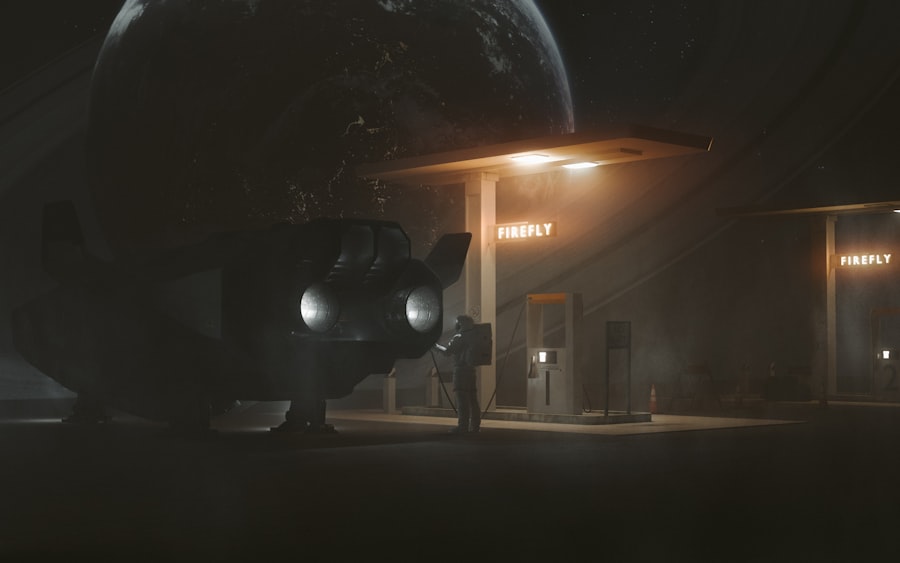
One of the most profound implications of Einstein’s theory of relativity is the phenomenon known as time dilation. According to this theory, time is not experienced uniformly; rather, it can vary based on relative speed and gravitational fields. For instance, an astronaut traveling at high speeds in space would experience time at a different rate than someone remaining on Earth.
This concept has been experimentally validated through precise measurements involving atomic clocks placed on fast-moving aircraft or satellites. Time dilation reveals that time is not an absolute measure but is instead influenced by the observer’s frame of reference. This realization has far-reaching implications for our understanding of the universe.
It suggests that time can stretch and compress, leading to scenarios where two observers may perceive the same event differently based on their relative positions and velocities. Such insights challenge traditional notions of simultaneity and raise intriguing questions about the nature of reality itself.
The Perception of Time in Different Cultures
| Culture | Perception of Time |
|---|---|
| Western Culture | Time is seen as linear and is often divided into specific units such as seconds, minutes, and hours. |
| Eastern Culture | Time is seen as cyclical and is often associated with natural rhythms and seasons. |
| Native American Culture | Time is seen as fluid and is often based on events and experiences rather than specific measurements. |
| African Culture | Time is seen as being more flexible and less rigidly structured than in Western cultures. |
Cultural perspectives on time vary significantly across societies, shaping how individuals experience and interpret their lives. In many Western cultures, time is often viewed as a commodity—something to be managed efficiently and utilized productively. This perspective fosters a sense of urgency and encourages individuals to prioritize future goals over present experiences.
The relentless pursuit of progress can lead to a disconnection from the present moment, as people become preoccupied with what lies ahead. Conversely, some Eastern cultures embrace a more cyclical understanding of time, viewing it as an ongoing process rather than a linear progression.
This perspective fosters mindfulness and encourages individuals to engage fully with their experiences rather than constantly striving for future achievements. Such cultural differences highlight the diverse ways in which humanity relates to time, influencing everything from social interactions to spiritual beliefs.
Time Travel and the Laws of Physics
The concept of time travel has captivated human imagination for generations, inspiring countless stories in literature and film. While it remains firmly within the realm of science fiction, discussions surrounding its feasibility often intersect with established laws of physics. Theoretical frameworks such as wormholes and closed timelike curves suggest that under certain conditions, traversing through time may be possible.
However, these ideas remain speculative and face significant scientific challenges. One major obstacle to time travel lies in the paradoxes it presents. For instance, the famous “grandfather paradox” raises questions about causality: if one were to travel back in time and alter events in such a way that their own existence was jeopardized, what would that mean for the timeline?
Such dilemmas highlight the complexities inherent in reconciling time travel with our current understanding of physics. While theoretical explorations continue to push boundaries, practical applications remain elusive, leaving humanity to ponder whether time travel will ever transcend the realm of fiction.
The Philosophy of Time

Philosophical inquiries into the nature of time have persisted throughout history, with thinkers grappling with questions about its essence and significance. Some philosophers argue that time is an objective feature of the universe, existing independently of human perception. Others contend that it is a subjective construct shaped by consciousness and experience.
This debate raises fundamental questions about reality itself: Is time an inherent aspect of existence or merely a framework through which humans interpret their experiences? The philosophy of time also delves into concepts such as temporality and permanence. Some philosophical traditions emphasize the transient nature of existence, suggesting that all things are in constant flux.
In contrast, others posit that certain aspects of reality may possess an enduring quality that transcends temporal change. These discussions invite contemplation on the relationship between time and existence, prompting individuals to reflect on their own experiences within the broader context of reality.
Time as a Dimension
In modern physics, time is often regarded as a fourth dimension, complementing the three spatial dimensions that define our physical reality. This conceptualization allows for a more comprehensive understanding of how objects move and interact within space-time—a unified framework that combines both space and time into a single continuum. In this view, events are not merely points in time but are situated within a broader context that encompasses both spatial and temporal dimensions.
Understanding time as a dimension opens up new avenues for exploring phenomena such as gravity and motion. For instance, massive objects like planets warp the fabric of space-time around them, influencing how other objects move through this continuum. This interplay between space and time underscores the interconnectedness of all things in the universe, suggesting that changes in one dimension can have profound effects on others.
As scientists continue to investigate these relationships, they deepen our understanding of reality’s intricate structure.
The Connection Between Time and Space
The relationship between time and space is one of the cornerstones of modern physics, particularly in Einstein’s theory of general relativity. This theory posits that space and time are not separate entities but are interwoven into a single fabric known as space-time. Events occur at specific coordinates within this four-dimensional continuum, where both spatial location and temporal position are essential for understanding how phenomena unfold.
This connection has profound implications for our understanding of gravity as well. Rather than being viewed as a force acting at a distance, gravity emerges from the curvature of space-time caused by massive objects. As such, objects follow paths determined by this curvature, illustrating how deeply intertwined space and time truly are.
This revelation reshapes our comprehension of motion and interaction within the universe, emphasizing that changes in one dimension can reverberate through others.
The Mysteries of Time in Quantum Physics
Quantum physics introduces an additional layer of complexity to our understanding of time, challenging classical notions with its counterintuitive principles. In this realm, particles exist in states of probability rather than certainty until observed or measured—a phenomenon known as wave function collapse. This raises intriguing questions about the role of observation in shaping reality and how it relates to our perception of time.
Moreover, some interpretations of quantum mechanics suggest that time may not be fundamental at all but rather an emergent property arising from deeper underlying processes. This perspective invites speculation about the nature of reality itself: if time is not an intrinsic feature but rather a byproduct of more fundamental interactions, what does that imply for our understanding of existence? As researchers continue to explore these mysteries, they push the boundaries of knowledge and challenge conventional wisdom about time’s role in shaping reality.
The Role of Time in the Origin of the Universe
The origin of the universe is intricately tied to concepts of time, particularly in discussions surrounding the Big Bang theory—the prevailing cosmological model explaining how the universe began approximately 13.8 billion years ago. According to this theory, space and time emerged simultaneously from an initial singularity—a point where density and temperature were infinitely high. This event marked not only the birth of matter but also the inception of time itself.
As the universe expanded from this singularity, it underwent rapid changes that shaped its evolution over billions of years. Understanding how time functions within this context is crucial for comprehending cosmic history—from the formation of galaxies to the emergence of life on Earth. The interplay between cosmic events and temporal progression underscores how deeply intertwined these concepts are in shaping both our universe’s past and its future trajectory.
The Exploration of Time in Science Fiction and Popular Culture
Time has long been a captivating theme in science fiction literature and popular culture, serving as a vehicle for exploring complex ideas about existence, identity, and morality. From H.G. Wells’ “The Time Machine” to contemporary films like “Interstellar,” narratives involving time travel often delve into philosophical questions about causality and free will while entertaining audiences with imaginative scenarios.
These explorations reflect humanity’s enduring fascination with time—its mysteries, its implications for human experience, and its potential for altering destinies. Science fiction serves not only as entertainment but also as a platform for contemplating profound questions about reality itself. As creators continue to push boundaries within this genre, they inspire audiences to reflect on their own relationship with time while sparking curiosity about what lies beyond our current understanding.
In conclusion, the concept of time encompasses a rich tapestry woven from scientific inquiry, philosophical exploration, cultural perspectives, and imaginative storytelling. As humanity continues to grapple with its complexities—whether through rigorous research or creative expression—the quest for understanding remains an integral part of our shared experience within this vast universe.
In the fascinating exploration of time and its perception, the article “Cosmic Ventures: Time is an Illusion” delves into the philosophical and scientific perspectives that challenge our conventional understanding of time. For those intrigued by this concept, a related article on the same website further expands on these ideas, offering a deeper dive into the mysteries of the cosmos and our place within it. You can explore more about these intriguing topics by visiting the related article on their website. This additional resource provides a comprehensive look at how our perception of time influences our understanding of the universe, making it a must-read for anyone interested in the intersection of science and philosophy.
WATCH THIS! Time Is An Illusion: Quantum Physics Proves It
FAQs
What is the concept of time as an illusion in cosmic ventures?
The concept of time as an illusion in cosmic ventures refers to the idea that time is not a fixed and absolute reality, but rather a subjective experience that can be influenced by various factors such as gravity, velocity, and perception.
How does the concept of time as an illusion relate to cosmic ventures?
In cosmic ventures, the concept of time as an illusion is often explored in the context of space travel, black holes, and the nature of the universe. It challenges our traditional understanding of time and encourages us to consider the possibility of time being a more fluid and malleable concept.
What are some scientific theories that support the idea of time as an illusion in cosmic ventures?
Some scientific theories that support the idea of time as an illusion in cosmic ventures include Einstein’s theory of relativity, which suggests that time is relative and can be experienced differently depending on one’s frame of reference, as well as quantum mechanics, which raises questions about the fundamental nature of time at the quantum level.
How does the concept of time as an illusion impact our understanding of the universe in cosmic ventures?
The concept of time as an illusion challenges our traditional understanding of the universe as a linear progression of events and opens up new possibilities for how we perceive and interact with the cosmos. It encourages us to consider the interconnectedness of time and space and the potential for alternative realities and dimensions.
What are some practical implications of considering time as an illusion in cosmic ventures?
Some practical implications of considering time as an illusion in cosmic ventures include rethinking our approach to space travel, exploring the potential for time manipulation and travel, and reconsidering the nature of causality and determinism in the universe. It also has implications for fields such as philosophy, psychology, and spirituality.