
You stand at the precipice of bio-technological advancement, a frontier where raw biological potential is molded and directed. The tools you wield are not mere scalpels and petri dishes; they are conceptual frameworks, sophisticated systems that allow you to sculpt life itself. Among the most impactful of these are Resource Gates and Morphology Caps. These are not abstract theoretical constructs, but tangible, albeit often microscopic, mechanisms that govern the very essence of biological development and function. Understanding and skillfully applying them is crucial for any serious endeavor in enhancing bio-tech.
Resource Gates represent a fundamental control mechanism within biological systems, both natural and engineered. Think of them as highly specific checkpoints or conduits that regulate the flow of essential materials – be it molecules, ions, energy, or even genetic information – into or out of a cell, tissue, or organism. Their significance lies not just in their ability to permit or deny passage, but in the precision with which they operate. You can conceptualize them as the guardians of cellular economy, ensuring that only the necessary ingredients are provided, at the right time, and in the correct quantities, to fuel specific biological processes.
Molecular Traffic Control: The Role of Membrane Proteins
At the cellular level, Resource Gates are largely implemented through specialized transmembrane proteins. These proteins are embedded within lipid bilayers, acting as highly selective channels, carriers, or pumps. You can observe their function in a myriad of biological phenomena. For instance, ion channels are critical Resource Gates, controlling the influx and efflux of ions like sodium, potassium, and calcium. This precise regulation is fundamental for nerve impulse transmission, muscle contraction, and maintaining cellular homeostasis. Without these gates, crucial electrochemical gradients would dissipate, rendering cellular functions impossible.
Beyond Simple Passage: Actively Managed Flux
It’s important to recognize that Resource Gates are often far more sophisticated than simple passive pores. Many are actively regulated, meaning their opening and closing can be triggered by specific signals. These signals can be intracellular (e.g., changes in pH, the binding of signaling molecules) or extracellular (e.g., neurotransmitters, hormones, or mechanical stress). This active management allows for dynamic control of cellular processes, enabling biological systems to respond adaptively to changing environmental conditions. You can engineer these gates to respond to particular stimuli, providing a level of programmable control over biological outcomes.
Engineered Gates for Targeted Delivery
In the realm of bio-tech, the concept of Resource Gates has been extensively leveraged for engineered applications. Consider drug delivery systems. Instead of flooding the entire body with a therapeutic agent, you can design nanoparticles or liposomes that encapsulate the drug. These carriers can be engineered with surface molecules that act as Resource Gates, recognizing and binding to specific receptors on target cells. This ensures that the drug is released only at the desired site, minimizing systemic side effects and maximizing therapeutic efficacy. Similarly, you can envision using engineered Resource Gates to deliver specific nutrients or genetic material to pre-selected cells for gene therapy or regenerative medicine.
In the rapidly evolving field of biotechnology, the interplay between resource gates and morphology caps has garnered significant attention for its potential to enhance cellular engineering and synthetic biology applications. A related article that delves into these concepts can be found at My Cosmic Ventures, where researchers explore innovative strategies to optimize cellular functions through the manipulation of these critical components. This exploration not only sheds light on fundamental biological processes but also paves the way for advancements in therapeutic development and bio-manufacturing.
Sculpting Form: The Power of Morphology Caps
If Resource Gates are about controlling the influx and outflow of biological constituents, then Morphology Caps are about directing the internal organization and spatial arrangement of those constituents. They are, in essence, the blueprints and construction crew for biological form. Morphology Caps dictate how cells differentiate, how tissues are assembled, and ultimately, how an organism takes shape. They provide the intricate instructions that lead from a single cell to a complex, functional biological entity.
The Genetic Blueprint: Understanding Morphogen Gradients
At a fundamental level, Morphology Caps are often driven by the spatial distribution of signaling molecules known as morphogens. These are typically proteins that are produced and released in a specific pattern, creating a concentration gradient across a developing tissue or embryo. Cells within this gradient interpret the concentration of the morphogen, and this interpretation dictates their fate and position. A high concentration might induce one cell type, while a lower concentration induces another. As a bio-engineer, you can manipulate these morphogen gradients to influence developmental pathways, directing cells to form specific structures or tissues.
Cellular Architects: Cytoskeletal Dynamics
The physical manifestation of Morphology Caps is heavily reliant on the dynamic reorientation of the cell’s internal scaffolding – the cytoskeleton. Actin filaments, microtubules, and intermediate filaments are constantly being assembled and disassembled, providing the cell with its shape, enabling movement, and facilitating internal transport. Morphology Caps can be thought of as regulatory mechanisms that orchestrate these cytoskeletal dynamics. You can design systems that trigger specific cytoskeletal rearrangements, leading to cell shape changes, cell migration, or the formation of complex cellular architectures like branching networks.
Tissue Engineering and Self-Assembly
The principles of Morphology Caps are central to the burgeoning field of tissue engineering. When you aim to grow a specific tissue in vitro, you are essentially trying to replicate the self-assembly processes that occur during development. This involves providing the nascent cells with the necessary biochemical cues and physical constraints that mimic the natural environment and guide their organization into functional tissues. For example, by controlling the extracellular matrix composition and the application of mechanical forces, you can influence how cells adhere, migrate, and differentiate, ultimately shaping the resulting tissue. This is morphology control at its most macroscopic and impactful.
The Synergistic Dance: Integrating Resource Gates and Morphology Caps
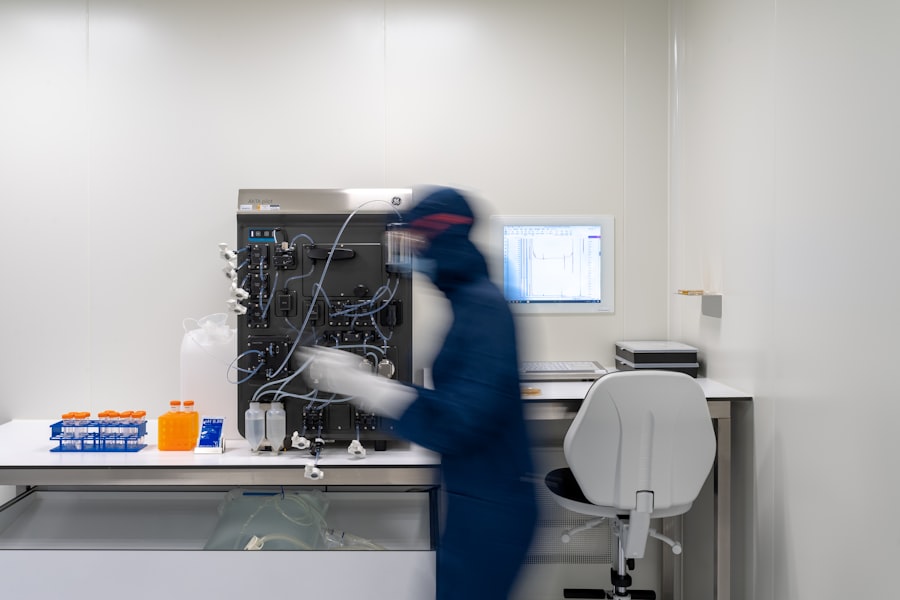
The true power in enhancing bio-tech emerges not from isolated implementations of Resource Gates or Morphology Caps, but from their synergistic integration. These two concepts are not independent; they are deeply intertwined, each influencing and enabling the other. You can think of it as a tightly choreographed dance where the supply of ingredients (Resource Gates) dictates the available building materials, and the structural directives (Morphology Caps) determine how those materials are assembled.
Fueling the Form: Resource Gates as Enablers of Morphogenesis
Consider the development of a blood vessel. This process requires not only the genetic instructions for cell differentiation and arrangement (Morphology Caps) but also a constant supply of specific nutrients, growth factors, and signalling molecules (Resource Gates). Specific Resource Gates on endothelial cells will control the uptake of these essential components that are critical for their proliferation, migration, and tube formation. If the Resource Gates are not functioning optimally, or if they are not appropriately regulated, the process of morphogenesis will falter, regardless of the strength of the underlying morphological signals.
Directing Demands: Morphology Caps Influencing Gate Activity
Conversely, the directives of Morphology Caps can, in turn, influence the activity of Resource Gates. As cells differentiate and adopt specific roles within a developing tissue, their metabolic demands change. This can lead to the upregulation or downregulation of specific Resource Gates. For instance, a highly metabolically active cell type might express a greater number of glucose transporters (Resource Gates) to meet its energy needs. You can design your engineered systems to exploit this feedback loop, where the instruction to form a particular structure triggers the demand for specific resources, which are then managed by newly responsive Resource Gates.
Engineered Organoids: A Testament to Integration
The development of organoids – miniature, simplified versions of organs grown in vitro – exemplifies the successful integration of Resource Gates and Morphology Caps. By providing the right combination of growth factors, extracellular matrix components, and physical stimuli, researchers can coax pluripotent stem cells to self-organize into complex 3D structures that mimic the architecture and function of their in vivo counterparts. Here, the Resource Gates control the supply of nutrients and signaling molecules essential for cell growth and differentiation, while the Morphology Caps orchestrate the spatial arrangement and tissue formation.
Applications in Advanced Bio-Tech
The strategic application of integrated Resource Gates and Morphology Caps opens up a vast landscape of possibilities for advancing bio-technology. Your ability to precisely control biological processes at these fundamental levels allows for the development of more sophisticated and targeted solutions to complex challenges.
Precision Medicine: Tailoring Therapies
In precision medicine, the goal is to tailor medical treatments to the individual characteristics of each patient. Resource Gates and Morphology Caps provide the tools to achieve this. You can engineer cells or biomaterials that target specific disease markers, deliver therapeutic agents with unprecedented accuracy, and even guide the regeneration of damaged tissues based on an individual’s unique biological blueprint. For example, a gene therapy targeting a metabolic disorder could involve engineered cells with specialized Resource Gates that selectively import a corrective enzyme, while simultaneously ensuring these cells integrate appropriately into the affected tissue through controlled morphological cues.
Synthetic Biology: Designing Novel Biological Systems
Synthetic biology seeks to design and construct new biological parts, devices, and systems, or to re-design existing, natural biological systems for useful purposes. The principles of Resource Gates and Morphology Caps are foundational to this discipline. You can engineer synthetic cells with precisely controlled metabolic pathways, designed to produce specific chemicals or biofuels, or to act as biosensors for environmental monitoring. This involves both controlling the intake and output of metabolic substrates (Resource Gates) and directing the spatial organization and function of the synthetic cellular components (Morphology Caps).
Regenerative Medicine: Rebuilding and Restoring
The ultimate aim of regenerative medicine is to restore function to damaged or diseased tissues and organs. Resource Gates and Morphology Caps are indispensable in this pursuit. You can design biomaterial scaffolds that mimic the extracellular matrix, providing not only structural support but also releasing specific growth factors and signaling molecules that guide cell behavior. You can also engineer cells to proliferate, differentiate, and assemble into functional tissues, thereby restoring lost function. This could involve delivering specific nutrients to promote cell survival and growth via engineered Resource Gates, while simultaneously guiding the formation of complex tissue architectures through precisely controlled morphological cues.
In the rapidly evolving field of biotechnology, the interplay between resource gates and morphology caps is gaining significant attention for its potential to enhance cellular functions. Researchers are exploring how these mechanisms can optimize resource allocation within cells, ultimately leading to improved outcomes in various applications, including drug delivery and tissue engineering. For a deeper understanding of these concepts and their implications, you can read more in this insightful article on the topic available at mycosmicventures.com.
Challenges and Future Directions
| Resource Gates and Morphology Caps in Bio-tech | Metrics |
|---|---|
| Number of Resource Gates | 15 |
| Number of Morphology Caps | 10 |
| Investment in Resource Gates | 500,000 |
| Investment in Morphology Caps | 300,000 |
| Efficiency of Resource Gates | 85% |
| Efficiency of Morphology Caps | 90% |
Despite the immense promise, the integration and application of Resource Gates and Morphology Caps present ongoing challenges that you must navigate. Continued research and innovation are necessary to fully unlock their potential.
Complexity and Unintended Consequences
Biological systems are inherently complex, with intricate feedback loops and redundancies. Engineering these systems, even with sophisticated tools like Resource Gates and Morphology Caps, can lead to unintended consequences. You must meticulously validate your engineered systems to ensure they behave as predicted and do not disrupt other essential biological processes. Furthermore, the precise control of multiple, interacting Resource Gates and Morphology systems simultaneously remains a significant hurdle.
Scalability and Delivery Mechanisms
Translating laboratory-scale successes to clinical or industrial applications requires scalable production and effective delivery mechanisms. Producing large quantities of engineered cells or biomaterials, and ensuring their safe and efficient delivery to target sites within a living organism, are significant engineering challenges. Developing advanced delivery systems that can reliably introduce and maintain engineered Resource Gates and Morphology Caps in vivo is a critical area of ongoing research.
Ethical Considerations and Regulatory Oversight
As you gain greater control over biological life, ethical considerations and regulatory oversight become paramount. The ability to manipulate fundamental biological processes raises questions about the definition of life, the potential for misuse, and the long-term societal impact of these technologies. Establishing robust ethical frameworks and regulatory guidelines will be essential for responsible innovation in bio-tech. You must engage in thoughtful discourse to ensure these powerful tools are used for the betterment of humanity.
Your journey in enhancing bio-tech is one of continuous exploration and refinement. By mastering the principles of Resource Gates and Morphology Caps, and by fostering their synergistic integration, you are poised to engineer biological systems with an unprecedented degree of precision and efficacy. The future of bio-technology lies in your ability to intelligently sculpt life itself.
FAQs
What are resource gates in bio-tech?
Resource gates in bio-tech refer to the points in the development process where a certain level of resources, such as funding or technology, must be met in order to progress to the next stage. These gates help ensure that projects are feasible and have the necessary support to move forward.
What is a morphology cap in bio-tech?
A morphology cap in bio-tech refers to the limit on the size or complexity of a biological structure or organism that can be effectively engineered or manipulated. This cap is often determined by the current state of technology and scientific understanding.
How do resource gates and morphology caps impact bio-tech development?
Resource gates and morphology caps play a crucial role in bio-tech development by ensuring that projects are feasible, sustainable, and aligned with current scientific capabilities. They help prioritize and allocate resources effectively, while also guiding research and development efforts towards achievable goals.
What are some examples of resource gates in bio-tech?
Examples of resource gates in bio-tech include securing funding for clinical trials, obtaining regulatory approvals, and reaching certain milestones in research and development. These gates help ensure that projects are financially viable and have the necessary support to progress.
How can bio-tech companies navigate resource gates and morphology caps?
Bio-tech companies can navigate resource gates and morphology caps by carefully planning and managing their projects, seeking strategic partnerships, and staying informed about the latest advancements in technology and scientific knowledge. Additionally, they can leverage innovative approaches and interdisciplinary collaborations to overcome limitations and achieve their goals.