Einstein’s Theory of Relativity is a cornerstone of modern physics, revolutionizing our understanding of space, time, gravity, and the universe. While its mathematical intricacies can be daunting, the core concepts are surprisingly intuitive, offering a profound new perspective on reality. This article aims to demystify Einstein’s monumental work, breaking down its fundamental principles into digestible parts for a curious audience, delving into both Special and General Relativity.
Before venturing into Einstein’s revolutionary ideas, it’s crucial to understand the framework that preceded him: Newtonian physics. For centuries, Isaac Newton’s laws of motion and universal gravitation provided a remarkably accurate description of the universe. They painted a picture of a universe where space was an absolute, unchangeable stage, and time flowed uniformly for everyone, everywhere, regardless of their motion.
Absolute Space: The Unmoving Stage
Newton posited that space was a fixed, three-dimensional grid, an unmoving backdrop against which all events unfolded. Imagine a vast, invisible canvas. Objects moved upon this canvas, but the canvas itself remained static. This absolute space was the reference point for all measurements of position and motion. Regardless of whether someone was standing still or racing at incredible speeds, they would perceive the “stage” of space as identical and unchanging. This concept felt intuitively correct. We experience the world as if space is a stable, objective entity that doesn’t bend or warp.
Absolute Time: The Universal Clock
Parallel to absolute space was the concept of absolute time. Newton believed that time flowed at the same rate for all observers. A second ticking by for someone on Earth was identical to a second ticking by for someone in a distant galaxy, irrespective of their relative motion. This led to the idea of a single, universal clock governing the cosmos. Everyone experienced the passage of time in the exact same way, a concept deeply embedded in our everyday understanding. This notion of time as a linear, unrelenting, and universally synchronized flow is what we intuitively grasp.
The Speed of Light: An Unanswered Question
While Newtonian physics was incredibly successful, certain phenomena began to challenge its foundations. One of the most significant of these was the behavior of light. According to Newtonian mechanics, if you were moving towards a light source, you should measure its speed as being faster than if you were moving away from it. However, experiments, particularly the Michelson-Morley experiment in the late 19th century, consistently showed that the speed of light in a vacuum was always the same, approximately 299,792 kilometers per second, regardless of the observer’s motion or the motion of the light source. This inconsistency gnawed at physicists, hinting at a deeper truth about the nature of space, time, and light. This constant speed of light became a paradox that Newtonian physics struggled to reconcile.
For those interested in a deeper understanding of Einstein’s theory of relativity, a related article that provides a comprehensive explanation can be found at My Cosmic Ventures. This resource delves into the fundamental concepts of both special and general relativity, offering insights into how these groundbreaking theories have reshaped our understanding of space, time, and gravity. Whether you’re a student or simply curious about the universe, this article is a valuable addition to your reading list.
Special Relativity: The Fabric of Spacetime
Albert Einstein’s Special Theory of Relativity, published in 1905, addressed these inconsistencies by proposing a radical new view of space and time. It is “special” because it deals with cases in which the laws of physics are the same for all non-accelerating observers – a concept known as inertial frames of reference. The theory is built upon two fundamental postulates that dismantle the Newtonian notions of absolute space and time.
The Two Postulates: The Pillars of Special Relativity
Einstein’s postulates were deceptively simple yet profoundly transformative:
- The Principle of Relativity: The laws of physics are the same for all observers in uniform motion (inertial frames of reference). This means that there is no absolute state of rest. If you are in a windowless train moving at a constant speed, you cannot perform any experiment inside the train to determine whether you are moving or stationary. The laws of physics will behave identically in both scenarios. This extends Newton’s Galilean relativity, which applied only to mechanics, to all of physics, including electromagnetism.
- The Constancy of the Speed of Light: The speed of light in a vacuum is the same for all inertial observers, regardless of the motion of the light source or the observer. This is the revolutionary postulate that directly contradicted Newtonian intuition. Whether you are standing still and measuring the speed of a light beam, or chasing after it in a rocket at half its speed, you will always measure the exact same speed for that light. This seemingly small detail has enormous consequences for our understanding of space and time.
Consequences of the Postulates: Time Dilation and Length Contraction
The postulates of Special Relativity lead to several counter-intuitive but experimentally verified consequences. These consequences reveal that space and time are not absolute but are relative to the observer’s motion.
Time Dilation: Moving Clocks Run Slower
One of the most striking predictions of Special Relativity is time dilation. It states that time passes more slowly for an observer who is moving relative to another observer. Imagine two twins: one stays on Earth, while the other travels in a spaceship at a significant fraction of the speed of light. When the traveling twin returns, they will have aged less than the twin who remained on Earth. This isn’t an illusion or a trick of perception; it’s a genuine difference in the passage of time. The faster an object moves, the slower time elapses for it, relative to a stationary observer. This effect becomes noticeable only at speeds approaching the speed of light. At everyday speeds, the difference is so infinitesimally small that it’s imperceptible.
Length Contraction: Moving Objects Shrink
Another consequence is length contraction. Objects moving at high speeds appear shorter in the direction of their motion when observed by a stationary observer. If the spaceship carrying the traveling twin were measured by someone on Earth, its length would appear compressed. Similarly, if the traveling twin were to measure the length of Earth from their spaceship, they would observe it to be contracted along the direction of their travel. Again, this is not an optical illusion; it’s a real physical phenomenon. The faster an object moves, the more its length contracts in its direction of motion, as seen by an observer in a different inertial frame.
Relativistic Mass Increase: More Speed, More Inertia
Special Relativity also suggests that an object’s mass increases as its speed increases. This is often referred to as relativistic mass. As an object accelerates, it requires more and more energy to increase its speed further. As it approaches the speed of light, its mass would theoretically approach infinity, requiring an infinite amount of energy to accelerate it further. This is why exceeding the speed of light is considered impossible within the framework of Special Relativity; it would require an infinite amount of energy to achieve. The concept of relativistic mass is now sometimes viewed in a different light, with physicists often preferring to talk about momentum and the energy-momentum relation. However, the underlying idea that it becomes progressively harder to accelerate an object as it approaches the speed of light remains a fundamental consequence.
The Equivalence of Mass and Energy: E=mc²
Perhaps the most famous equation in physics, E=mc², is a direct consequence of Special Relativity. This equation reveals a profound relationship between mass (m) and energy (E), stating that they are interchangeable and equivalent. The constant ‘c’ represents the speed of light, squared. Because ‘c’ is a very large number, even a small amount of mass contains an enormous amount of energy. This principle underlies nuclear reactions, where a small amount of mass is converted into a large amount of energy, as seen in nuclear power plants and atomic bombs. It tells us that mass is a concentrated form of energy.
Spacetime: The Unified Fabric
Special Relativity fundamentally altered our perception of space and time. Instead of being separate, absolute entities, space and time are interwoven into a single, four-dimensional continuum called spacetime. Events occur at specific points in spacetime. The path of an object through spacetime is called its worldline. Your worldline is a continuous line representing your journey through space and time. What appears as an interval of time to one observer might be a mix of space and time intervals to another observer moving relative to them. Spacetime is not a static backdrop but a dynamic entity that can be influenced by matter and energy.
General Relativity: Gravity as the Curvature of Spacetime
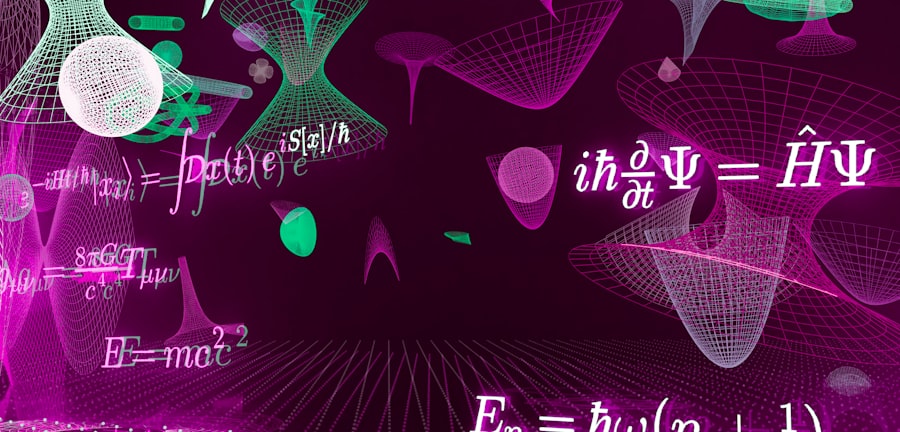
While Special Relativity deals with uniform motion, it doesn’t account for gravity. Einstein’s General Theory of Relativity, published in 1915, provides a revolutionary new description of gravity, not as a force, but as the curvature of spacetime caused by mass and energy.
The Equivalence Principle: The Foundation of General Relativity
The cornerstone of General Relativity is the equivalence principle. Einstein realized that gravity and acceleration are indistinguishable. Imagine being in a closed elevator. If the elevator is accelerating upwards in empty space, you would feel a force pushing you down towards the floor, just as you would if you were standing on Earth due to gravity. Conversely, if you were in freefall on Earth, you would experience weightlessness, similar to floating in space far from any gravitational influence. This equivalence suggests that gravity itself is not a force but a manifestation of acceleration, or more precisely, the curvature of spacetime.
Gravity as Spacetime Curvature: Rolling Downhill in the Cosmos
General Relativity posits that massive objects, like stars and planets, warp or curve the fabric of spacetime around them. Imagine placing a heavy ball on a stretched rubber sheet. The ball creates a dip in the sheet. If you then roll a smaller marble across the sheet, it will be deflected by the dip, appearing to be pulled towards the heavy ball. This is analogous to how gravity works, according to General Relativity. Planets orbit the Sun not because the Sun exerts a mysterious “pull,” but because the Sun’s immense mass significantly curves the spacetime around it, and planets follow the natural trajectories, which are curves, within this warped spacetime. What we perceive as the force of gravity is actually objects following the geodesic paths—the straightest possible paths—in this curved spacetime.
Experimental Evidence: Confirming the Warped Universe
General Relativity has been rigorously tested and confirmed by numerous observations and experiments. These confirmations provide strong evidence for the validity of Einstein’s theory.
The Precession of Mercury’s Orbit
One of the earliest successes of General Relativity was its ability to explain a subtle anomaly in the orbit of Mercury. Mercury’s orbit around the Sun doesn’t follow a perfect ellipse; it slowly rotates over time, a phenomenon known as precession. Newtonian gravity, even with the influence of other planets, couldn’t fully account for the observed amount of precession. General Relativity, by considering the curvature of spacetime caused by the Sun’s mass, accurately predicted Mercury’s orbital precession with remarkable precision. This was a significant triumph for Einstein’s new theory.
Bending of Starlight by Gravity: A Cosmic Lens
Another crucial prediction of General Relativity is that gravity can bend light. Since light travels through spacetime, and massive objects warp spacetime, light rays passing near a massive object will be deflected. During a solar eclipse in 1919, Arthur Eddington and his team observed that the apparent positions of stars behind the Sun were shifted, exactly as predicted by General Relativity. This observation provided stunning visual proof that gravity indeed affects light. This effect is now known as gravitational lensing and is used by astronomers to study distant galaxies and dark matter.
Gravitational Waves: Ripples in the Fabric of Spacetime
General Relativity also predicted the existence of gravitational waves—ripples in the fabric of spacetime that propagate at the speed of light, generated by violent cosmic events such as the merger of black holes or neutron stars. For decades, these waves were purely theoretical. However, in 2015, the LIGO (Laser Interferometer Gravitational-Wave Observatory) collaboration announced the first direct detection of gravitational waves, originating from a pair of colliding black holes. This landmark discovery opened a new window into observing the universe and further solidified the validity of General Relativity. The detection of these waves was a monumental achievement, confirming a prediction made a century earlier.
Black Holes: Regions of Extreme Spacetime Curvature
General Relativity predicts the existence of black holes, regions of spacetime where gravity is so strong that nothing, not even light, can escape. These are formed when massive stars collapse under their own gravity. The concept of a black hole is a direct consequence of the extreme curvature of spacetime predicted by Einstein’s equations. While black holes themselves cannot be directly seen, their presence can be inferred from their gravitational effects on surrounding matter and the radiation they emit. The observation of phenomena associated with black holes, such as the accretion disks of supermassive black holes at the centers of galaxies, provides further indirect evidence for their existence and for the validity of General Relativity.
The Cosmological Implications: Understanding the Universe
General Relativity is not just a theory of gravity; it’s the fundamental framework for understanding the structure and evolution of the entire universe.
The Expanding Universe: A Universe in Motion
Einstein’s equations, when applied to the universe as a whole, suggest that the universe is not static but is either expanding or contracting. This was a startling prediction, as the prevailing view at the time was of a stable, unchanging universe. Later observations by Edwin Hubble confirmed that galaxies are indeed moving away from each other, and the further away they are, the faster they recede. This observation, known as Hubble’s Law, is powerful evidence for the expanding universe, a concept deeply rooted in General Relativity. The expansion of the universe means that spacetime itself is stretching, carrying galaxies along with it.
The Big Bang Theory and Cosmic Evolution
General Relativity provides the theoretical foundation for the Big Bang theory, the prevailing cosmological model for the universe. According to this theory, the universe began in an extremely hot, dense state and has been expanding and cooling ever since. The early moments of the universe, including its rapid inflation and subsequent evolution, are all described by the principles of General Relativity. This theory paints a picture of a universe that has a dynamic history, originating from a singular point and evolving over billions of years.
The Interwoven Nature of Relativity and Quantum Mechanics

While Einstein’s theories of relativity have been incredibly successful in describing the macroscopic universe, they face challenges when confronted with the realm of quantum mechanics, which governs the behavior of subatomic particles. Both theories are cornerstones of modern physics, but they have yet to be fully unified into a single, comprehensive theory of everything.
The Macroscopic vs. The Microscopic: A Fundamental Disconnect
Special Relativity deals with the large-scale structure of spacetime and the behavior of objects at high speeds. General Relativity describes gravity as the curvature of spacetime. Quantum mechanics, on the other hand, describes the probabilistic and quantized nature of matter and energy at the atomic and subatomic levels. The problem arises when attempting to describe extreme environments, such as the singularity at the center of a black hole or the very early moments of the Big Bang, where both theories are expected to apply simultaneously. The mathematical formalisms of relativity and quantum mechanics are fundamentally different, leading to inconsistencies when trying to reconcile them.
The Quest for Quantum Gravity: The Holy Grail of Physics
Physicists are actively pursuing a theory of “quantum gravity” that would unify General Relativity and quantum mechanics. Such a theory would provide a complete description of all physical phenomena, from the smallest particles to the largest cosmic structures. Several promising avenues are being explored, including string theory and loop quantum gravity, each offering a different approach to reconciling these two pillars of modern physics. The unification of these theories is considered one of the most significant unsolved problems in theoretical physics.
Einstein’s theory of relativity has profoundly changed our understanding of space and time, and for those interested in exploring this groundbreaking concept further, a related article can provide additional insights. You can read more about the implications of relativity and its impact on modern physics in this informative piece. For a deeper dive into the subject, check out the article here, which explains the key principles and applications of Einstein’s revolutionary ideas.
The Enduring Impact of Einstein’s Relativity
| Concept | Explanation |
|---|---|
| Special Relativity | Explains the relationship between space and time and the concept of time dilation. |
| General Relativity | Describes the force of gravity as a curvature of spacetime caused by mass and energy. |
| E=mc^2 | Equation that shows the equivalence of energy (E) and mass (m) multiplied by the speed of light squared (c^2). |
| Gravitational Waves | Ripples in spacetime caused by the acceleration of massive objects, predicted by Einstein and confirmed in 2015. |
Einstein’s theories of relativity are not just abstract intellectual exercises; they have had a profound and lasting impact on science, technology, and our understanding of the universe. Their influence extends far beyond theoretical physics, shaping our modern world in numerous ways.
Technological Applications: From GPS to Nuclear Power
The principles of relativity have found practical applications in technologies we use every day. The Global Positioning System (GPS), for instance, relies heavily on corrections derived from both Special and General Relativity. The satellites orbiting Earth move at high speeds and are in a weaker gravitational field than we are on the surface. Without accounting for time dilation (from Special Relativity) and gravitational time dilation (from General Relativity), GPS devices would quickly become inaccurate, drifting by several kilometers each day. Furthermore, the understanding of mass-energy equivalence (E=mc²) underpins nuclear power generation and nuclear weapons, fundamentally altering global politics and energy production.
A Shift in Perspective: Redefining Reality
Beyond technological advancements, Einstein’s theories have fundamentally reshaped our philosophical and scientific worldview. They have taught us that our common-sense intuitions about space, time, and gravity, built from everyday experiences, are insufficient to describe the universe at its most fundamental levels. Relativity reveals a universe that is far stranger, more dynamic, and more interconnected than previously imagined. It has challenged our notions of absolute reality and demonstrated that our observations and measurements are intrinsically linked to our own frame of reference.
The Journey Continues: Unraveling the Universe’s Mysteries
Einstein’s Theory of Relativity remains an active area of research and inspiration for physicists and cosmologists. While the theory has been incredibly successful, there are still unanswered questions and ongoing investigations into the nature of dark matter, dark energy, and the ultimate fate of the universe. Relativity provides the bedrock upon which further exploration is built, guiding scientists in their quest to unravel the deepest mysteries of the cosmos. The ongoing dialogue between theoretical predictions and observational data continues to push the boundaries of our knowledge.
In conclusion, Einstein’s Theory of Relativity, though complex in its mathematical formulation, offers a remarkably elegant and powerful explanation for the workings of the universe. By challenging our ingrained Newtonian notions of absolute space and time, Special Relativity introduced the concept of spacetime and the interconnectedness of mass and energy. General Relativity then redefined gravity as the curvature of this spacetime, providing a new framework for understanding the cosmos. The enduring legacy of Einstein’s work lies not only in its profound scientific insights but also in its ability to inspire awe and curiosity about the vast and wondrous universe we inhabit.

Most of the Universe Is Already Beyond Our Reach
FAQs
What is Einstein’s theory of relativity?
Einstein’s theory of relativity, proposed by Albert Einstein in the early 20th century, consists of two main ideas: special relativity and general relativity. Special relativity describes the relationship between space and time, while general relativity explains the force of gravity as a curvature of space-time.
How does special relativity work?
Special relativity states that the laws of physics are the same for all non-accelerating observers, and that the speed of light in a vacuum is constant for all observers. It also introduces the concept of time dilation and length contraction, which means that time and space are not absolute but are relative to the observer’s frame of reference.
What is general relativity and how does it explain gravity?
General relativity extends the principles of special relativity to include the effects of gravity. According to general relativity, massive objects like planets and stars cause a curvature in space-time, which in turn affects the motion of other objects. This curvature is what we perceive as the force of gravity.
What are some practical implications of Einstein’s theory of relativity?
Einstein’s theory of relativity has had numerous practical implications, including the development of technologies such as GPS, which relies on the principles of both special and general relativity to provide accurate positioning information. It has also led to advancements in our understanding of the universe, such as the prediction and subsequent discovery of gravitational waves.
Is Einstein’s theory of relativity still relevant today?
Yes, Einstein’s theory of relativity is still highly relevant today. It forms the basis for our understanding of the fundamental nature of space, time, and gravity, and continues to be tested and confirmed through experiments and observations. The theory also plays a crucial role in modern physics, including the study of black holes, cosmology, and the search for a unified theory of physics.