
The fabric of reality, as commonly perceived, is a constant, unwavering stage upon which events unfold. Days turn into nights, seasons transition, and the passage of time feels like a steady, predictable river. Yet, Albert Einstein, with his revolutionary theories of relativity, dismantled this intuitive understanding, revealing a cosmos far stranger and more profound than anyone had previously imagined. His insights into time and space were not merely academic curiosities; they fundamentally altered humanity’s perception of the universe and our place within it.
Einstein’s Special Theory of Relativity, published in 1905, introduced the radical concept that time is not absolute. Before Einstein, Isaac Newton’s physics reigned supreme, positing a universal clock ticking uniformly for everyone, everywhere. Space was a fixed container, and time a relentless, unchanging flow. Einstein challenged this bedrock assumption. He proposed that the speed of light in a vacuum is a constant, approximately 299,792,458 meters per second, regardless of the observer’s motion. This seemingly simple postulate has profound implications, leading to the phenomenon of time dilation.
The Traveler’s Temporal Advantage
If an object moves at a significant fraction of the speed of light, time for that object slows down relative to a stationary observer. This is not a psychological perception but a physical reality. Imagine two identical twins: one remains on Earth, while the other embarks on a journey in a spaceship traveling at near light speed. Upon the traveler’s return, they would find that they have aged less than their Earth-bound sibling. The faster one travels through space, the slower one travels through time. This is a direct consequence of the constant speed of light; to maintain this cosmic speed limit, space and time must bend and stretch, compensating for differences in motion. The implications are staggering. A journey that might seem like a few years to the traveler could correspond to centuries or millennia passing on their home planet. This inherent inequality in temporal experience, dictated by velocity, shatters the notion of a shared, universal present.
The Paradox of Simultaneity
Another unsettling consequence of the constancy of light speed is the relativity of simultaneity. Events that appear to happen at the same time for one observer may not be simultaneous for another observer in relative motion. Consider two lightning strikes hitting the front and back of a moving train. An observer standing beside the tracks might see both strikes occurring simultaneously. However, an observer in the middle of the train, moving towards the front strike and away from the rear strike, will perceive the front strike happening before the rear strike. This is because the light from the front strike has a shorter distance to travel to reach the observer on the train. This lack of a universal “now” means that the order in which events occur is not fixed but depends on the observer’s frame of reference. What is past for one observer could be future for another, blurring the lines of causality in a way that challenges our most fundamental intuitions.
In exploring the profound implications of Einstein’s theories, one can gain further insight by reading the article titled “The Cosmic Paradox: Understanding Time and Space.” This piece delves into the complexities of relativity and its impact on our perception of the universe, shedding light on the terrifying truths that Einstein uncovered. For a deeper understanding of these concepts, you can read the article here: The Cosmic Paradox: Understanding Time and Space.
The Dynamic Canvas of Spacetime
Einstein’s General Theory of Relativity, published ten years later in 1915, extended these ideas by incorporating gravity into the picture. Instead of viewing gravity as a force acting across empty space, Einstein proposed that it is a curvature of spacetime itself. This unified concept of spacetime, a four-dimensional continuum where space and time are interwoven, is the true arena of the universe. Massive objects, such as stars and planets, warp and distort this fabric, and it is this distortion that we experience as gravity.
Gravity as Geometric Distortion
The universe, therefore, is not a collection of objects moving in a static expanse. Instead, it is a dynamic, pliable entity where matter and energy dictate the geometry of spacetime, and the geometry, in turn, dictates the motion of matter and energy. Imagine placing a heavy bowling ball on a stretched rubber sheet. The ball creates a dip in the sheet, and a smaller marble rolled nearby will curve towards the bowling ball, its path influenced by the distortion. This analogy, though imperfect, illustrates how massive objects warp spacetime, causing other objects to move in curved trajectories, which we interpret as gravitational attraction. This elegant geometric interpretation of gravity replaced Newton’s mysterious “action at a distance” with a tangible, albeit abstract, mechanism.
The Bending of Light and Gravitational Lensing
A direct prediction of General Relativity is that light, too, should follow the curvature of spacetime. This means that light rays passing near massive objects will be deflected. This phenomenon was spectacularly confirmed during a solar eclipse in 1919 when observations of starlight passing close to the Sun showed a deviation from its expected path, precisely as predicted by Einstein. This bending of light by gravity is known as gravitational lensing. Massive galaxies or clusters of galaxies can act as cosmic lenses, bending the light from more distant objects and creating multiple images, distorted arcs, or even a complete ring of light. This astronomical observation provides direct evidence that gravity is not a force but a consequence of the shape of spacetime.
The Universe’s Unpredictable Rhythm
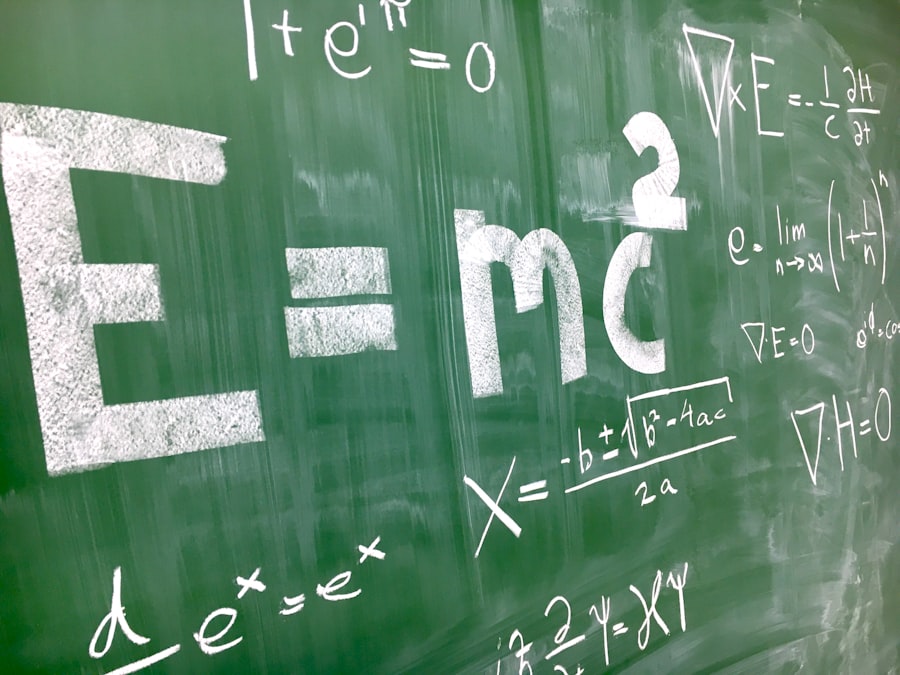
The relativity of time and space implies that the universe does not operate on a single, synchronized clock. Each observer experiences time and space differently based on their motion and the gravitational fields they inhabit. This leads to a view of the cosmos that is far less deterministic and predictable in the way we might initially assume.
The Aging of Planets and Stars
The gravitational pull of celestial bodies affects the rate at which time passes for them. For objects closer to a massive body, time flows slightly slower than for those further away. This effect is minuscule for everyday objects but becomes significant for astronomical scales. Planets orbit stars, and stars themselves are massive entities that warp the spacetime around them. This means that the internal clocks of planets and stars are not identical to those far removed in the cosmic expanse. Each star system, each galaxy, exists in its own unique temporal flow, dictated by the distribution of mass and energy.
The Expanding Universe and its Temporal Implications
Einstein’s theory also laid the groundwork for understanding the expansion of the universe. Cosmological models based on General Relativity predict that the universe is not static but is either expanding or contracting. Observations by Edwin Hubble in the late 1920s confirmed that galaxies are moving away from each other, indicating an expanding universe. This expansion implies that the universe was once much smaller and denser, and the very concept of time and space would have been dramatically different in its early stages. The further away a galaxy is, the faster it appears to be receding, and this too has temporal consequences for distant observers looking back into cosmic history.
The Unsettling Horizon of Black Holes

Perhaps the most terrifying implication of Einstein’s theories arises in the context of black holes, regions of spacetime where gravity is so intense that nothing, not even light, can escape. These enigmatic objects represent the ultimate warping of spacetime, pushing the boundaries of our understanding to their limits.
The Event Horizon: A Point of No Return
A black hole is defined by its event horizon, a boundary in spacetime beyond which events cannot affect an outside observer. It is often described as a point of no return. As matter or energy approaches the event horizon, it is accelerated by the intense gravitational field. Once it crosses the event horizon, its fate is sealed. The concept of spacetime within a black hole is so drastically distorted that our familiar notions of direction and causality break down. From an external observer’s perspective, an object falling into a black hole appears to slow down and fade as it approaches the event horizon, never quite crossing it due to extreme time dilation. However, for the object itself, the crossing is an inevitable event.
Singularities and the Limits of Physics
At the heart of a black hole lies a singularity, a point of infinite density and zero volume, where the laws of physics as we currently understand them cease to apply. General Relativity predicts the formation of singularities within black holes, but it offers no explanation for what happens at this point. This signifies a breakdown in our current models, indicating that a more complete theory, likely one that unifies General Relativity with quantum mechanics, is needed to comprehend the true nature of these cosmic enigmas. The singularity represents a terrifying truth: there are aspects of the universe that lie beyond our current capacity to describe or predict.
In exploring the profound implications of Einstein’s theories, one cannot overlook the fascinating insights presented in a related article that delves into the mysteries of the universe. This piece not only elaborates on the terrifying truth about time and space but also connects to broader concepts in modern physics. For those interested in a deeper understanding, the article can be found here, offering a compelling perspective on how these theories shape our comprehension of reality.
The Cosmic Dance of Relativity
| Concept | Explanation |
|---|---|
| Time Dilation | The phenomenon where time passes differently for observers moving relative to each other |
| Space-time Continuum | The unified concept of time and three-dimensional space as a four-dimensional continuum |
| General Relativity | Einstein’s theory describing the gravitational force as a curvature in space-time |
| Black Holes | Regions of space where gravity is so strong that nothing, not even light, can escape |
Einstein’s theories of relativity fundamentally changed our understanding of the universe, replacing a static, clockwork cosmos with a dynamic, interconnected tapestry of spacetime. The implications are profound and, in many ways, unsettling. The universe is not the same for everyone; time and space are malleable, bending and stretching in response to the presence of mass and energy.
Time as a Dimension, Not Just a Measure
The concept of time as a dimension, intricately linked with space, is a departure from our everyday experience. We tend to think of time as something that happens to us, a river carrying us along. Relativity suggests that time is a more active participant, an integral component of the universe’s fabric. It can be stretched and compressed, its flow altered by motion and gravity. This realization can be deeply disorienting, as it challenges our intuitive perception of temporal passage.
The Universe as a Relational System
Ultimately, Einstein’s terrifying truths about time and space point to a universe that is inherently relational. Nothing exists in isolation; every point in spacetime is influenced by its surroundings, and in turn, influences them. The universe is not a collection of independent objects but a grand, interconnected performance where matter, energy, motion, and gravity are all participants in a cosmic dance governed by the principles of relativity. This interconnectedness, while beautiful, also underscores the limits of our individual perspectives and the profound mysteries that still lie beyond our grasp. The universe, as revealed by Einstein, is a place of astonishing complexity and humbling vastness, where our most cherished assumptions about reality can be dramatically redefined.
FAQs
What is the terrifying truth about time and space according to Einstein?
Einstein’s theory of relativity revealed that time and space are not fixed, but rather are interconnected and can be warped by the presence of mass and energy. This means that time can move at different rates depending on the speed and gravitational pull of an object, and that space itself can be curved.
How does Einstein’s theory of relativity impact our understanding of the universe?
Einstein’s theory of relativity revolutionized our understanding of the universe by showing that time and space are not absolute, but rather are dynamic and can be influenced by the presence of mass and energy. This has led to new insights into the nature of black holes, the expansion of the universe, and the possibility of time travel.
What are some practical implications of Einstein’s theory of relativity?
Einstein’s theory of relativity has practical implications in fields such as GPS technology, where the effects of time dilation due to the speed of satellites must be taken into account in order to accurately determine location. Additionally, the study of gravitational waves, which are predicted by the theory of relativity, has the potential to revolutionize our understanding of the universe.
How has Einstein’s theory of relativity been confirmed by experimental evidence?
Einstein’s theory of relativity has been confirmed by numerous experimental observations, including the bending of light around massive objects such as stars, the accurate prediction of the precession of the orbit of Mercury, and the detection of gravitational waves by the LIGO observatory.
What are some of the remaining mysteries and unanswered questions related to Einstein’s theory of relativity?
Despite the success of Einstein’s theory of relativity in explaining many phenomena, there are still unanswered questions and mysteries, such as the nature of dark matter and dark energy, the behavior of matter and energy at the quantum level within the framework of general relativity, and the potential for a unified theory that combines gravity with the other fundamental forces of nature.