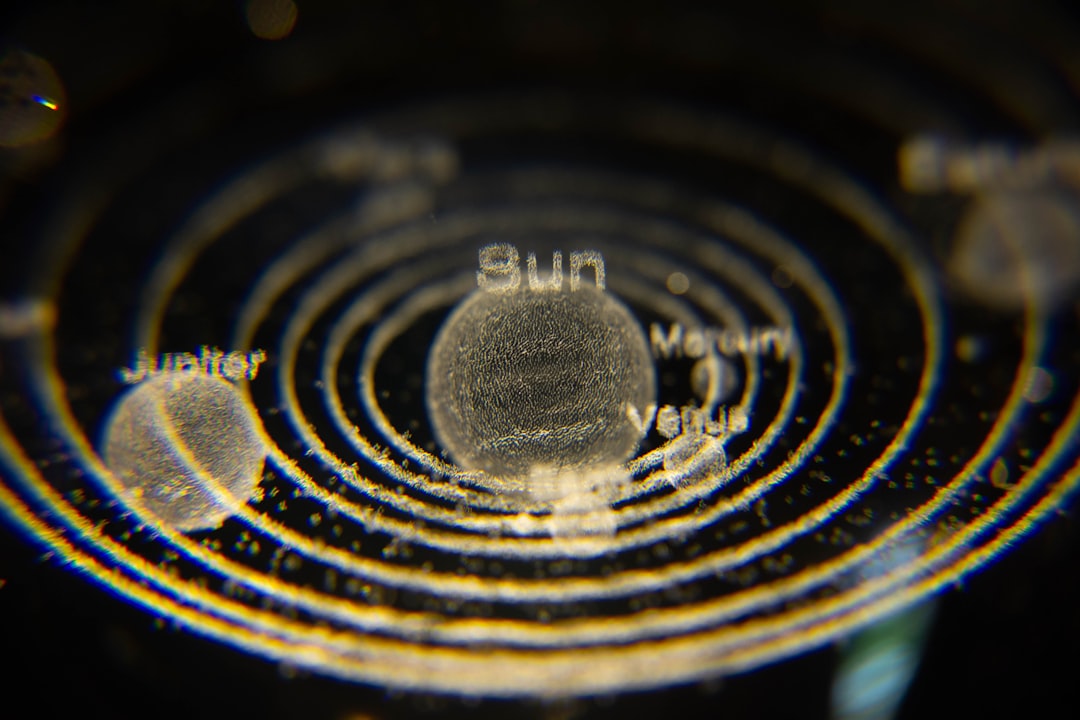
The seemingly immutable fabric of our solar system, a vast expanse populated by celestial bodies and vast nebulae of dust, is exhibiting subtle yet persistent changes. Recent observations and analyses by astronomical institutions worldwide have begun to document a phenomenon that can only be described as “dust thinning anomalies.” This is not a sudden, dramatic scattering, but rather a gradual, localized depletion of the interplanetary dust medium. While the term “anomaly” implies a deviation from expected norms, the precise cause and extent of this thinning remain subjects of intense scientific scrutiny. The implications, however, are far-reaching, potentially impacting everything from our understanding of planetary formation to the future of space exploration.
Understanding the Interplanetary Dust Medium
To grasp the significance of these anomalies, it is crucial to first establish a baseline understanding of the interplanetary dust medium itself. This diffuse cloud of solid particles, ranging in size from microscopic to millimeters, permeates the vastness between planets. It is a dynamic and complex component of our solar system, continuously replenished and altered through various processes.
Composition and Origin of Solar System Dust
The primary constituents of interplanetary dust are silicate minerals, carbonaceous compounds, and ice. These particles originate from a diverse set of sources. Meteoroids, fragments of comets and asteroids, are the most prolific contributors. As comets traverse their elliptical orbits, they shed volatile materials and dust, leaving behind trails that the planets eventually encounter. Likewise, asteroid collisions and fragmentation events directly inject debris into the interplanetary environment. Furthermore, stellar winds and the erosion of planetary surfaces also contribute, albeit to a lesser extent. The composition of this dust provides a unique archive, offering clues about the early solar system and the chemical evolution of its constituent bodies. Analyzing the isotopic ratios and elemental abundances within these dust grains can reveal their primordial origins and trace the conditions under which they formed. This ancient material has played a significant role in the formation of planets, acting as building blocks that gradually accreted to form larger bodies.
The Dynamic Nature of the Dust Cloud
The interplanetary dust cloud is far from static. It is subject to a constant interplay of forces that shape its distribution and density. Gravitational influences from the sun and planets create distinct regions of higher and lower dust concentration, such as the zodiacal cloud, which is particularly dense in the ecliptic plane. Solar radiation pressure, the outward push exerted by photons from the sun, acts to sweep smaller dust particles away from the sun. Conversely, the Poynting-Robertson effect, a drag force caused by the absorption and re-emission of sunlight, causes dust particles to spiral inwards towards the sun over time. These competing forces create a delicate equilibrium, leading to expected patterns of dust density and distribution. Understanding these dynamics is paramount for identifying deviations that constitute anomalies.
Recent studies have highlighted intriguing dust thinning anomalies observed in various regions of our solar system, shedding light on the complex interactions between cosmic dust and solar winds. For a deeper understanding of these phenomena, you can explore the article titled “Unraveling Dust Thinning Anomalies in Our Solar System” available at My Cosmic Ventures. This resource provides valuable insights into the implications of dust dynamics on planetary atmospheres and the broader cosmic environment.
Documenting the Thinning: Observational Evidence
The detection of dust thinning anomalies is a relatively recent development, made possible by advancements in observational technology and long-term monitoring programs. While subtle, the evidence is mounting from various independent sources, painting a consistent, albeit puzzling, picture.
Ground-Based and Space-Based Telescopic Observations
Direct observation of the zodiacal light, the diffuse emission of sunlight scattered by interplanetary dust, has provided early indications. Sophisticated instruments on space telescopes, such as the Hubble Space Telescope and the now-defunct Spitzer Space Telescope, have offered unprecedented resolution and sensitivity, allowing astronomers to map the dust distribution with greater precision. These observations have revealed regions where the expected dust density appears to be diminishing, often in specific orbital paths or localized areas within the solar system. Ground-based observatories, equipped with advanced coronagraphs designed to block out the direct light of the sun, can also observe zodiacal light, contributing to a broader dataset. These observations are crucial for corroborating findings from space-based instruments and for providing continuous monitoring over extended periods. Early photographic plates and subsequent digital imaging have allowed for historical comparisons, offering a baseline against which current trends can be measured. The subtle shifts in illumination patterns, when meticulously analyzed, reveal the gradual nature of these changes.
In-Situ Dust Measurements and Their Implications
Beyond remote sensing, spacecraft equipped with dust detectors have provided direct measurements of dust particle flux and composition in various regions of the solar system. Missions like Cassini, which orbited Saturn, and various asteroid rendezvous missions have equipped instruments capable of capturing and analyzing dust grains. These in-situ measurements offer definitive evidence of depletion in areas previously thought to be rich in dust. The flux of micrometeoroids impacting spacecraft surfaces, for instance, has shown unexpected drops in certain locations, indicating a reduced density of these particles. The analysis of collected dust samples, if such missions are equipped with sampling capabilities, can further confirm the thinning by revealing a lower accumulation rate than anticipated. These direct measurements are invaluable, as they are not subject to the ambiguities of light scattering models and can provide a more precise quantification of the dust density. The data from these instruments offer an independent verification of the trends observed through telescopic means.
Potential Causes for the Dust Thinning
The identification of dust thinning anomalies necessitates a thorough investigation into their potential causes. While no single explanation has been definitively established, several hypotheses are being actively explored by the scientific community, each with its own set of implications.
Increased Sweep-Up by Planets and Gravitational Perturbations
One plausible explanation involves an enhanced rate of dust accretion by planets. Gravitational interactions between planets and dust particles can funnel the dust into specific orbital regions, leading to its eventual capture or collision with the planetary bodies. If there has been a subtle, long-term shift in planetary orbital mechanics or if certain planetary systems have experienced an increased frequency of dust-rich cometary or asteroidal encounters, this could lead to a net removal of dust from the interplanetary medium. The concept of “gravitational focusing” is well-established, where the gravity of a planet can enhance the capture rate of dust particles in its vicinity. While significant shifts in planetary orbits are unlikely on short timescales, minor resonances or interactions could lead to localized increases in dust capture. Furthermore, the passage of larger celestial bodies through the solar system, though infrequent, could disturb dust streams and lead to their eventual accretion onto planets or moons.
Changes in Cometary and Asteroidal Activity
The primary sources of interplanetary dust are comets and asteroids. Any significant alteration in the activity of these bodies could directly impact the dust density. A decrease in the number of active comets, or a reduction in their dust production rate, would naturally lead to a thinning of the dust medium over time. Similarly, a decrease in asteroid fragmentation events or collisions could also contribute to a reduction in fresh dust injection. Astronomical surveys are continuously monitoring cometary and asteroidal populations. If these surveys reveal a decline in the number of actively shedding comets or a decrease in the rate of observable asteroid collisions, this could be a significant factor in the observed dust thinning. The composition of the dust shed by comets is also a key factor; if recent cometary activity is dominated by less dusty materials, this would also contribute to a general thinning. The lifecycle of comets is complex, with many being depleted of volatiles and becoming inert over time. A shift in the balance of active versus inert comets could therefore influence dust levels.
The Role of Stellar Winds and Solar Activity
While solar wind is primarily an outflow of charged particles, it can also exert pressure on dust grains, particularly smaller ones. Variations in solar activity and the strength of the solar wind could, in theory, contribute to the sweeping of dust particles from certain regions. However, the effect of solar wind pressure on larger dust particles is generally considered less significant than gravitational forces. Nonetheless, long-term cyclic changes in solar activity, if they align with observed dust thinning trends, cannot be entirely discounted. The heliosphere, the region of space dominated by the solar wind, acts as a dynamic boundary. Changes in its extent and intensity, driven by solar cycles, could potentially influence the distribution of dust. While direct removal by solar wind is less likely for larger grains, it could play a role in shaping the population of smaller, more easily influenced particles.
Hypothetical Scenarios: “Dust-Eating” Structures or Unknown Interactions
Beyond more conventional explanations, the possibility of unknown stellar or planetary mechanisms cannot be entirely ruled out. This could involve hypothetical “dust-eating” structures or as-yet-undiscovered interactions within the solar system that actively remove dust particles. While speculative, such scenarios highlight the limitations of our current understanding and the need for open-minded scientific inquiry. The discovery of exoplanetary systems has revealed a wide array of planetary architectures and phenomena that were once unimaginable. It is conceivable that our solar system harbors similar, albeit more subtle, processes that are yet to be identified. The ongoing search for extraterrestrial life, for instance, has led to a broader consideration of unusual astrophysical phenomena, and the same spirit of inquiry could be applied to the mysterious thinning of solar system dust. This is, of course, a realm of hypothesis, but one that underscores the frontier nature of current astronomical research.
Implications of Dust Thinning Anomalies
The observed dust thinning anomalies, regardless of their ultimate cause, carry significant implications for our understanding of the solar system and its evolution.
Impact on Planetary Formation Processes
The early stages of planetary formation are heavily influenced by the abundance and distribution of dust. A thinning of this primordial dust medium, particularly in certain regions, could have altered the rates and efficiencies of planetesimal formation and accretion. Understanding the historical dust density is crucial for building accurate models of how our solar system, and other planetary systems, came to be. If the thinning is a recent phenomenon, it has less direct bearing on the initial formation of planets, but it could still influence the ongoing processes of planetary development, such as the delivery of volatile compounds. The composition of the dust is also important. If the thinning is selective, affecting certain types of dust more than others, it could have differential impacts on the chemical evolution of planetary bodies.
Effects on the Zodiacal Light and Observational Astronomy
The zodiacal light is a fundamental component of the sky’s illumination, impacting astronomical observations, particularly those conducted from Earth or near-Earth orbit. A reduction in dust density would manifest as a dimmer zodiacal light, potentially improving the signal-to-noise ratio for certain deep-sky observations. However, it could also complicate efforts to study the dust itself, as there would be less material to observe. Astronomers have long used the zodiacal light as a benchmark and a source of background noise. A significant, unexplained dimming could subtly alter the observational landscape. For instruments sensitive to faint light, a reduction in zodiacal light might be beneficial, allowing for deeper surveys. Conversely, for studies focusing on the distribution and properties of the dust itself, this thinning presents a challenge, requiring recalibration of observational strategies and theoretical models.
Potential Consequences for Space Missions and Future Exploration
The interplanetary dust medium poses a hazard to spacecraft, as even small particles can cause significant damage at high velocities. A thinning of the dust cloud could, in theory, reduce the risk of micrometeoroid impacts, making space travel marginally safer. However, the precise locations of dust thinning are crucial. If the thinning is localized around specific orbital paths, it might offer “safer corridors” for targeted missions. Conversely, if the thinning is widespread but uneven, predicting safe trajectories could become more complex. The long-term implications for resource utilization, such as the potential harvesting of water ice from cometary dust, would also need to be reassessed if the abundance of such material is diminishing. The prospect of reduced impact risks could influence mission design, potentially allowing for lighter shielding or a greater tolerance for smaller impact events. However, this benefit is contingent on the uniformity and predictability of the thinning, which is currently not fully understood.
Recent studies have shed light on the intriguing phenomenon of dust thinning anomalies in our solar system, revealing how these changes can impact planetary atmospheres and surface conditions. For a deeper understanding of this topic, you can explore a related article that discusses the implications of these anomalies on celestial bodies. This research not only enhances our knowledge of solar system dynamics but also opens up new avenues for exploration. To read more about this fascinating subject, visit this article.
Future Research and Unanswered Questions
The dust thinning anomalies present a compelling astronomical puzzle, with many questions yet to be answered. Ongoing and future research efforts are crucial to unraveling their mysteries.
Continued Monitoring and Refined Observational Techniques
Sustained and more precise monitoring of the interplanetary dust medium is essential. This includes utilizing advanced observational techniques, such as interferometry and high-resolution spectroscopy, to better map dust density and composition across the solar system. Future space missions specifically designed for dust characterization and measurement will be invaluable. The development of new instruments with enhanced sensitivity and broader spectral coverage will allow for more detailed studies of the dust population and its temporal variations. Long-baseline interferometry, combining data from multiple telescopes, can provide exceptionally high angular resolution, enabling the mapping of dust clouds with unprecedented detail. The continuous accumulation of observational data over decades is crucial for distinguishing between cyclical variations and genuine long-term thinning trends.
Theoretical Modeling and Simulations
Sophisticated computational models are needed to simulate the complex dynamics of the interplanetary dust medium. These models should incorporate gravitational interactions, solar radiation pressure, and potential sources of dust injection and removal. By comparing simulation results with observational data, scientists can test different hypotheses and refine their understanding of the underlying physical processes. The development of robust numerical simulations that can accurately represent the behaviour of billions of dust particles under various forces is a significant undertaking. These models can then be used to predict the long-term evolution of the dust medium and to explore the feasibility of different proposed causes for the thinning. The ability to run these simulations on powerful supercomputers allows for the exploration of a wide parameter space, testing the sensitivity of the dust distribution to variations in physical parameters.
Interdisciplinary Collaboration and New Analytical Approaches
Addressing the dust thinning anomalies will likely require interdisciplinary collaboration between astronomers, planetary scientists, and physicists. The development of new analytical approaches, perhaps drawing on techniques from other fields, might also be necessary to interpret the complex datasets being generated. The study of dust thinning is not solely an astronomical problem; it touches upon fundamental questions of celestial mechanics, astrophysics, and the very history of our solar system. Collaboration with researchers in fields such as atmospheric physics or plasma physics might offer novel perspectives on the interactions between dust and the solar environment. Furthermore, the application of advanced statistical methods and machine learning algorithms to large astronomical datasets could uncover subtle patterns and correlations that might otherwise go unnoticed.
The fading veil of interplanetary dust is a subtle yet profound reminder that our solar system is a dynamic and ever-evolving entity. The dust thinning anomalies, while currently enigmatic, represent a compelling avenue for scientific discovery, promising to deepen our understanding of the cosmic processes that shape our celestial neighborhood and, by extension, the universe beyond. The ongoing quest to understand these subtle shifts underscores the iterative nature of scientific inquiry, where each new observation and hypothesis paves the way for further exploration and a more profound appreciation of the cosmos.
FAQs
What are dust thinning anomalies in our solar system?
Dust thinning anomalies refer to regions in our solar system where the density of interplanetary dust is significantly lower than expected. These anomalies can occur in various parts of the solar system, including the asteroid belt, Kuiper belt, and beyond.
What causes dust thinning anomalies in our solar system?
There are several potential causes of dust thinning anomalies, including gravitational interactions with planets and other celestial bodies, solar radiation pressure, and the dynamics of the interplanetary medium. These factors can lead to the dispersal and depletion of dust in certain regions.
How do scientists study dust thinning anomalies in our solar system?
Scientists study dust thinning anomalies using a variety of methods, including space-based telescopes, ground-based observatories, and spacecraft missions. These tools allow researchers to observe and analyze the distribution of interplanetary dust and identify regions with anomalous thinning.
What are the implications of dust thinning anomalies in our solar system?
Studying dust thinning anomalies can provide valuable insights into the dynamics and evolution of our solar system. By understanding the processes that lead to these anomalies, scientists can gain a better understanding of the interactions between celestial bodies and the interplanetary medium.
Are there any potential applications of studying dust thinning anomalies?
Studying dust thinning anomalies can have practical applications, such as informing the design and operation of spacecraft and missions that traverse regions with low dust density. Additionally, understanding the distribution of interplanetary dust can help scientists assess the potential hazards it may pose to future space exploration efforts.